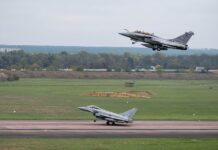


Russia is using fighter jets from both ends of its inventory, its most advanced fifth-generation Su-57s and the rare MiG-35s, to counter Ukraine’s long-range drones, though for sharply different operational reasons.
While reports of Su-57s deployment for Moscow’s air defense and shooting down Ukrainian drones have appeared frequently, a Telegram channel belonging to the specialized community Soniashnyk and connected to Ukrainian aviation reported on October 21 that Russia deployed a MiG-35 to shoot down Ukrainian drones.
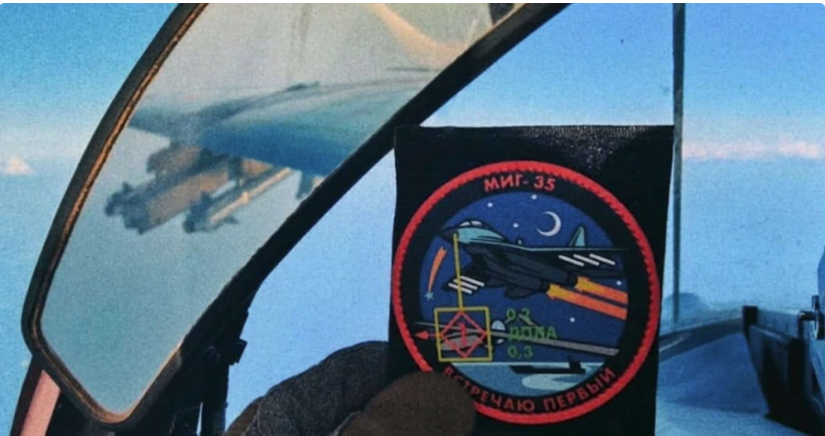
The Telegram channel also published an image of a russian pilot in the cockpit of a MiG-35 allegedly involved in intercepting Ukrainian drones.
What makes MiG-35s alleged involvement in anti-drone operations unusual is the fact that these jets are still in the experimental stage and have rarely been used in the war in Ukraine.
In fact, while the war in Ukraine is already in its fifth year, there have only been three known instances where MiG-35s were involved in combat operations, and every time they were used for anti-drone operations.
The first reports of MiG-35 involvement in anti-drone operations emerged nearly three years ago, in November 2023; however, at the time, the story was based entirely on claims from Russian industry, with no supporting images or videos.
Sergei Korotkov, Chief Designer at the United Aircraft Corporation (UAC), told RIA Novosti that the MiG-35 was already participating in operations related to the conflict in Ukraine.
He said the aircraft “is already participating in all ongoing operations” amid the current events in Ukraine, and that the Ministry of Defense still needs to decide on serial procurement before further test flights.
Then nearly one-and-a-half years later, in May 2025, Russian sources claimed the MiG-35 was used for the first time since the start of the special military operation to intercept Ukrainian UAVs.
Now, nearly 17 months later, and for the first time, a Telegram channel associated with Ukrainian aviation has reported the use of the MiG-35 to counter Ukrainian drones. This time, it also published an image of the MiG-35 pilot.
Clearly, Russia has scarcely used MiG-35s in the war in Ukraine, and only for anti-drone operations.
So why is Russia using the latest, most advanced fighter jet from the legendary Mikoyan factory, which Moscow markets as a 4+++ generation fighter, so sparingly and strictly only for anti-drone operations?
Why is the MiG-35 Missing From Action?
Part of the reason is the numbers themselves.
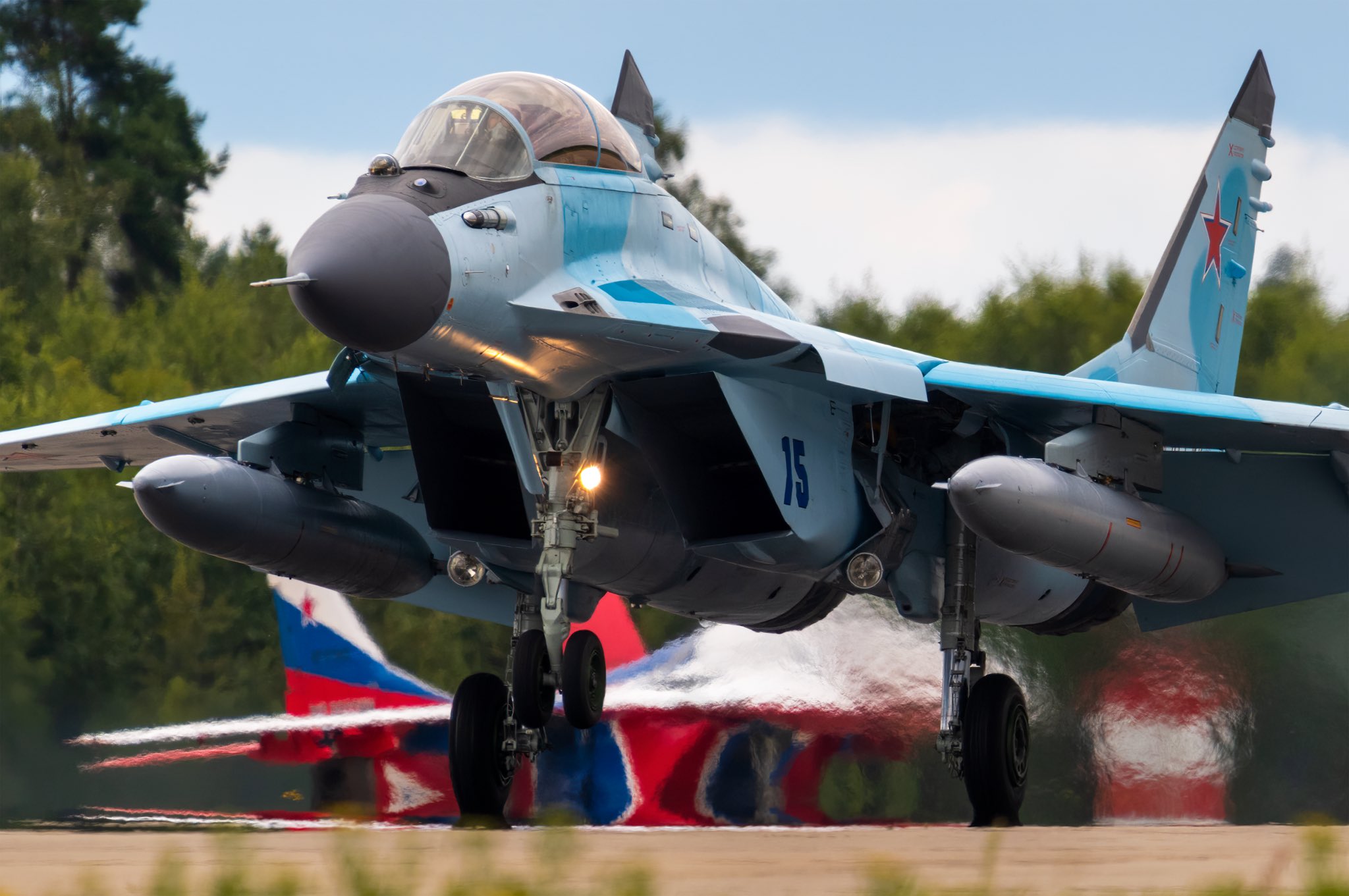
So far, the Russian Aerospace Forces (VKS) have received only six MiG-35s (four single-seat MiG-35S and two two-seat MiG-35UB variants).
All six fighters belong to an experimental/pre-production batch that took five years to produce, from 2018 to 2023. Two of these fighters (both two-seat MiG-35UB variants) are trainers.
The Mig-35 aircraft has not entered serial production yet.
The extremely limited numbers and experimental status mean that neither enough jets are available for combat nor have they matured enough to serve in frontline combat roles.
In fact, while Russia placed its first order for the MiG-35 eight years ago in 2018, and the fighter entered operational service in 2019, Moscow has placed no subsequent orders.
Russia initially planned to order 37 MiG-35s; later, it reduced that number to 24. However, in the end, Russia ordered only six aircraft.
Russia backed multiple Sukhoi models, including the Su-34, Su-35, and fifth-generation Su-57, over the cheaper MiG-35.
Similarly, although Russia presented the MiG-35 to international customers at the 2017 Moscow air show and entered it in numerous export contests, including the massive Indian MMRA contest for 114 fighter jets, it won no export orders.
Other export customers, including Algeria, Bangladesh, Malaysia, Iran, and Egypt, also overlooked the MiG-35.
The lack of substantial domestic orders and zero export orders clearly points to the fighter’s below-par performance.
In fact, analysts have consistently pointed out that while the MiG-35 was promised as a 4++ generation aircraft, it offers only marginal improvements over the 1980s MiG-29 in range, engine performance, and payload capacity, rather than a transformative leap.
They point out that the MiG-35 airframe is essentially a rebranded late-model Fulcrum airframe with slight modifications, such as more internal fuel and a larger wing area.
It currently has a PESA radar, not the promised AESA radar. The serial-production aircraft lacks thrust-vectoring control, as previously planned.
Its RD-33 derivative engines have underperformed, delivering no real gains in thrust, fuel economy, or reliability.
Analysts also point out that with air combat changing dramatically, the MiG-35 increasingly looks like an outdated combat aircraft.
It is not a stealth platform and lacks long-range weapons, sensor fusion, potent electronic warfare capabilities, and network-centric warfare.
No wonder neither Russia nor export customers are ordering MiG-35s.
Countries that want high-capability, high-performance fighters pick Rafale, F-35, F-15 Eagles, and F-16V.
Countries seeking cheaper alternatives gravitate toward the Chinese JF-17 and JF-10 and the Swedish Gripen.
Until MiG-35s receive new capabilities such as AESA radar, thrust vectoring, long-range weapons, and sensor fusion, the aircraft is ill-suited for modern warfare.
However, Ukrainian swarm drone attacks and the falling number of Russian combat aircraft due to wartime losses mean that Moscow is deploying every airborne asset that it can mobilize to counter Ukrainian drones.
Further, the limited deployment of MiG-35s in the Ukraine conflict serves two other purposes for Russia: it can give Moscow valuable real-world data to improve the aircraft and signal to international customers that the fighter has been combat-tested.
In fact, there is a case for resurrecting the flop MiG-35; it is substantially cheaper than Sukhois like the Su-34 and Su-35. Its operating costs are also much lower than the heavier Sukhoi fighters.
Once the war in Ukraine ends, Russia will need a cheaper alternative to expensive, heavy Sukhoi fighters to quickly rebuild the VKS fleet with more numbers to account for heavy wartime losses.
In fact, last year Breaking Defense reported that Yuri Slyusar, shortly before leaving his post as head of the United Aircraft-Building Corporation (OAK), confirmed that the MiG-35, now designated a “4+++ generation fighter,” would begin large-scale production.
Russia may be deploying the MiG-35 in limited counter-drone operations to test its performance in real-world conditions and use the data to improve the serial-production variant once the war ends.
Russia, however, is deploying the fifth-generation Su-57 for very different reasons.
Why is Russia Deploying Su-57 to Hunt Drones?
Another Russian fighter that has seen only a limited role in the war in Ukraine is the fifth-generation Su-57.
During a Ukrainian swarm drone attack on Russia’s largest Omsk oil refinery in July, online footage from locals showed the silhouette of the elusive Su-57 shrieking overhead.
Earlier, pictures emerged showing a Su-57 fitted with R-73 air-to-air missiles on its wing pylons rather than in its internal weapons bay. Another set of pictures has shown the Su-57 carrying short-range R-73/R-74 (AA-11 Archer) series air-to-air missiles.
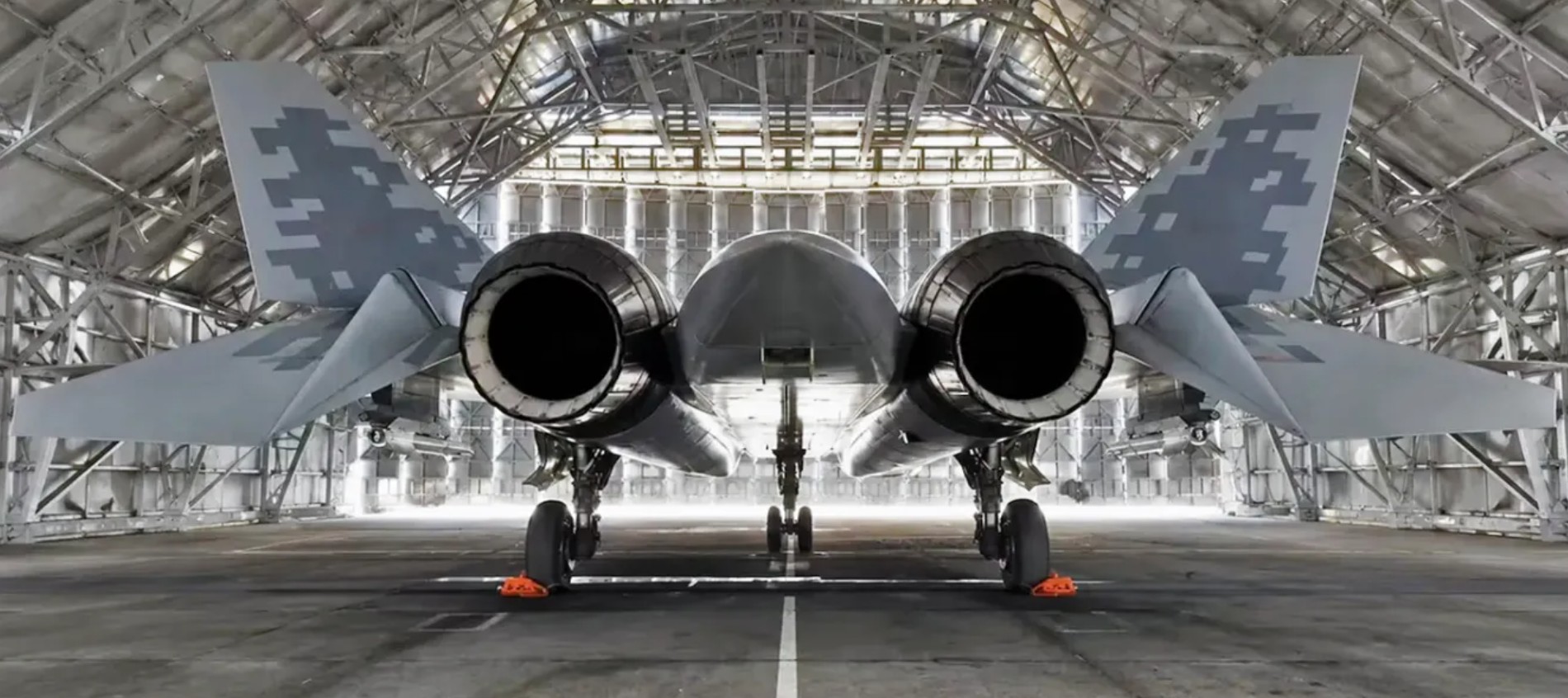
Carrying the missiles beneath the wing pylons would compromise the Su-57’s stealth; however, if the jet is deployed primarily for anti-drone operations, stealth is unnecessary. Similarly, short-range AAMs are effective only against drones.
These pictures provide conclusive evidence that Russia used the Su-57 for counter-drone operations.
Critics argue that Moscow is deliberately limiting the Su-57’s exposure to protect its export potential. Any confirmed losses to Ukrainian forces, they say, would severely damage the jet’s credibility in the international export market.
Russia is therefore using the Su-57 for low-risk counter-drone operations.
The war of attrition in Ukraine, which is already in its fifth year, the high aircraft loss ratio for both sides, and the intensity of Ukrainian swarm drone attacks have created a peculiar situation for Russia, where it is deploying its most advanced fighter, the Su-57, and perhaps the least promising, the MiG-35, mostly for low-risk counter-drone operations.
- Sumit Ahlawat has over a decade of experience in news media. He has worked with Press Trust of India, Times Now, Zee News, Economic Times, and Microsoft News. He holds a Master’s Degree in International Media and Modern History from the University of Sheffield, UK.
- He can be reached at ahlawat.sumit85 (at) gmail.com