

As Germany seeks a new partner to develop its next-generation fighter after the collapse of FCAS, it now faces two choices: join the Global Combat Air Program (GCAP) or forge a new partnership with Sweden and Spain.
If the proposal materializes, Europe could have three sixth-generation fighter programs: GCAP and the French initiative.
In June 2026, the Friedrich Merz administration pulled the plug on the FCAS (Future Combat Air System) that it was pursuing with France and Spain, over irreconcilable differences between industry partners Airbus (representing Germany and Spain) and France’s Dassault Aviation.
Berlin has been seeking a partnership to develop a sixth-generation aircraft ever since.
Earlier this month, reports indicated it held “exploratory talks” about joining the GCAP led by the UK, Japan, and Italy, and British Prime Minister Andy Burnham officially raised Germany’s involvement in GCAP.
However, Airbus had also earlier hinted it could potentially partner with Swedish defense manufacturer Saab to develop its sixth-generation fighter.
German defense officials have reportedly encouraged Berlin to seek a new fighter-aircraft collaboration with Sweden and Spain rather than join an existing deal involving the United Kingdom.
The internal ministry assessment notes that forming a new German-Swedish-Spanish partnership is “the more advantageous and promising” than joining the current GCAP. The evaluation does not, however, indicate that Defense Minister Boris Pistorius has approved the recommendation or that it represents a final government decision.
A New Partnership
Airbus had been exploring alternatives even before formally exiting the FCAS manned fighter program.
In May 2026, shortly before the collapse, Michael Schoellhorn, head of Airbus Defense and Space, told the Swedish newspaper Dagens Industri that he was looking forward to working with Sweden and Saab on a new next-generation fighter.
He emphasized Saab’s deep expertise in combat aircraft design and production and noted that discussions with the Swedish and German governments were already underway.
After the FCAS collapse, Schoellhorn said the company remained open to joining forces with Britain, Italy, and Japan for the GCAP, provided Germany secured a significant share of the work and meaningful leadership.
“What we’re ready to do is to join something or to build something where we have a significant portion of the work and the leadership. That’s currently being explored,” he said.
Days after Germany pulled out of FCAS, a group of companies led by Airbus, operating under the banner “Team Gen 6,” also submitted a position paper to the German government outlining a sixth-generation fighter concept, underscoring industry’s push for influence over the path forward.
Airbus has since invested heavily in the new path.
With a decision still pending and talks ongoing with both sides, Germany can swing either way. However, the German Defense Ministry’s inclination toward a new partnership with Sweden and Spain reflects the complexities of joining GCAP, now at an advanced stage.
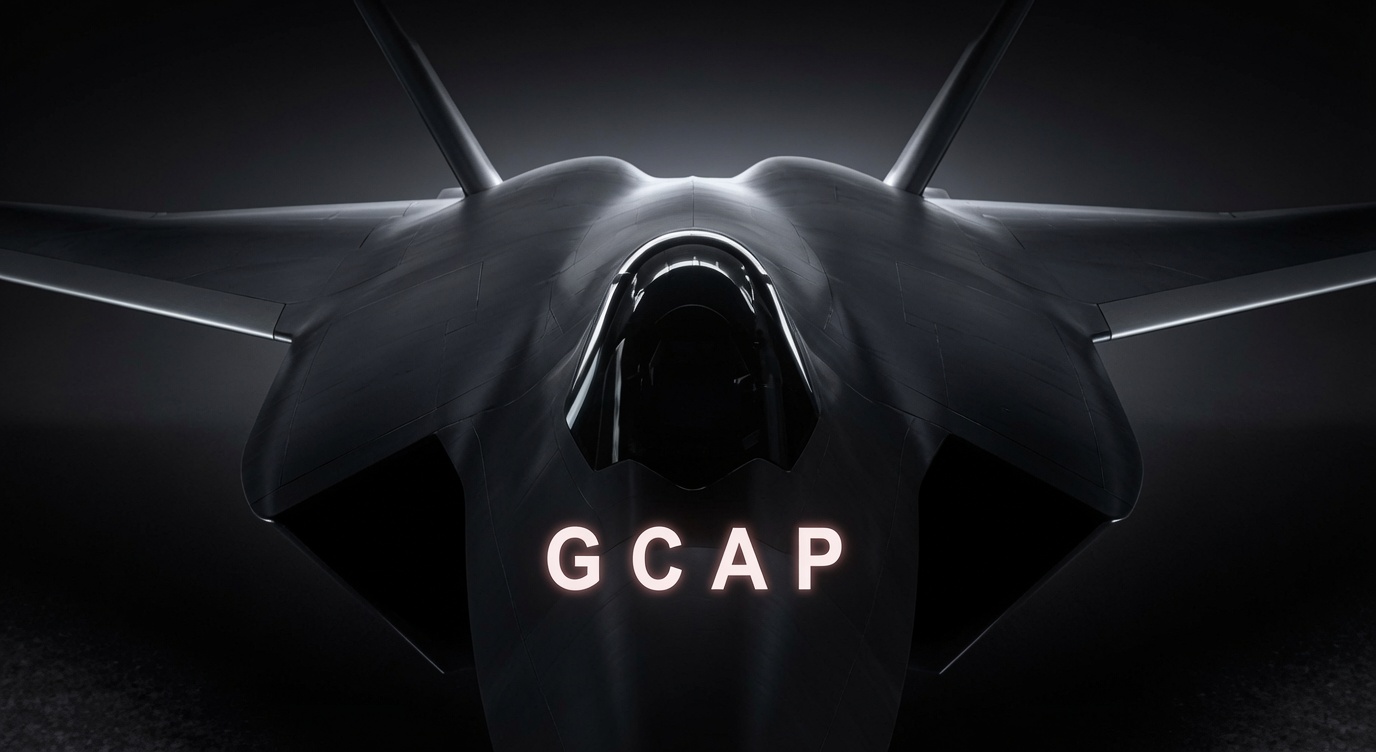
Unlike the FCAS, GCAP Stays on Track
Edgewing, GCAP’s industrial joint venture to design and develop the next-generation fighter, is led by Leonardo (Italy), Mitsubishi Heavy Industries (Japan), and BAE Systems (the UK), and is advancing toward the aspirational milestone of flying its first demonstrator by 2027 and fielding the aircraft by 2035.
For Germany, joining the GCAP program at this stage could be thorny. Although the UK and Italy have openly expressed willingness to welcome more partners into the GCAP, Japan has been reluctant, concerned that renegotiating everything with a new partner would delay the program.
In fact, Tokyo—which needs to replace its F-2 combat jet with a sixth-generation fighter amid tensions with China—had earlier blocked cash-rich Saudi Arabia’s entry for similar reasons.
Even if Japan conceded, reopening delicate talks on industrial participation, production shares, and intellectual property could cause friction.
In that scenario, Germany may be offered a junior role, with limited say over design, architecture, and key decisions, which could be unacceptable to both Airbus and Berlin. British industry representative in the program, BAE Systems, is already believed to dominate it and has reportedly been unwilling to share technology with other partners, as Italian Defense Minister Guido Crosetto alleged earlier in April 2025.
This could limit the German industry partner’s room to maneuver within the program.
Moreover, the German Defense Ministry’s assessment specifically targets BAE Systems, citing bad experiences during the Eurofighter program (pursued jointly by the UK, Germany, Spain, and Italy).
The Ministry has reportedly accused BAE of prioritizing exports over German and Italian development interests and warns that British dominance would be incompatible with a partnership of equals.
Another disadvantage for Germany in joining the GCAP is a clear mismatch between operational requirements and the aircraft’s design philosophy.
The GCAP is reportedly being built around a maritime scenario, whereas Berlin would want an aircraft suited to its own geography and continental use, much like the Eurofighter or the F-35A Lightning II it is acquiring from the US.
Beyond these overarching issues, the existing GCAP members already have different priorities. Japan wants to replace the F-2 with a new fighter by the mid-2030s, while the UK and Italy reportedly want GCAP to create a state-of-the-art “system of systems,” a fighter that can operate with a swarm of drones, on a less strict timeline.
Admitting a new partner could further complicate the program’s internal workings.
Germany with Saab
In contrast, Germany’s collaboration with Sweden and Saab appears much more promising, at least in theory.
For one, if Germany forges a new partnership with Sweden and Spain, it would gain industrial influence and an equal partnership from the start, better alignment with continental European operational needs, and a more balanced industrial starting position.
For example, FCAS got off to a decent start in 2017, with all partners onboard and a division of work, but it eventually stalled over disagreements on work-share arrangements, with French contractor Dassault refusing to cede space to Airbus in developing the Next-Generation Fighter (NGF), the program’s centerpiece.
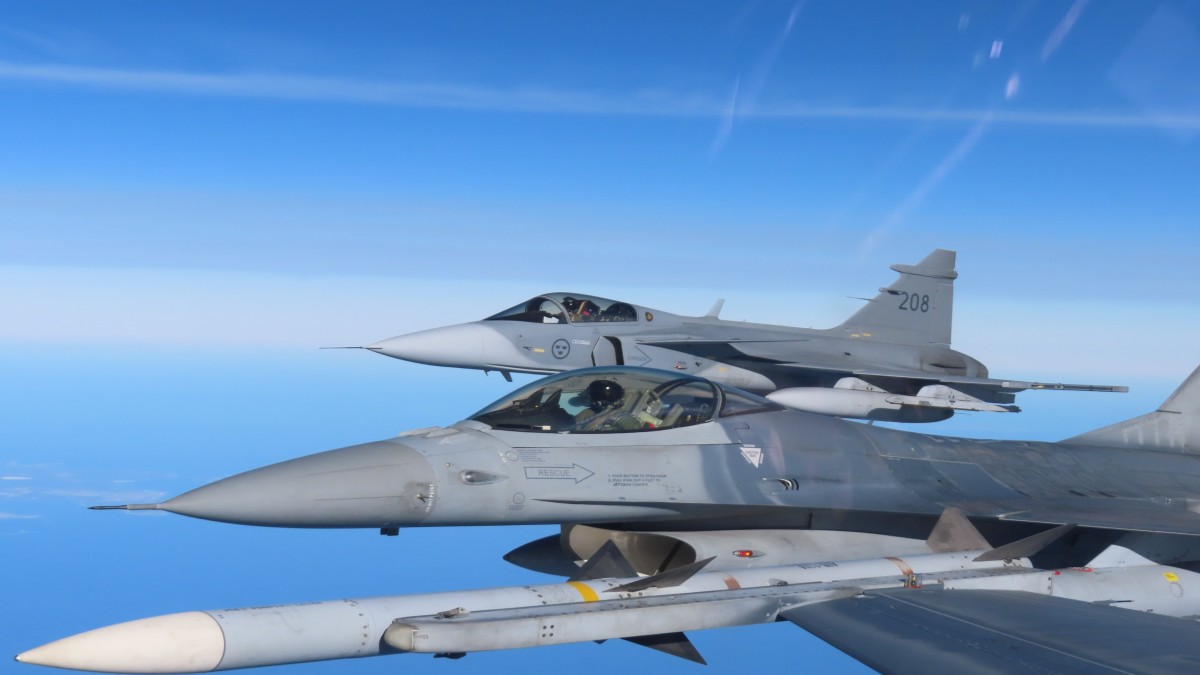
In its next partnership, Germany would want more influence and a greater workshare that actually benefits its industry.
The three countries could establish an Airbus–Saab joint venture, potentially using Saab’s Gripen E as a technological stepping stone or baseline while developing a new aircraft.
Both sides bring vast experience developing combat aircraft, which would come in handy for the new program. Moreover, bringing Spain into this partnership would give Airbus continuity and likely stronger bargaining power within the grouping.
That said, building a new partnership from the ground up also carries significant risks. The partners would need to establish governance structures, align requirements, agree funding shares, define intellectual property rules, and negotiate work-share from scratch.
This would push fielding past 2035, potentially into the late 2030s or beyond. Moreover, the exact problems that killed the FCAS manned fighter—work-share, leadership, and IP control—could easily reappear between Airbus and Saab, two strong design houses with distinct cultures.
Despite these risks, a pure continental European next-generation fighter partnership would preserve greater decision-making autonomy and manufacturing work for German, Spanish, and Swedish industry. More importantly, it would support long-term European defense-industrial capacity without the complications of late entry into an existing program with set architecture and priorities.
Saab is already conducting independent studies on sixth-generation technologies and has publicly stated it remains open to collaborations, including on fighter aircraft. “Saab remains open to a variety of collaborations and partnerships across a wide range of defense-related areas, including fighter aircraft.
Large-scale cooperation projects of this kind are typically addressed at the political level, with participation decisions made by the governments concerned,” a Saab spokesperson was quoted as saying in the POLITICO report. “Consequently, any questions about possible Swedish involvement should be directed to the Swedish government.
As always, Saab stands ready to support Sweden’s future fighter requirements,” it added. Meanwhile, Airbus boss Michael Schöllhorn shed some light on the company’s relationship with Saab in an interview with Handelsblatt earlier this week, emphasizing that they had “always worked well” together.
For now, it remains to be seen which way Chancellor Merz’s government will swing. The choice is between accepting a subordinate but potentially faster role within a mature program, or insisting on industrial leadership and requirements fit, at the cost of delays and the risk of repeating past mistakes and failures.
- Contact the author at sakshi.tiwari13 (at) outlook.com
- Follow EurAsian Times on Google News