Ukraine finds itself in an unusual position: a staunch NATO ally that has provided extensive military support since the early days of the Russian invasion is now withholding further assistance, while a previously cautious partner has signed a major deal that will significantly boost Ukraine’s air capabilities.
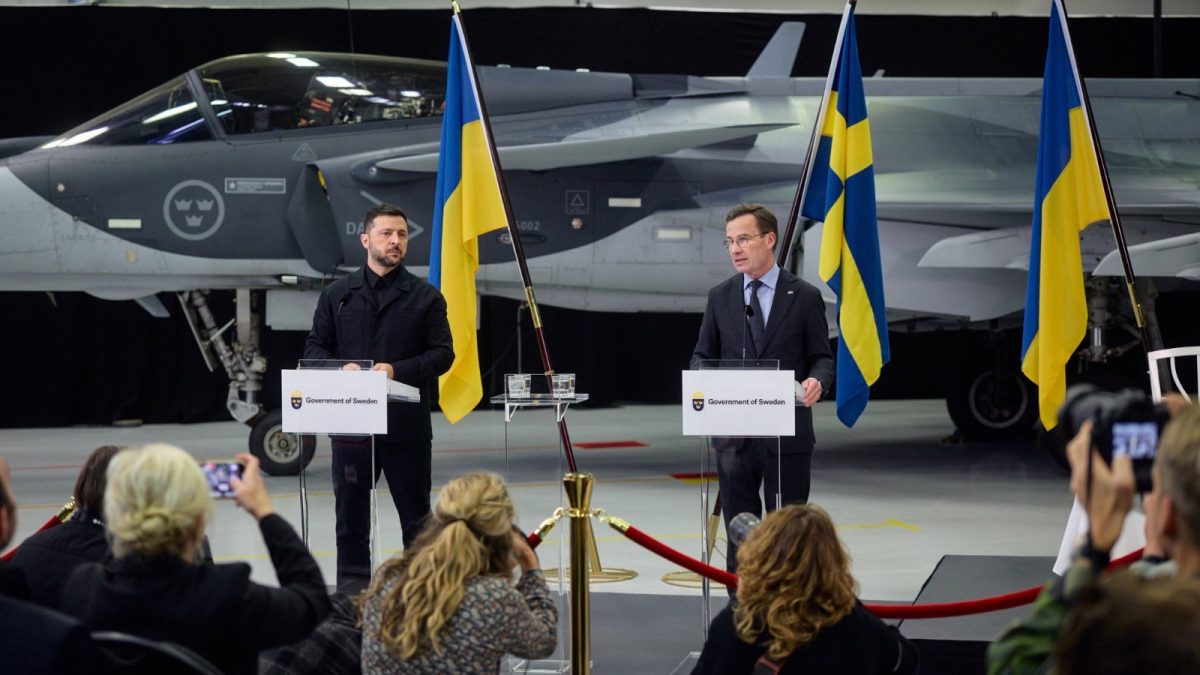
While Poland continues to withhold its MiG-29 jets amid an ongoing tussle over the transfer of drone technology with Kyiv, Ukraine has officially signed a deal with the Swedish manufacturer Saab to purchase the 4.5th-generation Gripen-E/F fighter jet.
Ukraine signed a contract on June 30 to deliver 16 Gripen fighter aircraft, valued at about 24.6 billion Swedish crowns, or about $2.54 billion. The aircraft, along with spare parts and associated equipment, will be delivered between 2029 and 2039, according to Saab.
In addition to the new Gripen-E jets, Ukraine will also receive 16 older Gripen C/D aircraft starting in 2027.
“In addition, under our previous agreements with Prime Minister Ulf Kristersson, the first 16 Gripen C/D aircraft will be transferred to our Air Force at the beginning of 2027,” the Ukrainian President Volodymyr Zelenskyy said on X.
Notably, the deal follows the official announcement of the Gripen purchase by Ukrainian and Swedish leaders in May 2026, as EurAsian Times reported at the time. However, Kristersson’s office had indicated that Kyiv was poised to order 20 Gripen-E jets.
Together with Sweden, we continue strengthening Ukraine's combat aviation. Today, our countries signed an agreement for the procurement of 16 Gripen E fighter jets. Importantly, the aircraft will come with a package of related equipment, technical assistance, and support. In… pic.twitter.com/yqynTWOzYM
— Volodymyr Zelenskyy / Володимир Зеленський (@ZelenskyyUa) June 30, 2026
Notably, Zelenskyy and Kristersson had signed a letter of intent (LOI) in October 2025 for Kyiv’s purchase of up to 100 Gripen-E/F jets. The order for 16 could, thus, be the beginning of many more to come in phases.
In addition to the aircraft, the two sides are also apparently discussing anti-ballistic defense and drone technology.
“I thanked Sweden’s Minister for Defence, Pål Jonson, for this support and for the cooperation during our meeting. We discussed in detail the implementation of these steps, as well as broader bilateral cooperation, including preparations for the Drone Deal and our work on anti-ballistic defence,” Zelenskyy stated.
While the announcement did not specify that the weapons would be part of the deal, it is widely believed that the package includes advanced ammunition, such as IRIS-T, advanced medium-range air-to-air missiles (AMRAAM), and long-range METEOR air-to-air missiles.
The agreement represents a notable change in Sweden’s position, especially given that it had consistently rejected all Ukrainian requests for the aircraft, even as other NATO members transferred their older F-16s and Mirages to Kyiv.
Ukraine’s purchase of Gripen will pose a threat to Russia, which has regularly deployed its Su-34 and Su-35 fighters to launch glide bombs at Kyiv with near-complete impunity. The Ukrainian Gripen could be equipped with the Meteor missile, widely regarded as the longest-range Western air-to-air missile, creating a decisive “no-escape zone” for Russian aircraft, as EurAsian Times explained in detail earlier.
The Gripen was designed with the Russian threat as its central focus. Its short takeoff and landing performance enables it to operate from dispersed locations, including taxiways, small civilian airports, and even motorways. This capability would be especially valuable for Ukraine, whose air bases have been repeatedly struck by Russian missiles and drones.
In a social media post from last year, a Ukrainian pilot with the call sign “Karaya” described the Gripen as the “ideal option.” Karaya stated, “For me, the JAS-39 is the only fighter jet in the world I’d be willing to sell my soul for.”
The Gripen is seen as a potent platform for Ukraine due to its superior sensor fusion, powerful AESA radar, low operational costs, and ability to operate effectively from scattered, remote airfields. The aircraft has a rugged design and is built for harsh conditions and quick field maintenance. For example, side-mounted air intakes on the jet reduce the risk of foreign-object damage and debris-strewn fields.
Moreover, the aircraft can refuel and rearm in 10–25 minutes with a small crew (including conscripts or limited specialists).
The Gripen-E/F can identify, track, and engage multiple targets at long range, thanks to its cutting-edge electronic warfare (EW) capabilities, sophisticated infrared search-and-track (IRST) systems, and an AESA (Active Electronically Scanned Array) radar. The aircraft can switch between air-to-ground, air-to-air, and reconnaissance tasks with ease, while offering strong survivability through electronic attack and passive detection.
The Gripen-E/F would allow Ukraine to gather intelligence, defend its airspace, and conduct strikes against Russian ground targets by supporting a range of NATO-compatible weapons, including AMRAAM and Meteor missiles, as well as precision-guided munitions such as JDAMs, which the Ukrainian Air Force already has.
No MiG-29s for Ukraine
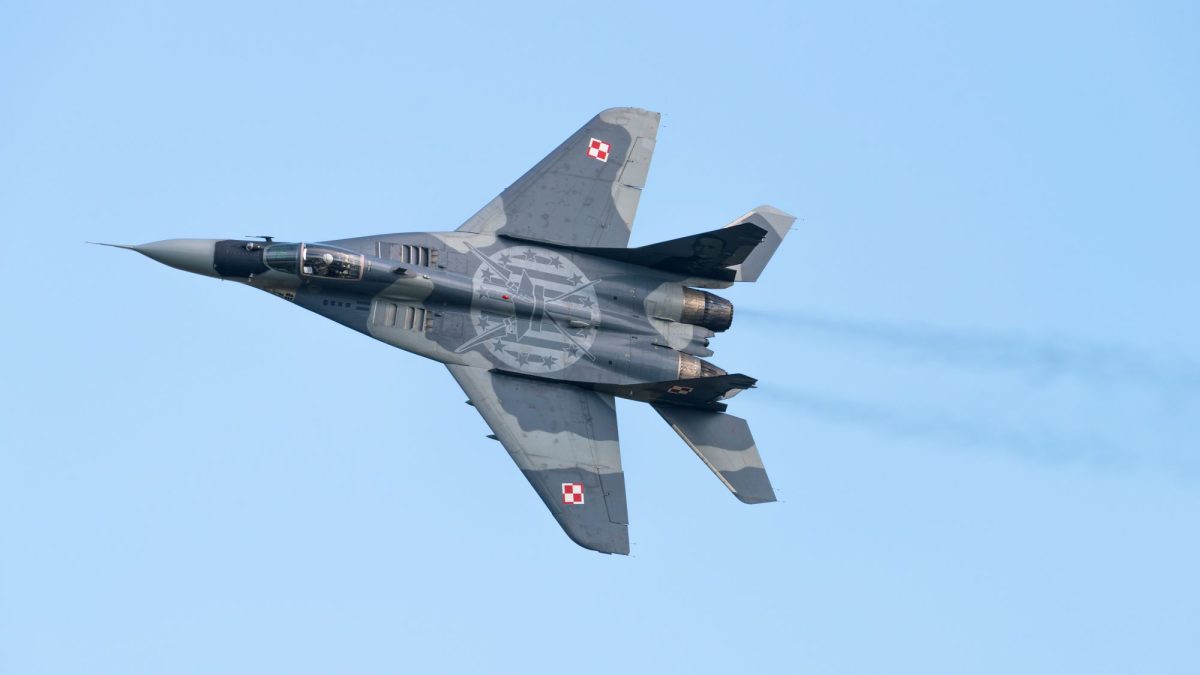
Deputy Prime Minister and Minister of National Defense Wałysław Kosiniak-Kamysz recently stated in an interview on Polish TV that the country has decided not to send its remaining MiG-29 fighter jets to Ukraine as part of a January agreement that was supposed to provide 14 Soviet-origin aircraft to Kyiv in exchange for drone technology for Warsaw.
Kosiniak-Kamysz clarified that Poland had initially proposed what he called a “partnership approach” in which Ukraine would exchange its sophisticated drone capabilities, including technology, expertise, and operational know-how, for MiG aircraft. Furthermore, he asserted that although Ukraine initially accepted the proposal, it later withdrew from the agreement, depriving Poland of the anticipated benefits.
“There are no MiGs because there are no drones,” the Defense Minister stated, stressing that Poland is seeking reciprocal cooperation rather than one-sided military assistance.
Poland has already given billions in aid and hosted millions of refugees and is now seeking tangible benefits in return for depleting its remaining Soviet-era fleet. Moreover, it wants to build its own domestic drone industry as part of a broader military modernization and views Ukrainian battlefield-proven technology as highly valuable in that effort.
Ukraine has not commented on these reports and has refused to discuss them publicly. However, we know that the Ukrainian Air Force needs as many of these aging jets as it can get, for they are crucial for short-range air defense, quick-reaction alerts, and operating from austere bases.
Although the MiG-29s are less advanced than the F-16s and Mirage 2000s delivered by other NATO countries, they offer three important advantages: they would significantly boost Ukraine’s fighter numbers, are compatible with munitions already in Ukrainian stocks, and can be operated by pilots who are already trained on the aircraft.
Poland has been one of Ukraine’s strongest and most consistent supporters since the start of Russia’s full-scale invasion in 2022.
It has delivered dozens of aid packages to the embattled country over the past four years of fighting—the official figures put direct military assistance at over €3.5 billion. In addition, the Polish government has consistently provided broader humanitarian support, including hosting refugees and providing economic aid.
Poland, which borders Ukraine, was among the first NATO countries to transfer military support to Kyiv. It reportedly transferred hundreds of tanks, including 250–300+ T-72 variants, 30–60 PT-91 Twardy, and 14 Leopard 2A4. Additionally, it has delivered hundreds of BMP-1 IFVs and Rosomak APCs to the Ukrainian Army, along with more than 50 Krab 155mm self-propelled howitzers.
Poland was also among the first NATO states to transfer its older Soviet-era aircraft to Ukraine, including MiG-29 fighters and Mi-24 helicopters. It has also been hosting training for Ukrainian forces and providing significant intelligence support since the initial months of the invasion. Moreover, it has served as a key transit route for Western aid.
However, the ties have come under strain.
In late May 2026, President Volodymyr Zelenskyy signed a decree honoring a Ukrainian military unit after the “Heroes of the Ukrainian Insurgent Army” (UPA). However, this infuriated Poland as it views the UPA as responsible for the massacres of tens of thousands of Polish civilians in Volhynia and Eastern Galicia during WWII.
Polish President Karol Nawrocki responded by stripping Zelenskyy of Poland’s highest state honor, which had been awarded in 2023, when ties were robust.
This led to a diplomatic spat, with Zelenskyy skipping a major Ukraine Recovery Conference in Gdańsk, Poland, in late June 2026.
Polish Prime Minister Donald Tusk has since called for de-escalation, mutual respect, and direct talks, warning that the feud is a “strategic mistake” benefiting Russia. However, Kosiniak-Kamys’s latest comment suggests that a thaw in ties may still be a little out of reach.
- Contact the author at sakshi.tiwari13 (at) outlook.com
- Follow EurAsian Times on Google News