After years of watching its Gripen-E/F fighter lose export battles to the F-35, Saab finally found its redemption when NATO chose the Saab GlobalEye as a replacement for its aging AWACS fleet over the American Boeing E-7 Wedgetail.
Speaking at the NATO Summit in Ankara on July 7, 2026, NATO Secretary General Mark Rutte announced that the alliance will begin formal negotiations with Saab for up to 10 GlobalEye aircraft to replace the alliance’s fleet of 14 Boeing E-3A Sentry AWACS.
The GlobalEye will now replace the aging Boeing E-3A Sentry AWACS aircraft, which have been in service since the 1980s and are operated by the NATO Airborne Early Warning & Control Force (NAEW&CF) based at Geilenkirchen Air Base, Germany.
Notably, the alliance operates a joint airborne early warning fleet, unlike fighter jets that belong to individual states. According to an official press statement, 11 NATO states, including Belgium, Canada, Denmark, Germany, Latvia, Lithuania, Luxembourg, the Netherlands, Norway, Romania, and Sweden, will jointly procure 10 aircraft.
“This will ensure we keep NATO’s… surveillance and early warning capability strong and credible for decades to come,” Rutte stated at the event.
Interestingly, the decision mirrors those of Sweden, Canada, and France to acquire the aircraft, which is built on the Canadian-made Bombardier Global 6000/6500 business jet. Although a contract between NATO and Saab has yet to be signed, reports suggest the program is valued at approximately $4.5 billion, and deliveries could begin by 2030.
“We are honored and proud to support NATO in its next-generation AEW&C capability,” Micael Johansson, president and CEO of Saab, stated after the decision was announced. “We are confident that GlobalEye is the right choice for the alliance, delivering proven capability, adaptability and long-term operational advantage. Today’s announcement clearly positions GlobalEye as the world-leading solution for advanced airborne early warning and control. We look forward to the next steps in the negotiations.”
The decision is a big win for the Swedish manufacturer, which struggled for a decade to secure export orders for its latest and most advanced fighter jet, the Gripen E/F, as Lockheed Martin’s F-35 swept the European market.
NATO initially leaned toward the Boeing E-7 Wedgetail in 2023 as a relatively quick replacement for the E-3s, which are due for retirement around 2035.
NATO members, including the Netherlands, the United States, Belgium, Germany, Luxembourg, Norway, and Romania, decided they would acquire six Wedgetails as part of one of their “biggest-ever” joint purchases. The initial preference was based on three main factors: price, availability, and the platform’s purchase by other countries, including the US, the UK, Australia, South Korea, and Turkey.
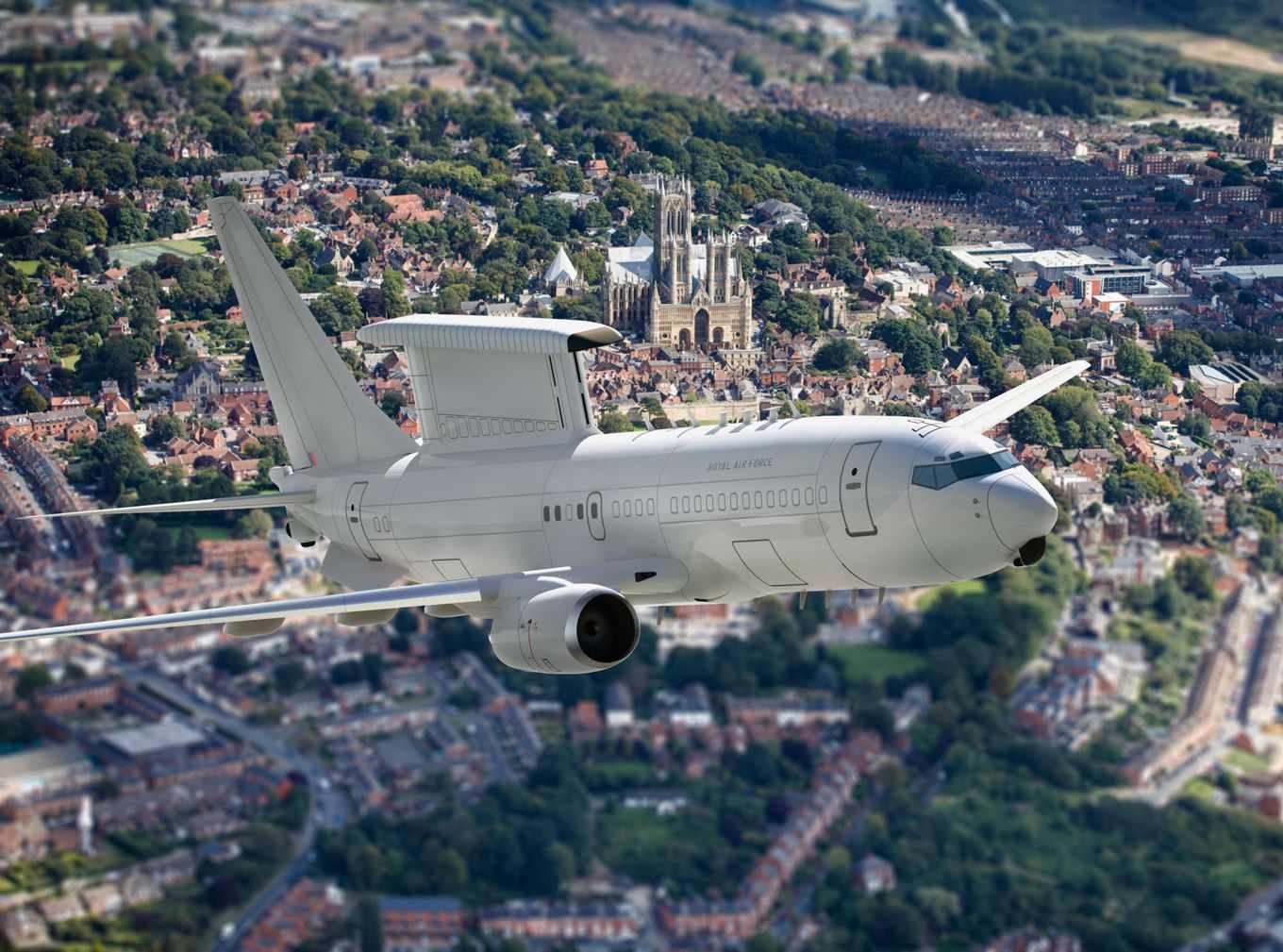
Moreover, the security alliance assessed that E-7 was the only option capable of meeting the timelines and requirements effectively.
However, Washington withdrew from the NATO AWACS replacement program, citing shifting defense priorities, high costs, and a strategic pivot toward space-based and other surveillance capabilities. The withdrawal removed the program’s strategic foundation and greatly weakened its economic case with the remaining NATO allies, who had favored the Wedgetail largely because of lower costs expected from broad participation, including that of the US.
By November 2025, the Netherlands announced that NATO had abandoned its plan to purchase the E-7 AEW&C, as EurAsian Times reported at the time.
“The withdrawal of the US demonstrates the importance of investing as much as possible in European industry,” deputy Dutch defense minister Gijs Tuinman stated.
Meanwhile, NATO chief Mark Rutte reassured the alliance that he “will do everything to make sure that we speed up” the decision on their replacements.
Since Saab’s GlobalEye was the only alternative available in the European market, it became the obvious choice for NATO’s AWACS replacement.
The decision to acquire a European-Canadian platform comes as many European countries see the US as less reliable under President Trump, whose administration has criticized Europe for not spending enough on defense and has threatened to reduce America’s military presence in Europe.
This has pushed European nations to strengthen their own defense industries and work more closely together.
For NATO, which is consistently at odds with Russia, acquiring an advanced early-warning aircraft is both a pressing need and a strategic priority. Typically, Early-Warning aircraft are considered among the most critical assets in combat, providing real-time command, control, and surveillance over vast regions.
As airborne command centers, they direct fighters, coordinate air operations, and integrate data from multiple sources, including satellites, other aircraft, and ground-based sensors. This function is essential in dynamic, complex battlefields where quick decision-making is crucial, as previously explained in a detailed EurAsian Times report. The aircraft’s powerful radars provide vital situational awareness and are critical in contested regions, where air superiority and early warning may prove decisive against a near-peer adversary.
Saab’s GlobalEye
According to Saab, the GlobalEye stands out as a multi-role, multi-domain system that provides simultaneous long-range surveillance of air, sea, and land targets from a single platform — something that typically requires multiple specialized aircraft.
“GlobalEye is an advanced multi-domain AEW&C solution with an array of active and passive sensors that provide long-range detection and identification of objects in the air, at sea and over land. By providing real-time information to units in air forces, armies, and navies, GlobalEye enhances situational awareness of surrounding areas and enables early threat detection,” states the manufacturer.
The GlobalEye system incorporates Saab’s Erieye Extended Range radar, which is mounted on the fuselage of the Bombardier Global 6000 long-range business jet.
Although it is classified as an AEW&C by Saab, the GlobalEye can also conduct land and sea surveillance thanks to the FLIR (Forward Looking Infrared) Systems Safire electro-optical system and the Leonardo Seaspray 7500E radar mounted in pods beneath the fuselage.
Notably, the GlobalEye offers real-time air, sea, and land surveillance over a range of 350 nautical miles (about 650 kilometers) by combining Saab’s Erieye Extended Range (ER) radar, marine surveillance radar, and a multi-domain Command and Control (C2) system.
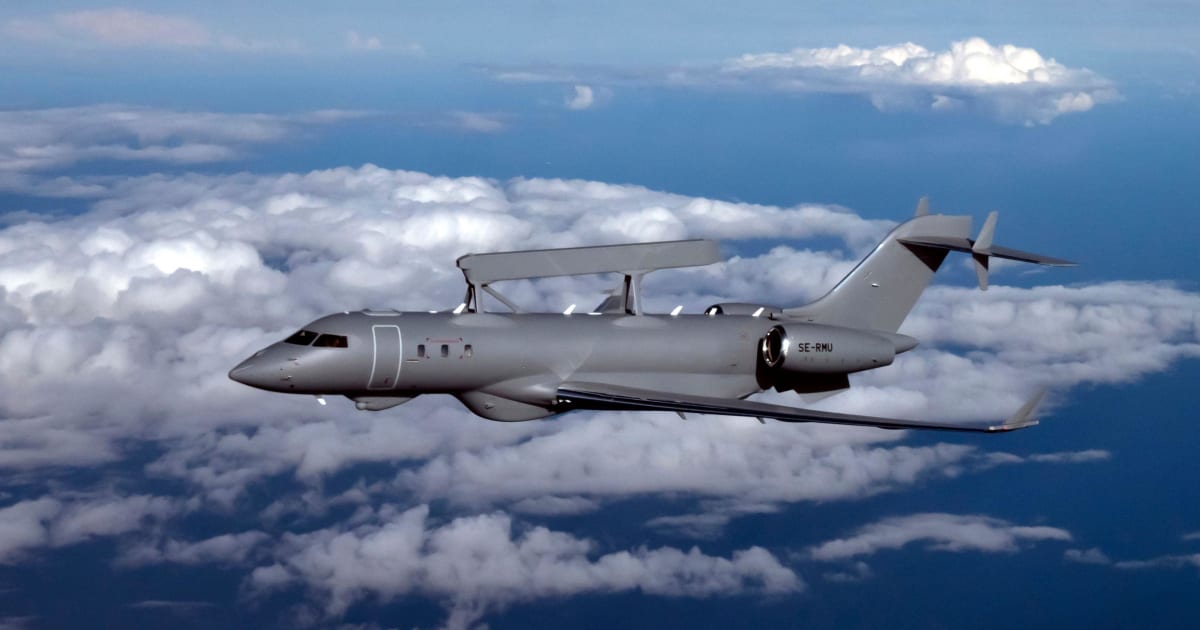
As noted in a Swedish announcement, the GlobalEye “combines excellent flight performance with low maintenance costs” and can remain airborne for over 11 hours. In contrast, NATO claims that a single Boeing E-3A can fly for up to 10 hours and track ships and aircraft over a distance of 400 kilometers.
The system can also recognize small targets, such as drones, and provide ground-moving target indication (GMTI), which is critical in modern combat.
Moreover, the GlobalEye is particularly good at detecting low-observable and stealthy threats, including drones and ballistic and hypersonic missiles, even in complex environments with significant clutter and electronic jamming. “GlobalEye can detect all kinds of airborne targets – ordinary aircraft types of all shapes and sizes, fighters, cruise missiles or helicopters. It also provides a significantly improved ability to detect smaller objects at greater distances, a key advantage for identifying new, low-observable aircraft and asymmetric threats,” according to information on the official Saab website.
Moreover, the manufacturer states that the GlobalEye can collect, process, and distribute information not only to the airborne forces available but also to all authorities and assets. It also facilitates effective sharing of information across platforms and can even direct and manage other assets, for instance, fighters, and let them know when and where to act.
“By being able to discover threats sooner, GlobalEye makes way for faster, more accurate decisions based on secure, real-time exchange of information between cooperating tactical units on land, at sea, and in the air. This first-to-know capability enables faster, more agile actions and mission effects. All together ensuring improved survivability of assets.”
The development of the GlobalEye has allowed Saab to re-enter the global AEW market, building on the success of its previous Erieye-equipped regional airliners, the Saab 340, 2000, and Embraer 145.
Moreover, it has allowed the Swedish manufacturer to arrest the plummeting of its reputation. NATO’s purchase of GlobalEye after abandoning the Boeing E-7 Wedgetail represents a perfect revenge for a company that kept losing to US aircraft for a decade.
- Contact the author at sakshi.tiwari13 (at) outlook.com
- Follow EurAsian Times on Google News