France has started preparations to train Ukrainian pilots to fly Rafale fighter jets ahead of delivery, Benjamin Haddad, France’s Minister Delegate for European Affairs, said. The question is: Will France-supplied Rafale jets end up like Russian Su-57s?
“We are currently discussing with the Ukrainians the issue of deploying Rafale fighter jets, piloted not by French but by Ukrainian pilots, in Ukrainian airspace. That is why we have also begun work on training these pilots,” said Haddad.
Earlier, French President Emmanuel Macron told reporters on July 13 that France and Ukraine agreed on a roadmap that will enable Ukraine to acquire 16 Rafale aircraft, besides other weapons.
“Earlier this afternoon, President (Volodymyr) Zelenskyy and I agreed on a roadmap between our two countries, implementing what had been agreed in principle last November regarding our bilateral defense cooperation,” Macron said at a news conference, referring to the Letter of Intent (LoI) signed between the two leaders for Kyiv’s procurement of the SAMP/T next-generation air defense system and up to 100 Rafale jet fighters.
Ukrainian President Volodymyr Zelensky had acknowledged that the training for Ukrainian pilots and mechanics will begin in France this year. Once training is complete, Zelensky said the first four Rafale jets will be delivered to Kyiv.
“The first aircraft should be flying in Ukrainian skies in 2028-2029. There will also be additional radars and additional missiles,” the French President said.
Ukrainian pilots are highly experienced on Soviet-era warplanes and have mastered flying F-16 and Mirage-2000 jets, but moving to the cutting-edge Rafales could still be a formidable task and could take 12–18 months for experienced pilots to reach combat-ready status.
Ukraine already operates the Mirage 2000-5F delivered by France last year.
Since the Rafales are not expected to arrive in Ukraine for at least the next few years, Ukraine will bet on Mirage 2000-5 and F-16 jets amid Russia’s attacks on the country. But nearly 50% of F-16s and ground-attack aircraft could be out of action by year-end because of maintenance issues, EurAsian Times reported yesterday.
The omnirole Rafale can perform air superiority, ground attack, reconnaissance, and even nuclear deterrence missions. It can switch between missions with ease, unlike single-role planes, making it versatile across evolving battlefields. Rafale also provides sensor fusion, a digital architecture, Link 16 data links, and networked operations.
The Rafale features an active electronically scanned array (AESA) radar, which enables it to identify and track targets at up to 200 kilometers, and the sophisticated SPECTRA electronic warfare system, which provides 360-degree threat detection.
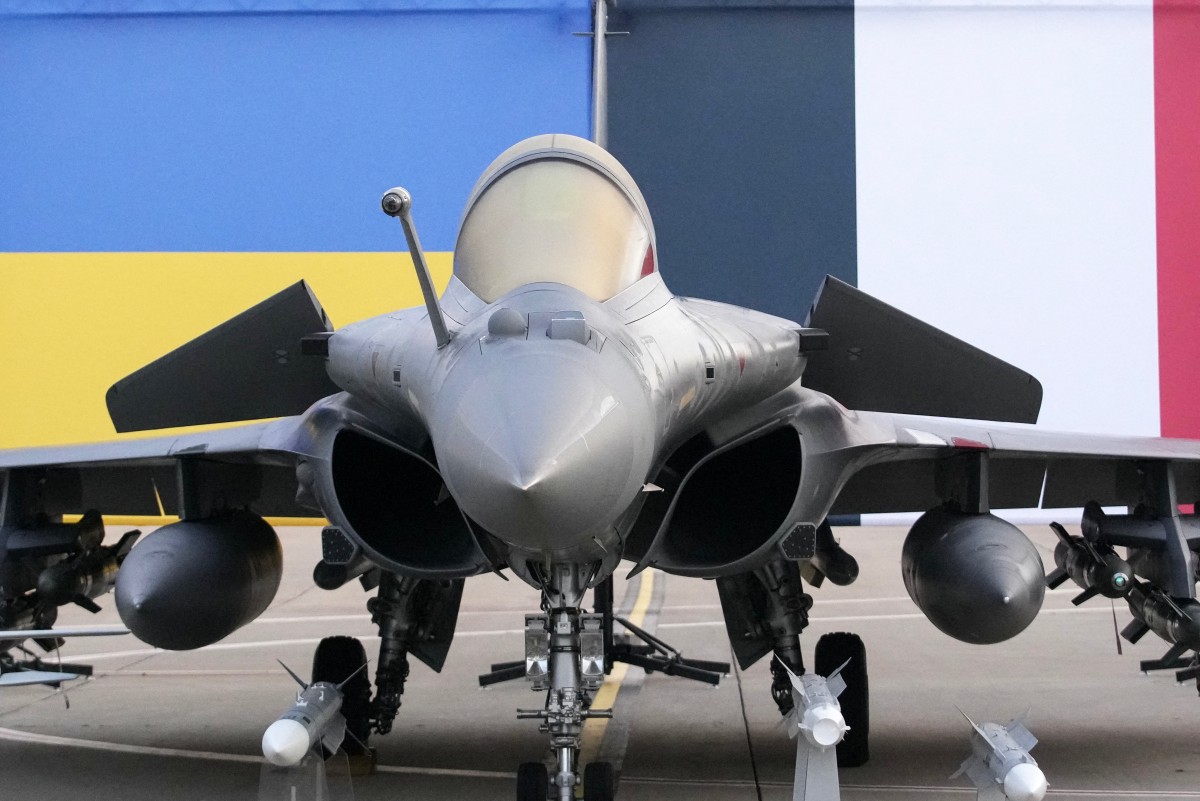
These features will boost the Ukrainian Air Force’s situational awareness, survivability in contested airspace, and the ability to operate effectively against Russian air defenses and jets. The aircraft can carry SCALP-EG cruise missiles, AASM Hammer precision-guided bombs, and a heavy payload across 14 hardpoints while retaining air-to-air weapons such as Meteor and MICA.
“Meteor missiles that destroy targets at distances exceeding 200 kilometers will help us push Russian jets away so that they can’t use glide bombs en masse anymore,” Zelensky earlier wrote in a post on X.
Su-57 vs Rafale
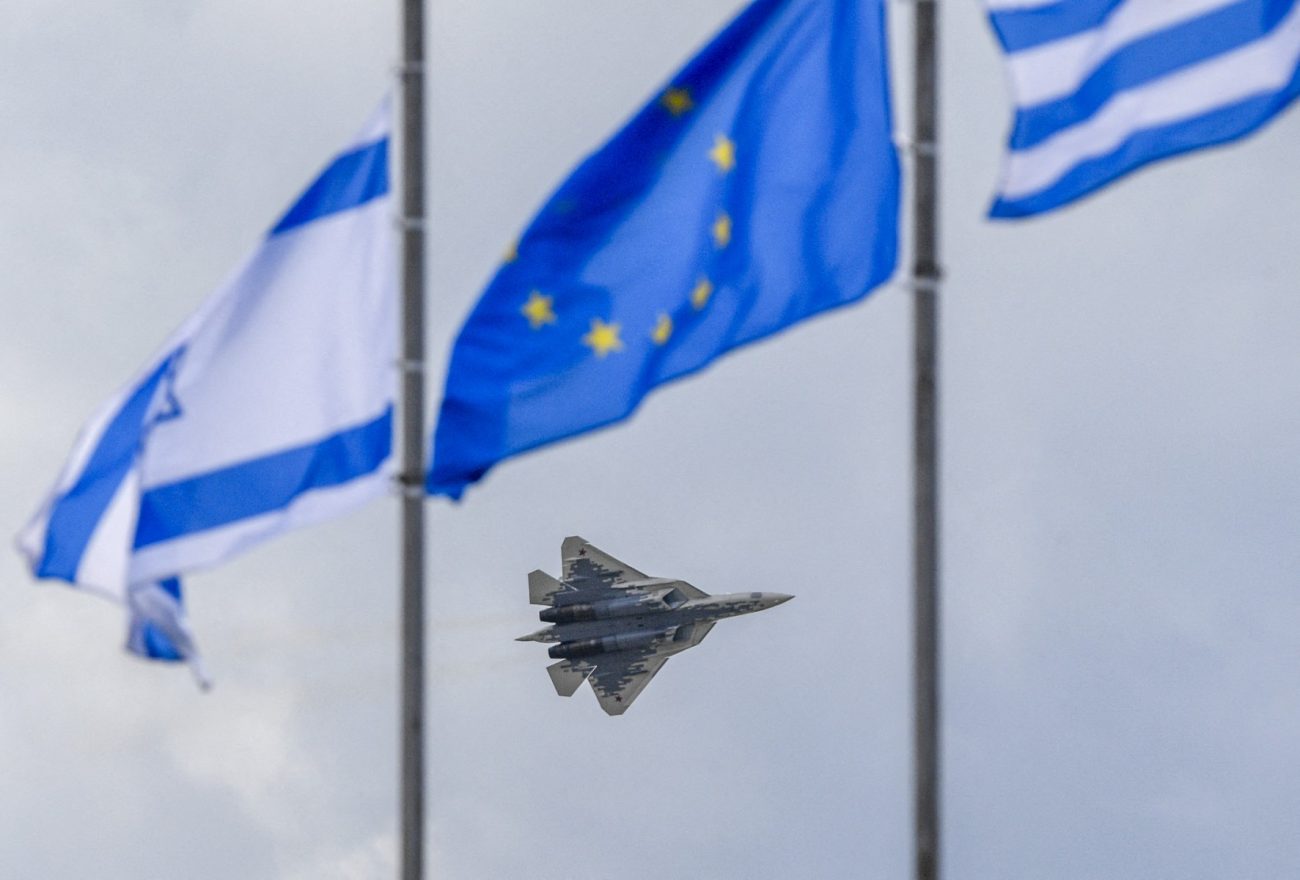
Russia has only a few dozen Su-57s in service. They are expensive and slow to replace, especially under tight Western sanctions, while Moscow works aggressively to export them and generate much-needed revenue.
India remains Moscow’s No. 1 client state for arms, and Putin has pitched the aircraft to New Delhi himself. India is believed to be evaluating the 5th-gen jet, despite reports of the IAF not looking for more Sukhoi variants.
Losing one over Ukraine would be a military and political blow for the Kremlin.
It would not only hand Western analysts the wreckage of arguably Russia’s most advanced fighter jet, but the aircraft falling into enemy hands could also seriously hurt its Russian export potential.
Ukrainian and Western reporting describes Su-57s firing Kh-59 and Kh-69 cruise missiles from well inside Russian airspace—often hundreds of kilometers behind the front lines. They have also been tasked with long-range shots at drones and cruise missiles heading for Russian territory, sometimes with short-range missiles carried externally.
Russia has claimed air-to-air kills with Su-57s (of drones and not fighter jets), but it has received little attention in the global media. However, Ukraine’s drones reportedly damaged Su-57s on the ground at Akhtubinsk in 2024 and deeper inside Russia in 2026, which were better reported.
There was no confirmation from Moscow, but things could have been very different had Ukraine flaunted the Su-57 wreckage.
Ukraine is doing something similar with its fighter jets. F-16s and the Mirage 2000-5 fleet spend most of their sorties on air defense—intercepting cruise missiles and attack drones. They also launch glide bombs and AASM Hammers from Ukrainian-controlled airspace.
The Ukrainian Air Force has credited F-16s with thousands of drone and missile kills and hundreds of standoff strikes, plus at least one Su-35 shot down in 2026. They still stay away from flying deep and closer to Russian S-400 coverage.
A Rafale deployment might follow the same logic: a July 2026 roadmap for an initial 16 aircraft (out of 100 per the letter of intent), with the first four transferable only after Ukrainian pilots and mechanics finish training, and operational use in Ukrainian skies discussed for 2028–2029.
Haddad’s point—Ukrainian pilots, not French ones—matches that.
Those jets would be most useful doing what the F-16s already do, only with longer-range tools: Meteor and MICA for cruise-missile and fighter defense, AASM Hammer for standoff strikes, all launched from behind Ukraine’s own air defenses.
Using them for deep penetration could endanger them, the same way Russia has refused to burn its Su-57s. Both Ukraine and Russia face the same constraint: a handful of cutting-edge fighters that must be protected at all costs.
- Contact EurAsian Times at editor (at) eurasiantimes.com
- Follow EurAsian Times on Google News