South Korea and Japan were forced to deploy fighter jets after Russian warplanes reportedly breached their respective air defense zones (ADIZ).
The Joint Chiefs of Staff (JCS) in Seoul said an unspecified number of Russian aircraft entered the Korea Air Defense Identification Zone (KADIZ) over the East Sea.
“Our military detected the Russian aircraft before they entered the KADIZ and deployed Air Force fighter jets, taking tactical measures to prepare for any contingency,” the JCS said in a brief statement.
Seoul said the Russian aircraft did not violate South Korean airspace.
Earlier, Japan also scrambled jets after Russian aircraft breached its airspace.
Japan’s self-defense force scrambled jets to warn the “suspected Russian” planes, top government spokesman Minoru Kihara said. “The violation of our national airspace by Russian aircraft is not only a grave infringement of our country’s sovereignty, but also a threat to our security and is completely unacceptable,” Kihara said.
“We lodged a very stern protest with Russia through diplomatic channels and strongly demanded measures to prevent any recurrence.”
When Russia Shot Down South Korean Passenger Aircraft
On August 31, 1983, at JFK Airport in New York, 269 passengers boarded Korean Air Flight (KAL) 007 to Gimpo International Airport in Seoul, South Korea, unaware of the disaster that would strike them within hours.
The aircraft took off from New York and was due to make a stop at Anchorage International Airport, Alaska, to refuel before departing for Seoul. Chun Byung and his co-pilot, Sun Donh Hwin, were both experienced pilots with good safety records.
After refueling at Anchorage, the aircraft departed for Seoul. The plane was set to autopilot but began deviating from its planned course, heading toward Soviet territory.
The aircraft had reportedly flown on a magnetic heading of 246 degrees shortly after leaving Anchorage, probably accidentally, as its pilots failed to link the plane’s compass heading to its instrument navigation system (INS).
Wrong Path?
The Americans expected the Soviet Union to test its new missile later that day. This missile was supposed to land near the Petropavlovsk Navy Base, where dozens of nuclear submarines were stationed.
By chance, KAL 007’s 246-degree heading set it on a direct course for this sensitive naval facility.
Hours into the flight, passengers aboard heard the voice of an aircrew member on the address system: “Ladies and gentlemen, we will land at Gimpo International Airport in Seoul within 3 hours. It is now 3 in the morning in Seoul. Before we land, we will serve you breakfast.”
Around the same time, a US Air Force (USAF) RC-135 reconnaissance aircraft was flying over the same area.
USAF’s RC-135s, equipped with electronic equipment, conducted regular sorties near Soviet territory to spy on the Soviet Defense System. These aircraft looked like civilian aircraft and reportedly only flew along the routes taken by passenger planes. However, they went only as far as the Soviet border.
So, when Soviet forces detected the target of interest flying toward the Petropavlovsk Navy Base, they scrambled a response, assuming that the aircraft, if it were an RC-135, would stay outside the roughly 20-kilometer prohibited zone marking the boundary of Soviet territory.
However, the KAL 007 did not stop and continued flying in the same direction.
The Soviet commanders dispatched two Su-15 fighters from its Dolinsk Sokol air base to intercept the plane.
Meanwhile, the Korean passenger aircraft soon entered international maritime territory and, shortly after, entered the Soviet-controlled Sakhalin area for the second time. The Soviet Air Force believed the plane was on a military mission.
Nevertheless, the Su-15 pilot, Colonel Gennadi Osipovich, tried to contact the plane on the international distress frequency. The Korean pilots probably couldn’t hear him, and Osipovich got no response.
He was under pressure from his commanders not to allow the plane to leave the Soviet territory a second time, despite exercising significant restraint.
In an interview in 1988, Osipovich said, “I was able to see a Boeing 747 plane with double-decker windows. Military cargo planes don’t have such windows. I didn’t understand why. What kind of plane is this? But I didn’t have time to think. I had to do my work. I signaled to the pilot of that plane, in international code, that he had violated our airspace, but there was no response.
Inside the cockpit of KAL 007, the pilots had no idea Soviet fighters had been flying alongside them all along, as they had no reason to believe they were in danger.
So, while the Soviet fighters flew alongside the Korean passenger aircraft, its pilots called Tokyo Air Traffic Control to request permission for a ‘step-climb,’ which involves flying higher and faster during the end phase of a long flight, when the plane has burned off most of its fuel.
Tokyo Air Traffic Control granted the pilots permission for a ‘step-climb’ and asked them to ascend to 35,000 feet. However, when the aircraft started climbing, Soviet officials thought the American spy plane was heading upward to avoid their reach, and they decided the aircraft should not be allowed to leave the Soviet border.
Osipovich recalled, “I was given orders to destroy the aircraft. I accomplished my goal.” A Soviet commander later admitted that he had orders to shoot down the plane at all costs, even if it left the Soviet border and crossed into the international airspace.
At 3:26 am Tokyo time, Osipovich fired two air-to-air AA-3 missiles at the Korean passenger plane, and pieces of the Soviet missile were embedded in the rear of the aircraft, destroying three of the aircraft’s four hydraulic systems.
However, this did not reduce the cabin pressure, allowing all four aircraft engines to continue operating.

Osipovich sent a message down to the control room, “The target is destroyed,” which was not the case, as the plane, though damaged, continued to fly for the next 12 minutes.
Eventually, the plane crashed into the sea off the island of Moneron, west of Sakhalin, despite the pilots’ best efforts to control the plane. All 269 passengers aboard probably drowned in the ocean.
The pilots did not realize until the last minute that missiles had hit their aircraft. In those last 12 minutes, the Korean plane did not send any ‘Mayday’ signal.
Seymour Hersh, an American journalist, writes in his book ‘The Target Is Destroyed’ that 40 seconds after the missile strike, the KAL 007 sent a message to Tokyo Air Traffic Control, with only a few words heard: “Rapid Compression… and Descending Two one zero thousand,” which meant that the plane was descending to 10000 feet, where passengers can breathe in the depressurized air.
According to radar tracking data from Japan, KAL 007 descended to 16,000 feet for the next four minutes after the message, and at that altitude the pilot tried to control the plane’s descent speed, but without success.
In its final phase, the aircraft rolled on its back, and the pilot tried to avert the accident by using engine power, but to no avail.
Geopolitical Hypocrisy Ensues
The news met with a harsh response from the US government. There were 61 Americans among the 269 deceased passengers, and one of them was US Congressman Larry McDonald, a conservative Georgia Democrat and an outspoken anti-communist.
Then US President Ronald Reagan called the incident a ‘genocide,’ while the US Secretary of State at the time, George Shultz, strongly criticized the Soviet action in a press conference.
The Soviet Premier at the time, Yuri Andropov, accused the US of using Korean aircraft for intelligence purposes.
The Soviet Chief of General Staff, Marshal Nikolai Ogarchov, insisted for days after the incident that the passenger aircraft was actually a false flag job, and the Americans had painted an RC-135 to look like a regular 747 or had somehow spoofed Soviet radar.
According to one of the sentries aboard the RC-135 flying in the same area, the Su-15 pilot who fired the missiles at the Korean airliner actually thought that the target was an RC-135.
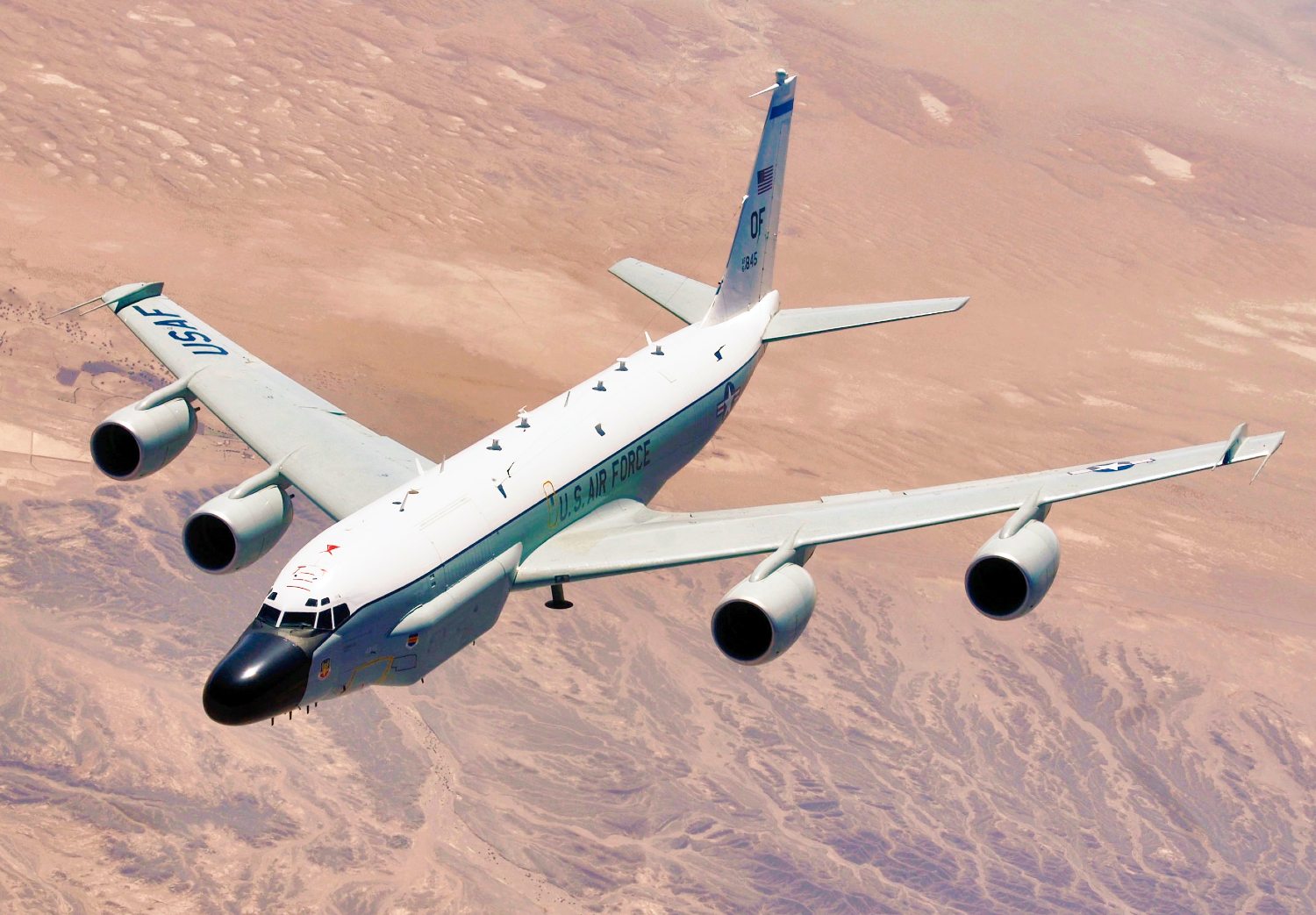
Two former US National Security Agency (NSA) officials told Murray Sayle, an American journalist, that the agency was convinced for a brief moment in the commotion after the shoot-down that the Soviets had shot down an RC-135.
Following the incident, the Soviet Union never told the world whether it found the plane’s wreckage, the flight data recorder, or the bodies of the dead. The relatives of the deceased passengers were forced to mourn them without performing their last rites.
President Reagan used the incident to argue that it was Soviet aggression on the global stage. He said, “Make no mistake … this was the Soviet Union against the world and the moral precepts which guide human relations among people everywhere. It was an act of barbarism.”
It wasn’t until the USSR disintegrated that Moscow released details of the cockpit voice recorder’s conversation. Only then did people know that the Korean plane was not destroyed in the air.
An international investigation later took place. The plane’s black boxes were found years afterward, and the Soviet Union eventually admitted that the aircraft was a civilian airliner.
- Mail us at: editor (at) eurasiantimes.com
- Follow EurAsian Times on Google News