

After struggling to acquire a cutting-edge submarine amid a host of export-related restrictions, the Royal Thai Navy’s frigate procurement appears to be facing a setback.
The Royal Thai Navy (RTN) may have to restart its frigate procurement after a government appeals panel advised it to cancel the existing tender and launch a new bidding process, local media reported, following a complaint by an unsuccessful bidder.
The Navy Commander-in-Chief, Adm. Naret Wongtrakun, said on November 16 that while he hadn’t seen the official document, he was aware of the panel’s recommendation.
The Navy has yet to formally confirm its next steps.
The panel’s review came months after the Royal Thai Navy selected South Korean shipbuilder Hanwha Ocean as the preferred bidder in September 2026 to construct one high-performance frigate for about 16.73 billion baht (US$510 million).
At the time, the selection was described as a procedural step toward negotiating specific terms, technical specifications, and the program’s scope, and ultimately signing a final contract.
Notably, Hanwha Oceans reportedly beat five other bidders: Thai Frigate Building Consortium, which included Thailand in partnership with Spain’s Navantia; Singapore Technologies Engineering (ST Engineering); TAIS Gemi İnşa ve Teknoloji A.Ş.; ASFAT (Askeri Fabrika ve Tersane İşletme A.Ş.); and Hyundai Heavy Industries (HHI).
The Appeals and Complaints Consideration Committee received complaints from all five bidders that the Royal Thai Navy rejected. It reviewed the complaints and the conclusions of the Navy’s procurement selection committee.
After a thorough investigation, the committee determined that the complaints from four firms lacked sufficient grounds, but found merit in the complaint submitted by the Thai Frigate Building Consortium. It concluded that the consortium’s issue seriously affected the procurement process.

Citing Section 119, Paragraph 2 of the Public Procurement and Supplies Administration Act B.E. 2560 (2017), the committee advised the Navy to terminate the procurement and conduct a new process in accordance with the relevant laws and procedures.
The Navy’s commander has said the recommendation needs thorough investigation before confirming its future course of action.
A major concern with the original selection was that Hanwha Ocean emerged as the only bidder to pass the Navy’s technical evaluation.
Six companies submitted proposals, but several were disqualified for failing to meet technical requirements, submitting incomplete documents, or submitting proposals that did not meet the tender conditions. This raised questions about whether the procurement specifications were too restrictive, or perhaps favored a particular shipbuilder.
However, the Navy defended the process, saying all bidders had equal opportunities and the technical requirements were necessary to ensure operational effectiveness, reliability, and long-term value.
Against that background, the review is meant to ensure procurement openness, competition, and adherence to public procurement laws.
Nonetheless, the review may derail the Royal Thai Navy’s plans for fleet modernization, operational readiness, procurement planning and defense-industrial cooperation, at least in the short term. A fresh tender may take another six months, potentially delaying contract finalization, construction, and eventual delivery of the vessel. This means the Navy would likely have to rely on its existing fleet longer than planned.
The proposed frigate is intended to provide surface warfare, anti-submarine warfare, and air defense capabilities, alongside command-and-control, data-link, and joint-operation capabilities. These are significant for protecting Thailand’s maritime interests, shipping routes, offshore energy infrastructure, and exclusive economic zone.
The postponement could delay the introduction of these capabilities, although the actual operational impact will depend on the availability of the Navy’s existing vessels.
The Royal Thai Navy currently has several outdated ships that need replacing, including two Naresuan-class frigates and four Chao Phraya-class frigates. It commissioned a single Bhumibol Adulyadej-class frigate, built by Daewoo Shipbuilding & Marine Engineering (now Hanwha Ocean), in 2019. However, the Navy indicated that it expected additional hulls.
While procuring just one frigate may not drastically alter the Navy’s combat posture, the 2023 White Paper the service unveiled earlier outlined a target of operating eight frigates by 2037. The Southeast Asian Navy has opted to procure ships in stages rather than fund the entire modernization program at once.
Therefore, the procurement review will cause avoidable trouble for the Navy. Interestingly, this comes even as the Royal Thai Navy has already struggled to procure Chinese submarines.
Thailand Struggled With Submarine Procurement
Thailand’s procurement of Chinese submarines has become one of the Royal Thai Navy’s longest-running and most controversial defense acquisition programs.
The Royal Thai Navy first announced the intention to acquire three attack submarines in 2015. The vessel was to be a variant of China’s Yuan-class attack submarines, a 2,550-ton, 77.7-meter-long S26T design featuring a Stirling-type air-independent propulsion system.
However, budgetary constraints prompted the Thai government to reduce the order to just one submarine, under a contract signed in May 2017. Nonetheless, the purchase was intended to restore Thailand’s underwater warfare capability, which had effectively disappeared following the retirement of its last operational submarines in the 1950s.
Following the agreement, steel cutting for the first submarine took place on September 4, 2018, and construction was to be completed by 2024.
However, problems arose when Germany refused to export the engines for installation in the Chinese-built submarine, citing restrictions associated with the European Union’s arms embargo on China, as previously explained in detail by the EurAsian Times.
The deal hit a snag when former Thai Prime Minister Prayut Chan-o-cha threatened to terminate the acquisition if the Chinese could not install the German-made MTU-396 diesel engines mentioned in the original deal.
As a workaround, Beijing proposed a local substitute: reverse-engineered Chinese engines, the CHD620, manufactured by China’s state-owned submarine builder. This was followed by a long period of hard-fought negotiations, with Chinese representatives pushing a submarine propelled by Chinese engines, which they said were standard.
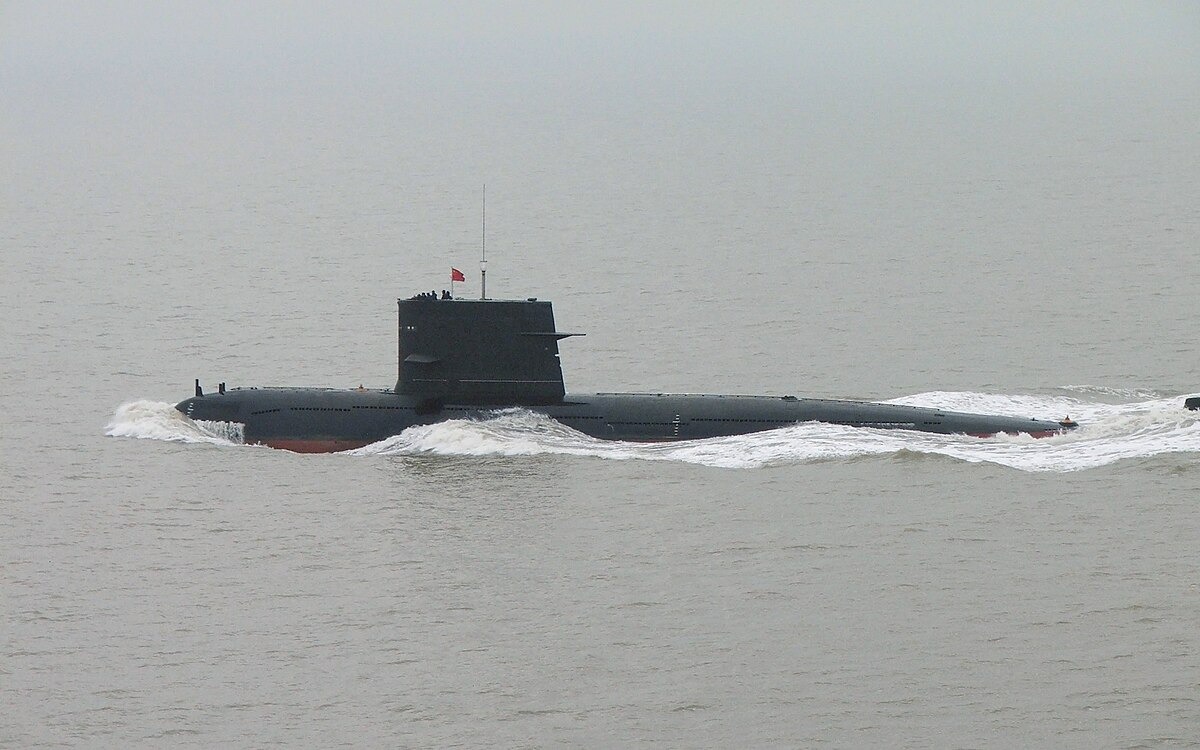
The Thai Navy was initially reluctant to accept the alternative, raising concerns about the new engine’s reliability, operational performance, and long-term durability.
This disagreement became the principal obstacle to completing the submarine acquisition.
The stalemate reportedly created financial and political difficulties for the Thai government, especially because Thailand had already paid 7.7 billion baht (US$237 million) towards the contract, and canceling the purchase risked losing a substantial portion of that money.
After extensive negotiations, the former Thai Defense Minister proposed converting the submarine contract into a Chinese-built frigate acquisition in October 2023, as the EurAsian Times reported.
“The frigate option will compromise the Navy’s capabilities slightly when compared with the submarine project, but the Navy can accept it,” the defense minister said at the time.
However, as luck would have it, this alternative also ran into financial and political difficulties, and the proposal was later shelved.
Finally, in a complete U-turn, the Thai Cabinet approved an amendment allowing the submarine to use China’s CHD620 engine instead of the originally specified German MTU 396, in August 2025. The revised agreement was subsequently signed on September 16, 2025, with China agreeing to extend the warranty and maintenance support arrangements and providing additional assistance to the Royal Thai Navy.
The revised agreement revived the program but also substantially extended the delivery schedule. The submarine was originally expected in 2023, but is now expected by late 2028.
These delays effectively threw a spanner in the works of Thailand’s modernization plans. The country has spent several years without the submarine capability it intended to acquire, and the delays have forced the Navy to reconsider its force-development priorities and manage competing requirements for submarines, frigates and other naval assets.
The frigate procurement has now introduced another complication, and could potentially cause capability gaps for longer.
- Contact the author at sakshi.tiwari13 (at) outlook.com
- Follow EurAsian Times on Google News