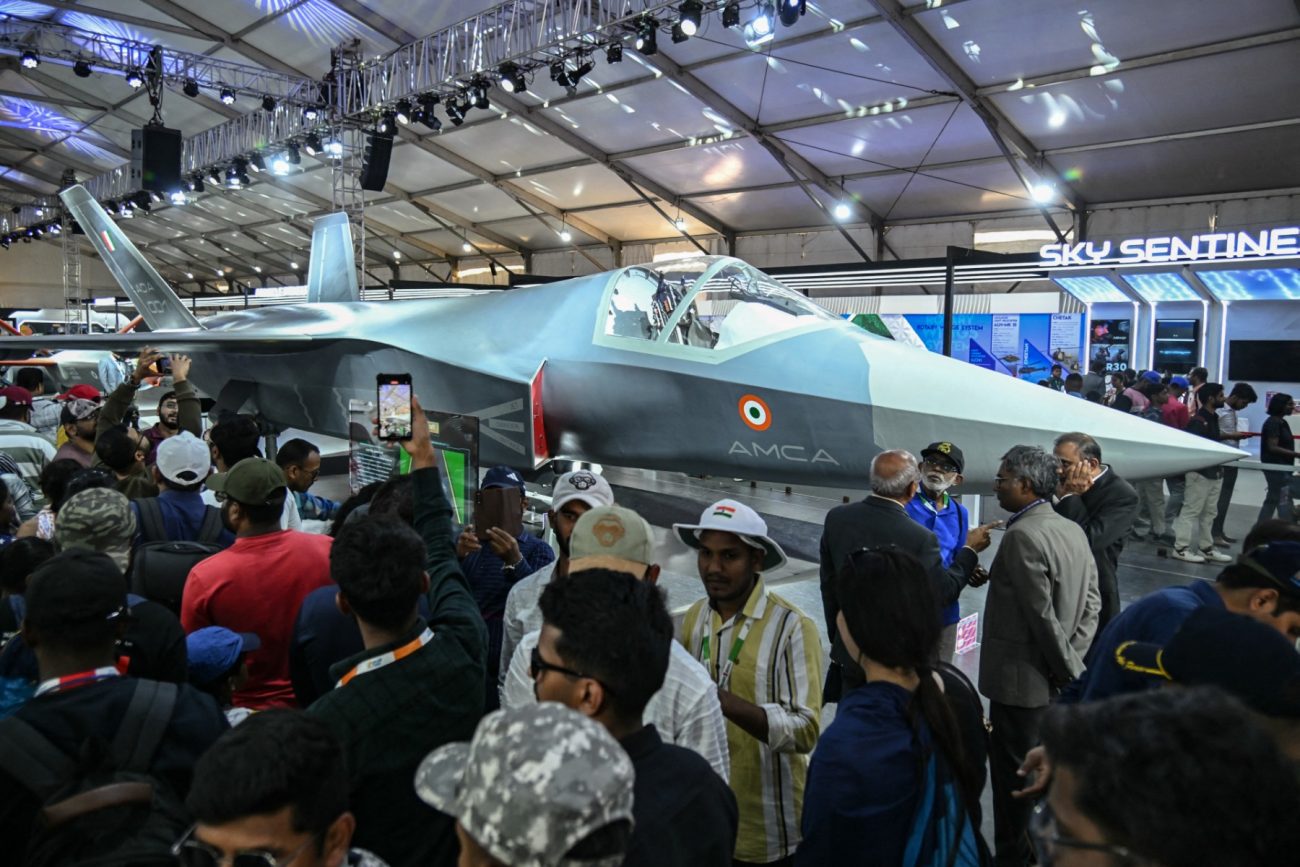
In a historic move that will herald a structural shift in India’s fighter jet development ecosystem for decades to come, the Aeronautical Development Agency (ADA) has issued a Request for Proposal (RFP) to three shortlisted bidders, all private firms, to develop India’s fifth-generation stealth fighter jet, AMCA.
The move is significant, as it ends the nearly seven-decade-long monopoly of India’s state-owned aerospace major, Hindustan Aeronautics Limited (HAL), in developing and manufacturing fighter jets.
The RFP is issued to three shortlisted bidders, including the Larsen and Toubro-Bharat Electronics Limited combine, Tata Advanced Systems, and Bharat Forge-BEML, ANI reported, citing defense officials.
The RFP, worth Rs 15,000 crore (US$1.56 billion), sets in motion one of India’s most ambitious aerospace projects ever, its own fifth-generation stealth fighter jet.
The winning bid will be selected based on the technical evaluation and the bid price. The RFP winner will manufacture five prototypes and one Structural Test Specimen (STS).
However, the project’s constrained budget and highly aggressive timelines have already raised serious doubts among defense experts about whether such a technologically complex program can realistically be delivered in such a compressed timeframe.
RFP’S Ambitious Timelines
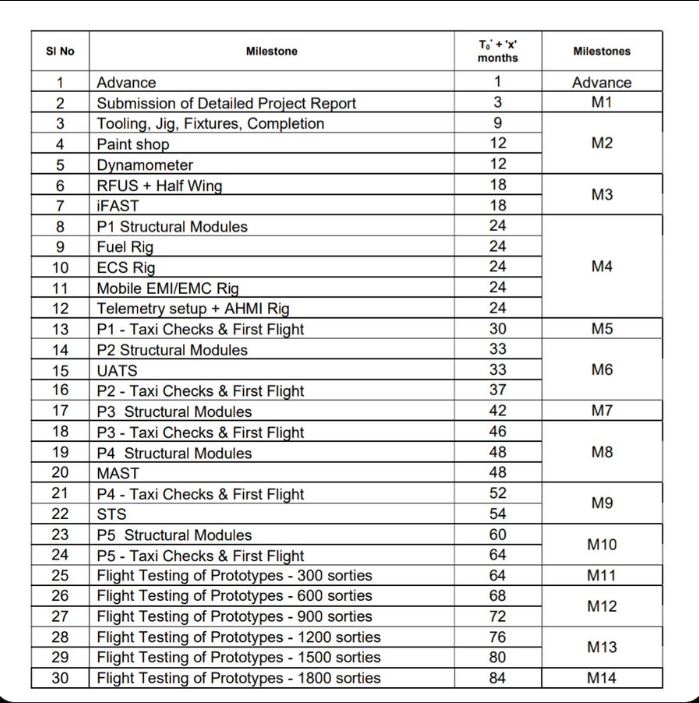
The RFP mandates that the first prototype must be ready within 24 months of contract signing and that its first flight must occur within 30 months.
The first prototype is expected to be rolled out by 2029, powered by the GE F414 engine.
The first flight of the second prototype (P2) must take place within 37 months of contract signing. The timeline for the first flight of P3 (third prototype) is 46 months, for P4 (52 months), and for P5 (64 months).
Altogether, 1,800 sorties are planned for the AMCA, to be carried out within 84 months from the date of contract signing. The RFP clearly states that the 84-month (7-year) timeline is mandatory.
Only after these 1,800 sorties will the serial production of the AMCA commence.
So, if all these overtly ambitious timelines are met, the AMCA could go into serial production around 2034-2035.
Notably, after this stage, there will be a fresh bidding process for the serial manufacturing of the AMCA, and HAL could participate again.
HAL’s in-depth experience in manufacturing fighter jets, from MiG-21s and Su-30MKIs to the Tejas, and its operational assembly lines will make it a strong contender in the bidding process for nearly 120 AMCA jets (seven squadrons).
However, the private consortium that secures the prototype contract will gain an insurmountable technological head start, making it the most likely to win the next stage of the bidding process as well.
Though the strict timelines are not just ambitious, they seem outright impractical for various reasons.
Firstly, except for the Tatas, no other shortlisted company has the experience of setting up a final assembly line for aircraft.
The Tatas have set up the assembly line for the C-295 transport aircraft, in partnership with Airbus.
However, even the C-295 is a transport aircraft, and the assembly line was set up in partnership with Airbus. So, basically, none of the companies have experience setting up assembly lines for fighter jets.
And, now they will have to set up an assembly line for one of the most complex pieces of aerospace engineering on earth, building prototypes for a fifth-generation stealth fighter jet from scratch.
The selected bidder will have to establish manufacturing infrastructure, tooling, and associated test facilities, and integrate Line Replaceable Units (LRUs). The winning bidder will also support ground testing, structural testing, flight testing, and certification activities, including troubleshooting and defect rectification during the developmental phase.
Furthermore, the winning firm will have to do this all alone, without any foreign assistance, as the RFP makes it clear that the winning bidder will have to incorporate a completely new company within three months of selection, and the new company cannot have foreign shareholding beyond passive institutional investments permitted under Indian regulations and must remain under the ownership and control of resident Indian citizens.
Additionally, the management and control of the company must vest exclusively with resident Indians, including the Board of Directors and key managerial positions such as the Chief Executive Officer, Chief Financial Officer, and Chief Operating Officer.
The winning bidder must handle detailed design finalization, supply chain for exotic materials/composites, engine integration (GE F414 initially), stealth features, and ground testing, all while building an STS for structural validation.
Facing all these constraints, the winning bidder must still roll out the first prototype within 24 months of signing the contract and ensure its first flight within 30 months of signing.
However, historical precedent shows that even established players with mature supply chains and prior 5th-generation experience take longer from contract signing to first prototype flight.
For instance, in the US, with a long history of aerospace design and development, the contract to manufacture the F-22 Raptor prototypes was awarded in 1991 to the Lockheed Martin/Boeing team. The first prototype rolled out in April 1997, and its first flight took place in September 1997, nearly six years after the contract was signed.
Similarly, the contract to manufacture the F-35 prototypes was awarded in 2001 to Lockheed Martin, which already had experience manufacturing F-22 Raptor prototypes. Still, the first prototype could roll out only in December 2006, more than five years after the contract signing.
Similarly, in Turkey, the KAAN contract was awarded to TAI in August 2016. The first prototype rolled out in 2023, and its first flight took place in 2024, nearly eight years after the contract was signed.
Now compare this to the 30-month mandatory timeline for the first flight of the AMCA prototype from the date of the contract signing.
If the US and Lockheed Martin, despite their rich history of fighter jet design and development, established supply chains and an unparalleled defense-industrial base, it still took Washington five to six years to roll out the first prototypes of stealth fighter jets, could the Indian firms, which will be setting their very first assembly lines for fighter jets, achieve this in mere 30 months?
The AMCA timeline is tighter than what the US achieved. Delays in complex programs are the norm due to integration issues, testing, and supply chain realities.
Just consider the repeated deadlines India’s Tejas program has missed and is still missing.
It is true that the Tejas program suffered from bureaucratic delays and the sanctions imposed in the aftermath of India’s 1998 nuclear tests.
Still, the 30-month timeline to roll out the first AMCA prototype and organize its first flight is overtly ambitious, especially given that the shortlisted players have no experience in setting up assembly lines for fighter jets, have no established supply chains, have the challenge of integrating a foreign engine, and have to deal with new technologies such as stealth coatings, sustained supersonic flights, and advanced sensor fusion.
Private-sector players will bring efficiency; however, delivering such a complex aerospace project on such compressed timelines would be a herculean task even for them.
- Sumit Ahlawat has over a decade of experience in news media. He has worked with Press Trust of India, Times Now, Zee News, Economic Times, and Microsoft News. He holds a Master’s Degree in International Media and Modern History from the University of Sheffield, UK.
- VIEWS PERSONAL OF THE AUTHOR.
- He can be reached at ahlawat.sumit85 (at) gmail.com