
Israeli forces have seized control of the historic Beaufort Castle in southern Lebanon, marking their deepest incursion into the country in more than 26 years.
Perched on a strategic clifftop overlooking the Litani River Valley, the 12th-century Crusader fortress, known locally in Arabic as Qalaat al-Shaqif, offers commanding views of southern Lebanon and northern Israel.
While the capture delivers clear military advantages, including a vital high-ground position against Hezbollah, it also carries profound cultural, historical, and symbolic weight.
The medieval fort has been a site of contention for nearly nine centuries and symbolizes the region’s complex and multi-layered history.
Throughout its 900-year history, the fortress has attracted warriors and empires, not just from its immediate neighborhood but from faraway lands, including Western Europe, because this region holds deep religious significance for many faiths. Christians, Muslims, and Jews have all fought for control of these hills over hundreds of years.
Like the region’s long and complex history, Beaufort Castle has changed hands many times. Each shift in control has added another layer to the fort’s story.
In fact, the changing ownership of Beaufort Castle perfectly reflects the many different phases of this region’s turbulent history.
New additional IDF footage shows Golani Brigade troops capturing the Beaufort Castle in southern Lebanon. https://t.co/5GHM2aM72x pic.twitter.com/svWBIxDmEd
— Open Source Intel (@Osint613) May 31, 2026
Originally built by the crusaders in the 12th century, the fort has been controlled by the Muslims, Christians, Mamluks, Ottomans, French, Israel, and has been part of independent Lebanon.
The Israeli occupation of Beaufort Castle is clearly not the last chapter in its long history.
Crusades and The Making of The Beaufort Castle
The history of Beaufort Castle goes back to the crusades.
After Islam’s rise in the Arabian Peninsula in the 7th century, Muslims gradually expanded northward and occupied the traditional Christian holy lands along the Mediterranean.
After Prophet Muhammad’s death in 632 CE, Muslim armies occupied Byzantine Syria and Lebanon between 634 and 638 CE.
In 637 CE, Muslim armies laid siege to Jerusalem, and after a months-long resistance, the city surrendered to Caliph Umar.
Jerusalem was under continuous Muslim control for the next four-and-a-half centuries.
However, in the second half of the 11th century, the idea of crusades began to emerge in the Christian lands of Europe.
Crusades were ‘armed pilgrimage’ to the Christian Holy Lands in the Middle East. The crusades were called by a Pope, who would promise spiritual rewards to their participants.
In 1095 CE, Pope Urban II called for a holy war at the Council of Clermont in France. Its immediate goal was to help the Byzantine Empire against the Seljuk Turks and recapture Jerusalem from Muslim rule.
Thousands of knights, soldiers, and even civilians from Western Europe joined the First Crusade.
Four years later, in 1099 CE, the crusaders finally captured Jerusalem after a long siege and established the Kingdom of Jerusalem.
Many other Crusader States were established in other parts of the Levant, including in Syria and Lebanon.
The site of Beaufort Castle was captured by the Crusaders (Franks) in 1139 CE, and it became part of the Kingdom of Jerusalem.
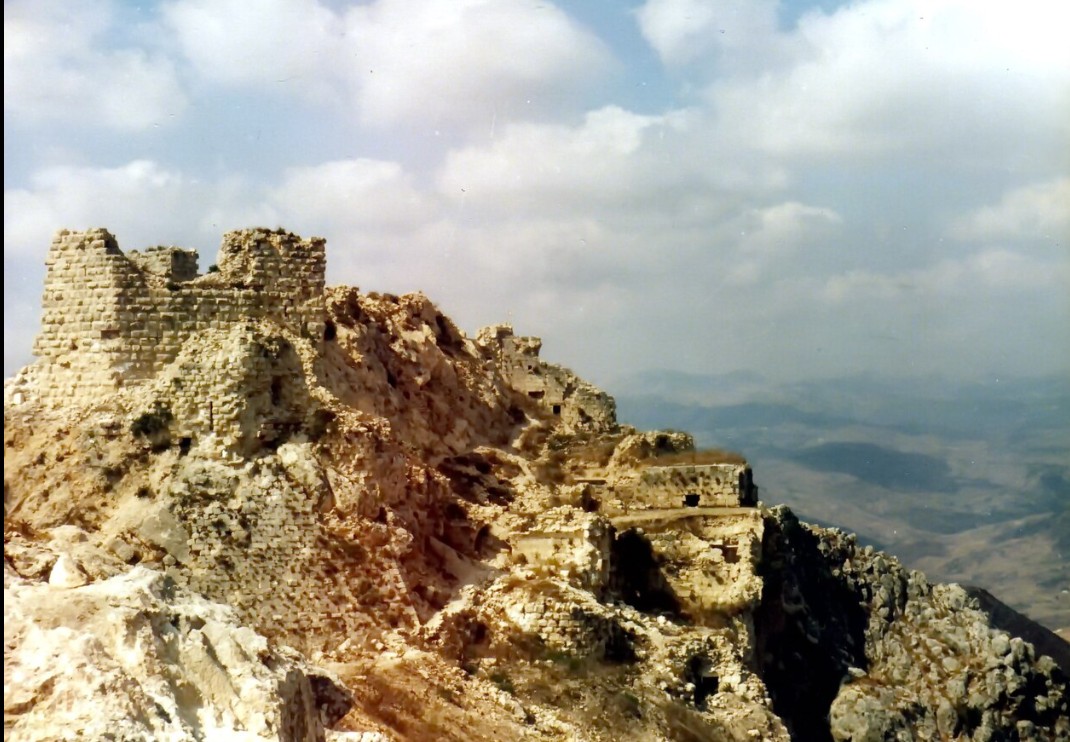
At the time, Jerusalem was ruled by King Fulk, who began construction of Beaufort Castle (meaning “beautiful fortress” in French) in about 1139 CE, writes Beth Spacey, who teaches Medieval History at The University of Queensland.
It was one of many such hilltop forts built by the Crusaders in the Levant to protect their settlements and kingdoms in a hostile region where they were surrounded and outnumbered by Arab and Seljuk Turk Muslims.
However, the Christian crusades also gave birth to Muslim counter-Crusades.
At that time, Saladdin, a key figure in Muslim and crusades history, became the Sultan of Egypt and Syria. A Kurd by origin, Saladdin was a charismatic figure and a gifted military planner.
In July 1187, he inflicted a crushing defeat on the Christian Crusader armies of Guy de Lusignan, King of Jerusalem (reigned 1186–92), at the battle of Hattin (depicted in Ridley Scott’s 2005 film, Kingdom of Heaven).
This victory annihilated the Christian forces in the region and paved the way for the Muslim reconquest of Jerusalem in October 1187 CE.
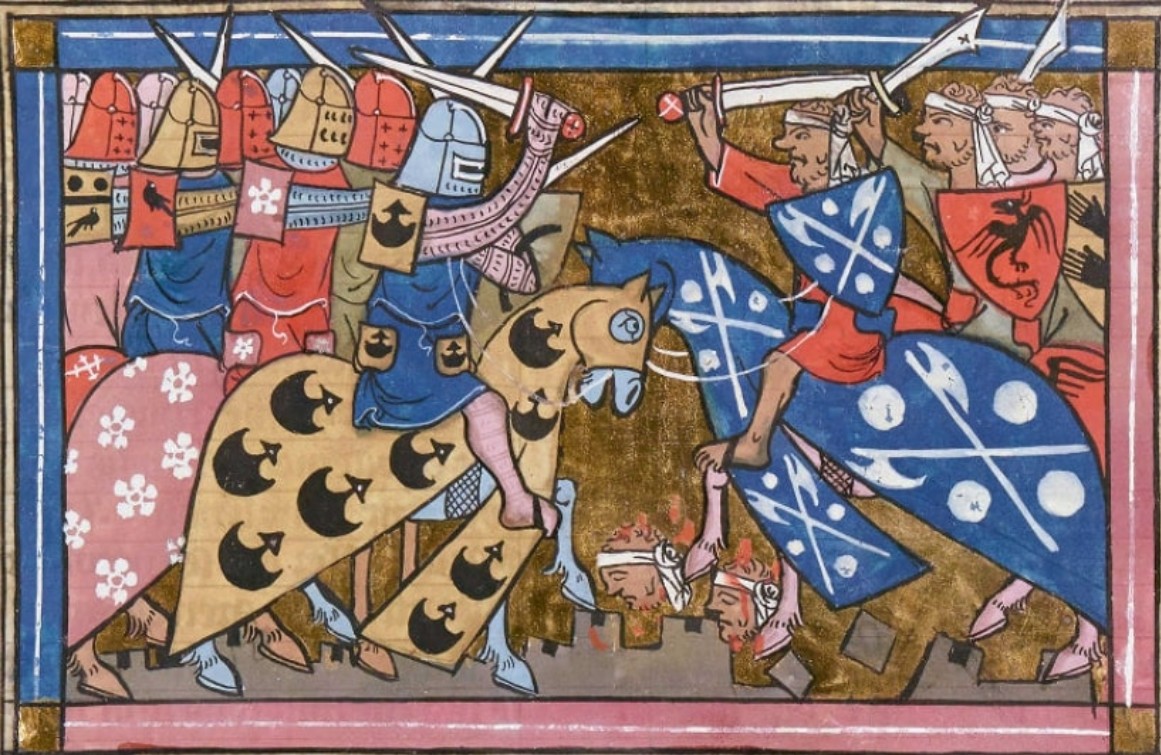
Three years later, in 1190 CE, Saladin captured Beaufort Castle. Thus, nearly five decades after it was built by the Crusaders, the Beaufort Castle was occupied by the Muslim armies of Saladdin.
However, this capture of Beaufort Castle by the Muslims was part of the push back by the Muslims against the crusaders, and fitted into the wider story of the recapture of Jerusalem and other parts of the Holy Land by the Muslims.
The castle remained in Muslim hands until 1240 CE.
After that, the castle reverted to Latin Christian control as part of a treaty with Theobald I of Navarre during the Barons’ Crusade.
Ultimately, the castle passed to the Knights Templar in 1260 CE.
The shifting ownership of the Beaufort Castle, even among Latin Christians, reflects the evolving force structure of the Crusades.
By the mid-13th Century, the Knights Templars were the dominant force among the Christian Crusaders.
According to Spacey, the Knights Templar was a military religious order made up of hybrid warrior-monks, founded in 1118 in the Kingdom of Jerusalem. Their initial remit was to defend Christian pilgrims visiting holy sites, but their role changed over time. They lived according to a religious rule known as the Templar Rule and took vows of chastity, poverty, and obedience, living in communities in accordance with it.
These Christian monks were highly trained warriors, especially proficient as mounted knights.
According to their patron, Bernard of Clairvaux, the Templars’ “soul is protected by the armor of faith just as his body is protected by the armor of steel”.
Gradually, the Knights Templar organization became very powerful and influential in the Crusader states of the Holy Lands.
They became an international organization, and kings and merchants started donating land and riches to them across Europe.
However, the Knights Templar controlled the Beaufort Castle for only eight years before the site was returned to Muslim rule for centuries.
In 1268, Mamluk forces from Egypt recaptured the castle from the Knights Templar.
The recapture of the Beaufort castle by the Mamluks is again tied to the wider history of the region. By the 1260s, the Mamluks were the dominant force in the region.
In fact, in 1260, the Mamluks had done the unthinkable, inflicting a crushing defeat on the Mongols, who had swept through the Middle East and Arab lands, laying waste to glorious cities like Baghdad, Damascus, and Iran.
The monumental Mamluk victory over the Mongols saved the last Muslim stronghold in the region.
In the 16th century, the Castle passed to Ottoman rulers, who controlled the whole of the Levant, as well as parts of North Africa, the Arabian Peninsula, Asia Minor, and parts of Southeast Europe.
Ottomans were to control the Castle for the next three-and-a-half centuries, until 1918, when, after Turkey’s defeat in the First World War, the Castle and Lebanon both became part of the French Mandate.
During this period, Palestine, including Jerusalem, was also under British Mandate.
The French ownership of the Beaufort Castle during this period marked the domination of European powers in the region after the end of the Ottoman Empire.
The castle became part of the independent state of Lebanon in 1943, symbolizing the era of decolonization during and after the Second World War.
In the 1970s, the Palestine Liberation Organization (PLO) controlled the castle and often used it as a base to launch attacks on the Israeli Defense Forces (IDF).
Israeli forces captured the fort in 1982 after the Lebanon War and used it as a major IDF base for the next 18 years.
Israel withdrew from Lebanon in 2000.
Now, once again, Israel has recaptured the fort.
“The Israeli flag is once again flying over the peaks overlooking the Galilee communities,” Defense Minister Israel Katz said at a memorial ceremony for fallen soldiers of the 1982 war with Lebanon, according to The Times of Israel newspaper.
“Our heroic soldiers have captured Beaufort once again and will remain there as part of the security zone in Lebanon,” he was quoted as saying.
However, as the Castle’s long and complex history shows, the Israeli occupation may not be the final chapter in its story.
- Sumit Ahlawat has over a decade of experience in news media. He has worked with Press Trust of India, Times Now, Zee News, Economic Times, and Microsoft News. He holds a Master’s Degree in International Media and Modern History from the University of Sheffield, UK.
- VIEWS PERSONAL OF THE AUTHOR.
- He can be reached at ahlawat.sumit85 (at) gmail.com