At the recent NATO summit in Ankara, Germany announced that it will purchase U.S.-made Tomahawk cruise missiles and station them on German soil. It will give Berlin long-range precision-strike capability amid heightened tensions with Russia.
Russia’s war in Ukraine has exposed a critical gap in European defenses: the lack of long-range ballistic and cruise missiles capable of striking deep into Russian territory.
Currently, the longest-range missile in Germany’s arsenal is the Taurus KEPD 350 cruise missile, which has a range of over 500 km and therefore cannot strike inside Russia if launched from Germany.
The distance between Berlin and Moscow is nearly 1,827 km; therefore, Tomahawks, with a maximum range of 2,500 km, will enable Germany to strike deep inside Russia.
“On the sidelines of the NATO meeting in Ankara, we agreed with the American government that American Tomahawk missiles will be purchased by us and stationed in Germany,” German Chancellor Friedrich Merz told MPs in a statement to parliament.
The move will “close an important strategic gap in our defenses”, he said.
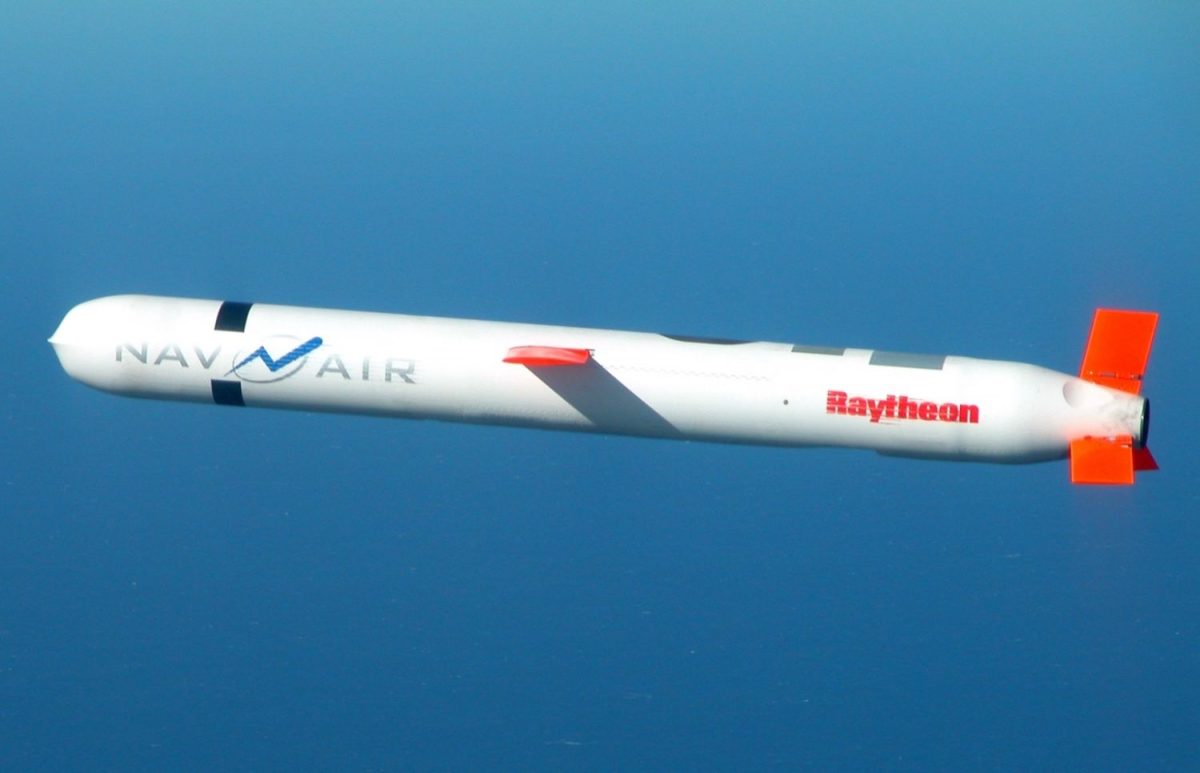
“At the same time, we will work on developing our own European systems and stationing them in Europe,” he added.
Merz did not specify how many missiles will be purchased or when they’ll be delivered.
Meanwhile, German Defense Minister Boris Pistorius acknowledged that Europe does not currently have long-range precision strike capabilities.
“The USA possesses key capabilities that we in Europe cannot do without,” Pistorius said.
Germany’s acknowledgment that it currently lacks its own long-range missile capabilities stands in sharp contrast to its pioneering role in the field during the 1940s.
In fact, not only was Germany the world’s first country to pioneer long-range guided missile technology and to develop the world’s first ballistic missile, but the US and the Soviet Union’s missile development programs were themselves built on stolen German missile tech and its scientists and engineers.
As U.S.-made Tomahawk cruise missiles are approved for sale to Germany, this moment offers a fitting opportunity to revisit the historical irony: the country that originated modern long-range missile technology is now acquiring systems whose foundational advancements were, in significant part, built upon its own wartime innovations.
V1 & V2: The World’s First Guided Missiles
During the Second World War, Germany might have lost the race to build the World’s first nuclear bomb; however, it was the first to introduce long-range guided missiles.
Germany pioneered modern missile technology during World War II with groundbreaking inventions developed at Peenemünde, the chief German research and testing facility for rockets and missiles.
It was here that the V1 and V2 rockets were developed.
The V-1 (Vergeltungswaffe Eins, or Vengeance Weapon One), was the world’s first operational cruise missile.
Powered by a simple but noisy pulsejet that earned it the Allied nicknames of “buzz bomb” and “doodle bug,” more than 20,000 were launched at British and continental targets, mostly London and Antwerp, from June 1944 to March 1945. It carried a one-ton, high-explosive warhead and had a range of about 240 km (150 miles), but was very inaccurate.
During the war, they were also known as flying bombs, and they terrified London residents.
Because the missile had a range of 240 km, Germany could launch it from occupied Northern France, where it built extensive launch sites.
This gave Germany an option to terrorize Londoners without risking the lives of German pilots.
The attacks on England eventually ceased in October 1944 when Allied ground forces overran and captured the launch sites in northern France.
Between June and October 1944, Germany launched over 9,500 V1 missiles at England. Once the launch sites in France were overrun by Allied forces, the Germans directed V-1s at the port of Antwerp and at other targets in Belgium, launching another 2,448 V-1s.
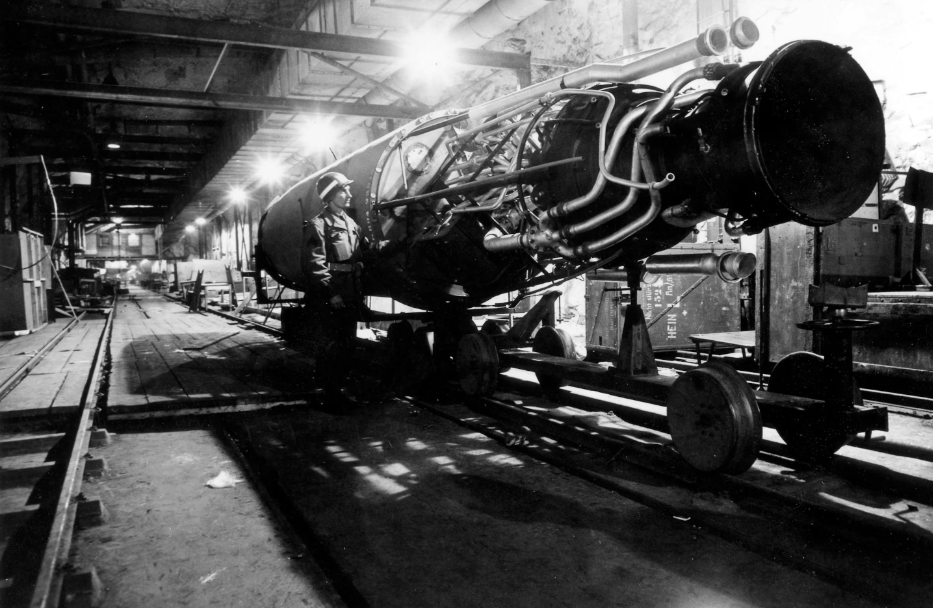
However, by then, Germany had already developed the V2, the world’s first practical long-range ballistic missile.
The V2 is also known as the forerunner of modern space rockets and long-range missiles. It became operational in September 1944.
Photograph by IWM/Camera Press/Redux
The V-2 was 14 meters (47 feet) long, weighed 12,700–13,200 kg at launch, and developed about 60,000 pounds of thrust, burning alcohol and liquid oxygen.
The payload was about 725 kg of high explosive.
The missile reached supersonic speeds, flew on a ballistic trajectory, and could strike targets up to 200 miles (320 km) away.
The peak altitude usually reached was roughly 80 km (50 miles). However, on June 20, 1944, a V-2 reached an altitude of 175 km (109 miles), making it the first rocket to reach space.
More than 1,100 V2s were launched during the war, and over 5,000 people died in these attacks.
How Germany Helped the U.S. & the Soviet Union Missile Programs
After the war, both the United States and the Soviet Union captured large numbers of V-2s and used them in research that led to the development of their missile and space exploration programs.
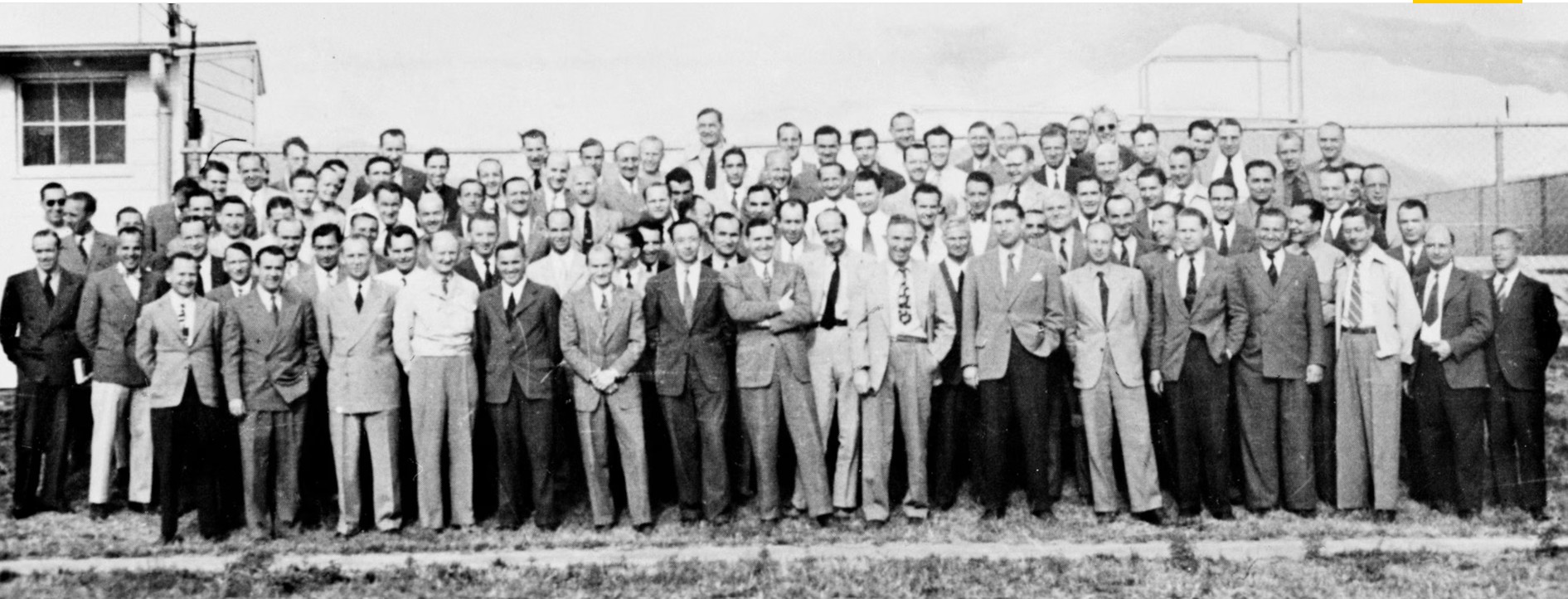
The U.S. also launched Operation Paperclip, under which over 1,600 German scientists and engineers who had worked on the V1 and V2 programs were recruited and brought to the US to work on its most advanced weapons and space programs.
In fact, many of these German scientists were also active members of the Nazi Party.
As the war was closing in Europe, there was a race between the US and the Soviet Union to capture German scientists.
The U.S. worried that France or the Soviet Union would poach the best German scientists, especially as the Cold War intensified.
“The U.S. had to deny German scientists from the Soviet Union by keeping them in the US,” said Brian Crim, professor of history at the University of Lynchburg and author of Our Germans: Project Paperclip and the National Security State.
Officially lasting until 1947 but continuing through similar programs until 1962, Operation Paperclip brought 1,500 scientists from Germany and Austria to the United States, where most of them became citizens.
According to journalist Eric Lichtblau’s book The Nazis Next Door: How America Became a Safe Haven for Hitler’s Men, many Nazi party members were also recruited and given US citizenship.
Photograph by Donaldson Collection
Wernher von Braun, the German scientist who developed the V2 and had been a member of the Nazi party, was also recruited.
Braun and his team developed rockets and missiles for the American military before being transferred to NASA in 1960.
As a NASA official, von Braun played a key role in developing the Saturn rocket for the Apollo missions that put the first man on the Moon.
Similarly, the Soviets forcibly deported more than 2,500 German specialists from their occupation zone, including key rocket engineers from the V-2 program.
These scientists helped develop the Soviet R-1 missile, R-7 ICBM, and Sputnik launcher.
However, even if the best German scientists were forcibly relocated to the US and the Soviet Union, questions remain as to why Germany itself failed to replicate its success in missile technology.
Why Germany Could Not Replicate Its Early Success in Missile Technology
After the war, the 1945 Potsdam Agreement mandated the “complete disarmament and demilitarization of Germany.”
All military forces and the production of military hardware were banned. Military research facilities, including Peenemünde, were dismantled, and heavy industry with war potential was restricted.
Germany itself was partitioned into two countries: East and West Germany. No advanced weapons programs were allowed for years.
Germany was specifically prohibited from developing nuclear weapons or long-range offensive ballistic missiles.
In fact, to this day, Germany has not developed intercontinental ballistic missiles (ICBMs). Its longest-range missile, the Taurus KEPD 350 cruise missile, has a range of over 500 km, meaning that Berlin had to buy US-made Tomahawk missiles to deter an aggressive Russia, which lies over 1,500 km from its territory.
However, following the Ukraine War, Germany is now also working on developing its own long-range missiles, potentially reclaiming a leading role in a field it once pioneered with the V-1 and V-2 more than eighty years ago.
- Sumit Ahlawat has over a decade of experience in news media. He has worked with Press Trust of India, Times Now, Zee News, Economic Times, and Microsoft News. He holds a Master’s Degree in International Media and Modern History from the University of Sheffield, UK.
- He can be reached at ahlawat.sumit85 (at) gmail.com