Iran says the latest US attacks have destroyed a maritime traffic control tower in India-linked Chabahar port.
Iran said in a statement, as reported by Tasnim news agency, that the US forces destroyed “a completely civilian structure” by the launch of three missiles.
The strikes reportedly targeted the Shahid Beheshti dock and the maritime traffic control tower, among other sites.
Mohammad Saeed Arbabi, head of the Chabahar Free Zone Organization, confirmed to Iran’s Fars news agency that the control tower was “targeted and damaged.”
Iranian state broadcaster IRIB and Mehr news agency reported explosions, power outages affecting roughly half the city, and debris striking a nearby hospital.
US Central Command (CENTCOM) stated that the operations were conducted “to further degrade [Iran’s] ability to threaten freedom of navigation in the Strait of Hormuz,” following President Donald Trump’s declaration that a previous ceasefire was over. Washington has blamed Iran for recent attacks on commercial shipping in the critical waterway.
https://t.co/jZlSVRePRC pic.twitter.com/Nj5o0oiphH
— Pete Hegseth (@PeteHegseth) July 17, 2026
The strikes marked the first reported US action on Chabahar since an April 2026 ceasefire and expanded the geographic scope of US-Iran hostilities beyond the Strait of Hormuz.
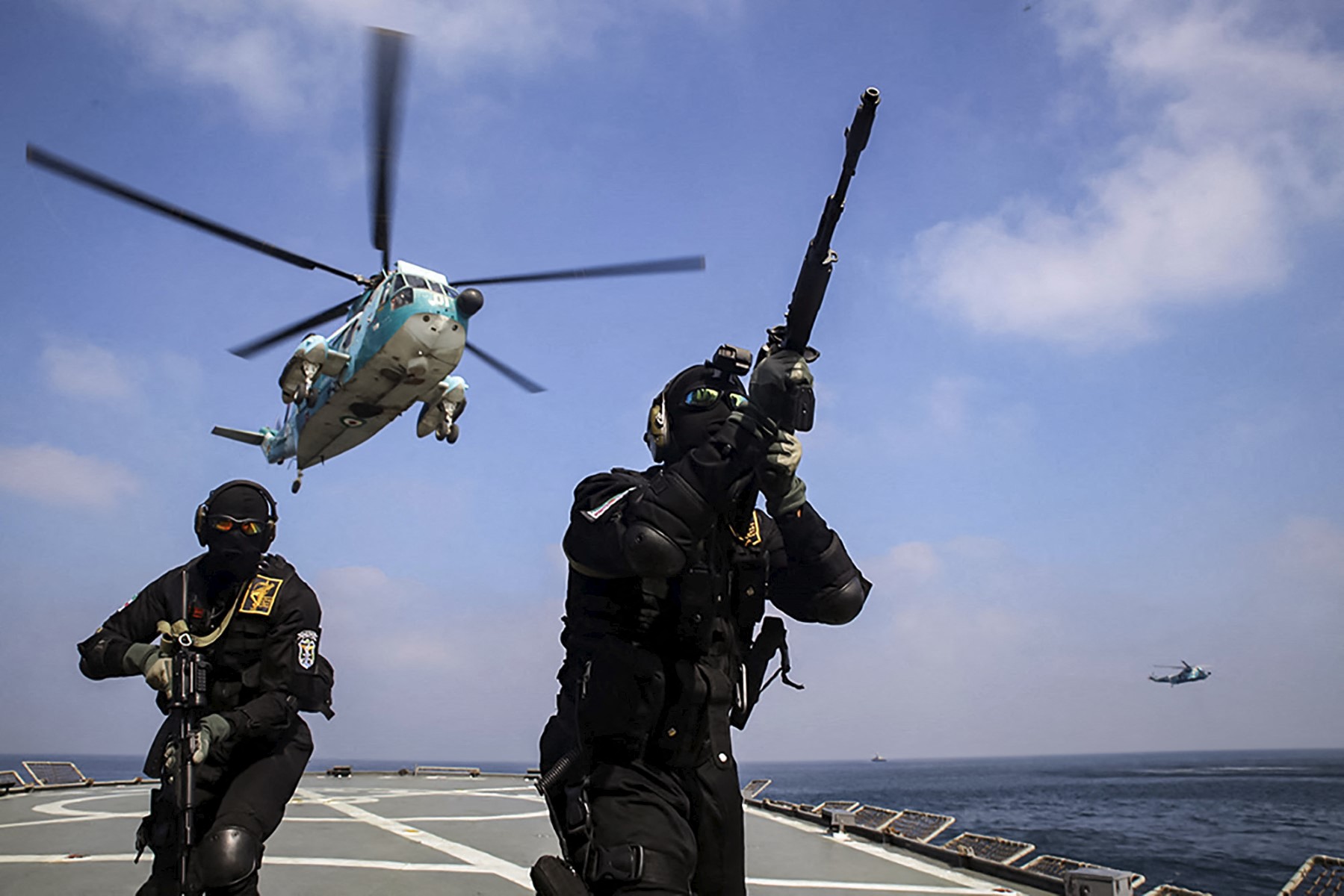
Meanwhile, CENTCOM wrote on X: On July 16, U.S. forces successfully destroyed the Chah Bahar Shahid Kalantari Port surveillance tower, part of a maritime surveillance network along Iran’s Gulf of Oman coastline used for decades by the Islamic Revolutionary Guard Corps (IRGC) to track and target commercial vessels transiting the Strait of Hormuz. The destruction of the tower directly degrades IRGC’s ability to coordinate attacks on innocent civilian crew members. Furthermore, the strike protects freedom of navigation in regional waters for all vessels, except for ships attempting to violate the ongoing U.S. naval blockade against Iran.
India’s Strategic Stake in Chabahar
Chabahar holds massive importance for India. The port is Iran’s only deep-water facility with direct access to the Indian Ocean, bypassing the Strait of Hormuz.
India has been the primary foreign developer and operator of the Shahid Beheshti terminal under a long-term agreement.
New Delhi has invested millions in port infrastructure, cargo-handling equipment, and connectivity projects, including road and rail links aimed at facilitating trade with Afghanistan and Central Asia
The Shahid Beheshti dock was developed with substantial Indian participation and remains central to India’s operational role at the port.
Indian officials have long described Chabahar as a cornerstone of connectivity initiatives such as the International North-South Transport Corridor (INSTC). The project allows India to maintain trade routes and energy access options bypassing Pakistan.
On 13 May 2024, India Ports Global Limited (IPGL) signed a 10-year contract with the Ports and Maritime Organization (PMO) of Iran to equip and operate the Shahid Beheshti Terminal at Chabahar Port. Under the contract, India has fulfilled its commitment to contribute USD 120 million toward the procurement of port equipment.
Later, India’s External Affairs Minister S. Jaishankar described Chabahar as holding “larger relevance” beyond bilateral ties with Iran, stressing that the long-term agreement signed in May 2024 was essential because “without it we cannot improve the port operations” and that such operations would ultimately “benefit the entire region.”
He cautioned against taking a “narrow view” of the project, noting that even the United States had previously recognized its broader importance.
Indian Prime Minister Narendra Modi has similarly emphasized its importance, stating that the progress on Chabahar through the long-term India-Iran agreement “not only holds great value to landlocked Central Asian states but also de-risks commerce between India and Eurasia.”
US-Iran Headed Towards Full-Fledged War?
US and Iran traded attacks on Friday, with Tehran targeting American assets across the Middle East.
A month after the peace MoU, Iran blamed US forces for striking civilian and energy infrastructure, including an airport, a railway station, and two bridges, with state media reporting at least eight dead and 20 wounded.
It signaled an apparent expansion of American strikes with a focus on Iranian infrastructure, which US President Donald Trump has previously threatened to hit, but there was no immediate comment from US officials.
The Iranian energy ministry on Friday told citizens to reduce their electricity use and switch off air conditioners in peak hours — even as temperatures in some areas soared — after the power grid came under strain from what it said were US strikes on energy facilities in the south.
Iran’s military had threatened “all infrastructure across the region” in the event of any attacks on its own, and on Friday launched widespread strikes in what appeared to be the largest exchange of fire since the deal was signed last month.
In Kuwait, where Tehran said it had targeted US military sites on Friday, the electricity ministry said a power and water plant was damaged by an Iranian attack, urging users to “ration their electricity consumption” as a result.
Iran’s Revolutionary Guards also said they had targeted US radar systems and military aircraft in Qatar to “punish the aggressor”, with Doha saying it had intercepted a missile attack.
Iran’s Guards also said they had attacked two US radar sites in Oman as well as the Al-Tanf military base in Syria, which a Syrian military source denied to AFP. US forces said they withdrew from the base earlier this year.
Jordan’s military said it shot down three Iranian missiles, while Kurdish forces in Iraq said the US-led coalition there shot down several drones over Erbil.
Strikes in Iraq’s Kurdistan region also killed eight members of an Iranian Kurdish armed opposition group, the exiled party said, blaming the attack on Iran.
The region’s presidency condemned the attacks as “a serious escalation and a blatant violation of Iraq’s sovereignty”.
In Bahrain, Tehran targeted US helicopters and planes at an airbase, Iranian state media reported, with the tiny island nation urging citizens to take shelter.
By ET Online Desk with AFP Inputs