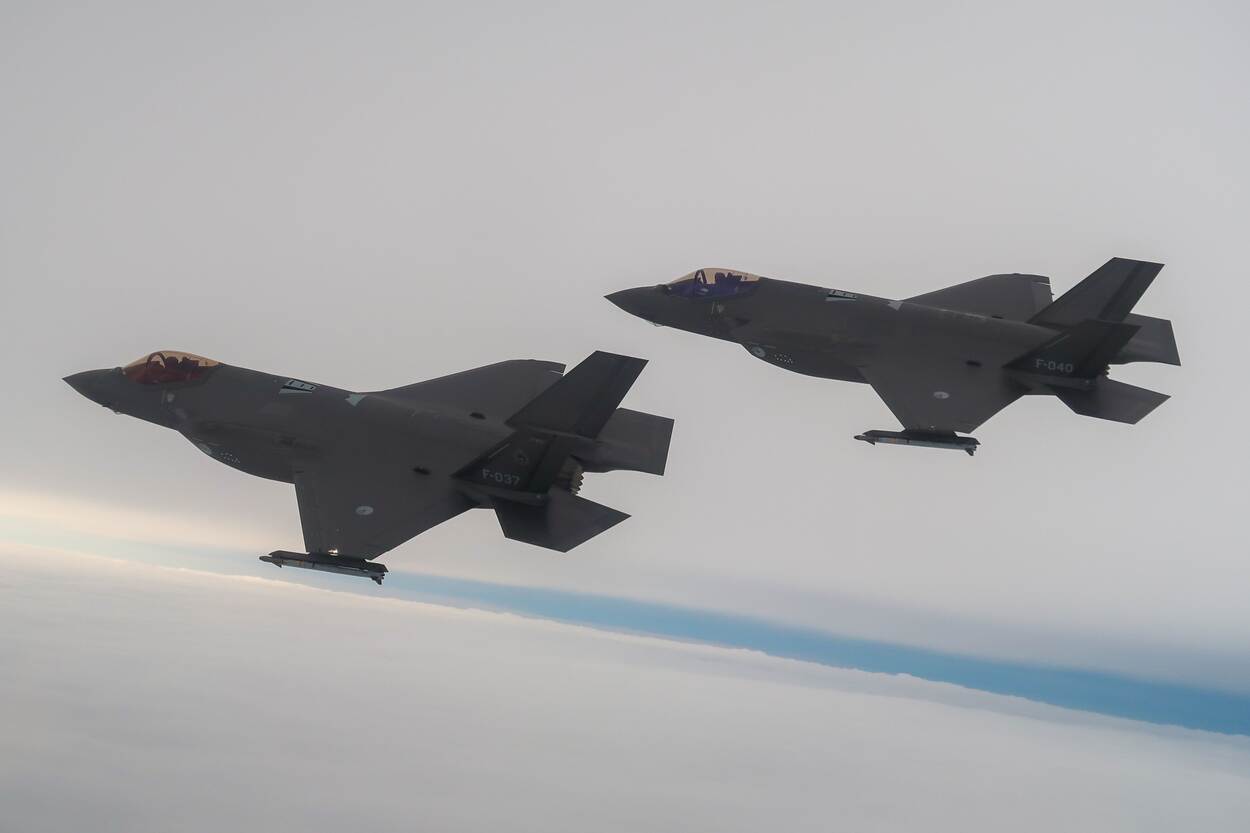
Following the F-15 EX’s success, another upgraded fourth-generation fighter could return to the U.S. Air Force, as the service’s long-stated goal of an all-stealth force now looks increasingly impractical, prohibitively expensive, and even undesirable.
The USAF could acquire a new variant of the F-16 Fighting Falcon jets, dubbed the F-16G, to help fill capacity shortfalls in its aging fighter fleet.
The jet would differ from the Block 70 F-16 Viper variant, which many countries worldwide, including Taiwan, Turkey, Morocco, Bahrain, Peru, and others, have ordered.
Notably, the F-16 first flew in the 1970s, and the USAF has not placed any new orders for the single-engine fighter jet in over two decades.
If the talks with Lockheed Martin are successful, this would mark the return of a second fourth-generation fighter jet, which was considered a dead horse for all practical purposes. Earlier, the twin-engine F-15 looked almost finished, until it was resurrected from the dead.
The USAF is now investing heavily in the aircraft.
The Air Force stopped buying the F-15E Strike Eagle after 2001 and took delivery of the last one in 2004. Nearly two decades later, it revived the line: in July 2020, it awarded Boeing a US$1.2 billion contract for the first eight F-15EX Eagle IIs, a thoroughly modernized variant.
The USAF is now investing heavily in the F-15EX. According to the latest budget documents, the USAF plans to procure as many as 268 new F-15EX aircraft over the next 10 years, which could cost US taxpayers over US$ 37 billion.
However, operating and support for the 268-jet fleet could cost as much as US$140.7 billion.
The revival of the F-15EX, along with discussions of a new F-16G variant, fits a pattern in which the USAF has largely abandoned plans for an all-stealth force and is increasingly moving toward a diversified force structure, where upgraded fourth-generation fighter jets complement fifth- and even sixth-generation warplanes.
Lockheed’s Upgraded F-16G Variant
According to Aviation Week, Lockheed Martin has proposed an aircraft called the F-16G, an improved version of the F-16 Block 70.
Sources said it will include conformal fuel tanks, 600-gal. wing tanks, both an infrared search-and-track and SNIPER targeting pods, and a drag chute.
The new features will make the aircraft much more lethal, extend its range, improve its targeting capability, and enable it to operate from shorter runways.
Notably, this is not the first time the USAF has considered reviving the F-16 aircraft.
In 2021, for example, then-Air Force Assistant Secretary for Acquisition Will Roper said that because of the aging fleet and capacity shortfalls, the service should take advantage of the hot production line.
“As you look at the new F-16 production line in South Carolina, that system has some wonderful upgraded capabilities that are worth thinking about as part of our capacity solution,” Roper said.
Meanwhile, the USAF said it is still finalizing the precise mission requirements for its future aircraft.
“The Department of the Air Force is in the initial phases of analyzing options for the next Future Years Defense Program. At this stage, we have neither defined the precise mission requirements nor the spectrum of options that could fill it,” it said.
Why F-16G Instead of More F-35s?
Notably, a study last year found that the USAF needs to increase fighter aircraft production to meet shortfalls. It noted that the F-16 fleet is aging and retiring faster than F-35 production can replace it.
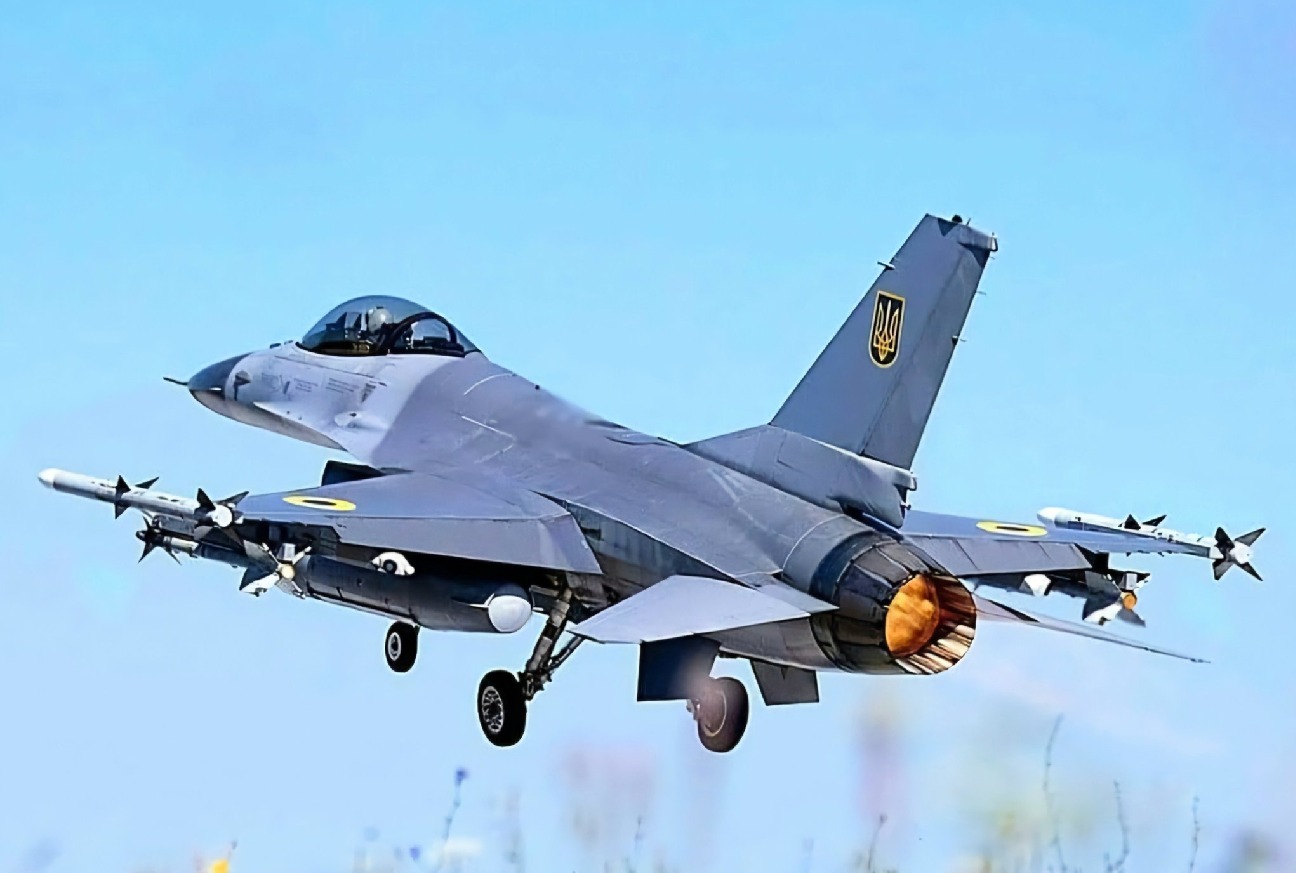
The USAF’s 2025 long-term fighter force-structure assessment concluded that it needs 1,558 manned aircraft in fiscal 2035 “to achieve an acceptable level of risk to operations in support of the National Military Strategy.”
The USAF currently has 1,098 fighters in its inventory in fiscal 2026, below the statutory minimum of 1,145.
Earlier, Inside Defense reported in December 2025 that the service was weighing buying the new variant of the F-16 to fill capability gaps at a lower cost than the F-35.
Buying an upgraded F-16 does offer the USAF several advantages.
Firstly, the US already has an established production line for the F-16 in Greenville, South Carolina. So, ordering new F-16s would not require establishing a new production line, or even reviving a dormant one.
The facility was established to produce Block 70/72 aircraft for foreign customers and is now the world’s only F-16 production facility.
Eight countries have ordered the Block 70/72 variant of the F-16, also known as the F-16 Viper.
Meanwhile, the Philippines has had sales approved, but the buy has been delayed or shelved. Vietnam, Colombia, and Indonesia have also been discussed as possible future Block 70 customers.
The specialist tracker F-16.net lists 102 Block 70/72 F-16s on order as of September 2026.
These large export orders have largely covered this facility’s operating costs.
However, the large order backlog could mean slight delays in delivering new F-16G aircraft.
Furthermore, the USAF already operates a large F-16 fleet; therefore, it would not need to spend much on training and maintenance.
Lockheed itself is deeply invested in continuing the F-16 production line.
It is upgrading the USAF’s existing F-16 fleet.
It is exporting the Block 70/72 variant to foreign customers and upgrading legacy F-16 fleets to the Viper standard.
Taiwan, for instance, upgraded 139 of its existing F-16A/B Block 20 fighters to the F-16V standard. That retrofit program, called Peace Phoenix Rising, finished in December 2023.
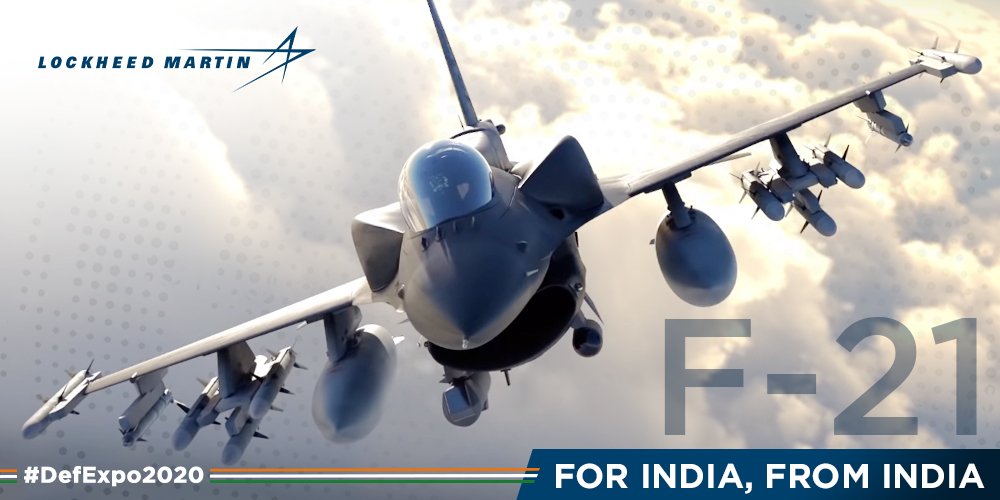
Lockheed Martin has been pitching F-21, a highly customized version of the F-16, to India. The company says it designed the aircraft specifically for Indian requirements.
If the F-16 makes a comeback, it could end the USAF’s long-stated goal of an all-stealth fighting force.
Several factors have contributed to the end of the USAF’s all-stealth force dream. One main reason may be cost.
The F-35’s maintenance costs are incredibly high.
According to the U.S. Government Accountability Office (GAO), the acquisition and lifetime sustainment costs of the F-35 program could exceed USD 2 trillion, making it one of the Pentagon’s most expensive weapons programs ever.
Despite this high cost, the F-35’s Mission Capability (MC) rate fell from 67% in 2021 to 44% in 2025, and its Full Mission Capability (FMC) rate fell from 38% in 2021 to 25% in 2025.
Some F-35 variants, such as the F-35C, had an FMC rate as low as 15.3%.
Furthermore, the F-35’s Block 4 upgrade troubles are well documented. In June, the F-35 Joint Program Office (JPO) confirmed that the US Marine Corps (USMC) has accepted six F-35 fighters without their designated AN/APG-85 radars.
However, perhaps more than anything, the USAF has realized that upgraded fourth-generation fighter jets will remain relevant in its new fighting doctrine.
Even the most upgraded F-16s can never match the stealth and sensor-fusion capabilities of the F-35. However, an air force must perform various missions, some of which do not require stealth.
Homeland defense, counter-drone warfare, training, hostile aircraft interception roles, and various strike missions in airspace whose air-defense capability has already been degraded do not require stealth.
Take, for instance, Operation Midnight Hammer, where F-35s, F-22s, F-16s, and B-2 Spirits all flew in close formation, complementing each other’s strengths. Under the new doctrine, a fourth- and fifth-generation mixed fighter fleet will remain relevant.
Soon, even a sixth-generation fighter, the F-47, could also be part of this mix.
Further, once the Collaborative Combat Aircraft (CCA) program is teamed with fourth-generation fighters, they will be even more lethal. Stealthy, expendable drones will let fourth-generation fighters operate more freely in hostile airspace.
It must be noted that the USAF is still considering the proposition of an upgraded F-16, and no firm orders have been placed yet. However, the fact that a single-engine jet that first flew in the 1970s and has not received any new orders in the last two decades could make a comeback to the USAF is remarkable, to say the least.
- Sumit Ahlawat has over a decade of experience in news media. He has worked with Press Trust of India, Times Now, Zee News, Economic Times, and Microsoft News. He holds a Master’s Degree in International Media and Modern History from the University of Sheffield, UK.
- He can be reached at ahlawat.sumit85 (at) gmail.com