

Two strategic competitors—the US and China—pursuing very different models of power projection share one thing: both have launched an active crackdown on their top military leadership to tighten control over the armed forces.
Beijing has once again purged dozens of officials from the Chinese Communist Party (CCP), including top generals, heads of the powerful Central Military Commission (CMC) General Office and defense company officials. The officials were expelled at the CPC’s fifth plenum, an annual event comprising top officials, held earlier this week.
The Central Committee of the Communist Party of China (CPC) is the party’s top leadership body, while the Central Military Commission (CMC) is the supreme military leadership body that directs the People’s Liberation Army (PLA), the People’s Armed Police, and the state militia.
Chinese President Xi Jinping heads both the CPC and the CMC.
The plenum reportedly focused on party discipline and political loyalty and adopted a document aimed at “deepening party self-governance.”
The name of the expelled officials was revealed in a comminuque issued on October 29, 2026, the last day of the four-day gathering, as the party concluded its investigation of the accused officials.
The statement issued after the plenum says President Xi’s leadership was removing “serious hidden dangers” in the military after facing its own issues with “enormous political courage and a strong sense of responsibility.”
Of the 33 full and alternate Central Committee members expelled, at least 16 are senior generals, according to reports.
Among the most distinguished names on the list are two successive directors of the CMC General Office, Lieutenant Generals Zhong Shaojun and Fang Yongxiang.
These expulsions are noteworthy because the General Office is the CMC’s primary administrative and secretarial agency, serving as a key channel for Chairman Xi Jinping to manage day-to-day military operations and command the People’s Liberation Army (PLA).
The PLA’s theater commands, which oversee military operations, have also been affected.
The purges include Huang Ming, former commander of the Northern Theatre Command; Liu Qingsong, former political commissar of the Eastern Theatre Command; and Wang Haijiang, former commander of the Western Theatre Command.
The plenum also confirmed the removal of several prominent figures in China’s defense sector. Two prominent names on this list are Lei Fanpei and Jin Zhuanglong, who previously served as deputy directors of the Office of the Central Commission for Integrated Military and Civilian Development, which oversaw the military-industrial system. Both were expelled from the party.
Since Xi took office in 2012, he has undertaken a broader campaign to end corruption and any potential revolt against the CPC and his leadership. However, since at least late 2023, the widespread crackdown has become considerably more intense, peaking in 2024–2025 when several senior generals and ministers “went missing,” and continuing well into 2026.
The anti-corruption drive focused on senior military personnel and defense industry executives in 2023, with a focus on the Rocket Force (PLARF), which is allegedly marred by major corruption.
In October 2025, China’s Ministry of National Defense removed nine senior officers for “serious violations of Party discipline” and “duty-related crimes” involving “extremely large amounts of money.”
In September 2026, it expelled two top military leaders, Zhang Youxia and Liu Zhenli, from the Communist Party and the military. Youxia, the joint vice-chairperson of the CMC and second in line in the military command structure after Xi Jinping, was placed under investigation for “suspected serious violations of discipline and law” in January this year.

A string of purges has decimated the seven-member Central Military Commission. Currently, only two members remain on the commission: Xi himself and Zhang Shengmin, the military’s anti-graft tsar.
President Xi Jinping appears increasingly frustrated by what he sees as a lack of discipline within the party ranks. He stated earlier this year that the party must remove “sick trees” and that the battle against corruption is a “never-ending journey.”
However, indications suggest these purges are part of a broader strategy to tighten control over the military and the party, ensure loyalty, and stay in power.
Earlier, Professor Kondapalli, a Professor of China studies at Jawaharlal Nehru University, New Delhi, reminded EurAsian Times of a popular statement by Mao Zedong, former Chairman of the Communist Party, in 1927: “Political power grows out of the barrel of a gun.”
Mao also said, “Our principle is that the Party commands the gun, and the gun must never be allowed to command the Party.” This slogan established that the CCP must maintain absolute control over the armed forces.
The purges serve to lock in personal loyalty to Xi, remove any potential independent power bases or factional networks inside the PLA, and clear the way for a smooth extension of his rule as the next Party Congress is scheduled for the second half of 2027. By shrinking the CMC to himself and one trusted confidante, Xi seems to have reduced the risk of collective military pushback or the emergence of alternative centers of influence.
“The fall of Zhang Youxia signals that Xi’s ‘one-man rule’ has reached a point where systemic trust—the belief that loyalty guarantees safety—has completely evaporated,” Minxin Pei, a professor at Claremont McKenna College in California and editor of China Leadership Monitor, was earlier quoted as saying by the Wall Street Journal. “At this stage, he isn’t ruling through a stable coalition anymore. Rather, he is relying on a cycle of endless political purges to keep his grip on power,” Minxin explained.
That said, while Xi’s China continues its crackdown unabated, things are not much different in Donald Trump’s United States.
Military Purges Continue in United States
This week, the US Secretary of War Pete Hegseth removed Lt Gen Brett Sylvia, a senior army strategist on the Pentagon’s joint staff, over claims that he revealed classified information to the public.
The Pentagon said it sent an alleged information-leak case for criminal investigation, asserting that dismissing the senior general was necessary “to safeguard sensitive information,” as reported by the Washington Post at the time. Sylvia served as director of strategy, plans, and policy within the joint staff.
While this dismissal appears to be part of Hegseth’s broader campaign to identify officials suspected of sharing information with journalists, it comes amid a broader trend of expelling the military’s top leadership in recent years.
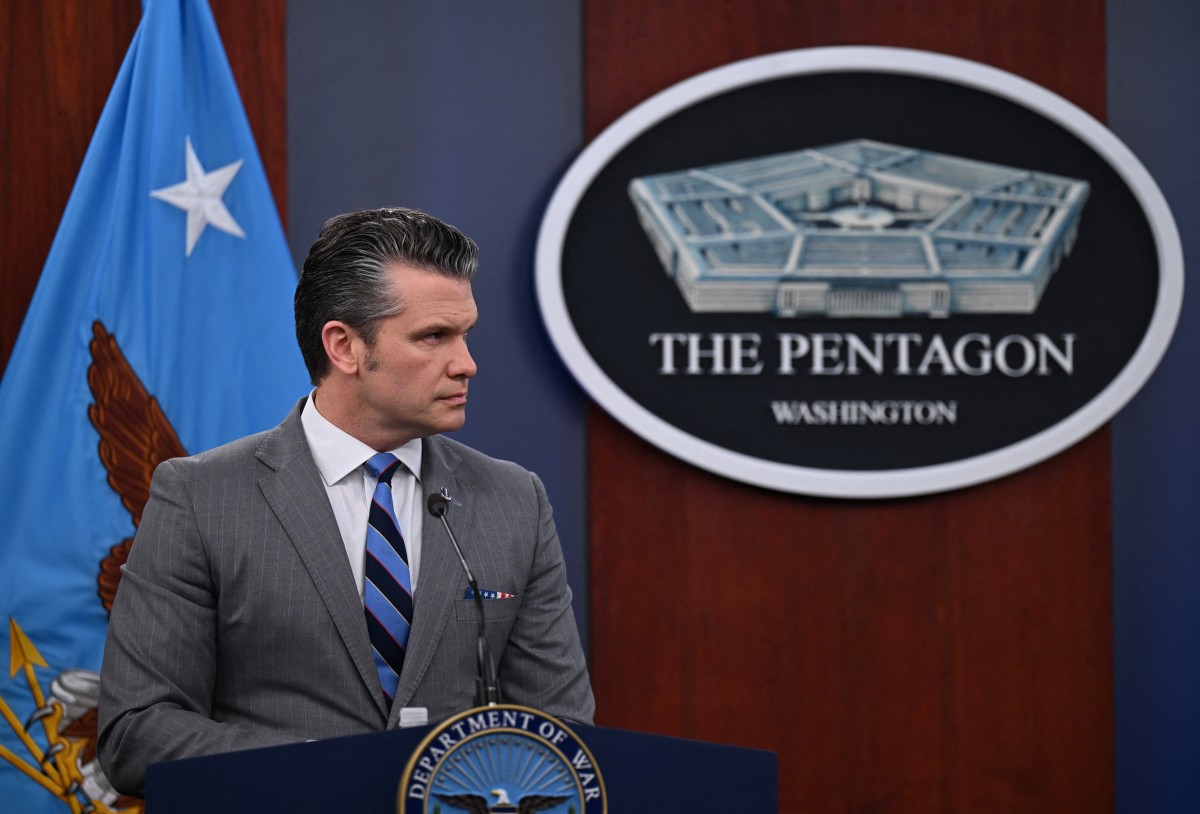
According to reports, at least 26 admirals and generals stepped down or were pushed out since Hegseth took over. In fact, Hegseth himself said in September 2026 that the Pentagon had already “fired 10% of the generals and admirals” and was cutting another 10% of senior-officer positions.
Some of the most significant dismissals include Chairman of the Joint Chiefs Gen. Charles “CQ” Brown Jr., Chief of Naval Operations Adm. Lisa Franchetti, Air Force Vice Chief Gen. James Slife, Army Chief of Staff Gen. Randy George, the Judge Advocates General of the Army, Navy, and Air Force, and DIA Director Lt. Gen. Jeffrey Kruse, and General Chris Donahue, the commanding general of US Army Europe and Africa.
Hegseth said in September 2026 that he was looking to reduce the number of military positions designated for generals and admirals by 20%, raising concerns about political meddling in the military’s leadership. He said that the reduction was “long overdue” and necessary to purge “woke” elements from the military. “You can’t change a culture with the same people who enabled it. Personnel is policy at every single level,” Hegseth stated.
He added that “no fatties, no trannies, no weirdos, no wimps, no radicals, just warriors” would be welcomed in the US armed forces anymore.
The Pentagon positioned several previous expulsions as a way to reduce bureaucracy. However, critics speculate that Hegseth’s decision to cut top leadership appears intended to marginalize seasoned leaders, stifle criticism, and elevate more officers who support Trump.
Hegseth’s decision has drawn criticism from retired military officials and lawmakers in Congress. They believe this way of relieving senior officials makes the military lose talent, lowers the morale of those serving as they do not know what is in store for them, and complicates civil-military relations by politicizing the armed forces, driven by “ideological grievance, personal rivalry, and an unrelenting demand for political loyalty”.
Writing for the EurAsian Times earlier, veteran journalist and commentator Prakash Nanda emphasized: “It is well-known that apart from political loyalty, Trump and Hegseth have shown antipathy towards all those officials who were associated with the previous Biden Administration’s “diversity, equity, and inclusion policies”. For them, these policies weakened the American military, and the officers who supported them should quit.”
In both US and China cases, the core driver is ensuring the military remains a reliable instrument of power projection and aligns with the leadership’s vision.
For the US, this means alignment with the current administration’s strategic and cultural priorities amid great-power competition. Meanwhile, for China, it reinforces the CCP’s foundational principle of Party control over the gun and allows Xi to retain full control.
In both cases, it is expected to affect military preparedness and military modernization goals, at least in the short term. However, both countries’ leadership appears ready to take this risk.
- Contact the author at sakshi.tiwari13 (at) outlook.com
- Follow EurAsian Times on Google News