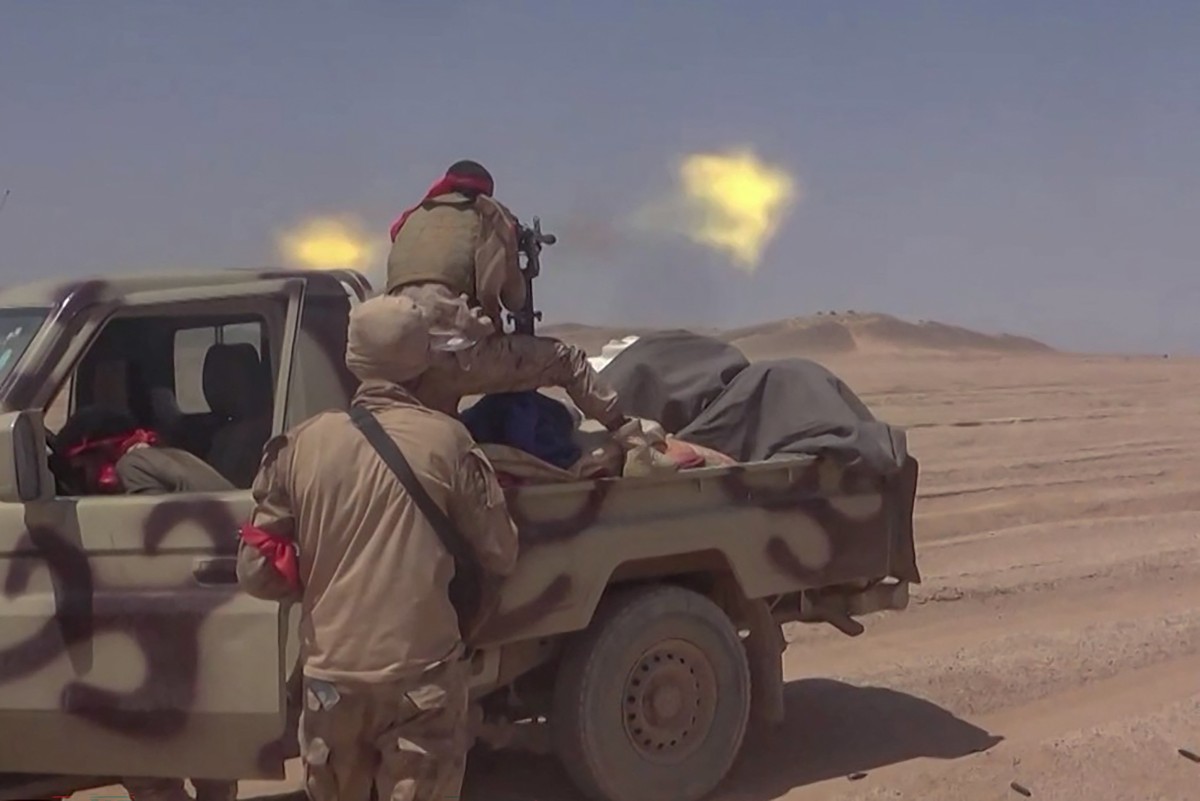
Over the last few days, the Houthi militant group in Yemen has captured territory along the Red Sea coast; taken control of a pair of islands – Greater Hanish and Lesser Hanish – near the Bab al-Mandeb Strait, a Red Sea chokepoint into the Gulf of Aden; and seized Perim Island and the port of Mocha.
By seizing Mocha, the sleepy port on the Bab el-Mandeb Strait, Houthis have tightened their grip on one of the world’s most vital arteries. 12% of global trade passes through that 18-mile-wide bottleneck.
In the process, the Houthis have dealt Saudi Arabia its gravest setback in Yemen in years.
Despite the conclusion of the tripartite Mecca Pact last month, which said that an attack on Saudi Arabia is also an attack on Pakistan and Turkey and that the attacker will be dealt with collectively, Riyadh seemingly stands alone today and is vulnerable to Houthi missiles.
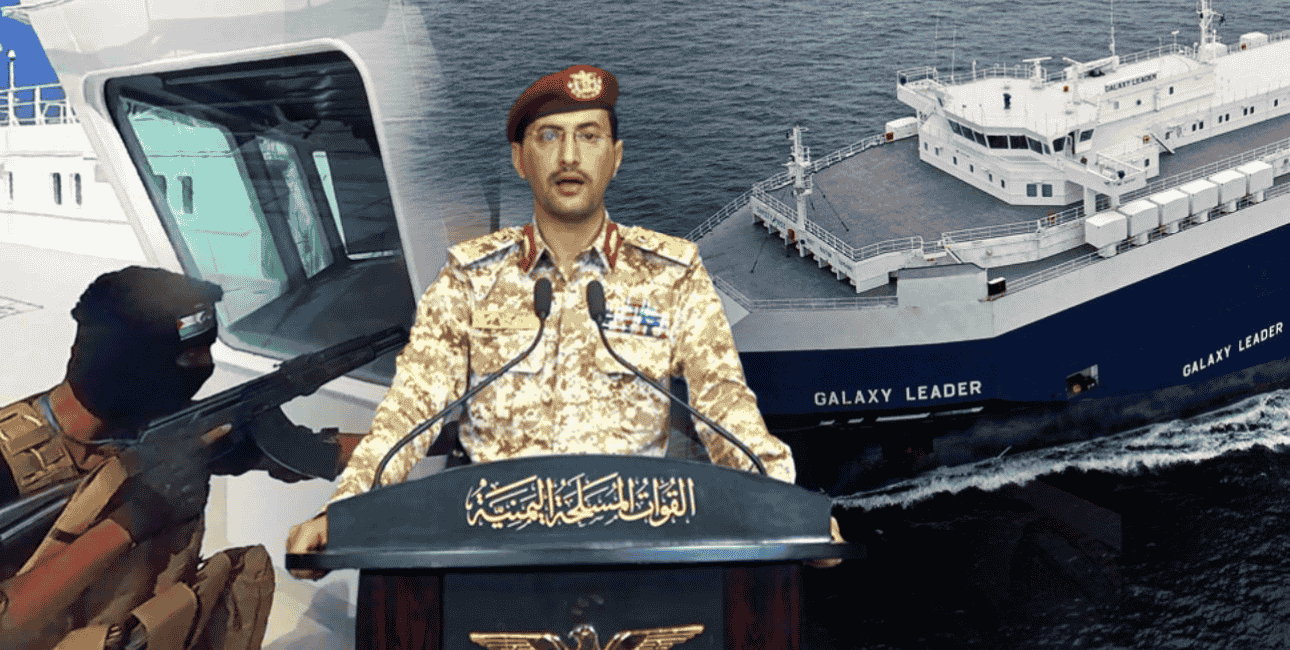
Houthis now threaten Saudi Arabia’s strategy of dodging the risks of passage in the Strait of Hormuz by exporting its oil via its East-West pipeline to the Red Sea port of Yanbu. The Houthis say they want to block Saudi-linked ships in the Red Sea.
It is now obvious that the Houthis (officially known as Ansar Allah) have transformed from being a localized and ragged mountain militia to become one of the most formidable non-state fighting groups in the world. They have not only successfully withstood years of airstrikes from the legitimate government of Yemen, Saudi Arabia, the United States, and Israel but also expanded their territorial control of the critical global choke point of the Bab el-Mandeb Strait.
Houthis are now believed to have the capacity to launch long-range missile strikes at Israel, more than a thousand miles away. They can and do target anyone in the Red Sea with naval drones. And going by a recent New York Times report, they are likely to use artificial intelligence and other means to produce more advanced weaponry themselves, making them less reliant on their sponsors in Iran.
Traditionally, Iran has been the principal supplier of arms to the Houthis, as documented by the UN Panel of Experts in 2024, the Conflict Armament Research (CAR) study, and repeated weapons interdictions at sea.
The CAR research indicates that Houthi forces in Yemen depend on an advanced, Iran-backed smuggling network utilizing components from at least 16 countries and territories to sustain their long-range strike capabilities. Recovered hardware features Iranian design specifications, enabling the Houthis to deploy sophisticated ballistic missiles, UAVs, and uncrewed underwater vehicles that threaten Red Sea shipping lanes.
Some arms shipments to the Houthis have been direct dhow shipments from Bandar Abbas in Iran to Yemen’s Red Sea coast. When coalition navies increased patrols in the Gulf of Oman, the Islamic Revolutionary Guard Corps (IRGC)’s Quds Force (secret foreign operations branch) changed the route.
The new route is through the northern Gulf, near Kuwaiti waters, where Iranian freighters transfer crates to small fishing boats that face less scrutiny.
Another route goes via Somalia — weapons land in Puntland, trucked to Bosaso, then smuggled across the Gulf of Aden. The Houthis have established highly complex logistical pipelines through unstable zones in Sudan, Eritrea, Djibouti, and Somalia. Weapons landed along the East African coast are subsequently funneled across the narrow Red Sea into Houthi-held ports such as Hodeidah.
The second route is smarter because weapons such as missiles are not transferred as complete systems.
Missile bodies, engines, guidance gyroscopes, and jet engines for cruise missiles are all shipped separately, labeled with Iranian code names. Only 5% of parts were made in Iran; the rest came from 16 other countries, including commercial drone engines from Europe and China, and chips from Asia. Iran sources globally, assembles blueprints, then ships kits for assembly in workshops around Sanaa and Saada.
As a result, in 2025-26 Houthis can field at least ten types: Burkan-3 ballistic (1,200 km), Hatem (1,450 km, based on Iran’s Kheibar Shekan), Palestine-2 (1,500-2,000 km, Quds-2 cruise missiles (2,000 km, low-altitude), C-801 derived Al-Mandab anti-ship missiles, and Samad and Qasef long-range drones (2,500 km range).
Apparently, training of the Houthis to use these weapons has also been a part of the package. UN experts have documented Hezbollah and IRGC advisors to aid and advise them. Apparently, the Houthis rely heavily on Hezbollah, which acts as a force multiplier by providing specialized technical expertise, strategic guidance, and specialized training in advanced asymmetrical warfare.
According to Peter Salisbury, an adjunct professor at Columbia University’s School of International and Public Affairs, who has studied Houthi weapons manufacturing closely, “Iran and Hezbollah have invested heavily in continuing to upskill the Houthis in the manufacture and use of weapons. Increasingly they’ve been able to indigenize the production of a lot of things like one-way attack drones.”
Reportedly, the Iranians have encouraged the Houthis to develop additional supply chains for components from places like China, whose factories supply many of the drone parts used around the world. In fact, Western and regional intelligence reports have noted a widening web of secondary actors.
For instance, US intelligence has pointed to a complex supply chain involving specialized components sourced from entities within China. While Beijing publicly maintains neutrality and safeguards its commercial shipping interests, dual-use components—including microelectronics, guidance systems, and engine parts essential for fabricating long-range cruise and ballistic missiles—frequently find their way into Houthi manufacturing hubs through front companies.
Furthermore, expanding ties between Iran and Russia have raised concerns about potential intelligence-sharing and advanced weapon transfers intended to complicate Western security operations in the Red Sea.
The mechanics of the Houthis’ network extend deep into the Middle East’s diplomatic and commercial aviation sectors, it is said. Confessions from detained Houthi sailors have revealed highly organized travel programs used to transport operatives for advanced training.
Houthi personnel are frequently documented flying via commercial routes from Sana’a to neutral regional hubs like Amman, Jordan. From there, they transit through Damascus or Beirut—both heavily influenced by Iran and Hezbollah—before flying to Tehran. In specialized camps within Iran, these operatives are said to undergo intensive training in maritime electronics, drone piloting, missile calibration, and naval mining before returning to Yemen to apply their newfound skills.
The aforesaid NYT report also says that a Houthi delegation traveled to Tehran in July for the funeral of Iran’s supreme leader, Ayatollah Ali Khamenei. Afterward, they boarded a flight home to Sanaa on Iran’s Mahan Air, which is under sanctions imposed by the United States.
It is believed that the aircraft carried Iranian military personnel and weaponry. When airstrikes prevented the plane from landing at Sanaa International Airport, the flight diverted and managed to land elsewhere in Houthi-controlled territory.
If anything, the facts mentioned above only underscore the reality that Iran and its proxies are now potent enough to widen the arena of the conflict in the whole of the Middle East.
Incidentally, since October 2023, Houthis have hit vessels from more than 40 nations. Last week’s Mocha capture shows ambition is not just harassment, but control of islands in the strait — a Houthi Hormuz in the Red Sea, parallel to Iran’s threat to close the Strait of Hormuz.
That means that, in the foreseeable future, the stability of the global oil market will remain dependent on how Iran and the Houthis behave.
Of all the Gulf countries, Saudi Arabia has the most to worry about because it supports the government in Yemen against the Houthis. If it cannot export oil, the Kingdom will have to shut in wells that can take a long time to restart.
Houthi Red Sea dominance also poses major risks to Israel, which now has to defend its cities against Houthi missiles. With Hamas to the west, Hezbollah to the north, and Iran to the east, Israel now has an expanded threat to the south.
Houthi control over Bab al-Mandeb also threatens Egypt, which earns as much as 2% of its GDP from Red Sea transit fees. Those fees have fallen as security risks have increased, hurting Egypt’s already strained finances.
All this argues for a regional military response to the Houthis, but none seems to be daring to act. Saudi Arabia spends $70 billion a year on defense and has a capable air force. But its air force alone has not defeated the Houthis and, by recent history, cannot.
Thanks to Iran, the Houthis now have low-cost strategic weapons in a $10,000-20,000 drone, for neutralizing which Saudi Arabia has to fire a $2-4 million interceptor.
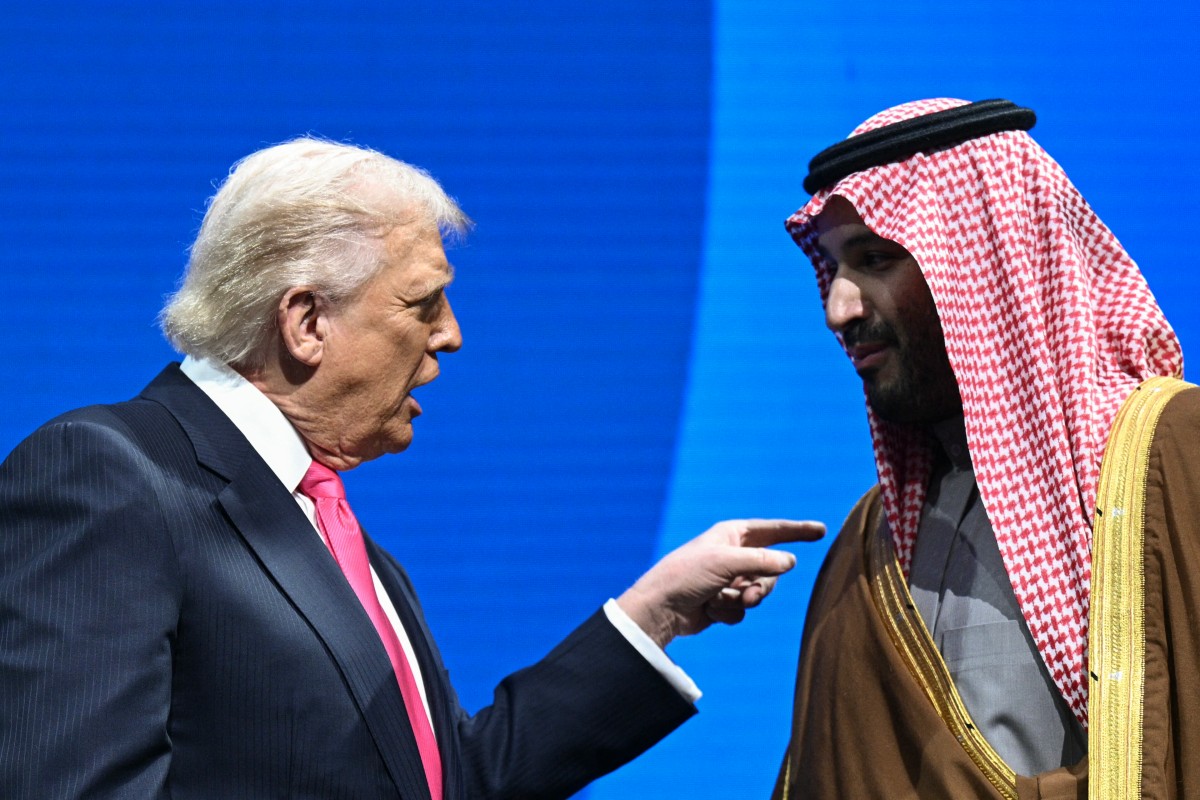
Incidentally, Saudi Crown Prince Mohammed bin Salman reportedly contacted US President Trump multiple times today (September 17) to request direct US air strikes on Houthi forces following their rapid advances along the Red Sea coast and near the Bab al-Mandeb Strait.
Apparently, Trump declined the request, choosing instead to limit American assistance to intelligence sharing, target planning, and non-kinetic support.
Are Iran and the Houthis defeating Trump, the US, and its Middle Eastern allies? The number of those answering “Yes” seems to be growing every passing day, particularly in the United States.
- Author and veteran journalist Prakash Nanda is Chairman of the Editorial Board of the EurAsian Times and has been commenting on politics, foreign policy, and strategic affairs for nearly three decades. He is a former National Fellow of the Indian Council for Historical Research and a recipient of the Seoul Peace Prize Scholarship.
- The author can be reached at prakash.nanda (at) hotmail.com