After its combat debut during India’s Operation Sindoor in May 2025 against Pakistan, the BrahMos supersonic cruise missile has attained considerable global attention and buyers.
India has since signed a deal to export the missile to Vietnam, while negotiations with Indonesia are in the final stages. Meanwhile, the United Arab Emirates has also expressed strong interest in acquiring the BrahMos missile.
The UAE is looking to strengthen its precision-strike capabilities amid unprecedented Iranian attacks, an escalating rivalry with Saudi Arabia, and the need to diversify its defense suppliers beyond traditional Western partners.
However, questions were raised about India’s industrial capability to scale up production to meet both domestic and international demands. These concerns intensified in April 2026 after reports indicated that BrahMos production capacity had dropped by more than 50% due to large-scale staff transfers at BrahMos Aerospace, multiple resignations, and delays in approvals for the BrahMos NG (next-generation) missile.
There is now finally some positive development on the production front.
The long-awaited BrahMos integration and testing facility in Lucknow has now reportedly become India’s largest BrahMos production facility, boosting the missile’s production capacity by 20 percent.
According to BrahMos Aerospace co-director Alexander Maksichev, the new center in Lucknow has already manufactured its first batch of missiles, with the second batch now underway.
“New center in Lucknow has manufactured the first batch of the missiles… second batch is now underway,” Alexander Maksichev, BrahMos Aerospace co-director, told Sputnik News.
Four BrahMos plants are now active across India, in Hyderabad, Nagpur, Pilani, and the latest and largest one in Lucknow.
Lucknow Plant Key To BrahMos Success
The new Lucknow facility is a major addition to India’s BrahMos program.
Built at a cost of Rs 300 crore, the facility spans 80 hectares. Construction began in 2021 and was completed in just 3.5 years. The Lucknow plant was inaugurated in May 2025, and the first batch of missiles was delivered in October.
Its annual output can potentially more than double India’s annual BrahMos production capacity.
While India has never officially disclosed the annual production capacity of the three plants in Hyderabad, Nagpur, and Pilani, reports indicate that the plants produced only 50-100 BrahMos missiles annually. Meanwhile, the Lucknow plant can produce 80-100 missiles annually, thereby more than doubling India’s annual output.
However, when operating at full capacity, the plant can produce up to 150 BrahMos missiles annually.
This is critical, as to fulfill both domestic and international orders, India needed to boost its annual BrahMos production capability.
On March 1, 2024, the Indian Navy placed an order for 220 BrahMos-ER supersonic cruise missiles, worth Rs 19,518 crore, along with associated shipborne launch systems, primarily for deployment on Indian Navy warships (including Visakhapatnam- and Kolkata-class destroyers).
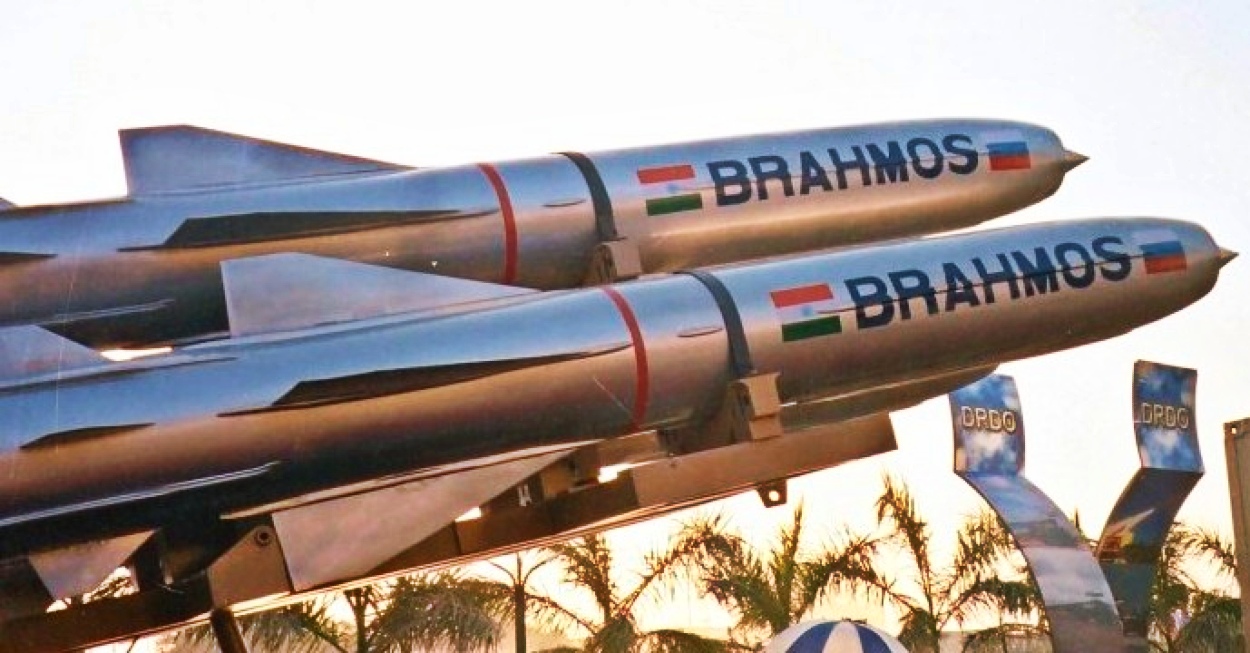
Besides, the Indian Army and the Indian Air Force (IAF) have also placed orders for BrahMos missiles. Additionally, India has to export BrahMos missiles and launch systems to the Philippines and Vietnam.
BrahMos Aerospace currently has an order book of approximately US$6 billion.
India is also close to finalizing a deal with Indonesia, and many other countries, such as the UAE, Thailand, Brazil, Chile, and Armenia, have also expressed interest. To fulfill these orders, India needed to significantly boost the production capacity of the BrahMos missile.
According to reports, India used 15-19 BrahMos missiles during Operation Sindoor in May last year in a single night. In a high-intensity battle with Pakistan, perhaps, hundreds of Brahmos missiles would be needed.
Boosting BrahMos production is vital not only to meet potential wartime requirements but also to bring down the missile’s high unit cost. Although the BrahMos is highly lethal and difficult to intercept, its steep price remains a major limitation for both domestic needs and export competitiveness.
In fact, BrahMos is among the costliest cruise missiles in its class. The average per-unit cost of BrahMos ranges from USD 2.75 million to USD 4 million. In comparison, the US Tomahawk missiles, which incidentally served as an inspiration for Indians to develop their own high-speed cruise missile, cost USD 1.3 to USD 2.5 million.
However, in terms of range, the Tomahawk far exceeds the BrahMos. The Tomahawk offers a range of 1,000-2,500 km, whereas BrahMos’s range is a modest 290 km. Similarly, the Russian Kalibr cruise missile, widely used in the Ukraine war, offers a range of 1,500-2,500 km and costs nearly USD 1.5 million to USD 2.4 million.
The Chinese YJ-12 is perhaps the best competitor of BrahMos. The YJ-12 has a range of 250-400 km, comparable to BrahMos’s 290 km range, and both have a speed of around Mach 3. However, even the YJ-12 costs around USD 1.2-1.8 million per unit, compared with BrahMos’s average cost of USD 3.5 million per unit.
The BrahMos project was launched with an authorized capital of US$250 million. India contributed 50.5 percent, while Russia contributed 49.5 percent of the total project costs over two decades. This massive developmental expense is distributed across the unit cost of every missile produced, meaning each missile includes a portion of the initial US$250 million research investment that went into developing the technology.
However, as more missiles are produced, the per-unit production cost will decrease.
The Lucknow facility, therefore, by adding the capability to produce 100-150 more missiles every year, will reduce the average missile cost, making it more competitive for both the Indian military and foreign buyers.
Lastly, the Lucknow facility is paramount for the BrahMos NG program.
In fact, the Lucknow facility was planned specifically to produce the BrahMos NG.
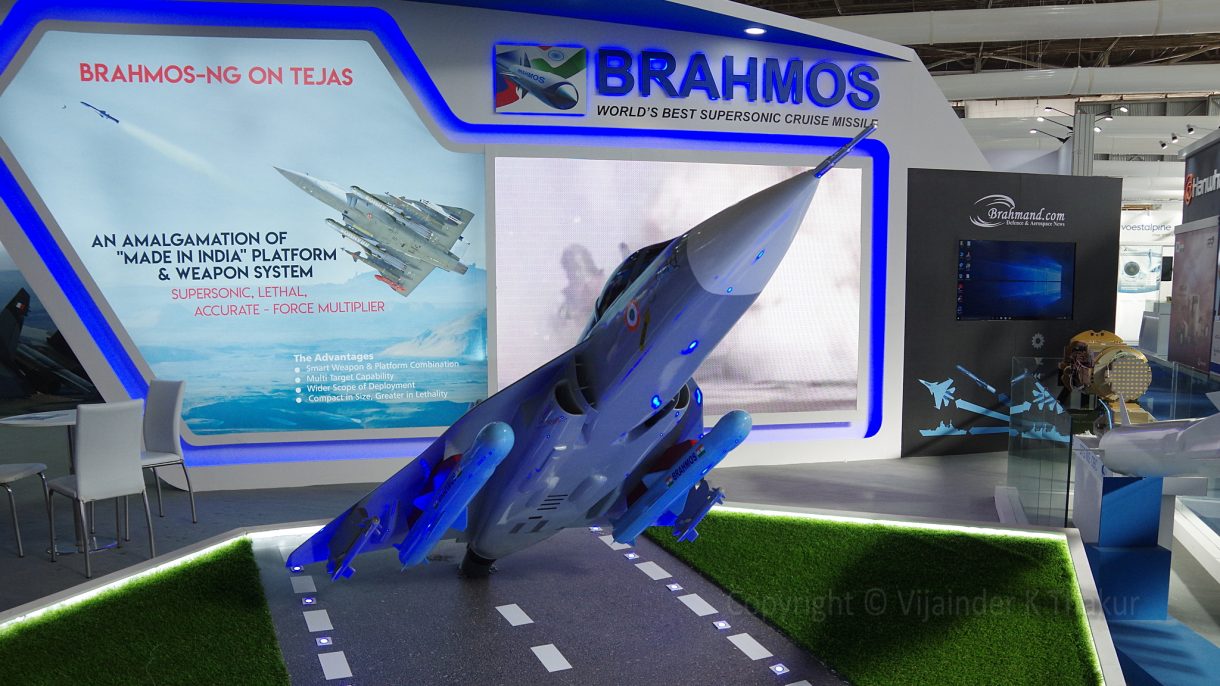
The Government of India formally approved and initiated construction of the BrahMos-NG development and testing facility in Lucknow on December 26, 2021, when Defense Minister Rajnath Singh laid its foundation stone. The other three plants cannot support BrahMos NG production; therefore, the Lucknow facility is important to the BrahMos NG project’s success.
The new BrahMos NG is significantly lighter (1,290 kg vs. the original 2,900 kg), allowing aircraft like the Sukhoi Su-30MKI to carry up to three missiles instead of just one, a major boost in firepower. Further, this lighter, shorter missile will also allow light aircraft like the LCA Tejas to launch the supersonic BrahMos missiles.
Furthermore, due to its lightweight and compact size, the missile will fit inside the AMCA’s internal weapons bay, India’s planned fifth-generation fighter jet.
- Sumit Ahlawat has over a decade of experience in news media. He has worked with Press Trust of India, Times Now, Zee News, Economic Times, and Microsoft News. He holds a Master’s Degree in International Media and Modern History from the University of Sheffield, UK.
- He can be reached at ahlawat.sumit85 (at) gmail.com