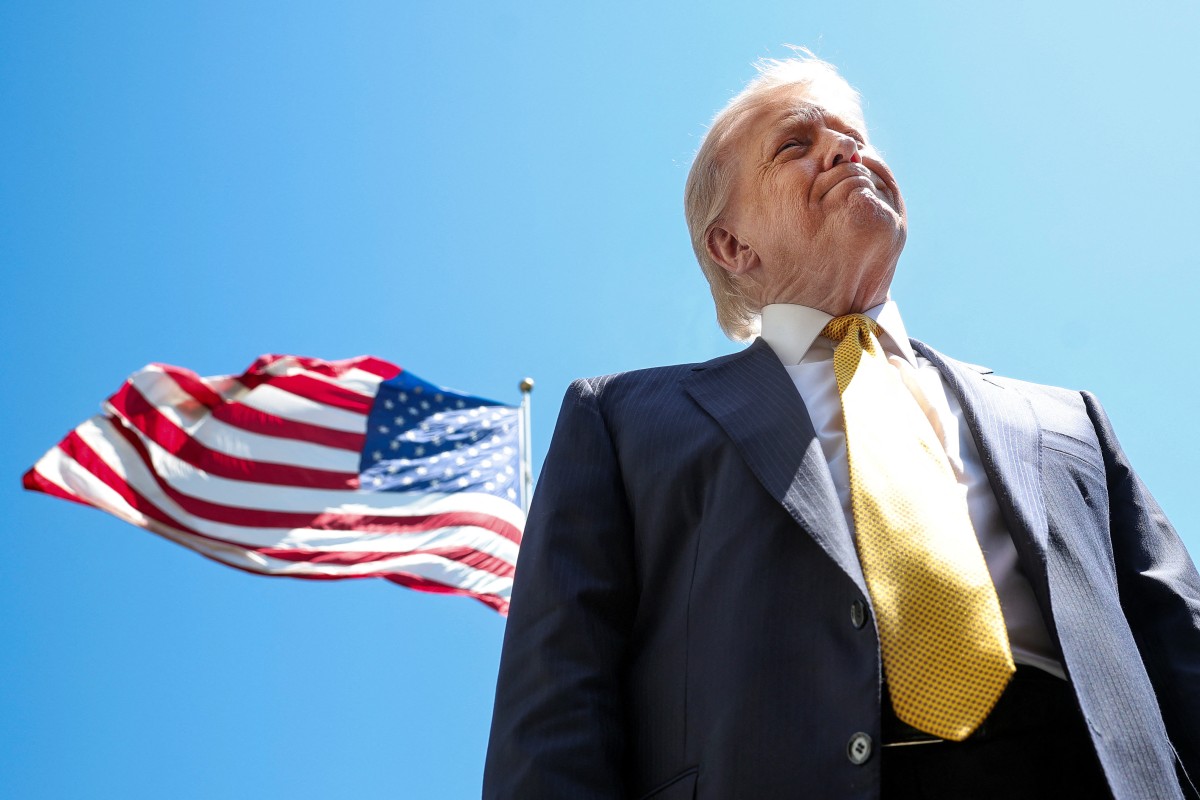
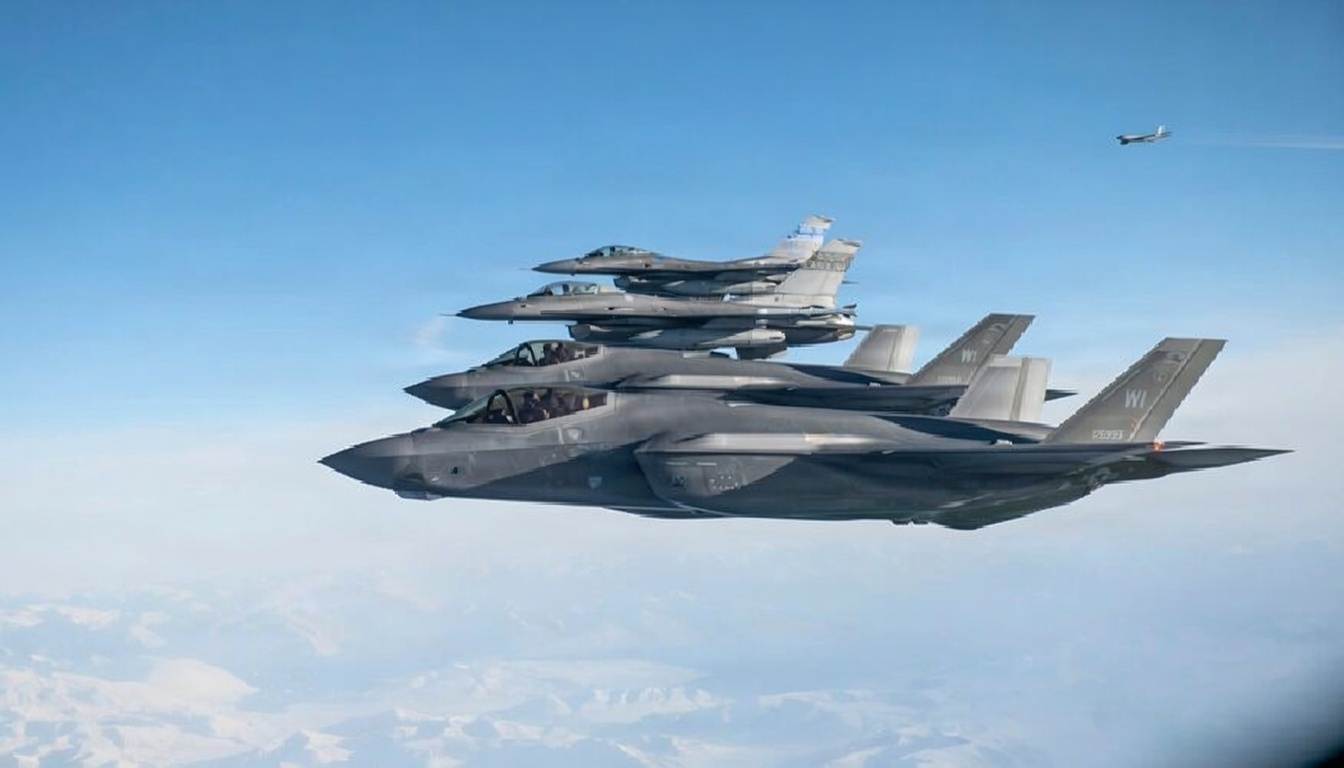
US President Donald Trump has demanded that future American aircraft carriers discard the Electromagnetic Aircraft Launch System (EMALS) and use the “proven” catapult technology.
Trump announced this as part of a national security presidential memorandum, to “fix critical long-term issues in Navy shipbuilding and ship repair programs and restore capacity and competition to the maritime industrial base.”
Trump lamented “an atrophied shipbuilding industrial base,” which he said made constructing and repairing warships slower and more expensive.
The first ship affected will be the USS Doris Miller, the fourth Gerald R. Ford-class carrier, which has a projected delivery date of 2034. Changing the catapult systems could cost billions of dollars, the Wall Street Journal reported, citing Bryan Clark of the Hudson Institute think tank. Operating and maintaining steam systems would also require more sailors.
General Atomics, the company that won the contract to build electromagnetic catapults for the Doris Miller, said the decision to switch systems “warrants careful reconsideration.”
Earlier, speaking on USS George Washington on October 28 last year, Trump said, “I’m putting out an order, I’m going to sign an executive order, when we build aircraft carriers, it’s steam for the catapults, and it’s hydraulic for the elevators. Do you agree? Everybody agrees.”
Denouncing EMALS, Trump said the technology is expensive, unreliable, and difficult to repair.
“They’re spending billions of dollars to build stupid electric. And the problem, when it breaks, you have to send up to MIT, get the most brilliant people in the world, fly them out. The steam, they said they can fix it with a hammer and blowtorch. And it works just as well, if not better.”
Making a case for steam catapults, Trump said that they worked very well for the U.S. Navy for nearly half a century. “They had steam, which worked so beautifully, and it has for 50 years, right? So we’re gonna go back. Seriously, fellas, I want to make that change. I’m gonna do an executive order,” he added.
“I’m not going to let them continue to do this thing. They’re trying to make it work; they’re trying so hard, and they have something that’s perfect. So we’re going to go back on that and the magnets.”
Back in 2017, Trump called the Electromagnetic Catapults “no good.”
Even during a Navy visit to Japan in 2019, Trump called the system “crazy electric” and “very, very complex.”
Steam vs EMALS
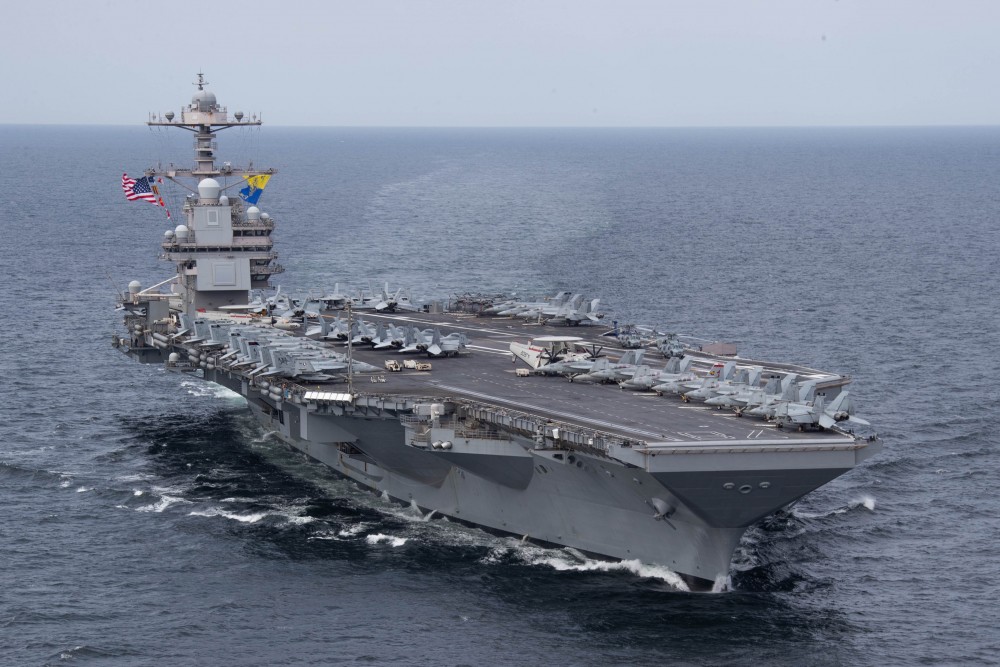
Currently, only two carriers in the world feature EMALS technology: the USS Gerald R. Ford and China’s Fujian.
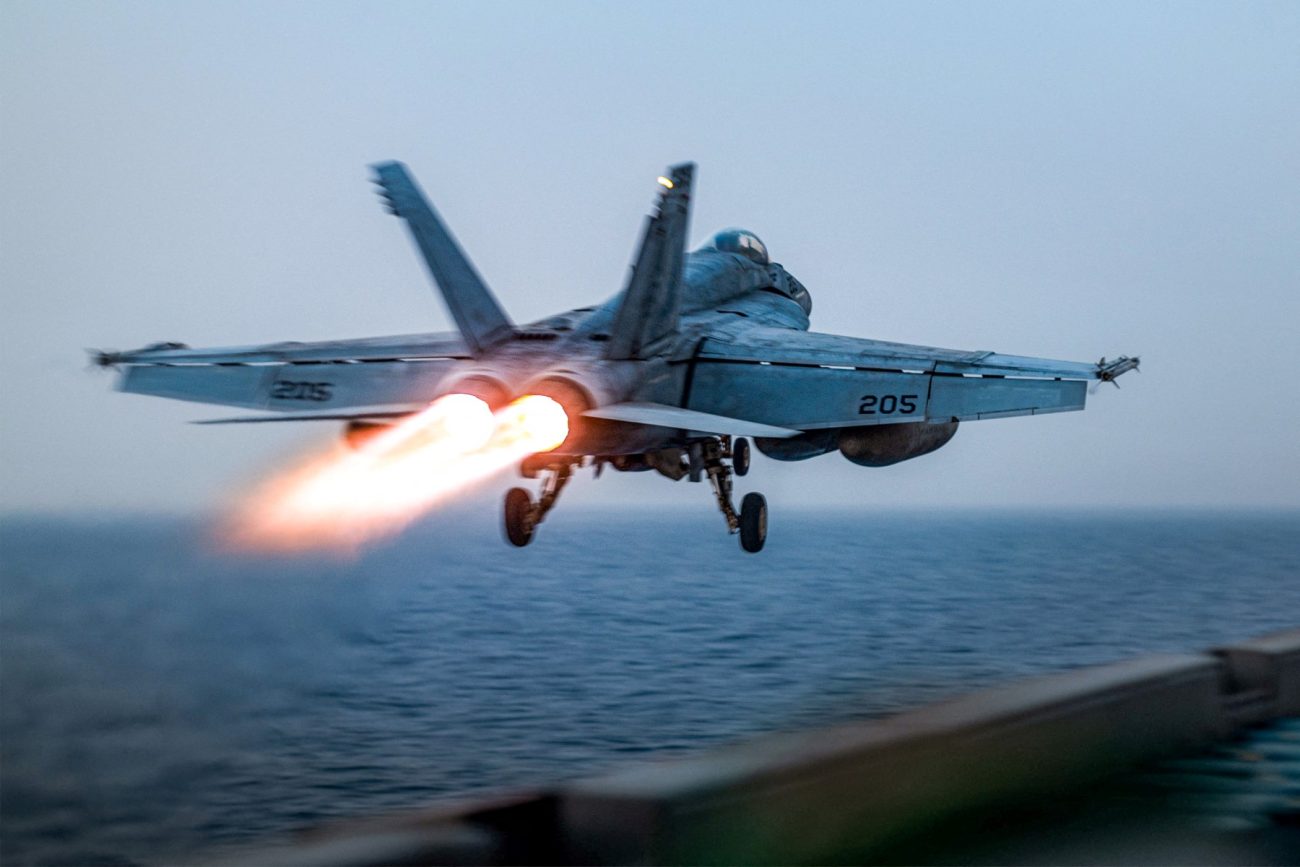
Catapults are critical to aircraft carrier operations because they allow heavier aircraft, including strike jets, refuellers, AWACS, and AEW&C, to take off from short flight decks.
EMALS was designed to launch aircraft more efficiently and with less stress on both the equipment and the airframes.
The US began developing EMALS technology in the first decade of the 21st century, after using steam catapults on its Nimitz-class carriers for nearly half a century.
Compared to steam catapults, electromagnetic launch systems offer finer control, better efficiency, and adjustable launch power. However, they are expensive to build and maintain, require massive power, and suffer from reliability issues.
Trump’s criticism of EMALS has some truth to it.
A 2019 Pentagon report highlights how the troublesome electromagnetic catapults and new arresting gear on the USS Gerald R. Ford performed terribly during at-sea trials over the past two years.
According to a 2018 Bloomberg report, citing the annual review of the Office of the Director of Operational Test and Evaluation (DOT&E), EMALS suffered 10 “critical failures” across 747 aircraft launches during at-sea trials since USS Gerald R Ford’s delivery in 2017.
The Advanced Arresting Gear (AAG) had 10 “operational mission failures” over 763 landing attempts in that same time frame, it said.
This is even though the USS Gerald R. Ford, at US$13 billion, is the world’s most expensive aircraft carrier.
According to the Bloomberg report, the EMALS was experiencing a critical failure once every 455 launches, which was 9 times the Navy’s desired rate.
Similarly, the carrier’s 11 Advanced Weapons Elevators, or AWEs, which help move ordnance and other aircraft stores to and from the main flight deck to the ship’s magazines, also suffered repeated failures.
Similarly, a DOT&E report published earlier this year lamented that, despite software and hardware upgrades, the USS Gerald R. Ford’s reliability statistics have not improved substantially.
“Despite engineering upgrades to hardware and software, reliability has not appreciably changed from prior years, and reliance on off-ship technical support remains a challenge,” the DOT&E report said.
“As part of an effort to provide short- and long-term improvements to address EMALS reliability degraders, NAVAIR delivered a software update and upgraded all catapult position sensor blocks prior to CVN 78’s deployment, and is continuing development on further
improvements,” it added.
Similarly, the DOT&E report highlights reliability issues with the Advanced Arresting Gear (AAG) aboard the USS Gerald R. Ford.
“Despite some software and hardware improvements in AAG, reliability has not appreciably changed because the FY23 data reflects many short-duration failures that were unreported in the developmental test, as well as system-of-systems degradations, all of which would have prevented landing.”
“NAVAIR continues to work on short- and long-term improvements to address AAG reliability degraders. However, difficulties such as obtaining replacement parts and the reliance on off-ship technical support remain a challenge,” it added.
In theory, the EMALS and AAG were supposed to improve the USS Gerald R. Ford’s sortie rate; however, persistent issues and repeated breakdowns have kept the carrier’s sortie rate lower than that of the 50-year-old steam catapult launch system.
However, changing the EMALS to a steam catapult in the upcoming Ford-class carriers would be neither easy nor cheap. Catapults and AAGs are integral to carriers and cannot be easily changed.
Furthermore, introducing a fundamental change to future carriers might push their timelines even further.
It remains to be seen whether Trump will actually follow through on his threat to direct the US Navy to revert to steam catapults and hydraulic elevators on new aircraft carriers, or if it’s an empty threat like his first term, when he made similar suggestions but never followed through.
- Sumit Ahlawat has over a decade of experience in news media. He has worked with Press Trust of India, Times Now, Zee News, Economic Times, and Microsoft News. He holds a Master’s Degree in International Media and Modern History from the University of Sheffield, UK.
- VIEWS PERSONAL OF THE AUTHOR.
- He can be reached at ahlawat.sumit85 (at) gmail.com