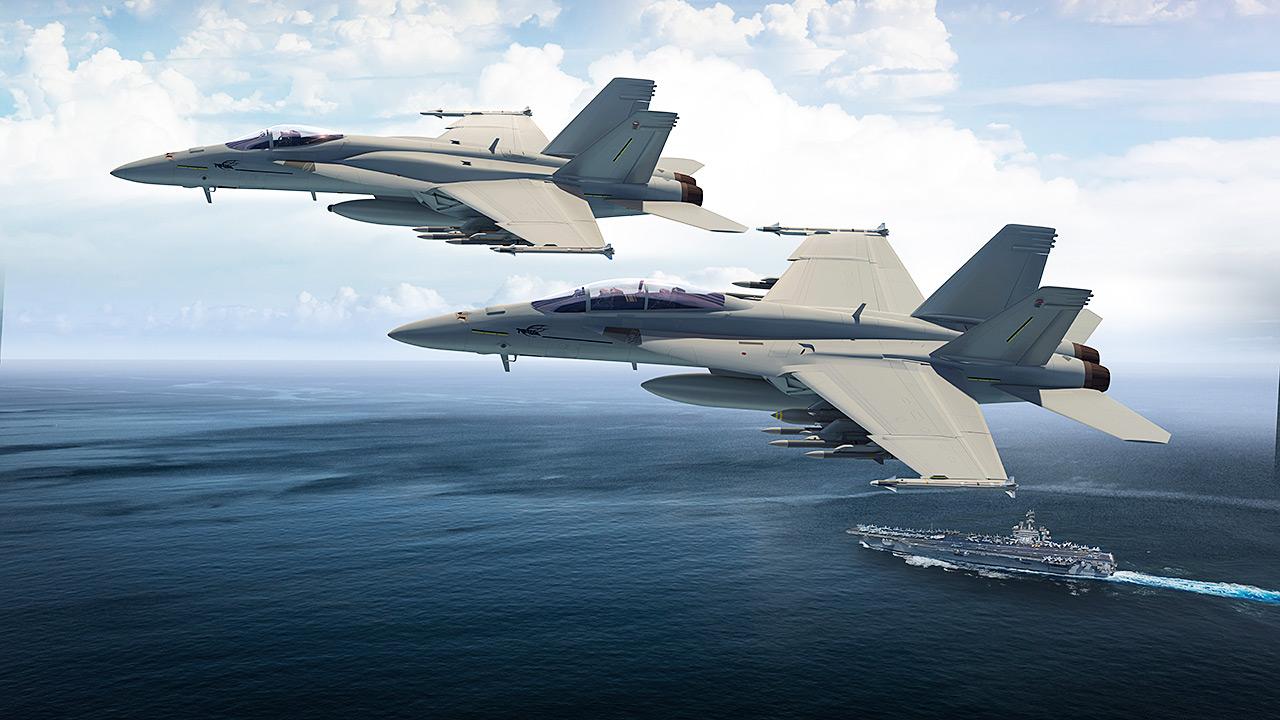
Indian news portal NBTOnline (part of Times of India) has reported, based on inputs from “reliable sources,” that the production of BrahMos missiles has plunged to below 50% of the level achieved a year ago.
The disconcerting report partly attributes the drop in production to the transfer of around 56 employees from Hyderabad to Lucknow and Pilani over the last few months, which has led to employee disgruntlement and resignations.
At Lucknow, BrahMos Aerospace is in the process of setting up an integration and testing facility for existing BrahMos variants and future BrahMos-NG production.
At Peepli, in the Pilani area of Rajasthan, BrahMos Aerospace has a production unit where subsystems fabricated at various Indian and Russian work centers are delivered for final missile integration, checking, mechanical and electrical assembly, fuel filling, storage, and related activities.
BrahMos has additional integration centers in Hyderabad and Nagpur.
Reliable sources have reportedly told NBT Online that BrahMos Aerospace has alerted the Indian Navy to the possible delay of a few years in the supply of BrahMos missiles.
On March 1, 2024, the Indian Navy placed an order for 220 BrahMos-ER supersonic cruise missiles, along with associated shipborne launch systems, primarily for deployment on Indian Navy warships (including Visakhapatnam- and Kolkata-class destroyers).
Large-scale transfers of employees between geographically dispersed integration units can understandably disrupt the family lives of affected personnel. If unavoidable, such transfers require deft management to preclude employee disgruntlement.
No Go-Ahead for BrahMos-NG
Besides the over 50% drop in BrahMos production levels, the NBT report also states, based on its sources, that the BrahMos-NG project has not yet been approved by the MoD.
It is ironic that the Government of India formally approved and initiated construction of the BrahMos-NG development and testing facility in Lucknow on December 26, 2021—when Defense Minister Rajnath Singh laid the foundation stone—yet has not approved development of the missile itself.
BrahMos-NG: Historical Perspective
BrahMos Aerospace first announced the BrahMos-NG missile concept in March 2021. The missile was expected to:
Be carried by lighter fighter jets such as the Tejas Mk. 1A and MiG-29UPG.
Fit inside the internal weapons bay of the FGFA, the stealth fighter India and Russia were co-developing at the time.
The NG is not a BrahMos variant; it is a clean-sheet, high-supersonic missile design that will be smaller and lighter than the current BrahMos.
The missile was initially projected to be 6 m long and 0.5 m in diameter, with a top speed of Mach 3.5 and a 200–300 kg warhead, and a maximum range of 290 km.
In July 2019, a BrahMos official reportedly told India Today that the missile would be 5 m long—possibly to enable torpedo-tube launch.
More recently, it has been reported that the new missile would be capable of launching from standard submarine torpedo tubes—similar to the submarine-launched Exocet used on Scorpene submarines.
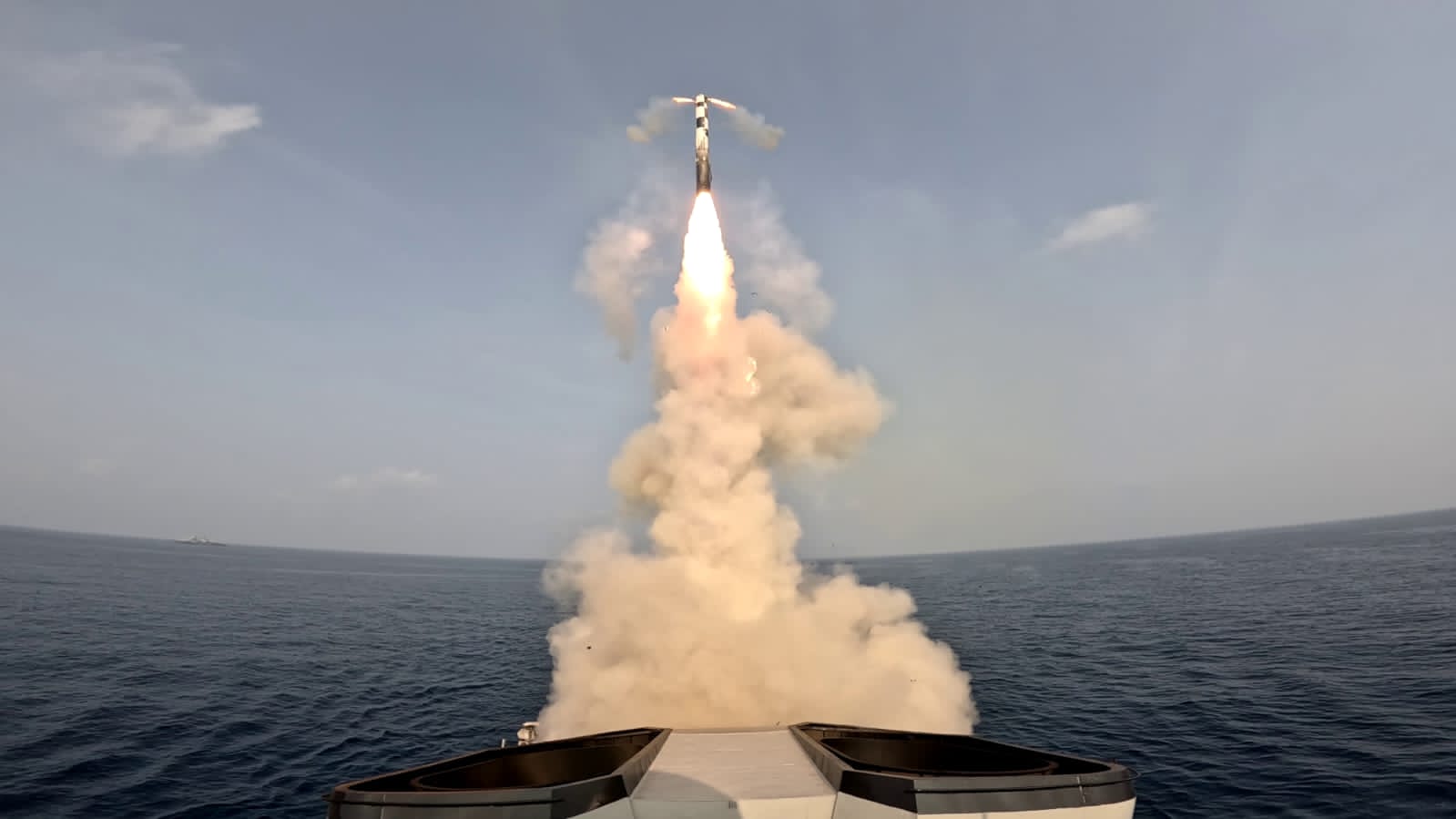
BrahMos-NG – Misleading Development Timelines
Over the years, BrahMos officials have made overly optimistic statements about the development timeline of BrahMos-NG.
A senior defense official reportedly told Times Now in November 2017 that the air-launched BrahMos-NG was “currently in the design stage,” adding that the missile would be ready by 2019.
In February 2024, BrahMos Aerospace’s Export Director, Pravin Pathak, stated that flight tests of BrahMos-NG would begin before the end of 2025.
He said: “In parallel with construction of the (Lucknow) plant… the first flight samples of the new BrahMos-NG rocket will be assembled for flight testing… before the end of 2025.”
There is good reason to believe that development actually started in September 2025.
On September 9, 2025, TASS reported that BrahMos Aerospace is designing the missile and intends to begin autonomous testing in 2026.
TASS quoted Alexander Maksichev, Russian Managing Director of the JV, as saying:
“We are currently at the working design stage… and then we will move on to autonomous tests.”
He added that it was too early to discuss timelines for actual flight testing.
After 14 years of announcements, it finally appeared that the project was making progress.
A New Ramjet Engine
Because BrahMos-NG must be significantly smaller and lighter, it requires a new, scaled-down ramjet engine.
During Aero India 2019, a BrahMos official stated that Russia’s NPO Mashinostroeyenia is developing this new engine.
This engine, like the missile itself, is a clean-sheet design. Feasibility studies and engineering analysis were reportedly completed around 2020.
Link with the Su-57
Russia has made a compelling offer to India to procure its Su-57 stealth fighters for the IAF.
In July, the IAF projected a requirement for 2–3 squadrons of stealth fighters to the Indian government, given the depletion of its fighter inventory, delays in AMCA development, and the evolving threat environment.
If the government accepts the Russian offer—which appears attractive due to the inclusion of transfer of technology—the IAF would want BrahMos-NG to be compatible with the Su-57 variant it acquires. The missile would need to fit within the aircraft’s internal weapons bays and conform to their load-carrying limits.
During the Dubai Airshow 2025, the Su-57 displayed a pair of Kh-58UShK anti-radiation missiles in its forward internal weapons bay during flight demonstrations.
The Kh-58UShK has a launch weight of 650 kg. By extrapolation, the forward internal bay’s maximum payload capacity appears to be around 1,300 kg.
In March 2019, BrahMos CEO Sudhir Misra stated that the Tejas underwing hardpoint can support a maximum load of 1,250 kg, including the launcher. This implies that BrahMos-NG would weigh less than 1,250 kg.
For comparison:
Standard BrahMos weighs ~3,000 kg
BrahMos-A weighs ~2,500 kg
Thus, miniaturization is critical.
In addition to physical fitment, radar and mission-computer integration would require close Russian-Indian collaboration.
If Not Su-57—AMCA Compatibility
If India does not pursue the Su-57, the missile will need to be compatible with AMCA’s internal bay—an uncertain proposition at this stage of AMCA development.
The Pakistan Trap: Israeli Analyst Explains Why Washington Keeps Picking Pakistan Over India: OPED
Conclusion
Any significant drop in the production of BrahMos missile variants at this stage would be a serious setback, potentially weakening the deterrence capability of the Indian Armed Forces.
Any delay in approving the development of BrahMos-NG could necessitate importing a comparable system to keep the IAF’s MiG-29 and LCA fleets operationally viable.
Russia has already begun work on the engine and a new high-supersonic air-launched missile. India must now decide whether to participate meaningfully—before timelines slip again, as they did in the case of the FGFA.
- Vijainder K Thakur is a retired IAF Jaguar pilot, author, software architect, entrepreneur, and military analyst.
- This is an Opinion Article. Views Personal of the Author
- Follow the author @vkthakur