China appears to have solidified its lead over the United States in hypersonic weapons.
After fielding multiple operational hypersonic missiles, Chinese researchers are claiming to have developed a prototype star-based navigation system designed to guide hypersonic vehicles when satellite signals from GPS or China’s BeiDou system are jammed or unavailable.
Researchers at the Guangdong Aerospace Research Academy made the claim in a report published on August 10.
The researchers set out to develop a celestial navigation system capable of operating at extreme speeds, such as hypersonic flights at Mach 5 and above. In doing so, they’ve addressed a major weakness of hypersonic missiles: their inability to function in GPS-suppressed environments.
While hypersonic missiles are extremely difficult to intercept due to their high speed and maneuverability, they require highly autonomous, precise navigation systems.
Hypersonic missiles can be guided by GPS or China’s BeiDou navigation system with pinpoint accuracy; however, these signals can be jammed, spoofed, or suppressed during wartime.
For instance, GPS signals are often jammed and suppressed in the conflict zone of the Russia-Ukraine War. While Starlink signals are much harder to block, Russia has shown that even they can be blocked with advanced electronic warfare measures.
To overcome GPS-suppressed environments, Russia developed fiber-optic drone technology that did not rely on external satellite-based navigation signals. Now, China is claiming to have developed a celestial-based navigation system for guiding hypersonic missiles in a GPS-suppressed environment.
Notably, sailors had been using a star-based navigation system for centuries. Sailors in medieval times also used tools like sextants to measure the angle between the horizon and a star, the sun, or the moon for navigation.
Modern star-based navigation does something similar. It uses stars as fixed reference points to determine a vehicle’s position and orientation. This method is known as celestial navigation.
Unlike GPS-based navigation or inertial systems that rely on ground stations or satellites, celestial navigation is completely self-contained and immune to external electromagnetic interference.
Therefore, in a contested environment where GPS signals are suppressed, a combined system that pairs celestial and inertial navigation could guide hypersonic missiles.
However, while using celestial navigation to guide hypersonic missiles sounds simple enough in theory, in real-life conditions it presented several complex problems.
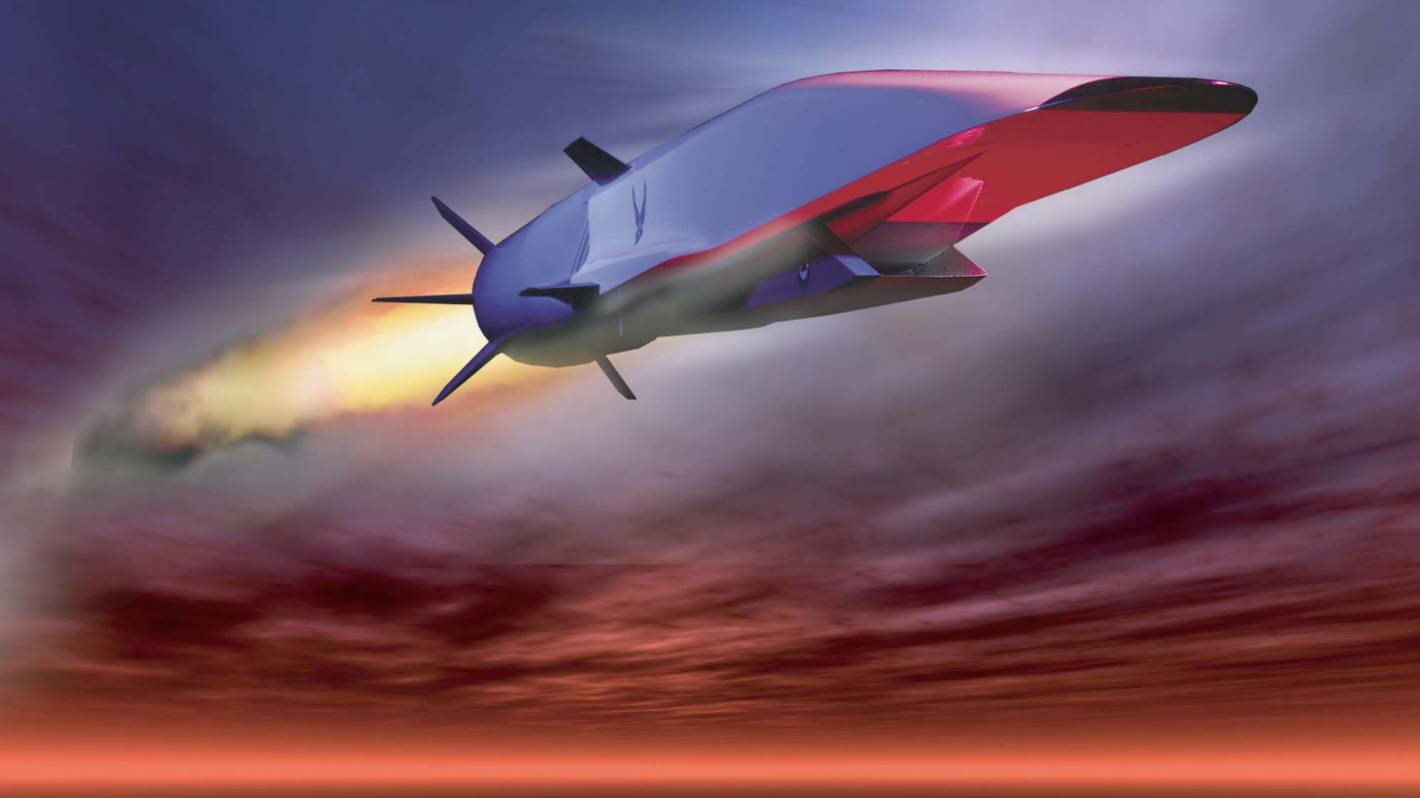
The Challenges of Using Celestial Navigation in Hypersonic Vehicles
When a missile or object travels through the atmosphere at hypersonic speeds of Mach 5 or higher, it experiences intense aerodynamic heating, generating a shock layer and a plasma sheath that can reach temperatures exceeding 1,000 degrees Celsius.
This uneven, fast-moving gas layer acts like frosted glass, bending the starlight that passes through it. It also produces strong infrared radiation, which acts like a bright flashlight and can overwhelm faint signals from stars. This makes it harder for sensors to detect star points.
To solve this twofold problem, the researchers developed radiation models and specialized sensing hardware.
The researchers built databases, designed sophisticated algorithms, and developed instruments to create what they described as “a complete technical chain – from fundamental research to prototype development – for high-speed flight applications,” Hong Kong-based South China Morning Post (SCMP) reported.
According to the academy, the team compiled two fundamental databases: one on thermal-chemical radiation of hot air and another on thermally induced radiation interference.
The team also developed software to model radiation around a high-speed vehicle. The simulations reached spectral resolution as fine as 0.12 nanometres, and radiation simulation error was strictly controlled within 18.9 percent.
These software simulation models helped the team estimate how atmospheric effects could alter the appearance of stars and how starlight would bend around a hypersonic vehicle. Based on this work, the team built a prototype star sensor designed to resist radiation interference.
Test data showed that in interference-free conditions, the star-pattern recognition rate of the prototype star sensor exceeded 99 percent, according to the report.
Even under strong aerodynamic radiation interference, the recognition rate of the sensor remained above 80 percent, while attitude measurement accuracy was better than 5 arcseconds – an arcsecond being 1/3,600 of a degree.
These test results show that even in the presence of radiation interference, the team’s prototype star sensor reportedly recognized star patterns with high accuracy.
This system has global applications, as all missiles, including supersonic cruise and ballistic missiles, face navigation challenges in GPS-suppressed environments.
Beyond military applications, the system also has commercial potential.
“The radiation measurement and simulation capabilities have already supported major mission-critical projects at several aerospace institutes, generating nearly 10 million yuan (US$1.5 million) in new sales revenue,” it said.
“The multidimensional radiation field measurement technology has also been adapted for civilian uses, including new engine test stands and industrial boiler combustion diagnostics,” the report added.
“It can provide real-time views of what is happening inside combustion chambers, helping upgrade industrial chains in aerospace equipment and high-end inspection.”
A star-based navigation system will help China cement its lead over the US in hypersonic weapons.
China Vs U.S. in Hypersonic Weapons
The US has only one operational or near-operational hypersonic weapon, the U.S. Army’s Long-Range Hypersonic Weapon (LRHW), also known as Dark Eagle.
It is a ground-launched, intermediate-range boost-glide hypersonic missile system.
The US deployed its ‘Dark Eagle’ LRHW during the Talisman Sabre military drills in Australia in August this year. This marked the first-ever overseas deployment of this sophisticated system.
The U.S. is also working on two other systems: the U.S. Navy’s Conventional Prompt Strike (CPS) and the U.S. Air Force’s Hypersonic Attack Cruise Missile (HACM) program.
Additionally, the Defense Advanced Research Projects Agency (DARPA) supports programs such as the Hypersonic Air-breathing Weapon Concept (HAWC).
However, none of these programs has achieved operational status.
On the other hand, Russia has four operational hypersonic missiles: the Kinzhal, the Tsirkon, the Zircon, and the Avangard. Earlier in June last year, Russia also ordered the start of mass production of its fifth hypersonic missile, the Oreshnik.
Additionally, China is leading in the global race for hypersonic weapons. China possesses the “world’s leading hypersonic arsenal,” with systems like the DF-17 capable of targeting U.S. bases in the Pacific.
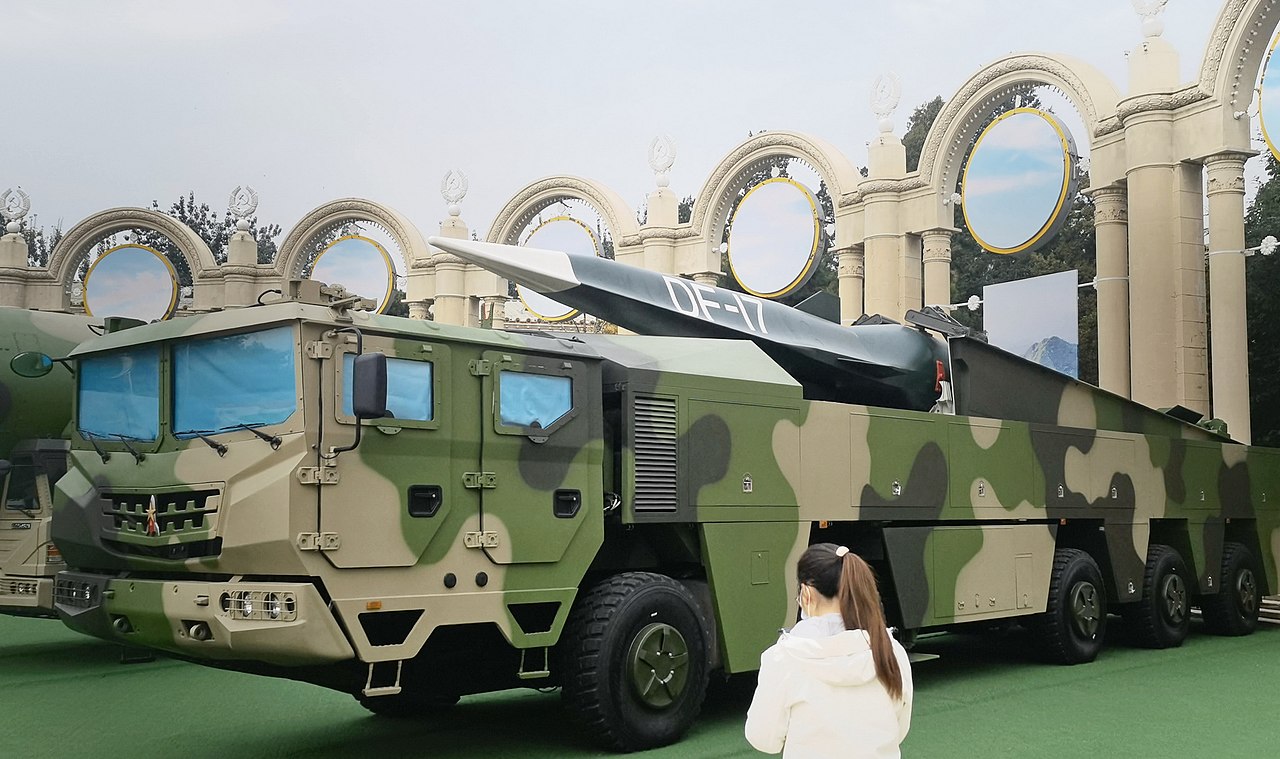
China has also fielded the YJ-20, a ship-launched hypersonic anti-ship ballistic missile, also known as a ‘carrier killer.’ It also has nuclear-capable DF-26 and long-range DF-27.
According to some estimates, China already has hundreds of hypersonic missiles.
In November last year, China also claimed to have developed a morphing hypersonic vehicle capable of flying at speeds exceeding Mach 5 and changing shape in flight.
The missile features a pair of retractable wings. This groundbreaking design allows it to dynamically adapt its aerodynamic profile mid-flight.
In flight, the wings can retract and fold inside the fuselage, minimizing drag during high-speed cruising. When extended, they generate additional lift and significantly improve maneuverability.
Furthermore, the degree of wing deployment and retraction can be finely adjusted to meet flight requirements. This enables real-time changes to the vehicle’s overall aerodynamic shape and flight characteristics, a capability long considered the “holy grail” and the “final frontier” of hypersonic flight.
To catch up with Russia and China, the US also included hypersonic weapons in a list of six key technology domains to maintain the U.S. Army’s conventional military superiority.
However, the US has a long way to catch up with countries such as China and Russia in the field of hypersonic weapons.
- Sumit Ahlawat has over a decade of experience in news media. He has worked with Press Trust of India, Times Now, Zee News, Economic Times, and Microsoft News. He holds a Master’s Degree in International Media and Modern History from the University of Sheffield, UK.
- He can be reached at ahlawat.sumit85 (at) gmail.com