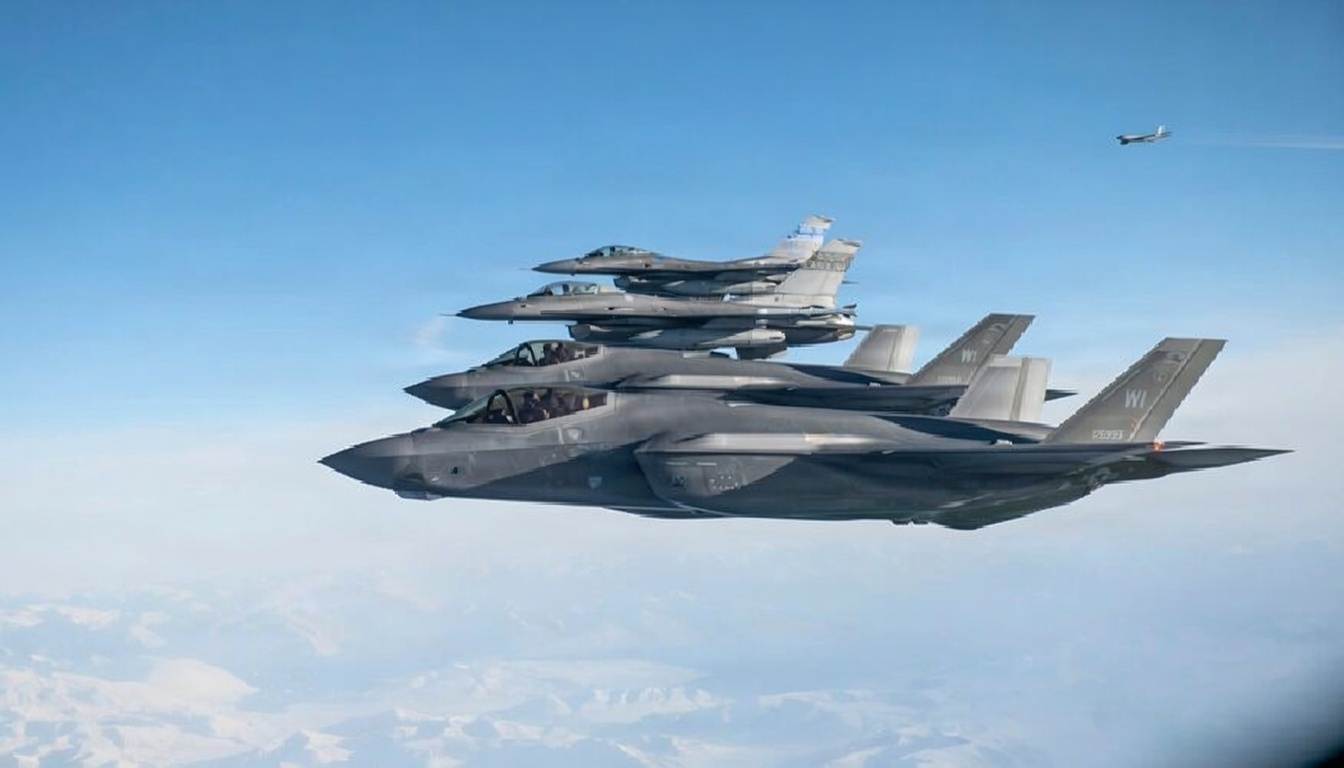
With Ukraine’s western-origin fighter jets assuming more combat responsibility in the ongoing war, Russia reportedly hatched a plan to spy on the Ukrainian F-16 and Mirage 2000 aircraft to hunt them in missile strikes. However, the plan was foiled by the Security Service of Ukraine (SBU).
An intelligence network belonging to the Russian military intelligence organization was exposed, the SBU announced on August 13, 2026. It included about 14 people across Ukraine who were reportedly sent to track F-16s and Mirage 2000s.
“The military counterintelligence of the Security Service of Ukraine, under the personal coordination of SBU Chief Oleksandr Poklad, neutralized a large-scale agent network of Russian military intelligence (better known as the GRU), through which the enemy could launch missile strikes on the Ukrainian Armed Forces’ air bases,” the SBU said in an official statement.
“The investigation established that the suspects’ activities enabled the enemy to plan and carry out attacks on the airfields of Ukrainian forces equipped with F-16 and Mirage 2000 combat aircraft,” it added.
Initially, the Russian GRU recruited a Lviv resident who ran a Telegram channel focused on aviation. The blogger allegedly caught the Russians’ attention when he published photos of Ukrainian fighter jets in Telegram groups.
“To carry out the enemy’s assignment, the agent, without revealing the true purpose, involved 13 of his subscribers who had high-quality photographic equipment and lived near the Defense Forces’ aviation infrastructure. They were to photograph Ukrainian airfields, military aircraft, their crews and technical personnel, as well as record the time intervals between aircraft takeoffs and landings, allegedly for the Lviv blogger’s Telegram channel,” the SBU stated, explaining the approach adopted by the chosen mole.
СБУ викрила агентурну мережу гру рф, до якої входило 14 осіб, що «полювали» за F-16 та Mirage 2000
➡️ https://t.co/gUwCFmvKyr pic.twitter.com/7uU4Z83OBX
— СБ України (@ServiceSsu) August 13, 2026
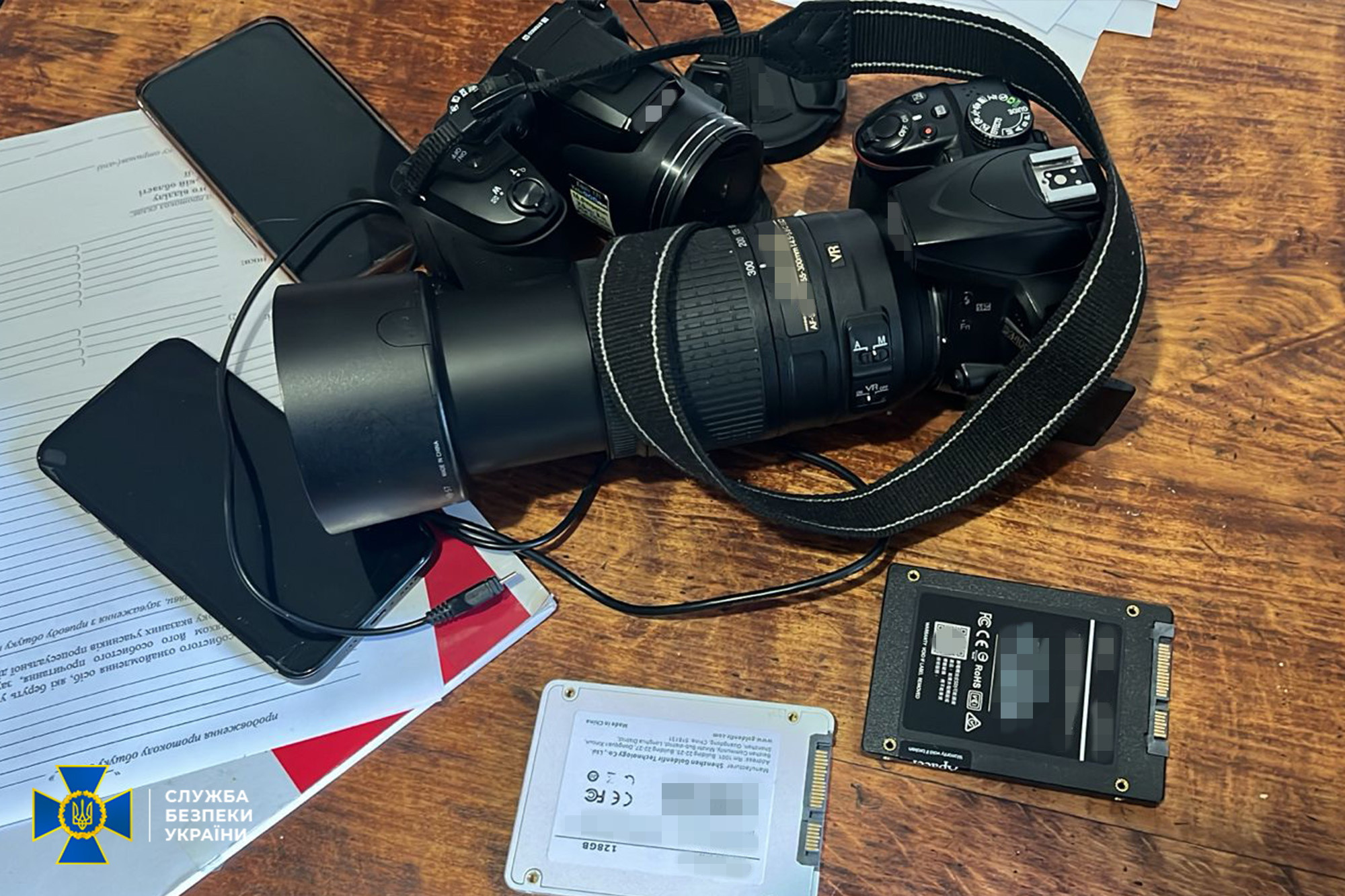
The SBU claimed that the suspects concealed themselves in open spaces close to air bases or in abandoned buildings, using professional cameras.
Exposing the modus operandi, the SBU stated, “They stored the photographs taken in an online storage facility, access to which they had previously received from the agent. He then passed the photographic materials to his handler from Russia, whose identity has already been established by the Security Service.”
The recruited agent reportedly “leaked” the landing and departure schedules for the Ukrainian combat helicopters. The agent received this information from a commander of a Ukrainian Armed Forces aviation squadron.
In addition, the SBU disclosed that during searches of the suspects’ homes, it found digital photography equipment and smartphones containing images of Defense Forces aviation sites, as well as other incriminating evidence proving the suspects had worked for Moscow.

“Investigators of the Security Service have now notified the detained agent, his accomplice, and the serviceman of suspicion of committing crimes against the foundations of national security,” the statement said. Further, it emphasized that a detailed investigation is underway to bring to justice all those responsible for the spying mission.
The SBU officers reportedly blocked 10 thematic groups and four Telegram channels that disseminated images and other information about Ukrainian Armed Forces aircraft units.
Notably, the exposure of the spying network comes as Ukraine’s F-16 and Mirage 2000 jets are regularly deployed to conduct air defense missions to thwart Russian aerial attacks.
“Ukraine’s F-16 and Mirage 2000-5 fighters have had significant successes in shooting down Russian cruise missile salvos since early 2025, and the F-16s alone have destroyed well over 2,500 Geran and Gerbera OWA drones,” Justin Bronk, Senior Research Fellow for Airpower and Technology in the Military Sciences team at London-based think tank RUSI, stated in an assessment of air war situation in Ukraine earlier this year.
In fact, both these jets are now increasingly used for combat missions on the front lines.
“Alongside their primary air defense duties, Ukrainian F-16s, Mirage-2000s and MiG-29s routinely launch precision stand-off attacks against battlefield targets with glide bombs like the American GBU-39 Small Diameter Bomb, GBU-62 JDAMs with glide kits, and French AASM Hammer. These theoretically allow the Ukrainian Air Force to strike a wide range of battlefield, logistics, and industrial targets out to around 60 km behind Russian lines,” Bronk said in his comprehensive assessment.

Ukraine has lost several of these fighters over the course of the war—including five F-16s and at least one Mirage 2000—but they continue to remain one of the most potent weapons in the Ukrainian armada.
This may explain Moscow’s mission to eliminate the jets, further suppressing Kyiv’s air defenses.
A Battle Of Espionage Looms Over Russia & Ukraine
Russia–Ukraine espionage has operated as a reciprocal, layered intelligence war for the past four years, often involving penetration of military organizations, recruitment of insiders, surveillance of bases and air defenses, and sabotage preparation.
Earlier this year, for instance, the SBU reportedly detained a Russian military intelligence agent in Zakarpattia who was collecting crucial information on defense industry enterprises in western Ukraine. The information was being passed on to the accused person’s biological father who lived in Kaliningrad.
Similarly, in January 2026, two people were detained by a Crimean court for carrying out sabotage operations on the Peninsula. The accused collected and disseminated information regarding the movement of Russian military equipment, the effects of Ukrainian missile strikes, and the placement of Russian Defense Ministry facilities and vital infrastructure.
In June 2025, Russia hired a mole to destroy Ukraine’s indigenously developed Neptune missile complex. The accused was allegedly hired by Russia’s military intelligence to track down Ukrainian units that were operating the Neptune missile installation in southern Ukraine.
He was reportedly instructed to provide the geolocation information of missile units in charge of protecting the Black Sea’s coastline. However, the Ukrainian SBU uncovered the plan and arrested the mole, as reported by EurAsian Times at the time.
Just days before this plan was foiled, the Ukrainian SBU had managed to infiltrate its suicide First Person View (FPV) drones hidden inside trucks, deep inside Russian territory, as part of its audacious Operation Spiderweb. These drones were then remotely launched to attack multiple Russian air bases and strategic aircraft sitting there.
In November 2025, Russia claimed it had thwarted a joint Ukrainian-British plot to steal MiG-31 aircraft equipped with Kinzhal hypersonic missiles. The plot involved directing the aircraft to a NATO facility in the Romanian Black Sea city of Constanta, where it would be downed by air defenses.
In April 2024, the SBU revealed that it had uncovered about 11 Russian spy networks since the beginning of the year. “In 2023, the SBU exposed a total of 47 espionage networks, resulting in the apprehension of all involved individuals. Moreover, since the beginning of this year, we have already uncovered an additional 11 networks,” SBU’s head stated.
Meanwhile, the Russian Intelligence Agency (FSB) learned in 2023 that Ukrainian intelligence agents had attempted to convince a Russian pilot who had been trained to fly the Tupolev Tu-160 and was involved in bombing missions in Ukraine to defect along with his Tu-22M3 strategic bomber, as the EurAsian Times had reported.
This is an incomplete list of several such espionage and sabotage operations, most of which are denied by the other side.
With no conclusive end to the raging conflict in sight, the two sides continue to engage in spying and sabotage activities to weaken one another.
- Contact the author at sakshi.tiwari13 (at) outlook.com
- Follow EurAsian Times on Google News