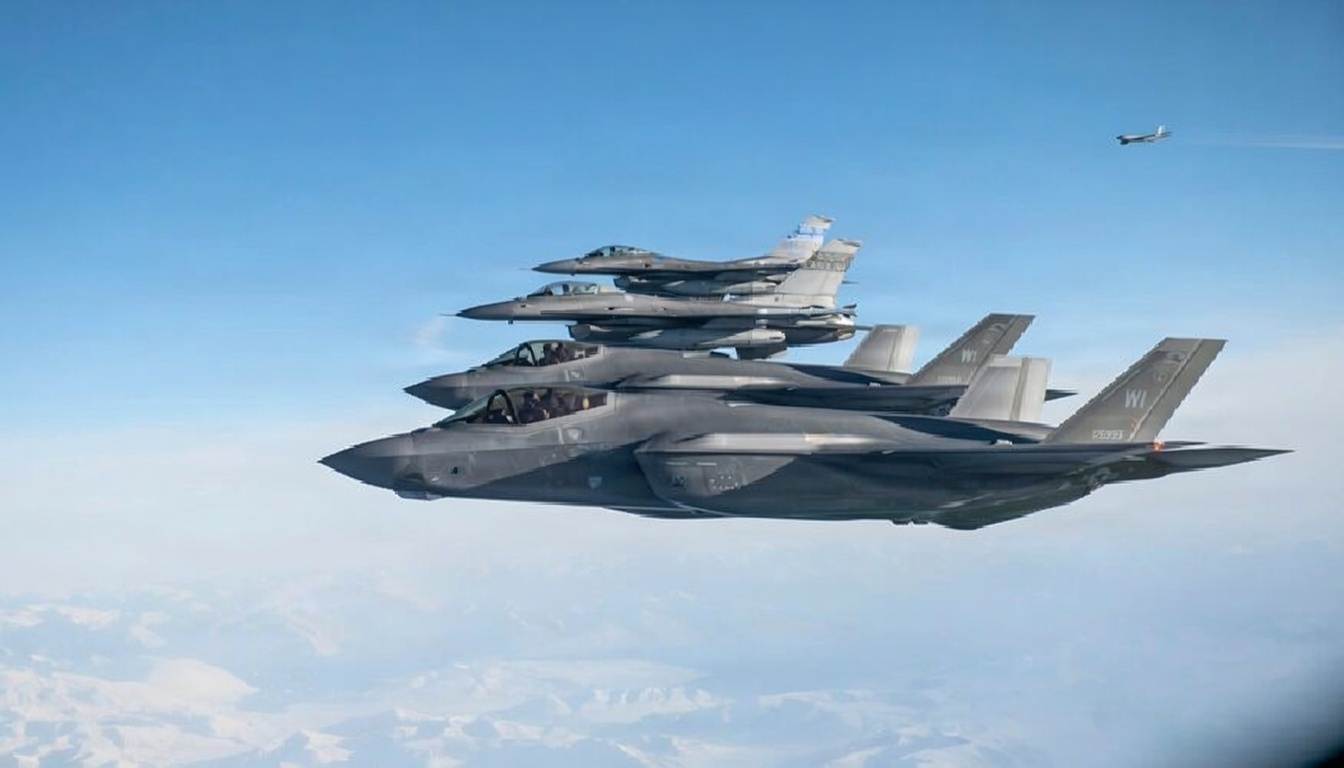
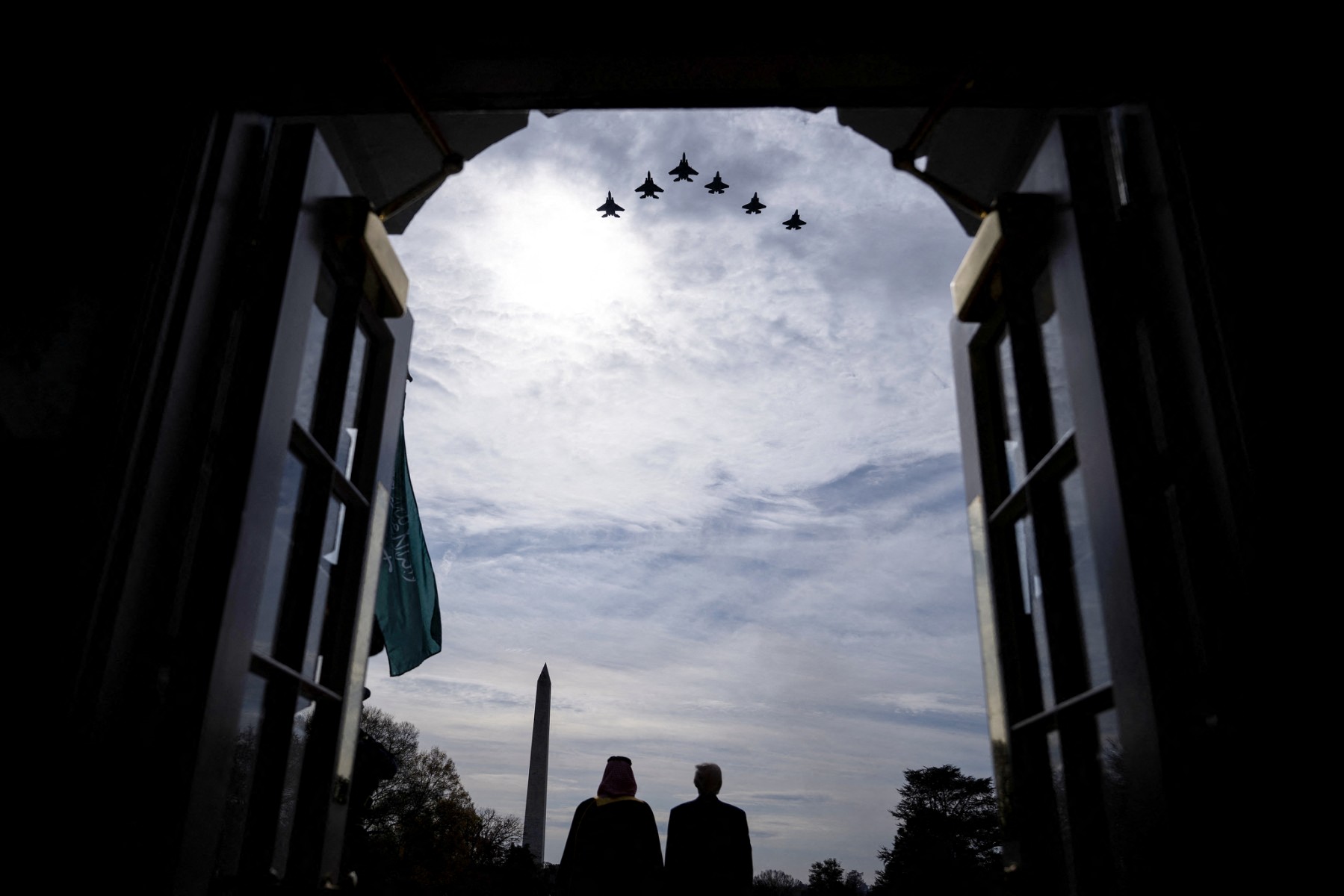
On 7 August, Saudi Arabia, Pakistan and Turkey signed an agreement stating that an armed attack on one would be considered an attack on all three.
The pact does not specify who determines activation, what response each member must provide, or how it intersects with their existing alliances and conflicts.
New Delhi has said it is assessing the implications for its national security and regional stability.
The ambiguity does not soften the commitment. It postpones the fight over its interpretation until the moment of crisis.
Riyadh did not merely add another security partner. It turned an attack on Pakistan into a Saudi liability and brought the India-Pakistan contingency into the heart of Gulf security architecture.
In the next crisis, Saudi Arabia will have to reconcile its commitment to Islamabad with its relationship with New Delhi: does the pact apply when Pakistan initiated the confrontation? Does an Indian response to an act attributed to Pakistan constitute an “attack” that activates the agreement? Who determines the facts, the aggressor and the activation threshold?
India can demand that clarification before the crisis. A Saudi answer narrowing the pact’s scope would reduce the risk. A refusal to clarify it would itself be strategic information.
A third-party guarantee does not turn Pakistan into a strategic sanctuary.
New Delhi has not granted Riyadh or Ankara a veto over its freedom of action. If India concludes that its security requires action against Pakistan, a signature in Mecca does not override Indian judgment.
Strategic relationships are not fixed-price subscriptions. Trust, access, priority, technology, investment and political capital are priced assets. A partner that deepens a security commitment to India’s principal adversary cannot assume that its access to Indian value will remain unchanged.
Pricing is not a sanction. It is the withdrawal of a subsidy.
India should differentiate: depth, speed, priority and access should reflect the risk each partner reduces or imports.
The India Middle East Europe Economic Corridor is not a railway, a port or a line on a map. It is a long-term capital commitment to political stability. It asks India to trust Saudi Arabia as a central link to Europe while Riyadh has incorporated Pakistan’s security into its formal obligations.
The next India-Pakistan crisis will therefore also test the corridor. It is whether goods, credit, insurance, infrastructure, data and policy decisions can depend on a central node formally bound to one side of the confrontation.
Corridor capital prices political durability, not merely kilometers.
IMEC should therefore be redesigned for redundancy. The corridor needs alternatives in ports, insurance, financing, logistics, and access to Europe, supported by data architecture and continuity plans that do not depend on a single node.
Saudi Arabia should be a route, not a veto.
Without India, there is no IMEC.
New Delhi can calibrate political capital, digital integration, energy links, data sharing, and logistical planning based on partner predictability. A Saudi Arabia that establishes itself as a reliable bridge between India and Europe creates one value; a Saudi Arabia that imports a Pakistani liability into that bridge creates another.
In fiscal year 2025–26, India imported roughly $30.8 billion in goods from Saudi Arabia and exported about $10.3 billion. India gives Riyadh access to markets, technology, and investment opportunities, and a central place in the post-oil future the Kingdom is trying to build.
India should price the energy margin, not weaponize dependence. New contracts, refining and petrochemical investments, strategic reserves, and long-term supply arrangements can flow to suppliers that reduce India’s exposure.
In May 2026, the United Arab Emirates became India’s second largest oil supplier, ahead of Saudi Arabia, as New Delhi and Abu Dhabi deepened cooperation in energy and strategic reserves.
Riyadh does not lose the Indian market. It has to compete for the next barrel.
India has also granted the Saudi Public Investment Fund regulatory privileges while talks have continued over a new investment protection framework. Future benefits, regulatory exemptions, investment protections, preferred approval channels and access to strategic projects should reflect their value to Indian interests.
Access to the Indian market is not an entitlement. It is a sovereign asset.
Pakistan is already converting military relevance into a strategic annuity: financing, arms deals, training, deployments, institutional access and a permanent place inside Gulf security. Its nuclear status adds a premium. The Mecca Pact does not formally provide Saudi Arabia with a Pakistani nuclear umbrella, but ambiguity itself allows Riyadh to imply that the weight of a nuclear power stands behind its security.
India can raise the opportunity cost of buying that value.
The UAE already provides India with energy, security, industrial, and financial depth; in May 2026, the two countries established a framework for a strategic defense partnership covering industry, advanced technology, training, maritime security, cyber, and secure communications.
Oman provides access to the Indian Ocean, trade, and potential energy storage. Cyprus and India have adopted a five-year defense roadmap. Greece is deepening strategic and maritime cooperation with New Delhi, while Israel adds technology, intelligence, security and access to the Eastern Mediterranean.
Together, these relationships form a redundancy arc – alternative routes, partners and access points – from the Indian Ocean to the Eastern Mediterranean. They allow India to shift traffic, capital, security and access among competing nodes and prevent any one geography from becoming a monopoly.
The strongest response to a partner becoming less reliable is not rupture. It is making that partner less necessary.
Riyadh itself turned to Pakistan and Turkey to reduce dependence on a single security provider. India can apply the same principle to Saudi Arabia: more routes, more partners, fewer chokepoints.
An American security framework, Indian economic and maritime weight, Israeli intelligence and technology, strong Gulf partnerships and a resilient IMEC would give Saudi Arabia capability without placing its ultimate security in the hands of a single external actor.
Why is Trump Dumping Advanced EMALS for 1950s Steam Catapults on Future U.S. Aircraft Carriers?
A fully safeguarded US-Saudi civilian nuclear framework linked to normalization with Israel would also reduce the premium Riyadh places on Pakistani nuclear ambiguity.
New Delhi has spent years building relationships with Washington and Moscow, Israel and the Gulf, Iran and Europe without surrendering the final decision to any of them. That is the basis of its power as a connector. It must now turn centrality into terms: who receives access to which assets, at what speed and at what depth.
A connector with power without pricing power becomes infrastructure for others’ strategies. Strategic autonomy is not absorbing other countries’ choices for free. It is the authority to price them, and to build the alternative.
- Shay Gal is Founder and Principal of Line of State, an international strategic practice advising governments, institutions, and decision makers on strategy, risk, access, and security in high-consequence environments. He previously served as Vice President of External Relations at Israel Aerospace Industries (IAI).
- Meet the Author on X: @ShayGal84
- This is an Opinion Article. Views Personal of the Author