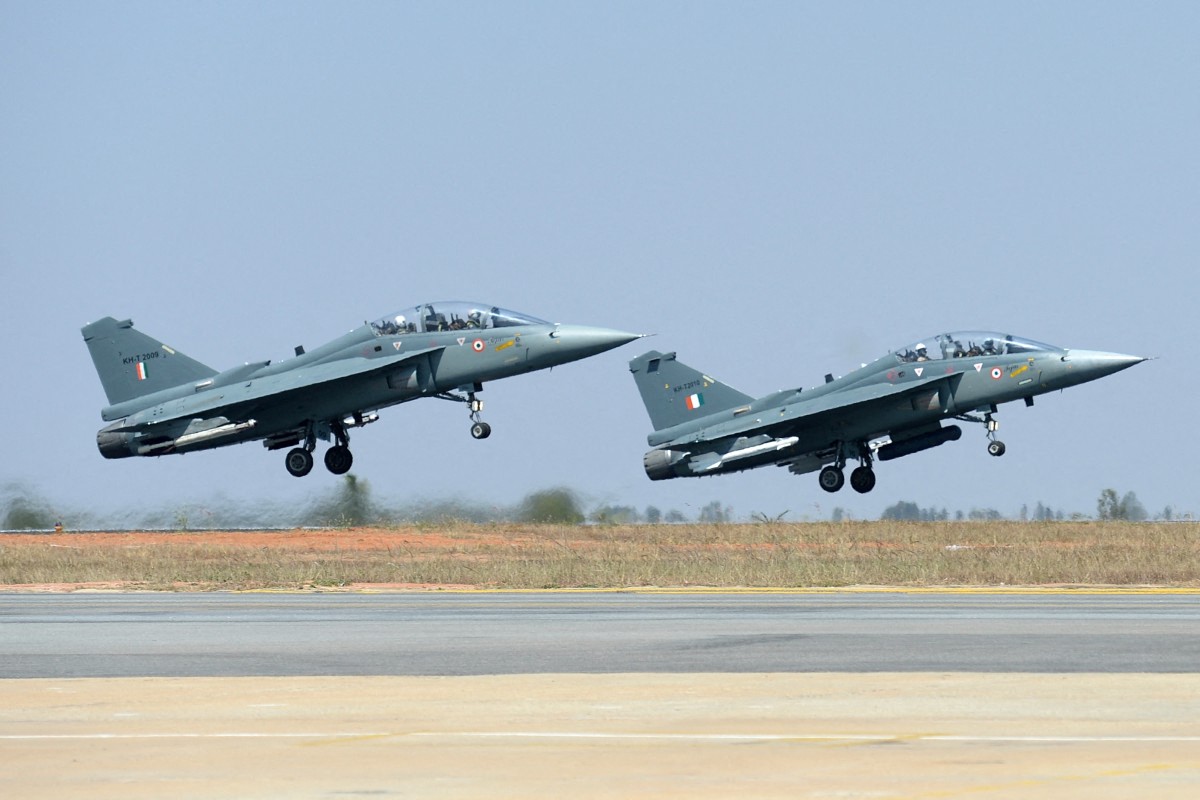
Hindustan Aeronautics Limited (HAL) has received seven GE F404-IN20 engines for India’s LCA Tejas Mk1A program.
GE Aerospace has reportedly assured HAL that it will dispatch an additional 20 to 22 units before December 31, 2026. With this input, HAL is confident that a major bottleneck would stand cleared and that it will be able to deliver the first full MK1A squadron to the Indian Air Force (IAF) by the end of this financial year.
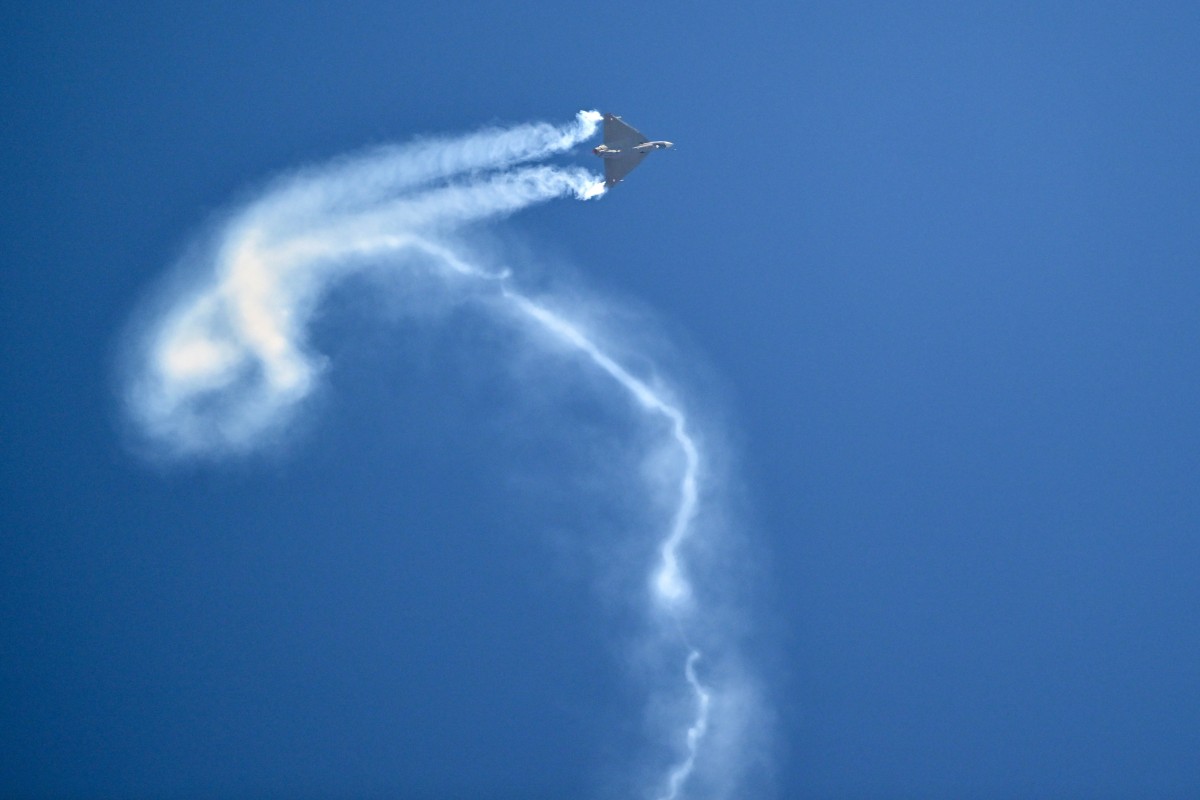
HAL claims that 20 Tejas Mk1A aircraft have been built and successfully completed flight testing, and will require only incremental tests when the new engine is fitted.
The first LCA Mk1A aircraft was originally scheduled for delivery by February 2024. If the new prediction is true, the aircraft will be delivered six years from contract signing in Febuary 2021.
Beyond delays in aero-engine supplies, there are also reports of integration issues that are still to be fully resolved. Earlier, the plan was to have the indigenous Uttam radar on Mk1A. It was shelved due to some technical delays. It was decided to integrate the Israeli EL/M-2052 Active Electronically Scanned Array (AESA) radar.
There are some integration issues with system-level linking of the radar with the weapon firing controls and electronic warfare (EW) suite. Once these are resolved at HAL and the Aeronautical Development Agency (ADA) levels, it will require clearance from the Center for Military Airworthiness and Certification (CEMILAC).
While the stand-alone initial firing trials for Astra and ASRAAM are stated to be complete, the full weapons package and EW suite will require integration clearance.
IAF’s Tejas Mk1A Orders
The IAF has ordered a total of 180 Tejas Mk1A fighter jets.
83 aircraft were ordered in February 2021, including 73 fighters and 10 trainers. The contract cost was ₹45,696 crore (approx. $6.5 billion). Deliveries were initially scheduled to commence in February 2024 and be completed by 2028-29.
HAL plans to ramp up production to 24–30 aircraft per year, including at its Nashik factory, to meet the final timelines. An additional order for 97 Tejas Mk1A fighters (68 single-seat fighters and 29 twin-seat trainers) was made in December 2025 for ₹62,370 crore (approx. $7.5 billion). This makes the average cost per aircraft at approximately ₹640–650 crore ($78–80 million).
HAL’s GE 404 Contracts for Mk1A
HAL signed the first contract with GE Aerospace for 99 F404-GE-IN20 engines in 2021 for the initial 83 Tejas Mk1A aircraft. The contract was valued at roughly $716 million. The engines have been trickling in at a slow rate due to reported supply chain issues. This has forced HAL to invoke contractual penalty clauses.
HAL ordered an additional 113 engines in November 2025 after IAF signed a deal for 97 more Mk1As. As per this contract valued at nearly $1 billion, engines will be supplied in the period 2027 to 2032.
Major On-board Transmitters
Unlike ground systems or ships, the total real estate available in a fighter aircraft is very small.
A large number of sensors transmit electromagnetic (EM) waves, including radio waves, microwaves, and lasers. These are often referred to as active sensors.
Reflected energy is used to detect airborne or surface objects, ascertain range, map terrain, or track weather. These sensors include Radar (Radio Detection and Ranging). It transmits pulses of radio waves to calculate the distance, speed, and altitude of an object by measuring the time it takes for the echo to return.
LiDAR (Light Detection and Ranging) transmits pulses of laser light and is often used in helicopters or drones for high-precision topographic mapping. Electronic Warfare (EW) and jamming systems actively transmit specific EM waves to jam enemy radars.
Modern jets utilize AESA systems, which can seamlessly shift between radar tracking, electronic attacks, and communications. Other transponders & telemetry systems also transmit.
Major On-board Receivers
Similarly, the aircraft has many sensors that receive external EM waves in various bands of the EM spectrum. These systems can be both transmitters and receivers, or only receivers.
Radar is an active system that transmits and then waits to receive the transmitted pulse. The ESM (Electronic Support Measures) have passive receivers that sweep the EM spectrum to intercept, identify, and geo-locate enemy radar and communication signals without transmitting.
Radar Warning and Missile Warning receivers are in this category. ELINT (Electronic Intelligence) and COMINT (Communication Intelligence) systems are also on board.
GNSS/GPS receivers receive low-power microwave signals from satellite constellations. IRST (Infrared Search and Track) systems detect infrared radiation naturally emitted by engine heat or friction on the skin of airborne targets. FLIR (Forward-Looking Infrared) uses IR signals for navigation, pilotage, and targeting in low visibility.
There are also multispectral and hyperspectral cameras that receive visible-light EM waves. LIDAR transmits energy to map terrain, measure cloud densities, or calculate distance. Magnetic Anomaly Detectors (MAD) on maritime aircraft detect disturbances in the Earth’s local magnetic field.
Aerial Weapons Using EM Energy
Aerial weapons use radio waves to home in on a target. They also follow infrared signals. Nowadays, there are surface and airborne directed energy weapons (DEW). Guided munitions (BVRAAMs, anti-radiation missiles) require mid-course updates and terminal target lock-on.
A typical X-band radar transmits electromagnetic pulses at frequencies between 8 and 12 GHz, corresponding to short wavelengths of about 2 to 4 cm. Airborne systems operate at, or receive energy at, much higher and lower frequency bands.
Integration of On-Board Radar, EW Suite, and Weapons
The integration of on-board radar, Electronic Warfare (EW) suites, and weapons has always been very complex. It is often called sensor fusion. There are many sensors transmitting and receiving on the mother aircraft itself.
Then in the tactical battle zone, there are airborne and surface-based transmitters often in similar frequency bands. In a typical modern tactical battle area (TBA), there are billions of pulses per second. These come from a dense, overlapping mix of friendly and hostile radars, communication nodes, tactical data links, and electronic-warfare jammers.
Identifying own and enemy pulses is the first challenge. Then automatically coordinating the switching ON or OFF of the transmission and reception of each system at very high frequency is a challenge. The radar, ESM, EW, and weapons should be able to operate with relative freedom, high efficiency, and minimal interference.
Modern aircraft have special electronic compatibility boxes that have evolved over decades. These boxes require total design information transparency of each and every system that has to be integrated. Often, when we buy imported systems, such transparency may not be fully available.
In its absence, one could be forced to seek help from the original equipment manufacturer (OEM). Sometimes that may be less forthcoming, or one may have to share one’s own system information.
Challenges
It is critical for modern combat platforms to unify active detection, passive defense, and offensive strike capabilities into a single, automated ecosystem, vastly reducing pilot workload and ensuring survivability in signal-dense environments.
The mission computers and compatibility boxes merge the passive EW data with the radar’s active targeting data. Concurrently, the EW system manages defensive countermeasures (jammers/decoys) against the adversary.
India’s Defense Research and Development Organization (DRDO) and HAL have advanced these capabilities on indigenous platforms.
India has strong knowledge of integrating these systems on the Su-30 MKI, which is made in India. HAL had gained considerable knowledge while upgrading the MiG-27 in India.
The LCA Tejas Mk1A integrates the AESA radar with the Angad EW suite (which includes a digital RWR and internal and external jammers) and supports complex weapons like ASRAAM and Astra.
The primary pending integration and technical issues holding up the operational induction of the Tejas Mk1A reportedly involve linking the imported Israeli AESA radar with weapon firing controls and synchronizing it with the electronic warfare (EW) suite, alongside comprehensive combat software validation.
Compatibility systems like the BAE Systems AN/ASQ-239 on the F-35 and Saab’s Arexis seamlessly merge RF and IR tracking with jamming and targeting support to ensure total spectrum dominance.
India needs to resolve any integration issues quickly for the Tejas Mk1A to become an operational platform. Nearly 40 percent of LCA systems are of foreign origin. The AESA radar is a very crucial system for the integration. Foreign OEM support must be sought to resolve integration issues, if required.
HAL in India and Hanwha Aerospace in South Korea (KAI T-50) are among the primary active buyers procuring GE F404 turbofan engines. There are ongoing logistic and replacement demands for legacy and developmental platforms like the Boeing-Saab T-7 ‘Red Hawk’ and TAI ‘Hürjet’.
To keep the testing process moving, HAL has even used older Category-B engines to conduct preliminary flight trials on some jets, ensuring they are ready for quick integration once the new GE engines arrive. HAL’s manufacturing network is fully primed for high-speed production once the engine supply stabilizes. Across India, suppliers have continued to build wings, fuselage sections, and landing gear.
The first squadron of LCA Mk1 was formed in 2015 with just two jets. If seven engines are already with HAL, then normally they should have actually delivered at least six jets.
That further confirms that there could be some integration issues. Early and rapid induction of LCA Mk1A is an urgent national defense need. At 29, IAF’s operational fighter squadron strength is well short of the sanctioned 42.5 squadrons required for optimal security.
While India needs capability through platforms like LCA Mk2 and AMCA, India also needs numbers urgently to defend a possible two-front war.
- Air Marshal Anil Chopra (Retired) is an Indian Air Force veteran, fighter test pilot, and ex-director-general of the Center for Air Power Studies. He has been decorated with gallantry and distinguished service medals during his 40-year tenure in the IAF.
- He can be reached on X: @Chopsyturvey
- Follow EurAsian Times on Google News