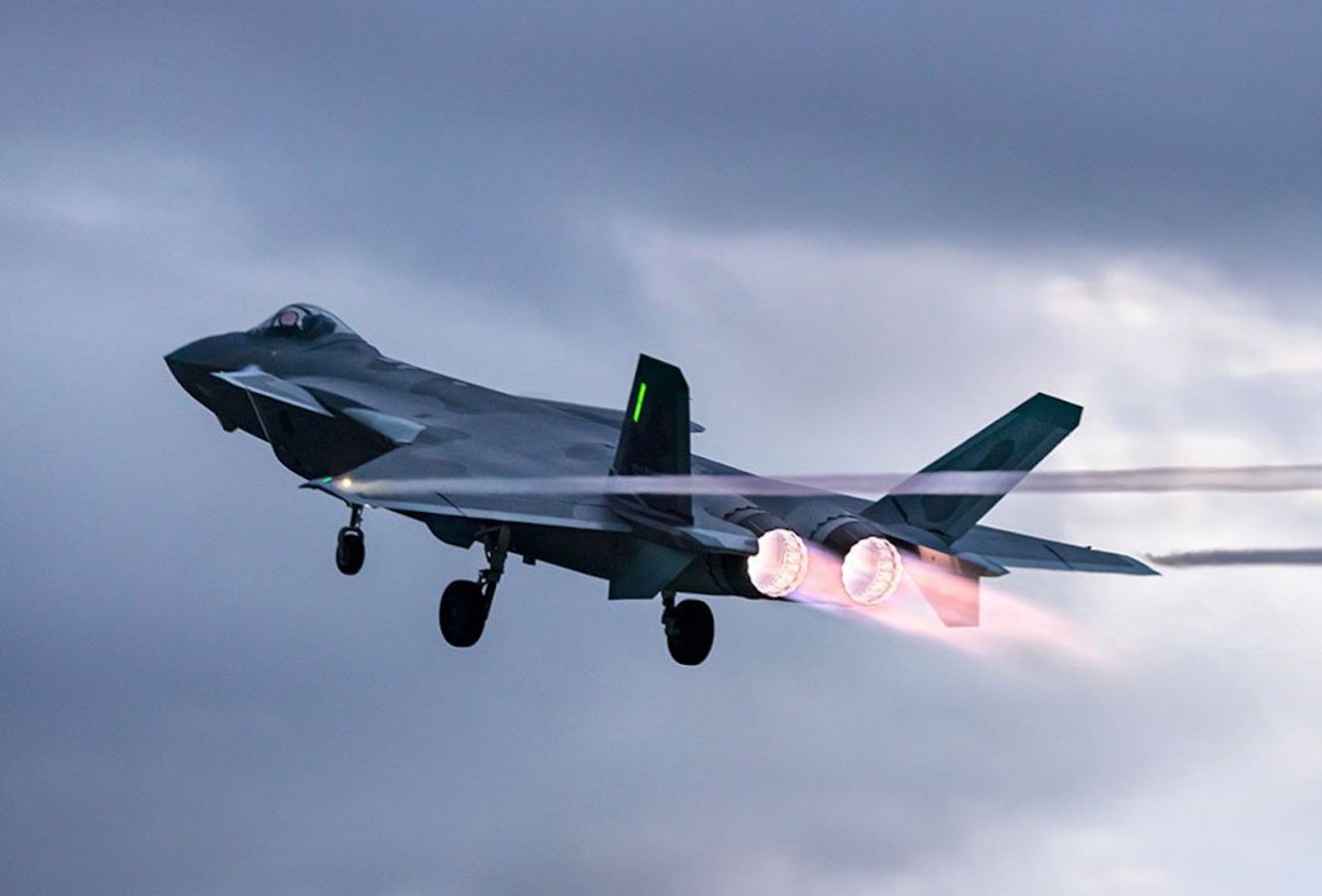
China has quietly achieved what few others have managed — fitting its J-20 stealth fighters with fully indigenous engines, while India remains far behind despite both nations starting their jet engine programs around the mid-1980s.
After years of development, Beijing’s WS-15 is now in serial production and powers the stealth J-20 aircraft. This is a massive boost for the Chinese Air Force (PLAAF), which has begun reducing its dependence on Russian engines.
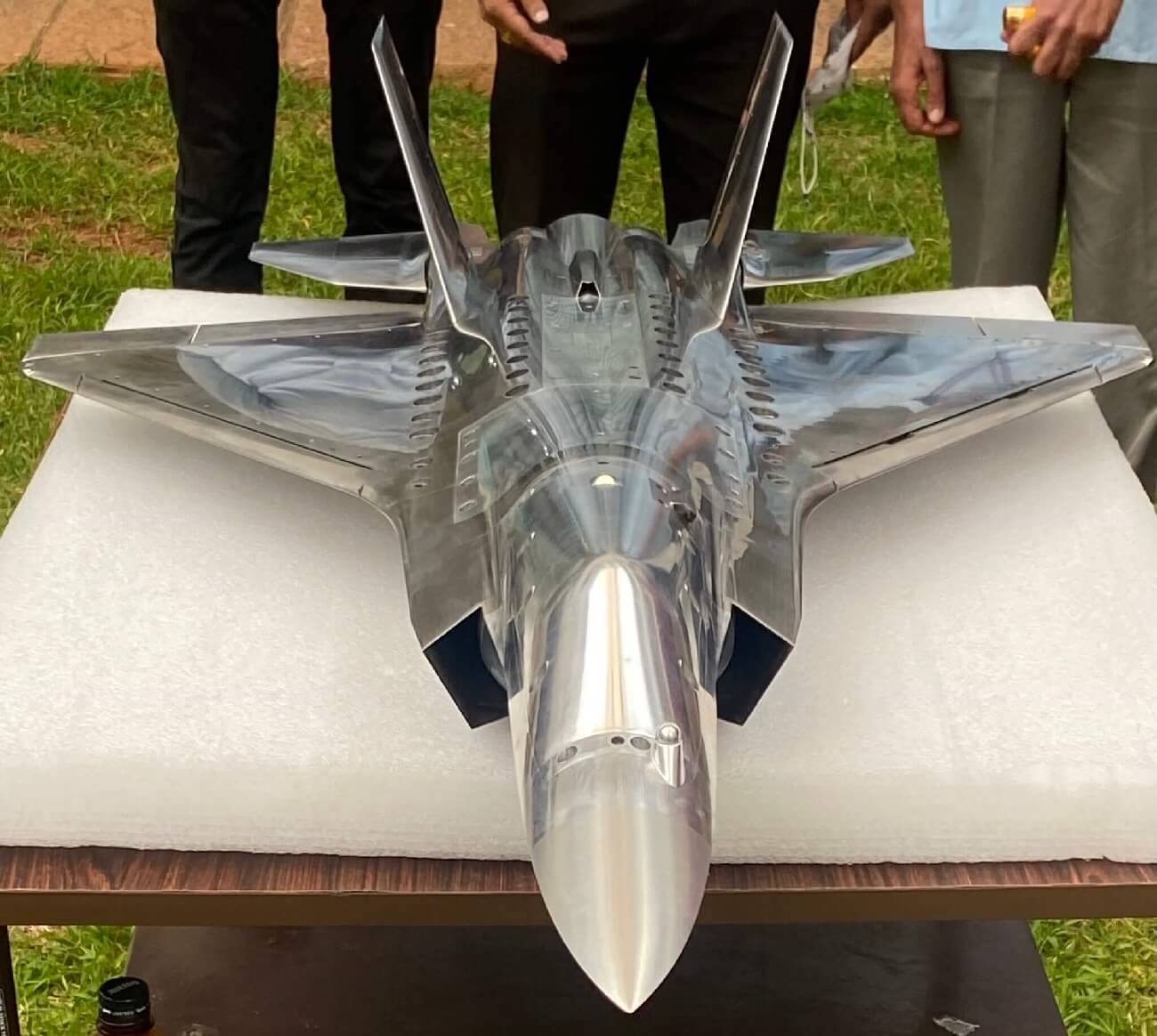
India, on the other hand, is still nowhere close to fielding an indigenous engine. The Tejas continues to rely on US GE F404 engines; the Tejas Mk2 will use the GE F414 under a licensed production deal, and the AMCA is expected to initially fly with foreign engines.
China initiated the WS-10 turbofan program to replace Soviet/Russian engines. It took them two decades to master advanced superalloy metallurgy and manufacturing processes, resulting in the production of the WS-10 and newer WS-15 engines for the J-20 stealth fighter.
China’s proficiency in jet engine tech, after decades of failure, is now fuelling the PLA’s air combat capabilities and boosting its operational autonomy.
India launched the Kaveri engine program under the Gas Turbine Research Establishment (GTRE). The project has been plagued by numerous developmental delays and funding hurdles, but has recently seen successful tests and integration with drones.
China’s Aero-Engine Development History
Chinese aero-engine development started in the early 1950s, largely relying on technological assistance from the Soviet Union. China’s first major trial production began in April 1954 with the M-11 radial engine for Yak-18 trainers.
Later, Chinese engineers reverse-engineered the Soviet engines since the original metallurgical technical data was unavailable. Their focus quickly shifted to early jet technology, allowing Beijing to build variants of the Soviet MiG-19 and MiG-21 engines.
By the 1980s, Western engine technology had rapidly surpassed Chinese capabilities, while the relationship with the Soviet Union had deteriorated. Development suffered from a flawed “one factory, one institute, one model” system, where engine research was tied strictly to a specific airframe and abandoned if the plane was canceled.
China launched the ambitious WS-10 program in 1986. However, early attempts to simply copy shapes and reverse-engineer systems like the Russian AL-31F were disastrous. Early WS-10s suffered severe reliability issues, sometimes failing after only a few dozen flight hours.
Thus, the WS-10 engine occupied a pivotal yet troubled chapter in China’s jet propulsion history. First conceptualized in the 1970s and formally approved by 1987, it achieved design and production certification by 2005. In 2000–2015, to catch up, China began tackling the rigorous metallurgical and engineering challenges required for modern propulsion.
The biggest breakthrough was learning how to mass-produce single-crystal turbine blades. These components sit in the hottest part of the engine and are subjected to enormous centrifugal forces. Early batches failed frequently due to impurities and internal cracking before yielding stable structures. The WS-10 Taihang turbofan gradually matured through repeated design, testing, and modification loops.
By the early 2010s, it had achieved the reliability required for mass production, replacing Russian AL-31F engines in frontline fighters such as the J-11 and J-10C.
Yet, even by 2017, it remained rather unreliable for frontline employment, limited to testing on twin-engine J-11s with Russian AL-31Fs as a fallback. The WS-10A experienced critical failures: overheating turbine blades, cracking, spraying, and mid-air stalling.
Its first-generation directionally solidified turbine blades proved inadequate against high core temperatures and pressure loads. In its initial three years, the PLA logged nearly 20,000 faults. The engine’s wet thrust, originally capped at 129 kilo-newtons (kN), was later raised to 137 kN, with a 145 kN target under development.
A breakthrough arrived only with the WS-10B, which incorporated improved alloys and components for turbines, compressors, and bearings. In 2018, a J-10C powered by the WS-10B performed aerobatics at the Zhuhai Airshow, signaling improved reliability.
Finally, after over three decades of development, China began equipping single-engine fighters with WS-10Bs from the 2019 fourth J-10C batch. However, its mean time between failures (MTBF) still lags behind Russia’s AL-31F and remains well below global benchmarks.
Beijing began consolidating in 2016 and fundamentally restructured the sector to compete directly with Western giants such as General Electric and Rolls-Royce. It formed the Aero Engine Corporation of China (AECC) by pooling tens of thousands of employees and billions of dollars in capital from AVIC and COMAC.
The WS-15 advanced afterburning turbofan is engineered to provide the Chengdu J-20 stealth fighter with super-cruise capabilities. It entered serial production and operational deployment in the mid-2020s. In the civilian sector, AECC leads the CJ-1000A high-bypass turbofan project. Designed to power the domestic COMAC C919 narrow-body airliner, it is undergoing flight testing as part of China’s goal to achieve self-sufficiency in commercial aviation.
India’s Aero-engine Development History
India’s journey in building aero-engines has been a long and difficult one toward self-reliance. In the early years, Hindustan Aeronautics Limited (HAL) mostly made engines under license from foreign companies.
Later, the focus shifted to developing engines completely on its own through the Gas Turbine Research Establishment (GTRE). The main story has always revolved around the Kaveri engine. Although the original version struggled, the work has now moved to a simpler, dry version of the engine, which is being readied for production — mainly to power drones.
RD-33 engines, which power the MiG-29 fighter jets, are also being manufactured at HAL’s Koraput division in Odisha. This phase provided Indian technicians and engineers with vital hands-on experience in maintenance, repair, and assembly, but did not grant India ownership of the engine’s intellectual property.
In 1986, seeking total sovereignty in critical defense technologies, the Defense Research and Development Organization (DRDO) launched the GTX-35VS Kaveri program under GTRE to design and build an indigenous afterburning turbofan engine for the Light Combat Aircraft (LCA) Tejas.
The program proved to be one of India’s toughest technological challenges, as designers faced severe metallurgical hurdles, particularly in making the turbine blades capable of withstanding temperatures exceeding 1,500°C.
Following India’s 1998 nuclear tests, global technology sanctions heavily restricted the country’s access to advanced aerospace know-how, forcing researchers to innovate independently.
The breakthrough came at the Defense Metallurgical Research Laboratory (DMRL) in Hyderabad. By mastering advanced vacuum investment casting and precise temperature gradients, DMRL achieved a historic milestone in 2021 by indigenously producing single-crystal turbine blades, a highly specialized component that prevents blades from stretching or creeping under extreme stress.
While the original afterburning Kaveri was delinked from the primary Tejas production program, it was successfully restructured into a “dry variant” (without an afterburner), producing around 46-48 kN of thrust. The Kaveri Derivative Engine (KDE) is now poised to power Unmanned Combat Aerial Vehicles (UCAVs) such as the DRDO Ghatak.
Companies like Godrej Aerospace began delivering serial-production-standard Kaveri derivative engines (D1) to GTRE, moving from prototype testing to full endurance and qualification trials. While developing a fully indigenous engine remains a national priority, India continues to forge strategic partnerships to learn the critical lessons.
HAL and GE Aerospace finalized a major technical transfer agreement, enabling the co-production of GE F414 engines in India to power the upcoming Tejas MK2 and AMCA fleet.
India’s strategy for a joint venture aero-engine with full intellectual property (IP) ownership centers on co-developing a 120 kN-class combat engine for the AMCA & Mk2 program. Key proposals, notably from Rolls-Royce and Safran, including complete technology transfer, localized R&D, and the establishment of a dedicated Indian aero-engine ecosystem by the early 2030s, are under consideration.
India vs China’s Aero-Engine Programs
China treated aero-engine development as a national strategic priority with consistent, long-term funding and full political backing. India treated it as just another DRDO project with fluctuating support.
China spent an estimated $42 billion on its aero-engine program since 1986, while India spent around $239 million on the Kaveri program.
China overcame early metallurgical bottlenecks in turbine-blade superalloys, whereas India is only now addressing them through recent technology transfers from Western partners.
China persevered despite many failures, took risks, and finally succeeded, whereas India remains reliant on imported power plants.
India’s current plan is to work with foreign companies through joint ventures to develop a new engine together. Instead of trying to build everything in-house, the focus is on full technology transfer and know-how. This is primarily to power future jets such as the AMCA and the TEDBF.
China followed a pragmatic approach and aggressively reverse-engineered Russian engines (AL-31F) while developing its own. This gave them a head start and real-world learning. India was too moralistic and mostly tried to develop engines from scratch.
China showed long-term consistency and patience, following a 25-30-year roadmap with steady investment. India’s Kaveri program suffered from changing requirements, inconsistent funding, and lack of continuity.
China had a higher risk appetite, accepted multiple failures and underperforming engines (early WS-10 versions), and kept improving them. India sought success and high performance too quickly, leading to demoralization and repeated setbacks.
China first built a stronger industrial and technological ecosystem with robust supply chains for critical technologies such as single-crystal turbine blades, high-temperature materials, and advanced metallurgy over decades. China sent its bright engineers abroad to learn critical technologies, and the state funded their stay and learning.
China hired Russian and Ukrainian designers and engineers after the Soviet breakup and employed them in China with high salaries. Similar offers to India were shunned on ethical grounds. Indian industrial base in this area remained weak.
Importantly, China began with lower-thrust engines and gradually transitioned to advanced engines such as the WS-10, WS-15, and WS-19. India aimed too high, too soon, with the Kaveri engine from the beginning and tried to match Western engines directly.
China’s was a better model of institutional focus and execution that first created dedicated organizations and gave them clear targets and accountability. India’s effort was spread over multiple agencies with bureaucratic oversight, delays, and a lack of focused execution.
If India wants to reduce its dependence on foreign engines, it will need a single, well-funded organization with clear leadership and accountability.
- Air Marshal Anil Chopra (Retired) is an Indian Air Force veteran, fighter test pilot, and ex-director-general of the Center for Air Power Studies. He has been decorated with gallantry and distinguished service medals during his 40-year tenure in the IAF.
- He can be reached on X: @Chopsyturvey
- Follow EurAsian Times on Google News