

Is Turkey now globally recognized as a major military-industrial power?
The question assumes significance as, in a span of 48 hours, Turkey has signed two significant agreements that enhance its military-industrial power projection.
In Doha on October 21, it signed the Badr Memorandum of Understanding with Pakistan, Qatar, and Indonesia for joint defense production, integrated manufacturing chains, and technology sharing.
In Ankara on October 22, it signed a Strategic Partnership with Canada, including a formal Agreement on Defense Industry Partnership, alongside deals on energy and air transport.
Four senior ministers signed the Badr Memorandum (BMU): Pakistan’s defense minister Khawaja Muhammad Asif, Turkey’s defense minister Yasar Guler, Qatar’s Deputy PM Sheikh Saud bin Abdulrahman Al Thani, and Indonesia’s Deputy Defense Minister Marshal Yusuf Jauhari.
Prof. Dr. Haluk Görgün, President (Secretary) of the Presidency of Defense Industries (SSB) in Turkey and regarded as the “architect” of the BMU, was present at the signing ceremony.
Incidentally, Badr refers to the Battle of Badr in 624 AD, when the Prophet Muhammad and his followers defeated their opponents in one of Islam’s earliest battles in the Arabian Peninsula.
Turkey’s defense ministry explained the name “Badr” as “full moon”. It said that “the four participating nations complement one another through this pact, which holds significant military and economic importance”.
In a statement, it added that “by leveraging the capabilities of each country in the field of military production, cooperation and integration will be achieved, defense industry capacities will be developed, and the needs of allied and friendly nations can thus be met.”
Similarly, the statement made by the Qatari Defense Ministry said the “Badr” Memorandum of Understanding “aims to foster cooperation in the field of defense manufacturing, enhance defense capabilities among the four countries, and promote collaboration in technical defense training, as well as in research and development areas, thereby contributing to the creation of solutions and industries worthy of the evolution of modern defenses”.
According to Arda Mevlutoglu, managing director of Ankara-based Mergen Analytical Strategies, the BMU’s implications could extend well beyond the four participants. “We may be witnessing the emergence of an interconnected network of defense and security arrangements extending from the Gulf to South and Southeast Asia, rather than a single formal alliance”.
Under the agreement, each country will bring its own resources and skills to the table.
“Turkey contributes technological expertise, systems integration and a mature defense industry; Pakistan and Indonesia offer manufacturing capacity, skilled workforces and sizable domestic markets; and Qatar provides investment potential and demand. Together, the four nations could establish integrated supply chains, allowing these countries to jointly develop, manufacture and sustain defence systems”, Mevlutoglu told Al Jazeera.
This means each member brings a complementary, not equal, asset. Turkey provides the industrial core, with establishments like Baykar (drones), TAI (aerospace), Aselsan (defense electronics), Roketsan (Missiles and munitions), STM (naval systems), and proven export models like the TB2 and Akıncı unmanned air-combat vehicles.
But Turkey seeks scale, co-production markets, and capital. Qatar can provide the finance. Pakistan and Indonesia can serve as markets.
Reportedly, Pakistan wants to diversify its military imports and not rely solely on China. It wants technology transfer and self-reliance through collaborations.
Indonesia is an emerging market and production base. Jakarta has bought Turkish weapons before — Kaplan tanks, MILGEM-derived frigates — and wants to build its own defense industry under Prabowo’s doctrine, with access to NATO-standard tech without full Western political conditions. The doctrine is championed by President Prabowo Subianto, who is aggressively executing a multifaceted supplier-diversification and co-production strategy.
However, the BMU is not the Mecca Pact of August 2026 that Turkey, Pakistan, and Saudi Arabia signed in Riyadh and reportedly contains a collective defense clause—an attack on one is an attack on all. It is an industrial MoU.
But one could argue that the initiative reflects Gulf countries increasingly looking toward the Global South and fellow Muslim countries, as recent Middle East conflicts have exposed vulnerabilities tied to dependence on foreign suppliers, technology restrictions, and supply chain disruptions.
By anchoring a defense-industrial coalition with Qatar, Pakistan, and Indonesia, Ankara seems to have signaled that it could be the technological and industrial nucleus of the Global South. And the global validation of its strategy has come through “the three-year action plan” with Ottawa.
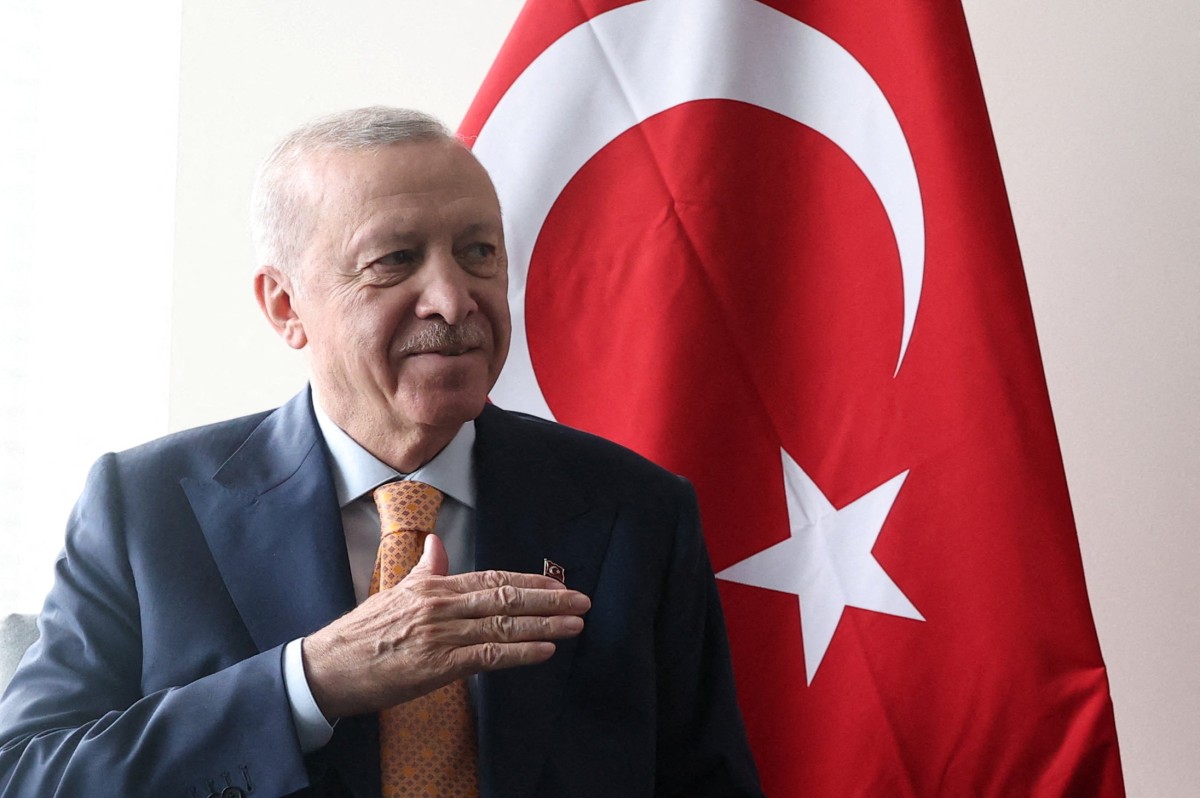
Reports describe the optics of Prime Minister Mark Carney being received at the Presidential Complex in Ankara with full honors by President Recep Tayyip Erdogan as historic. Carney is the first Canadian Prime Minister to make a dedicated bilateral visit to Turkey, although he traveled to Ankara in July to attend the NATO summit.
The visit resulted in the signing of three agreements: a Defense Industry Partnership between SSB Chairman Haluk Gorgun and Canadian Foreign Minister Anita Anand; an Air Transport Agreement; and a Joint Declaration on Energy Cooperation.
Remarkably, a few years ago, the two countries’ defense relations had virtually collapsed.
In October 2019, Canada imposed an arms embargo on Turkey after “Operation Peace Spring” in northeastern Syria. It was a military offensive launched by the Turkish Armed Forces and the allied Syrian National Army (SNA) against the Kurdish-led Syrian Democratic Forces (SDF) and the People’s Protection Units (YPG).
In October 2020, Canada suspended and later canceled export permits for L3Harris Wescam camera and targeting systems after confirming they were used on Turkish Bayraktar TB2 drones supporting Azerbaijan in the Nagorno-Karabakh conflict.
In fact, Canada adopted a presumptive-denial policy for military exports to Turkey. The Turkish defense industry saw Canada as a technology chokepoint.
However, over the last two years, Canada and Turkey have rebuilt their defense relationship. In January 2024, Ottawa quietly lifted arms-export restrictions and returned to a case-by-case assessment. In July 2026, at the NATO Summit in Ankara, the two defense ministers signed a “Statement of Intent” on military dialogue.
“In an increasingly complex global security environment, rising geopolitical uncertainties, and evolving humanitarian challenges, a strong and resilient Canada-Turkiye partnership is essential, providing a foundation to mitigate shared threats and capitalize on new opportunities,” said a joint statement by Carney and Erdogan on Thursday.
Canary’s own statement was more emphatic: “Today’s new Agreement on Defense Industry Partnership will connect Canadian and Turkish companies to work together, creating good jobs at home, export opportunities abroad, greater security for our citizens, and contributing to a stronger NATO alliance”.
The partnership’s three-year action plan rests on four pillars: trade and investment; defense and security; energy; and ties between people.
On trade, investment and innovation, the two leaders agreed to “work toward the successful conclusion of a Canada-Turkey Free Trade Agreement”. They will also expand bilateral trade and investments in priority sectors, including energy supply, defense production, aerospace, and artificial intelligence (AI).
On defense and security, Carney and Erdogan “underlined their intent to deepen bilateral and multilateral cooperation”. They also agreed to “strengthen cooperation in support of peace and security in the Euro-Atlantic region and beyond, including Ukraine, South Caucasus, and the Middle East, in particular Gaza”.
The three-year action plan calls for exploring co-development in aerospace, defense production, AI, critical minerals, LNG, and nuclear energy.
Of course, what Canada has agreed is not about Turkey alone. Carney is in the middle of a full-scale trade war with Washington. President Donald Trump’s tariffs and rhetoric questioning Canadian sovereignty have forced Ottawa to pursue a deliberate diversification strategy.
Carney has already reset ties with Saudi Arabia, India and China — all strained under his predecessor Justin Trudeau. Turkey, with 87 million people, NATO’s second-largest army, and a growing industrial base, fits perfectly into his “reliable partners” and “collective resilience” narrative.
For Turkey, the gain is more strategic than commercial. A G7 member and a Five Eyes country, which once embargoed it, Canada now legitimizes its defense industry as a partner. No wonder Erdogan was quick to link Thursday’s agreement to his pet project — “the Defense, Security and Resilience Bank” , announced by nine countries at the NATO summit in July 2026 to finance defense production.
Few will contest that Turkey’s defense industry has grown steadily. From an import-dependent country with 20% local production in 2002 to over 80% today, with $7.1 billion in exports in 2024, it is now a top-15 arms exporter. The fact that both Canada, which embargoed it, and Indonesia, which has options from South Korea and France, want co-production with Turkey is the recognition of Turkey’s defense ecosystem.
Apparently, the narrative has shifted from “Turkey buys” to “Turkey builds with.” Both the Badr agreement and the deal with Canada use the language of “joint production and technology sharing”, not a “buyer-seller” arrangement.
Secondly, Turkey is building a parallel architecture. A formal NATO ally, it is also becoming the leader of a non-Western defense network.
Thirdly, it is showing “Sanctions Resilience”. Western restrictions for its intervention in Syria and the controversy over its buying the S-400 from Russia seem to have taught Turkey to indigenize. Now that indigenization is proving to be its selling point.
However, some reality checks are needed. Turkey’s achievements need not be projected as triumphalism.
After all, both the Agreements made at Doha and Ankara are MoUs and framework agreements. No specific defense program has been identified that would allow assessment of impact on regional military balance. “Badr” has no factory, no joint venture company yet. In defense deals, MOUs are one thing, but their eventual shape is a different matter.
Second, there is the technology ceiling. Turkey still depends on Western subsystems — engines for Kaan and Altay, critical minerals processing, and high-end semiconductors. Canada can help with the latter, but Ottawa’s case-by-case export control means strategic tech will still be gated.
Engaging pragmatically with strategically vital G20 and NATO allies without requiring complete alignment on all domestic values, Canada is meeting this moment with what it calls “values-based realism”.
It is “pragmatically” dealing with other countries, but it will not cross a line when its commitment to the fundamental values of freedom, human rights, sustainability, and solidarity is challenged.
So, it remains to be seen how long Canada will remain silent on the widely reported sweeping and unprecedented nationwide crackdown by the Turkish government on dissent and civil society, heavily focusing on the systematic dismantling of LGBTQ+ and HIV-advocacy organizations.
However, all this does not detract from the fact that Turkey is emerging as a second-tier military-industrial power like South Korea and Israel. Its products are innovative and export-driven. But it has miles to go before reaching the status of the US, France, and Russia, which set global standards.
- Author and veteran journalist Prakash Nanda is Chairman of the Editorial Board of the EurAsian Times and has been commenting on politics, foreign policy, and strategic affairs for nearly three decades. He is a former National Fellow of the Indian Council for Historical Research and a recipient of the Seoul Peace Prize Scholarship.
- The author can be reached at prakash.nanda (at) hotmail.com