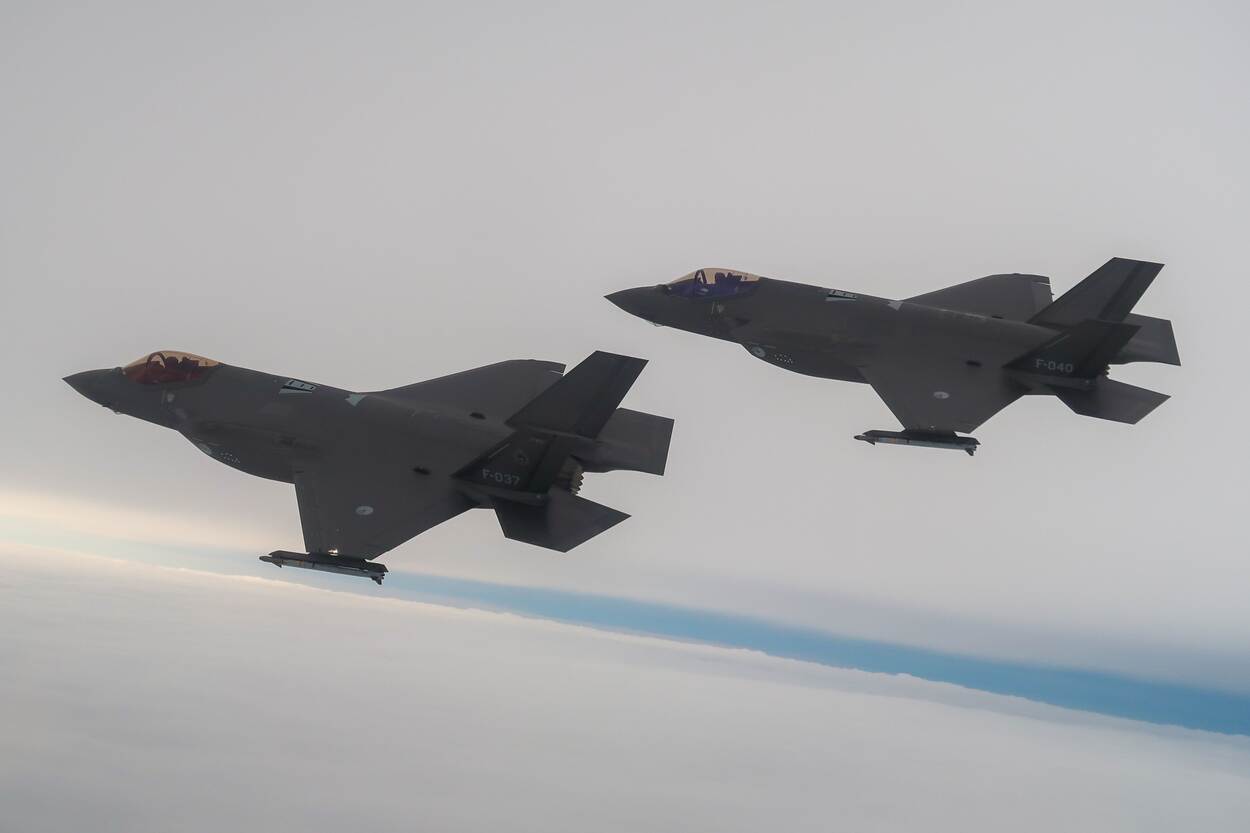
Italian Eurofighter Typhoon fighter jets deployed in the Middle East have been caught in the crossfire for the second time in the last six months.
Defense Minister Guido Crosetto said that an Italian Eurofighter Typhoon combat aircraft was struck in an attack on an air base in Saudi Arabia late on September 17-18, adding that no Italian personnel were hurt in the strike, news agency ANSA reported.
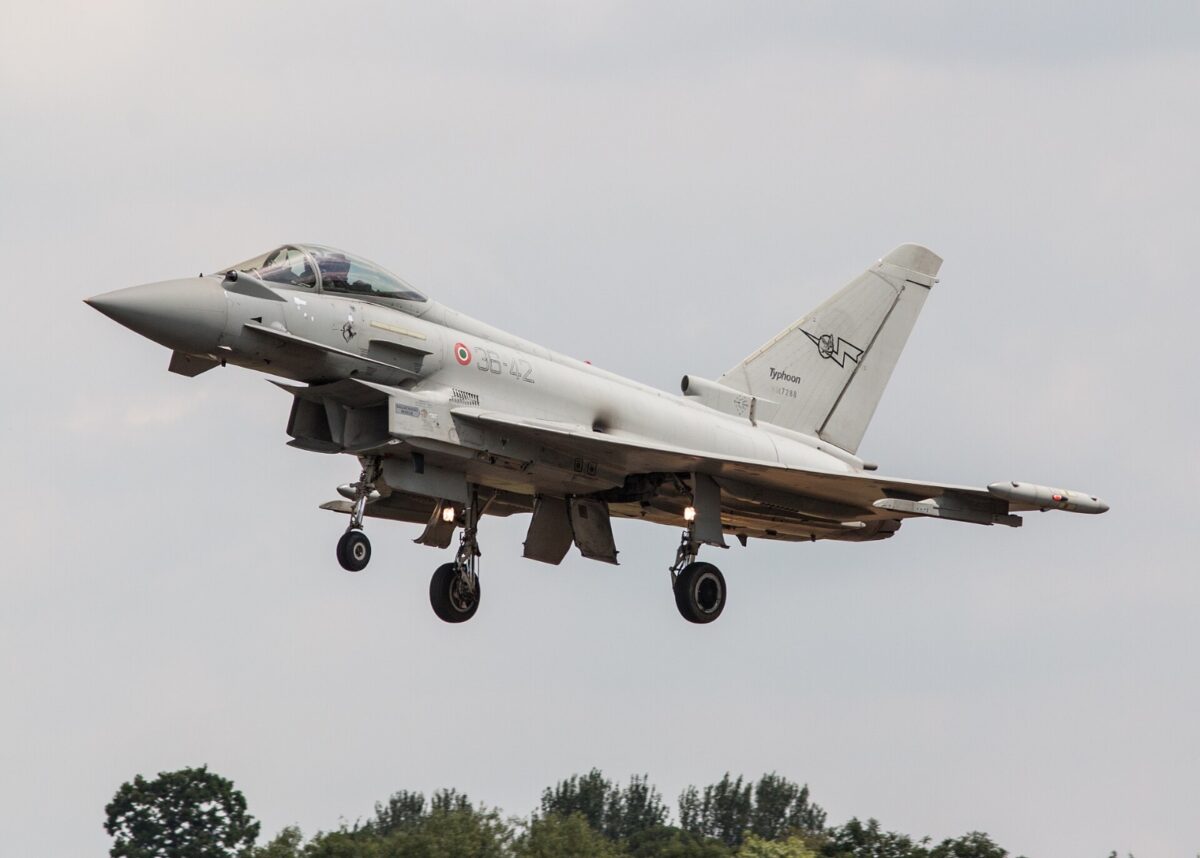
Italy’s official designation for the Eurofighter Typhoon is F-2000 (F-2000A for the single-seat version).
“Last night, I personally monitored, with the utmost attention and in close contact with the Defense Chief of Staff, General Luciano Portolano, the unfolding situation in Saudi Arabia, in particular at the Ta’if Air Base, which has been the target of several attacks and where Italian personnel are deployed as part of Operation Inherent Resolve,” Crosetto said.
“During the attack, an Italian F-2000 aircraft was hit. It was inside the base, in a remote area. There is no other damage to vehicles or infrastructure used by our personnel.”
“I asked the Chief of Staff of the Defense, General Luciano Portolano, the Commander of the Joint Operational Command, Lieutenant General Giovanni Maria Iannucci, and the Chief of Staff of the Air Force, General Antonio Conserva, to provide me with a further assessment, after those already carried out in recent weeks, on the evolution of the situation, the conditions of our personnel, and the possible operational options,” he stated.
"Questa notte ho seguito personalmente, con la massima attenzione e in contatto con il Capo di Stato Maggiore della Difesa, Generale Luciano Portolano, l’evoluzione della situazione in Arabia Saudita, e in particolare alla base aerea di Ta’if, che è stata oggetto di diversi… pic.twitter.com/ihJFLPemvT
— Ministero Difesa (@MinisteroDifesa) September 18, 2026
Italy contributes military personnel, aircraft, and support units to Operation Inherent Resolve, the multinational coalition fighting the Islamic State.
To bolster regional air defense and surveillance, it has established a Task Force Air at Taif’s King Fahd Air Base, which consists of four F-2000A Eurofighters, an E-550A Conformal Airborne Early Warning (CAEW) aircraft, and C-130J/KC-130J transport capabilities, among other things.
The Eurofighter Typhoon was possibly damaged in a strike launched by the Houthi militia amid the intensification of the conflict between Riyadh and the Yemen-based organization in recent times. Al Taif is in western Saudi Arabia, close to the Red Sea, and within range of the Houthi missiles.
The fighting between the two sides intensified earlier this month after the Houthis launched a rapid ground offensive along the Red Sea coast and overran the Saudi-backed Yemeni government forces, capturing the strategic port city of Mocha and seizing Mayun on Perim Island and the Hanish Islands near the Bab al-Mandeb Strait—another critical chokepoint for Saudi oil exports.
Additionally, Houthis have increased their drone and missile attacks, targeting military and energy installations in southern Saudi Arabia.
Saudi Arabia, on its part, has launched a major aerial strike campaign against the Yemen-based group. During one such strike, an F-15SA belonging to the Royal Saudi Arabian Air Force (RSAF) was downed by the Houthis, as previously reported by the EurAsian Times.
In fact, it deployed its own Eurofighter Typhoons and some other F-15SA jets to look for the downed aircraft, as claimed by the Houthis.
For Italy, the damage to its fighter jet is an unwarranted loss. However, it is not the first time that one of its Eurofighters has been damaged in West Asia this year.
In March 2026, Iranian attacks on Ali Al Salem Air Base in Kuwait as part of its war with the United States damaged two Italian F-2000s deployed there with Task Force Air Kuwait.
This was disclosed in reports that surfaced in late June 2026—the Aviationist news portal observed that three of the four Italian Eurofighters that were supposedly present at the base at the time of the attack had returned home a few days later, indicating that only one aircraft may have been affected in the strike or that one of the two purportedly damaged jets had only minor damage and could return home.
Additionally, an Italian MQ-9A Reaper drone was also reportedly damaged at Ali Al Salem during Iran’s counter-offensive. It was one of six drones from the 32nd Wing at Amendola Air Base in southeast Italy that were deployed to the Middle East to perform ISR (Intelligence, Surveillance, and Reconnaissance) in support of counter-terrorist operations against ISIS.
At the time, reports suggested that Italy had deliberately kept the aircraft on the ground, rather than relocating or launching it, specifically to stay away from any involvement in the US or Israeli campaign against Iran at the time.
That said, both incidents of Italian Eurofighters being struck demonstrate that even a “defensive” or support deployment under Operation Inherent Resolve carries real risk from low-cost, long-range munitions that can penetrate or overwhelm air defenses.
Italy Not Part of War
Italy’s prime minister Giorgia Meloni and Defense Minister Guido Crosetto have repeatedly said the war “is not ours,” and Rome was not consulted before the strikes on Iran.
Meloni’s argument has been consistent: Italy honored existing base agreements for technical and logistical activity and refused anything else. When NATO Secretary-General Mark Rutte later said hundreds of American aircraft had used Italian bases for Operation Epic Fury, Rome pushed back immediately, insisting the authorized flights were non-combat and that it had denied requests beyond that scope.
Italy and Spain were among the first NATO states to block US access to their bases for launching strikes against Iran. In fact, Meloni publicly opposed the war and told the parliament that the US-Israeli military operations were a part of a dangerous and expanding trend of interventions “outside the scope of international law.”
- Contact the author at sakshi.tiwari13 (at) outlook.com
- Follow EurAsian Times on Google News