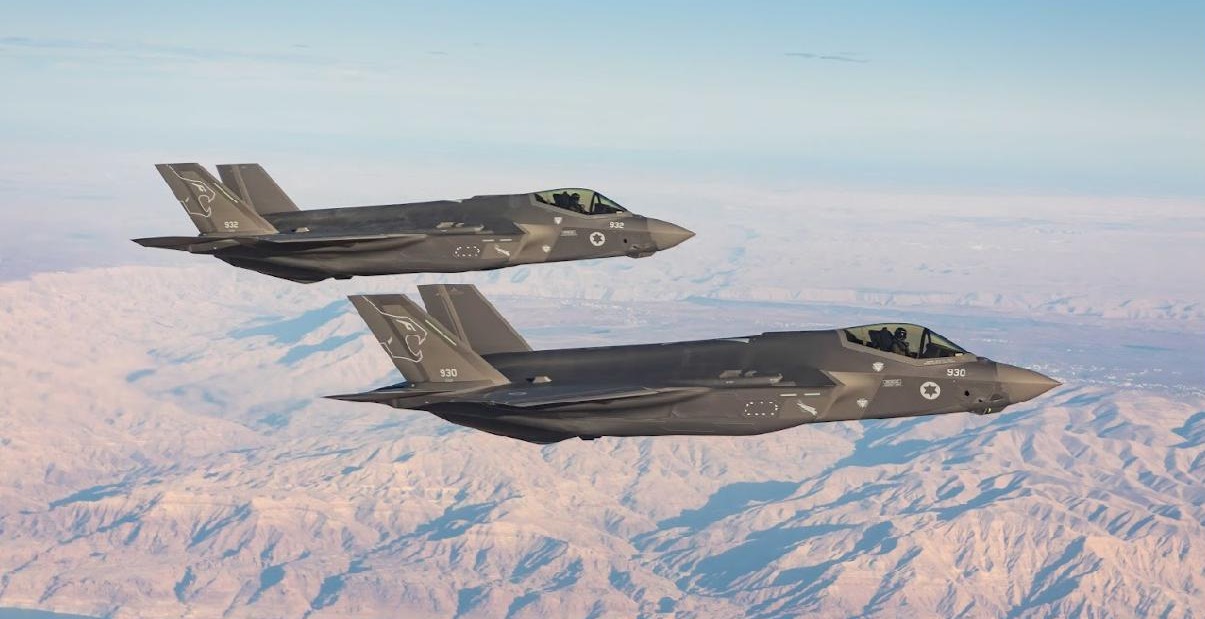
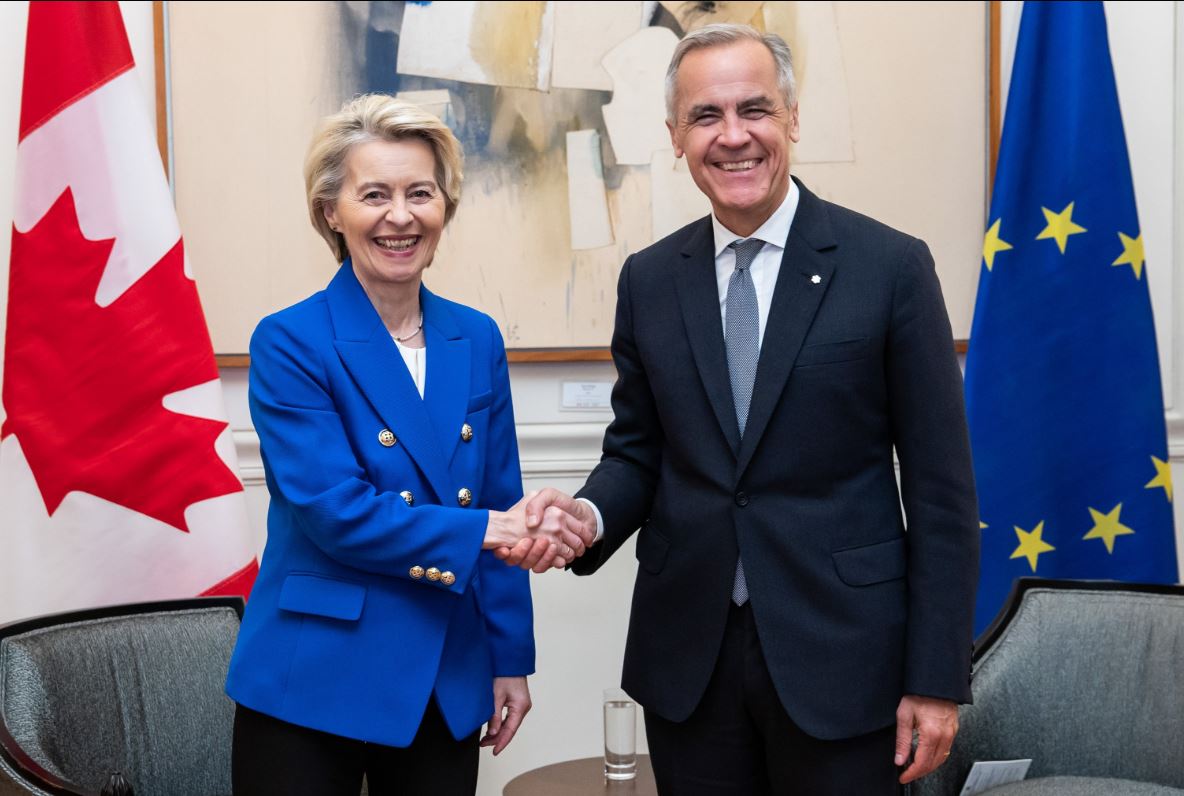
Finland has become the tenth European country to join France’s nuclear “forward deterrence” initiative, and Estonia is already discussing a similar step with Paris.
Finland, which joined NATO in 2023, shares a 1,340-kilometer (833-mile) long land border with Russia. Finland, however, made it clear that the French nuclear umbrella will complement, not replace, the NATO nuclear umbrella.
Finnish President Alexander Stubb stressed that Finland’s “foremost priority” was still to act as part of NATO and the EU and that the French initiative would not “replace or overlap with NATO’s nuclear deterrence.”
“If you ask what our primary nuclear umbrella is, it remains, as before, the NATO umbrella – or, more precisely, that of the United States. Thus, this adds value to our own defense planning,” he explained.
The two countries also committed to deepening their defense partnership, with Helsinki formally joining a French initiative to strengthen European security through forward nuclear deterrence.
In a joint statement, the two nations called the decision an “important step for European security, and for bilateral cooperation.”
“It will strengthen their partnership and offer opportunities for strategic signaling, as well as the ability to manage escalation below the nuclear threshold,” it continued, adding that a “Nuclear Steering Group” would be set up within the next few months to “begin the implementation of this cooperation.”
This makes Finland the tenth European partner to join the initiative launched earlier this year by French President Emmanuel Macron.
The United Kingdom, Germany, Poland, Sweden, the Netherlands, Belgium, Greece, and Denmark have already joined France’s initiative, which aims to deepen nuclear cooperation across Europe through joint exercises.
Norway, another Nordic country and Finland’s neighbor, joined the alliance in May.
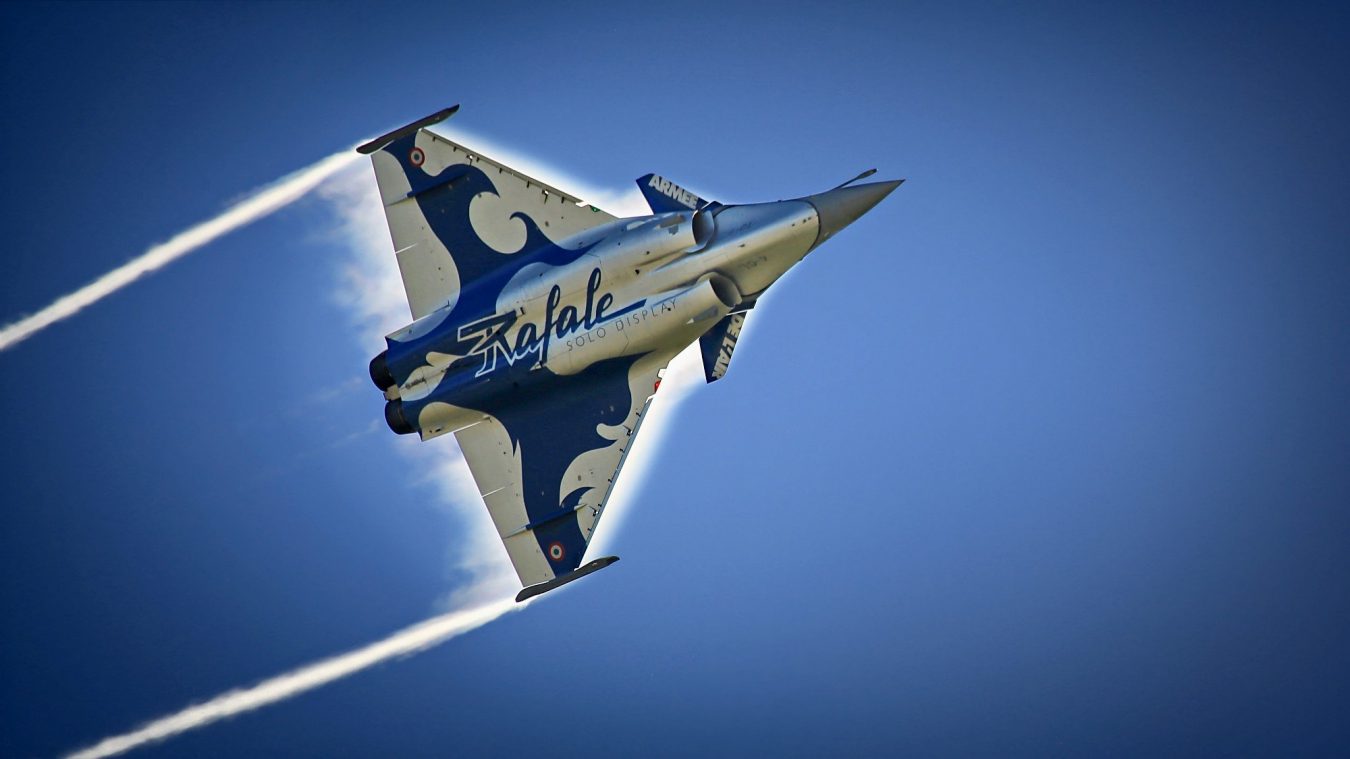
Under the framework, participating countries could also potentially host French nuclear-capable aircraft (Rafale and Mirage-2000) on a temporary basis.
France, however, will retain exclusive control over its nuclear arsenal, and any decision to use nuclear warheads, even during wartime, will rest exclusively with the French President.
Therefore, the French nuclear umbrella, in essence, is not very different from the US nuclear umbrella, which has forward-deployed its nuclear warheads in many European countries, but Washington retains the ultimate rights over them.
Notably, France is the only European Union (EU) country to have nuclear weapons. While the UK is also a nuclear state, it is no longer part of the EU.
As the US commitment to NATO wanes under President Trump, France proposed earlier this year that it could provide a ‘nuclear umbrella’ to European states for their security.
In a major speech at France’s nuclear submarine base in Île Longue on 2 March 2026, President Emmanuel Macron formally offered to extend French nuclear protection to European allies through a new doctrine called “forward deterrence”.
As many as 10 European states joining the French initiative underscores the rising insecurity among European states amid Russia’s war in Ukraine and Washington’s changing stance on its commitment to defend Europe.
While all 10 states are part of the US-led NATO alliance, four of these states – Germany, the Netherlands, the UK, and Belgium – also host American nukes.
Similarly, Norway joining the French ‘nuclear umbrella’ was significant, as it was not only a founding member of NATO but also frequently described as an Atlanticist country that believed its security was best achieved through close alignment with Washington.
However, all of these countries now want to strengthen their security by taking shelter under the French ‘nuclear umbrella.’
“We are doing this in light of the security policy situation in Europe, including Russia’s massive rearmament, also in the nuclear domain, and that it is waging a full-scale war against another European country,” Norway Prime Minister Jonas Gahr Støre told news agency NTB while joining the French ‘nuclear umbrella’.
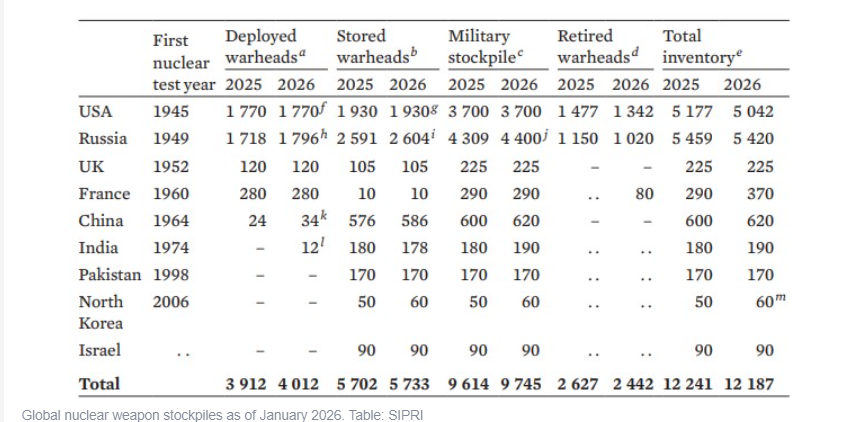
While France’s nuclear weapons are limited, nearly 290 according to SIPRI’s latest estimate, as compared to the US’s stockpile of over 5,000 nuclear warheads, these moves suggest that Paris is aiming to extend its nuclear umbrella to the whole of Europe and replace the US as the primary guarantor of security.
However, Finland clarified that despite becoming a NATO member and formally joining the French nuclear umbrella, nuclear warheads will not be stationed on its territory during peacetime.
“Finland does not intend to station nuclear weapons on its territory in peacetime,” President Stubb said.
In June, the Finnish Parliament passed new legislation that lifted the country’s complete ban on nuclear weapons.
Finland had a Cold War-era law that completely prohibited the import, transport, supply, and possession of nuclear weapons on its territory.
Under the new law, nuclear weapons could be deployed on Finnish territory “when it is done for Finland’s homeland defense, as part of NATO’s collective defense, or in the context of defense cooperation with allies”.
This legislation brought Finland’s nuclear posture in line with its three Nordic neighbors – Sweden, Norway, and Denmark – where there is no general, explicit statutory ban on nuclear weapons.
Estonia Could Be Next To Join French ‘Nuclear Umbrella’
Meanwhile, Estonia is also holding talks with France to join the initiative to strengthen nuclear deterrence in Europe.
Estonian Prime Minister Kristen Michal said this in an interview with AFP that Tallinn was “in discussion” with Paris over possible cooperation on the matter.
“This is not the kind of (initiative) that you just join … It needs certain capabilities, readiness and so on,” Michal told the news agency on the sidelines of the European Arctic Summit in Finland.
“We are under NATO’s nuclear umbrella already. And France is also backing up our independence with the troops in Estonia. So if the cooperation can be deeper in the nuclear field, that probably will go so,” he added.
Since 2017, France has maintained a military presence of around 300 troops in Estonia as part of NATO’s enhanced forward presence in the Baltic states.
Additionally, Lithuania, another Baltic country that shares a land border with the Russian exclave of Kaliningrad, is also considering joining the French ‘nuclear umbrella’.
However, to join the French initiative, Lithuania will have to amend its constitution, as, just like Finland, its constitution also explicitly prohibits the hosting of nuclear weapons on its territory.
Article 137 of the Lithuanian Constitution currently stipulates that no weapons of mass destruction or foreign military bases may be on Lithuanian territory. However, Europe is not the only place where more countries want to strengthen deterrence by joining another country’s nuclear umbrella.
Europe to Asia – New Countries Join Nuclear Umbrella
For instance, in September 2025, Pakistan and Saudi Arabia signed the Strategic Mutual Defense Agreement (SDMA) on the lines of NATO’s collective defense clause. The agreement’s most important clause states, “Aggression against one country shall be considered aggression against both.”
While not explicitly stated, some Pakistani leaders, including Defense Minister Khwaja Asif, had suggested that the agreement extend Pakistan’s nuclear umbrella protection to Saudi Arabia.
Similarly, when asked whether Pakistan would be obliged to provide the kingdom with a nuclear umbrella, a senior Saudi official told Reuters, “This is a comprehensive defensive agreement that encompasses all military means.”
“It can be viewed as a shortcut to nuclear capability in the event that Iran does acquire nuclear weapons. It also sends a message to the US that the Saudis are increasingly skeptical of any security guarantees Washington offers,” said Ghaffar Hussain, a London-based security expert and director of the Quilliam Foundation.
Last month, Pakistan, Saudi Arabia, and Turkey also signed the Makkah Pact, which includes a mutual defense clause.
Turkey, however, also hosts US nuclear weapons as a NATO member.
Meanwhile, Japan, which has one of the strongest laws banning the development, production, and hosting of nuclear weapons, has suggested that there is a need to review its three non-nuclear principles.
In July, Japanese Defense Minister Shinjiro Koizumi said that Tokyo needs a debate on nuclear weapons. Japan “cannot avoid touching” the issue, Koizumi was quoted as saying by the Japanese Daily The Mainichi.
Koizumi said Japan’s security environment has grown harsher and argued that Japan needs to change a situation in which some topics are deemed unacceptable to debate.
In December last year, a source who is involved in devising security policy under Prime Minister Sanae Takaichi’s government said Japan should possess nuclear weapons.
Earlier, former Defense Minister Itsunori Onodera also said late last year that Japan needs to debate the future of its non-nuclear principles.
Koizumi cited France and Finland as pursuing policies that favor stronger nuclear deterrence.
The extension of nuclear deterrence to new countries comes at a delicate time when the world’s nine nuclear-armed states have expanded the number of nuclear warheads deployed on missiles and other delivery systems – the first such increase in several years.
According to the latest data from the Stockholm International Peace Research Institute (SIPRI), an estimated 4,012 warheads were deployed on missiles and at bomber bases.
This is an increase of around 100 deployed warheads compared with the estimate for January 2025, mainly based on a reassessment of Russian nuclear warhead deployments and SIPRI’s assessment of new Chinese and Indian nuclear warhead deployments during 2025.
- Sumit Ahlawat has over a decade of experience in news media. He has worked with Press Trust of India, Times Now, Zee News, Economic Times, and Microsoft News. He holds a Master’s Degree in International Media and Modern History from the University of Sheffield, UK.
- He can be reached at ahlawat.sumit85 (at) gmail.com