Just three months after Canada joined the Global Combat Air Program (GCAP) as an observer, Bombardier has signed a framework agreement with BAE Systems.
British aerospace giant BAE Systems and Bombardier, a Canadian company that produces business jets and has a growing defense and special-mission business built on the same platforms, announced the Memorandum of Understanding (MoU) on October 28, 2026.
“Bombardier has a proud history of designing, building and supporting world-class aircraft while advancing aerospace technology. We are well positioned to bring together and develop the talent and expertise needed for programs that can carry a generational impact on the worldwide defense industry,” Stephen McCullough, Bombardier’s Executive Vice President of Engineering, Product Development and Defense, stated.
“This MOU with BAE Systems provides a clear framework to explore how these capabilities can support next-generation defense programs, while strengthening industrial capacity, high-value jobs and long-term aerospace leadership,” he added.
Meanwhile, BAE Systems Group Managing Director for Air, Simon Barnes, highlighted the partnership’s value in supporting Canada’s Defense Industrial Strategy and building enduring capabilities across the full lifecycle—from early design and digital development through systems integration, manufacturing, and in-service support.
Neither side published specific details on this collaboration, but an official BAE press release said the potential areas of focus may include aircraft and mission-system design, systems integration, digital engineering and digital thread technologies, advanced manufacturing, and long-term product support, sustainment, and security.
Both companies emphasized creating long-term sovereign combat air capabilities in Canada that could also serve international markets.
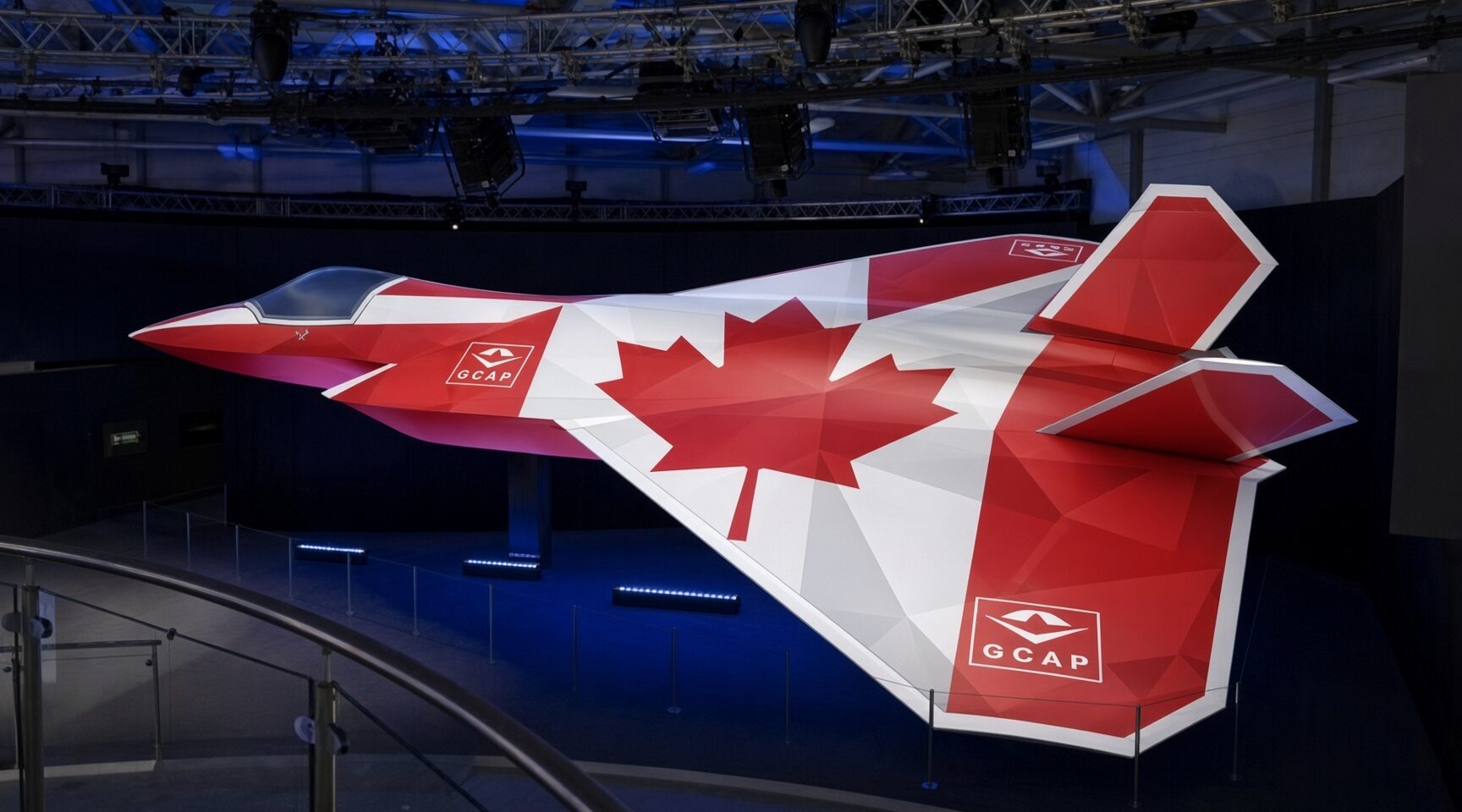
Notably, neither side explicitly linked the agreement exclusively to the sixth-generation GCAP, which Canada joined as an observer in July 2026. BAE Systems is the UK industry lead alongside Japan’s Mitsubishi Heavy Industries and Italy’s Leonardo. The three companies established the equal joint venture Edgewing to serve as the design, development, and lifetime design authority for the GCAP combat aircraft.
When Canada joined as an observer, the UK said the country would gain “direct insight” into the program, including “industrial collaboration” and “long-term delivery plans.” While Canada gets a non-decision-making role, the move “paves the way for discussions on Canada’s future participation and contribution to GCAP”, it emphasized.
As an observer, Canada would gain controlled access to classified or confidential data on the next-generation fighter’s design, technologies, performance, and development process. This could help the country to evaluate the system, plan potential future integration into the Royal Canadian Air Force (RCAF) through a purchase of the aircraft, or inform domestic defense strategies. It does not, however, carry any financial commitments, decision-making authority, or automatic industrial workshare.

Bombardier and BAE could potentially cooperate on GCAP-related work, or broader next-generation combat air capabilities because the program’s industrial structure allows commercial subcontracting and bilateral industry partnerships.
Although the three national companies retain core manufacturing, systems work, and much of the supply chain, non-partner companies can still bid for subcontracts, components, design support, digital engineering, manufacturing, or sustainment roles under commercial arrangements.
More importantly, the arrangement with BAE now creates a possible avenue for Bombardier to increase its market share in the defense industry, beyond providing airframes from its business-jet lineup and producing special mission aircraft. Bombardier is also apparently nearing a deal with Saab to build GlobalEye aircraft under license in Canada, following a preliminary Canadian government framework agreement covering up to six platforms.
That said, the MOU’s conditions don’t seem limited to a next-generation crewed aircraft. In fact, both companies’ press releases use the phrase “future combat air programs” in the plural, as The Aviation Week pointed out. Beyond the GCAP, BAE’s FalconWorks is developing an autonomous Collaborative Combat Aircraft called the Brontanax, which could be a potential area of collaboration between the two companies.
Brontanax is intended to be a platform capable of electronic warfare and precision-strike roles in manned-unmanned teaming (MUMT), with flight testing targeted for 2027.
Becoming an observer lets Canada engage with GCAP on a low-commitment basis and, if it later chooses, pursue fuller participation. If Ottawa eventually decides to join as a member, Bombardier could play a significant industrial role, though that would likely require renegotiating existing arrangements among the current partners.
While the Canadian firm has secured an MOU with a key GCAP industrial partner for next-generation collaboration, Germany and its industry partner Airbus are actively exploring the possibility of joining the sixth-generation program.
Germany Keen on GCAP?
Germany is weighing whether it could join GCAP, German Chancellor Friedrich Merz said in Tokyo on October 28, 2026, during his first visit to Japan since taking office. Merz raised the prospect as part of a broader effort to strengthen cooperation with Japan on defense, critical raw materials and future technologies.
After a joint press conference with Japanese Prime Minister Sanae Takaichi, Merz told reporters that the German and Japanese defense ministers will soon meet to discuss the issue. For her part, Takaichi said Japan would encourage defense industry cooperation where both countries’ capabilities complement each other, but she did not directly reference the Global Combat Air Program (GCAP).
Merz noted that Germany is assessing all its options, but talks on dividing industrial tasks among the current GCAP partners are already advanced. He cautioned that Berlin might not meet Japan’s preferred timeline to decide by early 2027.
In June 2026, the Merz administration withdrew from the FCAS (Future Combat Air System) that it was pursuing with France and Spain over irreconcilable differences between industry partners Airbus (representing Germany and Spain) and France’s Dassault Aviation. It has since been evaluating alternatives, with the GCAP and a new partnership with Sweden and Spain emerging as the two most viable options.
Earlier this month, reports indicated Berlin held “exploratory talks” about joining the GCAP led by the UK, Japan, and Italy. In fact. British Prime Minister Andy Burnham has said Germany is welcome to join the sixth-generation fighter program.
However, joining the program that has matured over the past two years at this stage could be a complex issue for Berlin, as previously explained in detail by the EurAsian Times.
Japan, for one, has been reluctant to open the program to new members over concerns that renegotiating all contracts with a new partner would delay the program. Tokyo needs to replace its F-2 combat jet with a sixth-generation fighter amid tensions with China, and cannot risk the timeline slipping beyond 2035.
Even if Italy and the UK convinced Japan to allow Germany to participate, reopening sensitive negotiations on industrial participation, production sharing, and intellectual property would still create friction between partners. In fact, Germany might be offered a more limited role with reduced influence over architecture, design, and key decisions—something that would sit uneasily with Berlin and Airbus.
BAE Systems already holds a dominant position in GCAP and is reluctant to share crucial technologies with other partners, which could potentially limit Airbus’ space in the program.
An internal German Defense Ministry assessment, reported earlier this month, recommended forming a new partnership with Sweden and Spain rather than joining GCAP, calling the former “more advantageous and promising.”
The assessment reportedly cited past experiences with BAE Systems during the Eurofighter program, concerns about British industrial dominance, and a perceived mismatch between GCAP’s design emphasis and Germany’s continental operational requirements. However, Defense Minister Boris Pistorius has not formally endorsed the recommendation.
Interestingly, the assessment singled out BAE Systems for its poor performance during the Eurofighter program (pursued jointly by the UK, Germany, Spain, and Italy). It accused the British company of prioritizing exports over German and Italian development interests and warned that British dominance would be incompatible with a partnership of equals.
Moreover, many argue that the GCAP is being built around a maritime scenario, while Berlin needs an aircraft for continental use, creating a clear mismatch in operational requirements with the Britain-led sixth-generation fighter program.
For now, Berlin continues to assess its options, as evident by Merz’s Tokyo visit. It remains to be seen whether Tokyo would be prepared to accommodate German participation and the associated demands, including any potential adjustment to decision timelines.
- Contact the author at sakshi.tiwari13 (at) outlook.com
- Follow EurAsian Times on Google News