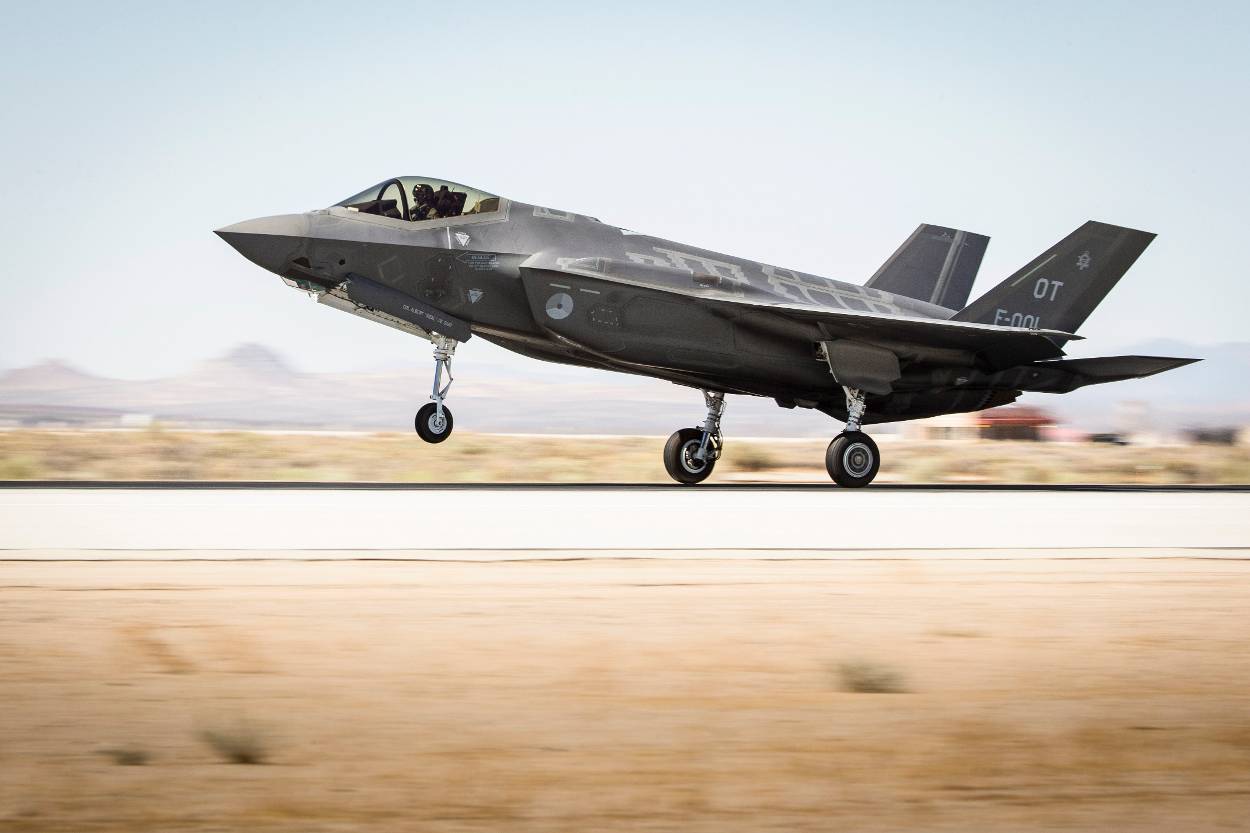
Iran has claimed to have downed another MQ-9 Reaper drone and forced out an F-35 stealth fighter and RQ-4 drone from its airspace after the United States conducted fresh strikes on boats and missile facilities.
A US MQ-9 Reaper unmanned aerial vehicle (UAV) was shot down, whereas an F-35 Lightning II stealth aircraft and an RQ-4 surveillance drone were spotted and fired upon, forcing them to retreat from the Iranian airspace, the Islamic Revolutionary Guards Corps (IRGC) said in a statement, as reported by Iran’s state-run IRNA news agency.
The aircraft entered Iranian airspace over the Gulf, the IRGC stated, adding that it reserved the “legitimate and definite” right to strike against any US violations of the truce.
The claims come after the US Central Command (CENTCOM) announced that it had conducted what it described as “self-defense strikes” near the Strait of Hormuz.
“US forces conducted self-defense strikes in southern Iran today to protect our troops from threats posed by Iranian forces,” US Central Command spokesperson Capt. Tim Hawkins said in a statement. “US Central Command continues to defend our forces while using restraint during the ongoing ceasefire.”
The US military reportedly sank two IRGC ships it said were attempting to lay mines in the Strait of Hormuz, and struck missile launch sites.
Citing a US official, the Wall Street Journal states that Iran responded to the strikes on boats by launching surface-to-air missiles at US aircraft, which prompted the attacks on missile launchers. Meanwhile, Iran said the strikes were conducted south of Larak Island near the Strait of Hormuz and claimed the lives of “several Iranian nationals.”
The Iranian Foreign Ministry has since accused the US of violating the ceasefire and vowed retaliation, sparking fears of another round of hostilities between the two sides.
The fresh escalation comes as the two sides are unable to reach a peace deal, weeks after a ceasefire ended nearly 40-days of hostility. The US President has called upon Iran to surrender its enriched uranium or destroy it under international supervision–a demand that has been categorically rejected by Tehran–extending the stalemate.
The latest strikes near the Strait of Hormuz came after the US President Donald Trump indicated that the negotiations for an extended cease-fire had been successful, but reiterated the threat to launch more strikes against Iran.
25 Reaper Shot Down?
If the recent Iranian claims are found to be true, this would be the 25th MQ-9 Reaper loss for the US Air Force in Iran.
A recently unveiled US Congress report confirms that of the 42 total losses suffered by the US military in the Iran War, about 24 were MQ-9 Reapers, accounting for 57% of all losses. These drones were destroyed on separate occasions throughout the conflict, as EurAsian Times recently reported in detail.
The heavy losses have been attributed to the heavy reliance on these drones for operations in high-risk, well-defended areas, without exposing human pilots to risk. The US military relies on the Reapers for Intelligence, Reconnaissance, Surveillance (ISR) missions, for guiding other tactical aircraft to conduct dynamic strikes, and for performing precision strikes on targets that may be too risky for manned jets to hit.
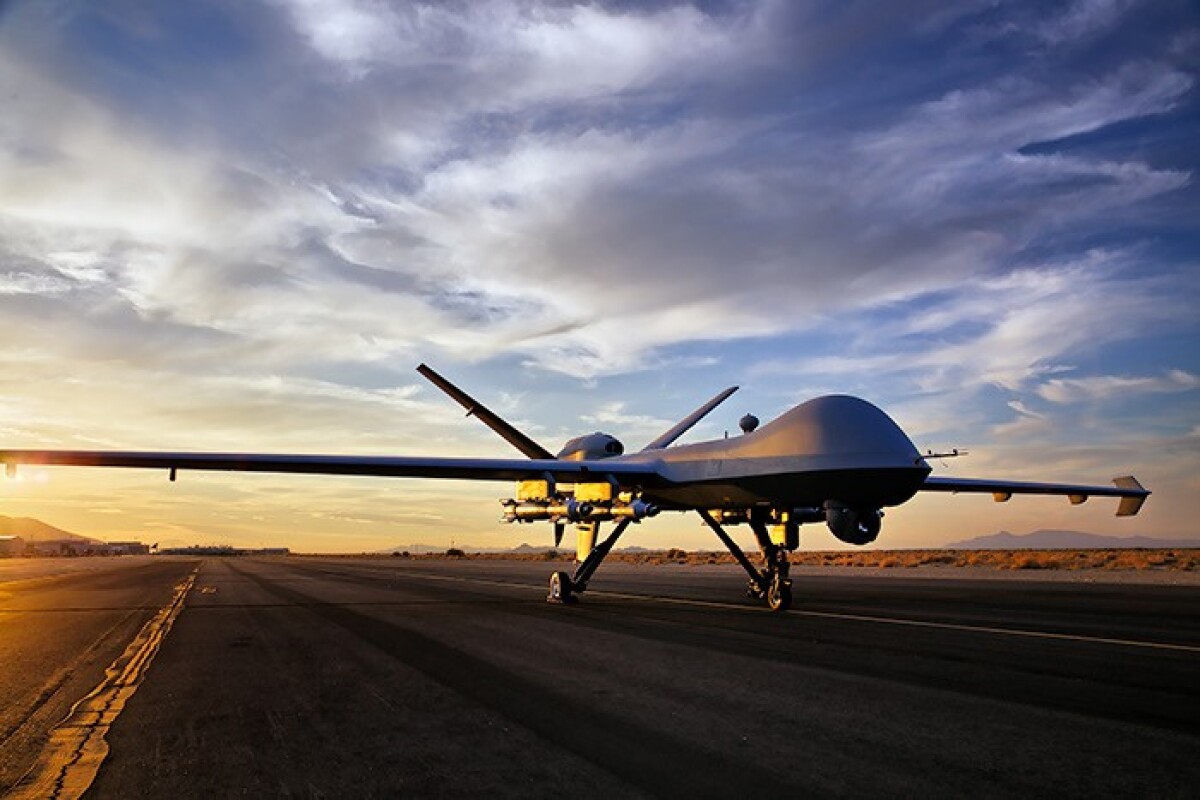
Despite the heavy losses, Chief of Staff Gen. Kenneth S. Wilsbach hailed the Reaper as the “Most Valuable Player” of the Iran war. “No other platform is even close to the MQ-9” when it comes to the number of strikes against Iran, Wilsbach said. “It’s an unmanned platform, so we get a lot of utility out of them, and don’t put our folks at risk,” he added.
After the ceasefire came into effect and the US military blockaded the Iranian coastline, the Reapers were deployed to fly missions near the Strait of Hormuz and enforce the blockade.
It is, therefore, very likely that the Reapers were deployed in the latest round of strikes on Iranian assets near the strategic strait.
Although Iran has been unable to down an F-35 Lightning II, the IRGC had severely threatened the stealth aircraft during the war. In March, Iran became the first country to strike an F-35 stealth fighter. The F-35 was damaged and made an emergency landing at a US air base in the Middle East.
The fifth-generation stealth jet was “flying a combat mission over Iran” when it was forced to make an emergency landing, Capt. Tim Hawkins, a spokesperson for US Central Command, announced.
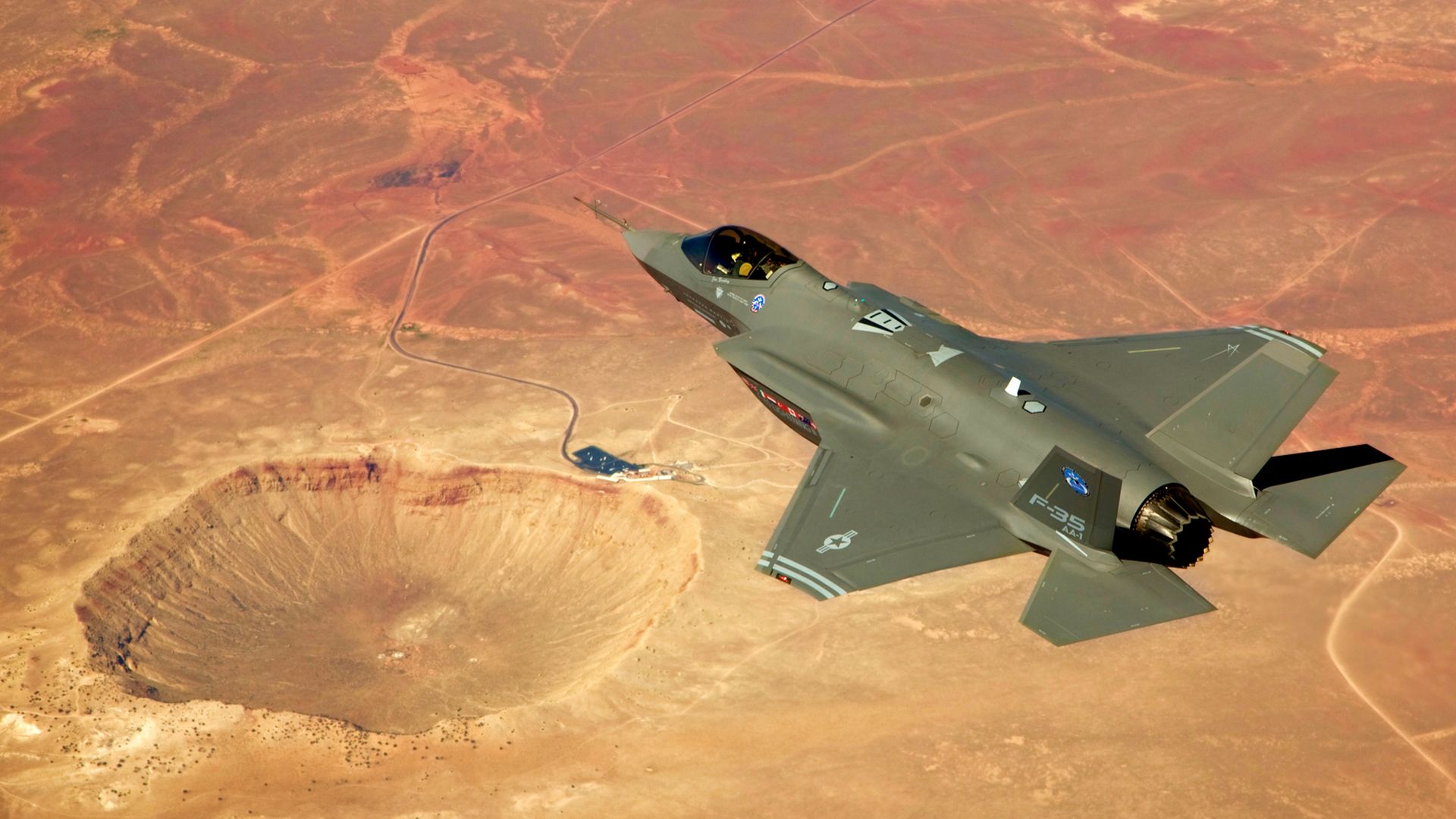
This was the first recorded event in which the stealth aircraft was successfully struck, and the incident exposed a critical vulnerability in the F-35, considered one of the most advanced fifth-generation fighters and widely exported. The F-35’s stealth technology is designed to evade radar, but it cannot hide its high heat signature from infrared sensors—as evidenced by the strike by an Iranian ground-based defense system.
As for the RQ-4 Global Hawk, it is a high-altitude, long-endurance (HALE) unmanned surveillance drone. It provides persistent, wide-area intelligence, surveillance, and reconnaissance (ISR) over vast areas, including the Persian Gulf, the Strait of Hormuz, and Iranian territory, without risking pilots’ lives.
The US has actively used RQ-4s for monitoring Iranian military movements, missile sites, naval activity, and nuclear facilities. Therefore, it is hardly a surprise that these drones were dispatched during strikes on Iranian assets.

Interestingly, Iran shot down an unmanned Navy RQ-4 Global Hawk surveillance aircraft in 2019, claiming the drone had entered its airspace.
In contrast, the Pentagon said the remotely piloted aircraft was over the Strait of Hormuz when it entered international waters.
“At the time of the intercept, the RQ-4 was operating at high altitude, approximately 34 kilometers from the nearest point of land on the Iranian coast,” the Pentagon stated. “This dangerous and escalatory attack was irresponsible and occurred in the vicinity of established air corridors between Dubai, United Arab Emirates, and Muscat, Oman, possibly endangering innocent civilians.”
For now, the recent Iranian claims could not be verified. However, we know that the IRGC has been able to destroy some of the most advanced aircraft in the USAF’s inventory, including the F-15E Strike Eagle, A-10 Thunderbolt II, the MQ-9 Reapers, and the MQ-4C Triton. Meanwhile, several others, including the F-35, the E-3 Sentry AWACS, the MC-130J Commando II, and the KC-135 tankers, were struck.
It remains to be seen whether the two sides can work out a deal, successfully extend the ceasefire, or give in and resume hostilities.
- Contact the author at sakshi.tiwari13 (at) outlook.com
- Follow EurAsian Times on Google News