The US Air Force (USAF) chief recently stated that the MQ-9 Reaper was the “most valuable player” (MVP) in the Iran War, even though the drone figures most prominently in the list of losses suffered by the USAF in the Middle-East war.
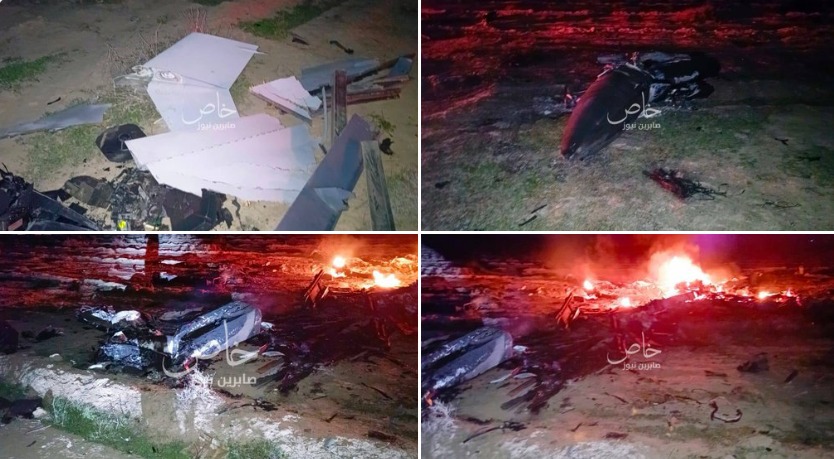
A new US Congress report has revealed that about 42 aircraft belonging to the USAF were either destroyed or significantly damaged in the six-week war with Iran. These include assets shot mid-air by Iranian missiles, assets destroyed by drones while still on the tarmac of air bases in the Gulf, and the assets lost in friendly fire incidents.
The report confirms that about 24 MQ-9 Reapers were destroyed on separate occasions throughout the conflict, which means they accounted for 57% of all USAF losses in the war.
Some past reports pegged the total number of Reaper losses at around 30, well above the US report’s figure.
Interestingly, the Chief of Staff, Gen. Kenneth S. Wilsbach, endorsed it as the MVP of the Iran war instead of expressing regret over the unprecedented losses, as reported by Air and Space Forces Magazine. “For Epic Fury, perhaps the most valuable player was unmanned: the MQ-9,” Wilsbach told the House Armed Services Committee on May 20 while responding to queries from Rep. Mike Rogers (R-Ala.) on the USAF’s plans for future unmanned and autonomous systems.
Wilsbach stated, “We’ve made many, many strikes” with Reapers, though he stopped short of putting a number on them.
As per publicly available information, the US military as a whole bombed over 13,000 targets in Iran during “Operation Epic Fury,” which began on February 28, 2026, and ended with a ceasefire on April 7, 2026.
The USAF deployed almost all of its fighter and bomber types against Iran, including F-15Es, F-16s, F-22s, F-35s, A-10s, B-52s, B-1s, and B-2s. However, Wilsbach believes that the Reaper proved to be the unsung hero of the war.
“No other platform is even close to the MQ-9” when it comes to the number of strikes against Iran, Wilsbach said, emphasizing how the autonomous aircraft had achieved the feat without putting its pilots at risk. “It’s an unmanned platform, so we get a lot of utility out of them, and don’t put our folks at risk,” Wilsbach said.
Big Losses Due To Big Responsibilities
Most of these 24 MQ-9 Reaper drones were destroyed in the air by Iranian ground-based forces, while some were struck in attacks on US bases across the Gulf region. Notably, each Reaper drone costs between $16 million and $30 million, meaning every loss is a major blow to the US military.
The math becomes even more concerning when Reaper losses to Houthi fire are added to the list of losses in West Asia. Earlier, for example, the Yemen-based and Iran-backed militia had claimed to have downed 15 to 20 MQ-9 Reaper drones during the US military campaign between 2023 and 2025. In fact, reports suggest that at least seven drones were lost between March 15 and April 23, 2025, alone.
The unprecedented losses confirmed by the US Congress report highlight the vulnerability of Reapers in high-threat environments like those in Iran, including their slow speed, large radar cross-section, and reliance on beyond-line-of-sight communications.
Some critics of the drone have argued that their use in counterterrorism operations (as seen in the past) differs significantly from their use on a modern battlefield saturated with a variety of legacy and modern air defense systems.
Iran, for one, is believed to possess a layered air defense network, including Russian S-300 systems, the indigenously developed Bavar-373, Khordad, and other radar-guided surface-to-air missiles (SAMs), as well as killer drones. These systems continued to operate despite the US President’s claims about their complete decapitation in US strikes.
However, the heavy Reaper losses in the Iran War also indicate that the drones were extensively deployed to hit high-value targets in heavily protected areas.
Although the US military has refused to provide a detailed breakdown of sorties conducted during Operation Epic Fury, Wilsbach’s remarks about the widespread use of MQ-9s suggest the aircraft likely spent significant time in higher-threat areas.
The Reapers reportedly conducted about a dozen circles above Iran at a time during the height of the war, concentrating on either directly hitting or supplying intelligence to other platforms to hit so-called “dynamic targets,” such as enemy aircraft, mobile systems, and missile and drone launchers.
It is pertinent to note that advanced multispectral sensors on the Reaper, including electro-optic and infrared sensors, synthetic aperture radar, and laser designators, enable incredibly accurate targeting and are considered a “unique capability” for dynamic strikes in irregular warfare or permissive areas.
The Reapers were also instrumental in reducing the rate of Iranian attacks and played a critical role in the kill chain, enabling coordinated precision strikes and enhancing fighter jet survivability. For instance, the videos published by US Central Command (CENTCOM) during the war showed that the laser-guided bombs dropped by the USAF and the US Navy on Iranian targets were guided by the MQ-9 Reapers.
Meanwhile, some reports noted that the drone played a major role in the search and rescue operation for the second crew member of the F-15E that was downed by Iran.
The Reaper allegedly fired at Iranian men who got within three kilometers of the downed airman, and were perceived as a threat by operators.
Wilsbach’s comments hinged upon a significant argument: although the Reaper losses are huge, they are still cheaper in the way that no human pilots were killed or captured.
This allowed the US to maintain pressure with high sortie rates and orbits that would have been more limited for manned aircraft. Despite vulnerability, Reapers delivered outsized effects through volume and persistence.
So, even though critics emphasize the high per-unit cost and the avoidable attrition rate, US leaders viewed the trade-off as worthwhile for the campaign’s specific goals, which puts General Wilsbach’s “MVP” comments in perspective. The Reaper was the workhorse of the air campaign, even if it took hits.
The war also signaled a shift in warfare, with the USAF prioritizing less costly, autonomous assets, such as the Reaper, to conduct high-risk strikes, even at high cost. The shootdown of the F-15E may have further enforced this policy shift, and it is likely for this reason that the Reapers are now purportedly flying missions near the Strait of Hormuz and enforcing the blockade of Iranian ports in the region.
Reaper: The MVP
The MQ-9 Reaper has been designed as a hunter-killer UAV that would combine long-endurance intelligence, surveillance, and reconnaissance (ISR) with lethal-strike capability against mobile targets.
MQ-9 Reapers have a range of about 1,000 miles (more than 1,600 kilometers), an endurance of about 27 hours, and the ability to stay on station for extended durations. This provides constant “eyes in the sky” for convoy protection, overwatch, combat search and rescue, target development, close air support, and terminal guidance—much more than manned fighters can sustain without crew fatigue or refueling.
With a payload capacity of roughly 3,850 pounds (1,746 kilograms), the drone functions much like a bomb truck. It can typically carry a range of munitions, including AGM-114 Hellfire missiles, GBU-12 Paveway II and GBU-49 Enhanced Paveway missiles, and GBU-38 and GBU-54 Joint Direct Attack Munitions.
Notably, the platform was widely used in counterterrorism and counterinsurgency during the “War on Terror” as soon as it entered service in 2007. The drone flew thousands of sorties for close air support, overwatch, and high-value target strikes in Afghanistan.
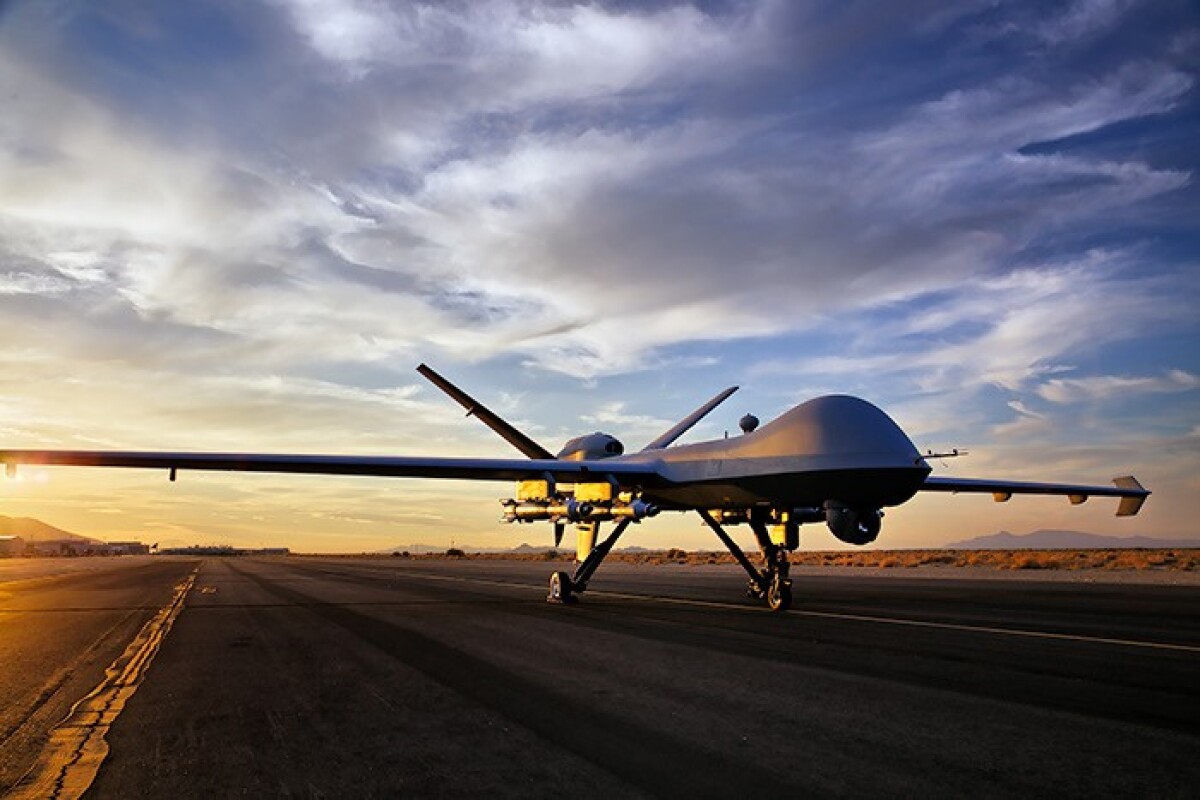
The drones were then used in counter-ISIS operations in Libya, Syria, and Iraq.
For example, during the Battle of Sirte in Libya in 2016, the MQ-9s conducted about 500 close air support strikes against ISIS positions in urban areas while operating in extremely dangerous conditions.
In the past few years, the drones have been deployed to strike the Yemen-based Houthis and other Iranian regional proxies. In 2024, a couple of American MQ-9 Reaper drones attempted to shoot down an unidentified object in the air off the coast of Yemen, as previously noted by the EurAsian Times in a detailed report.
The drones were sent to Puerto Rico in the Caribbean before the operation against Venezuela, before they were redeployed to West Asia to take on Iran.
General Wilsbach’s endorsement of the drone emphasizes its operational utility, particularly after two decades of service in a fast-evolving combat environment. In fact, the service is already moving ahead with plans to purchase 2 dozen Reapers to replace its losses, even as it looks for a next-generation successor to the drone.
- Contact the author at sakshi.tiwari13 (at) outlook.com
- Follow EurAsian Times on Google News