Even as Canada reviews its F-35A purchase amid tensions with the Trump administration, the Royal Canadian Air Force (RCAF) is readying a dedicated security force for the 16 American stealth fighters it will begin receiving in 2028.
Canadian Prime Minister Mark Carney ordered a review of the planned acquisition of 88 F-35As in March 2025, citing Canada’s heavy reliance on US defense suppliers amid rising friction with the Trump administration. Although the outcome of that review is yet to be published, Ottawa is contractually committed to the first 16 aircraft it has already paid for.
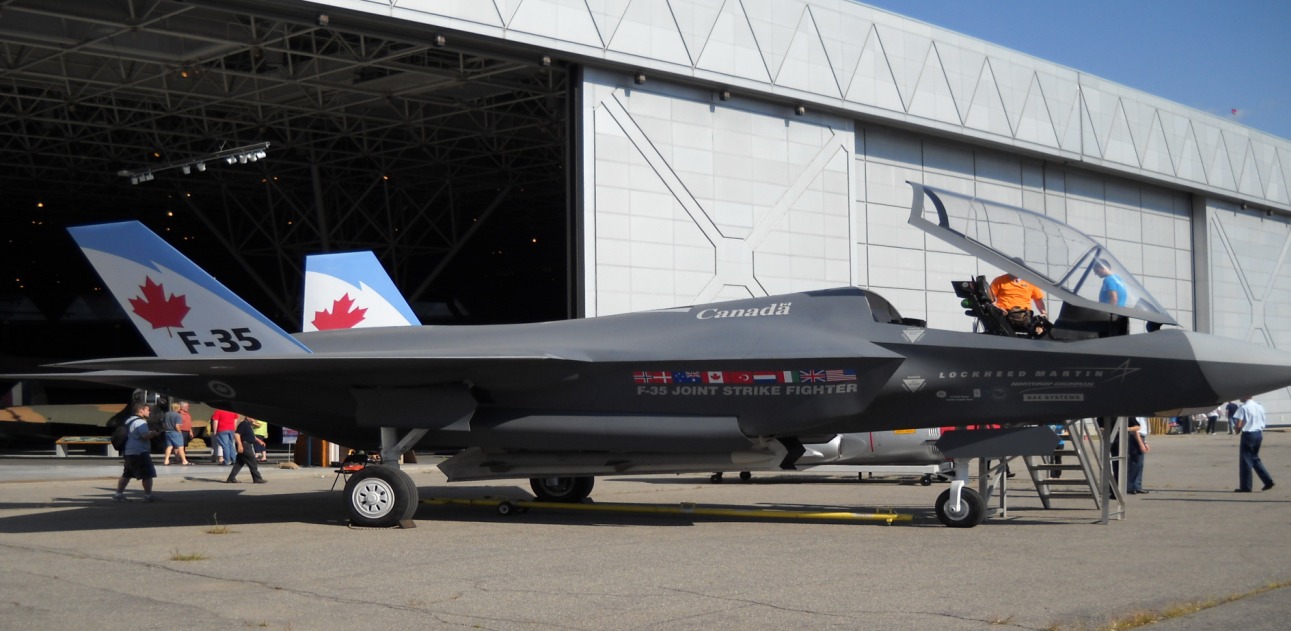
The first eight jets are scheduled to arrive at Luke Air Force Base in Arizona later this year or early next year, where Canadian pilots will train with the US Air Force (USAF). Following this, the aircraft will be transferred to Canada in 2028, primarily to 4 Wing Cold Lake, Alberta, and 3 Wing Bagotville, Quebec.
To protect these highly sensitive fifth-generation aircraft, the RCAF is creating a new military occupation known as Security Forces, or SecFor.
“The Royal Canadian Air Force (RCAF) is establishing a new military occupation, Security Forces (SecFor), to deliver a dedicated force protection capability. The new occupation will help support the RCAF as it introduces advanced air and space systems that require higher levels of security,” the service said in an official announcement last month.
The RCAF has noted that recruitment for the initial cohort, primarily non-commissioned members led by a small number of officers, is already underway. The position is open to eligible Regular Force and Primary Reserve members across the Canadian Armed Forces.
Members of the new security force will begin training in October this year, with the USAF’s 343rd Training Squadron at Joint Base San Antonio and Camp Bullis. Most of the trained personnel will then be stationed at 4 Wing Cold Lake in Alberta and 3 Wing Bagotville in Quebec, though some will be deployed to RCAF division headquarters.
Dedicated Security Force For F-35
The new force is likely being created to address the strict security, infrastructure, and technology-control requirements that accompany the F-35. The sale of the stealth aircraft often comes with several strings attached. For example, Canada must build dedicated hangars for the jets and get them approved by the US, and F-35 parts stored in Canada will be American property unless installed on the jet, as the Ottawa Citizen noted.
Moreover, the export of the F-35 by the United States comes with higher standards, including specialized infrastructure, stricter access controls, Special Access Program (SAP)-compliant facilities, rigorous personnel vetting, and ongoing compliance with US program-protection rules, among other things.
The F-35 has faced multiple security breaches, and adversaries have made coordinated attempts to steal its stealth technology. Earlier, a Chinese national, Su Bin, a permanent resident of Canada, helped the Chinese steal American military secrets, including designs for the F-22 and F-35, as the EurAsian Times reported.
Moreover, several instances of cyber espionage against the F-35 have been reported in the past two decades.
Earlier this month, for instance, reports indicated that a shipment of F-35 parts dispatched to the US from Australia was inconspicuously diverted to Hong Kong, a region China tightly controls.
Not just that, multiple incidents of unidentified drones flying over bases housing the F-35 in Australia, Denmark, and the Netherlands have been reported in the past year. This highlights the challenges F-35 operators face in protecting the jet from adversaries and potential saboteurs.
The RCAF has been planning a dedicated security force for some time. For instance, it initially planned to hire about 1,200 by 2030 as part of its future structure plan, per reports last year. Beyond the F-35, the SecFor will ensure the security of other aircraft the RCAF is acquiring, including the P-8A Poseidon maritime patrol craft and long-range remotely piloted aircraft such as the MQ-9B SkyGuardian drones.
“With the transition to these new platforms, the RCAF has undertaken important work not only to meet fighter staffing levels but also to define security requirements for these and future advanced technologies,” Maya Ouferhat, a spokesperson for the Defense Ministry, said in an emailed statement to the Canadian Security publication. “This includes looking at increasing security forces to ensure wings, personnel and data are properly protected given the sensitive nature of these new platforms,” she added.
Although their exact duties remain unclear, the new SecFor is the RCAF’s specialized response to the elevated security, force protection, and technology-protection requirements of modern, highly sensitive platforms like the F-35 and related systems—driven by both operational needs and alliance standards. The Canadian security personnel trained by the USAF will likely protect aircraft, facilities, personnel, and operations at main operating bases. Furthermore, they may be made responsible for safeguarding classified or advanced systems and information associated with these platforms.
The RCAF Commander, Lt.-Gen. Jamie Speiser-Blanchet earlier said, “We’re learning what they did as they were implementing and onboarding some of their advanced equipment, and we are working with (counter-drone) technology and various things to ensure that we are doing so as rapidly but as prudently and judiciously as possible.”
Currently, only the United Kingdom has a dedicated F-35-focused security unit, while the US and most other operators of the fifth-generation stealth aircraft rely on existing Security Forces with enhanced procedures, specialized program security roles, and higher standards rather than creating an entirely new occupation like Canada’s SecFor.
The British Royal Air Force (RAF) operates No. 6 RAF Police & Security Squadron (F35), based at RAF Marham, which is home to the UK’s F-35B Lightning Force. Its explicit mission is to provide dedicated policing, security, and counter-intelligence to “secure the F-35 Force and protect the F-35 platform, people and program in the UK and Overseas.”
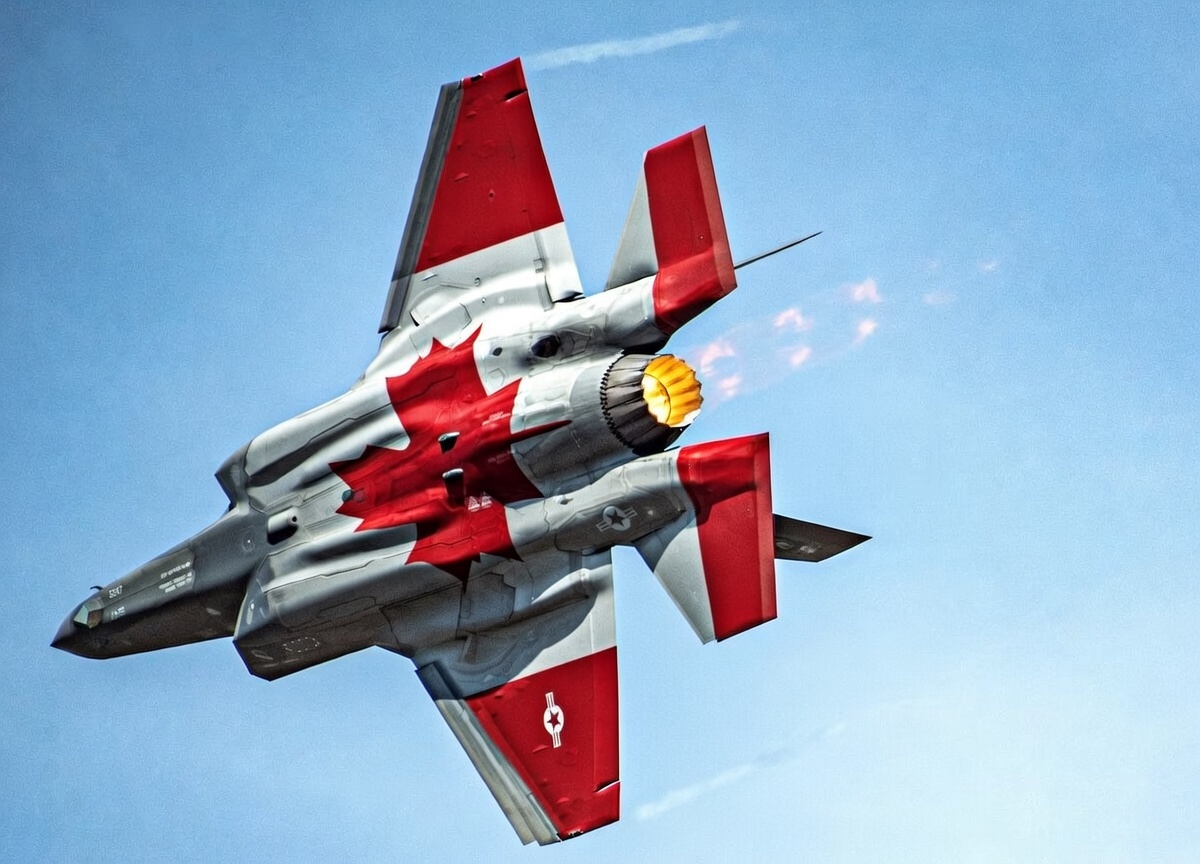
The RAF special security force includes an F-35 Air Wing Security Flight focused on enabling, protecting, and securing the aircraft for combat operations, and a mix of RAF Police, Military Provost Guard Service personnel, and civilians handling protective security, military working dogs, law enforcement, ground defense, guarding, and vetting.
In the United States, the standard USAF Security Forces (Defenders) provide force protection, physical security, law enforcement, and air base ground defense for all high-value assets, including F-35s. Meanwhile, elite teams such as Phoenix Ravens provide close-in aircraft security during high-threat deployments.
That said, Canada’s preparations to welcome the F-35A come as the country remains undecided on whether to complete the purchase of the remaining 72 fighters or opt for an alternative, such as the Saab Gripen-E/F.
The political sensitivity around the country’s F-35 deal has increased significantly amid the latest trade and diplomatic tensions between the two former allies, sparking concerns that Ottawa may nip it in the bud. However, Defense Minister David McGuinty has publicly pushed back against the suggestion that the government must forfeit the F-35 deal because of rising anti-US sentiment.
“Canada has a responsibility to obtain an appropriate fighter jet fleet for our own responsibilities, to acquit ourselves of our responsibilities domestically, continentally, and internationally,” McGuinty said earlier this month. “And I would say to Canadians that we continue to examine this issue very carefully.”
Gen. Jennie Carignan, Canada’s chief of the defense staff, echoed the view, saying the review is continuing despite external pressures.
- Contact the author at sakshi.tiwari13 (at) outlook.com
- Follow EurAsian Times on Google News