

In a massive show of force with major implications for Arctic defense, U.S. Air Force F-16 jets launched from a remote airfield in Alaska’s Aleutian Islands flew in formation with F-35s, Canadian CF-18 Hornets, and supporting airborne surveillance and refueling aircraft.
The homeland defense mission highlighted the United States and Canada’s ability to rapidly mobilize combat-ready airpower in the strategically vital Alaska region, showcased long-range interception capabilities, and practiced distributed operations from austere airfields.
It underscored NORAD’s ability to defend the Arctic, and the remote Eareckson Air Station in Alaska is at the center of this effort.
As Russia and China escalate flight operations across this strategically vital region and the Arctic becomes a new frontier for the competition, Eareckson Air Station has become indispensable to Washington’s force projection in the North.
Operation Noble Eagle: F-16s Launch From United States’ Remotest Airfield
The USAF deployed F-16 fighter jets to Eareckson Air Station, Alaska, from October 18 to 26 on an air defense alert mission called Operation NOBLE DEFENDER.
During this deployment, the USAF also launched a homeland defense mission on October 25, called Operation NOBLE EAGLE.
Under this mission, the USAF F-16 Fighting Falcons launched from the Eareckson Air Station, Alaska, and were joined by aircraft from two other Alaskan bases and one Canadian base.
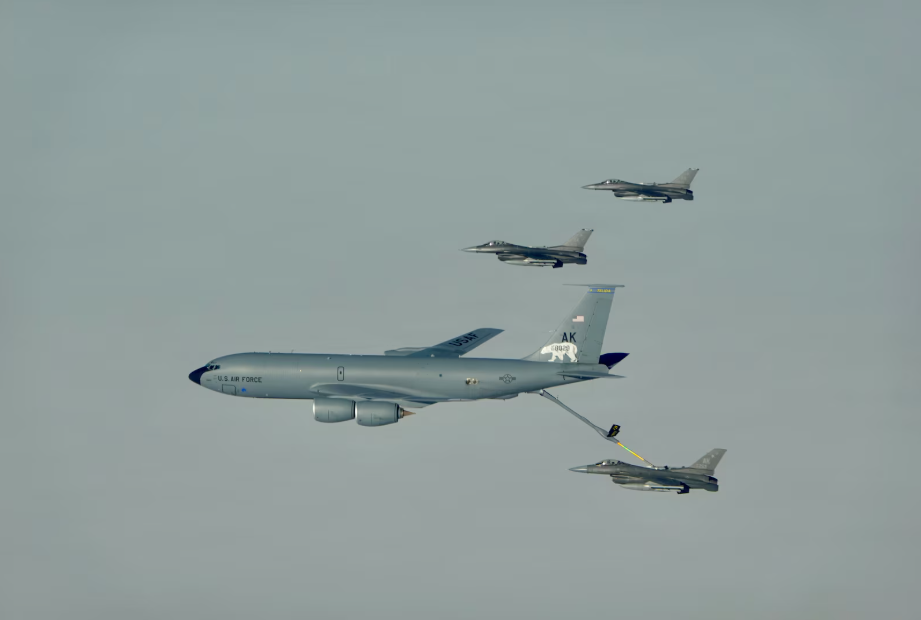
The complete fighter package included two F-16 Fighting Falcons, F-35 Lightning IIs from Eielson Air Force Base, an E-3 Sentry from Joint Base Elmendorf-Richardson, Royal Canadian Air Force CF-18 Hornets from Cold Lake, Alberta; multiple KC-135 Stratotankers and a CC-150 Polaris for aerial refueling, with an HC-130 Combat King II providing search and rescue and personnel recovery coverage.
“During the October 25 homeland defense mission, NORAD presented a layered fighter package across the Alaska theater of operations. F-16s from Eareckson Air Station provided coverage in the southern portion of the theater, while F-35s and additional F-16s from Eielson operated in the northwest and Royal Canadian Air Force CF-18s covered the northern approaches,” NORAD said in a statement.
“The combined operation demonstrated NORAD’s ability to rapidly generate, position and synchronize a credible force package in defense of North America.”
The deployment also included successful F-16 certification of the arresting system, further validating Eareckson Air Station as a viable location for future fighter operations from an austere airfield.
“Defending North America demands speed, flexibility, and the ability to bring combat power together across vast distances,” said U.S. Air Force Lt. Gen. Robert D. Davis, commander of the Alaskan NORAD Region.
For instance, Eareckson lies approximately 1,600 miles from Eielson Air Force Base and 2,600 miles from Cold Lake, underscoring the scale across which NORAD synchronized the force.
Operation NOBLE DEFENDER underscores the growing importance of the remote Eareckson Air Station in Alaska to NORAD’s overall strategy to maintain and strengthen Arctic defense amid rising threats from Russia and China.
“Operating from Eareckson Air Station proved we can deploy to an austere location, maintain alert, launch on short notice, and seamlessly integrate U.S. and Canadian forces to defend the northern approaches,” Lt. Gen. Davis said.
Eareckson Air Station & Arctic Defense
The isolated Eareckson Air Station on Alaska’s Western frontier has emerged as one of the most important pieces in Arctic defense. The remote base has become the USAF’s forward operating base to safeguard the Arctic, Alaska, and northern approaches to North America.
Alaska has two big Air Force bases, one in Anchorage and one near Fairbanks, plus a remote Space Force radar station.
The Air Force base in Anchorage is called Joint Base Elmendorf-Richardson (JBER), and it hosts the 3rd Wing of F-22 Raptors, C-17s, and the Alaska Air National Guard’s 176th Wing. It is Alaska’s largest military installation and a key hub for Pacific and Arctic operations.
The second-largest air base in Alaska is Eielson Air Base, about 26 miles southeast of Fairbanks. It hosts more than 50 F-35A Lightning II and F-16 fighter jets, and the Alaska Air National Guard’s 168th Wing. It supports Red Flag-Alaska exercises, Arctic training, and is described as the northernmost U.S. fighter wing.
The Clear Space Force Station hosts the missile warning and defense radar installation. It was an Air Force station until 2021 and now belongs to the Space Force.
The Eareckson Air Station, Shemya Island, is a remote airfield and radar site.
However, despite its remote location, the site has existed for more than half a century.
Construction began on the remote Shemya Island during the Second World War in 1943. US Army Engineers built a 10,000-foot runway here, intended for B-29 Superfortress operations against Japanese forces.
The remote Shemya Island was selected for its proximity to Asia and the Japanese Islands.
Shemya Island sits roughly 300 miles away from Russia’s Kamchatka Peninsula in the Russian Far East. It is one of Alaska’s westernmost islands.
The first landings happened in 1943.
However, military activity declined after the war ended. The base was deactivated in 1954.
During the Cold War, Shemya Island rose to prominence again because of its proximity to Russia’s Far East, where the Kremlin conducted many missile tests.
The island’s extreme Western location, roughly 1,500 miles southwest of Anchorage and around 300 miles from Russia’s Kamchatka Peninsula, made it uniquely valuable for early missile warning, forward-deployment post, and as a first line of defense against possible Soviet misadventures from the North.
In the 1970s, the AN/FPS-108 Cobra Dane phased-array radar was deployed here. It provided a vantage point to monitor Russian missile tests and military deployments.
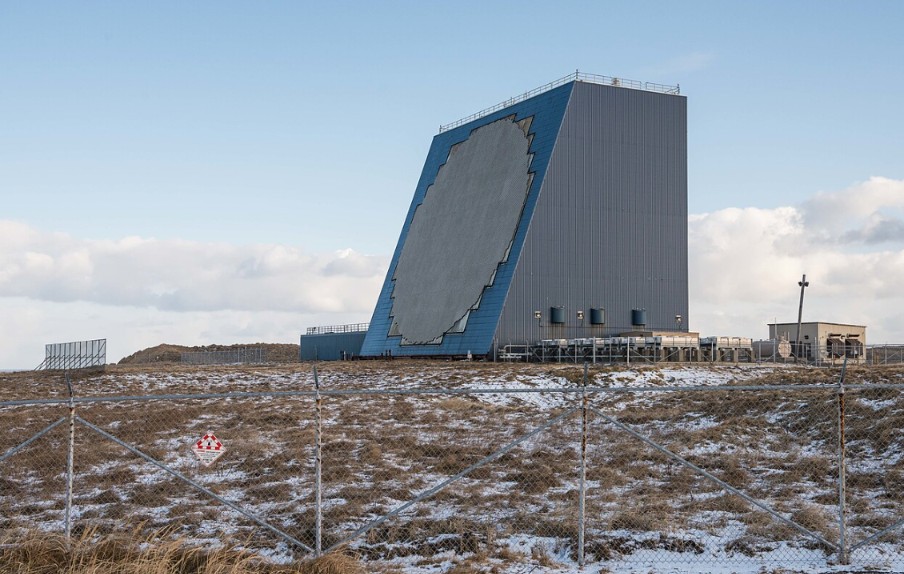
In 1993, Shemya Air Force Base was renamed Eareckson Air Station.
However, Eareckson Air Station lost importance as the Cold War ended and the Soviet Union disintegrated.
From the 1990s to the early 2010s, both Russia and China were hardly in a position to challenge U.S. dominance in the region.
However, rapidly melting and thinning Arctic sea ice is opening previously frozen maritime corridors, turning the High North into a vital shortcut for global trade.
The emerging Arctic Sea Route could dramatically cut shipping distances between Europe, North America, and Asia, while the region is also believed to hold significant oil and hydrocarbon reserves.
These emerging possibilities mean that the once-frozen Arctic is once again becoming a theater of superpower competition, and both Russia and China are aggressively expanding their military presence and economic claims to secure long-term dominance in the region.
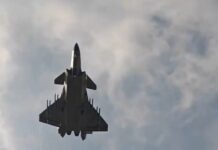
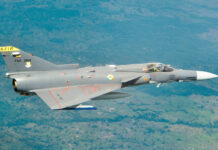
Russian and Chinese military aircraft activity near Alaska has increased in frequency and complexity in recent years.
For instance, in 2024, NORAD recorded about 12 Russian flights into the Alaskan ADIZ.
In July 2024, NORAD recorded the first-ever joint Russian-Chinese bomber patrol in the Alaskan ADIZ. Two Russian Tu-95 bombers and two Chinese H-6 bombers flew together over the Bering Sea, while Russian Su-35 fighters provided escort.
In August last year, NORAD recorded multiple Russian flights near the Alaskan ADIZ in a single week.
Then, in September 2025, two Russian Tu-95 bombers and two Su-35 fighters entered the ADIZ for about 53 minutes.
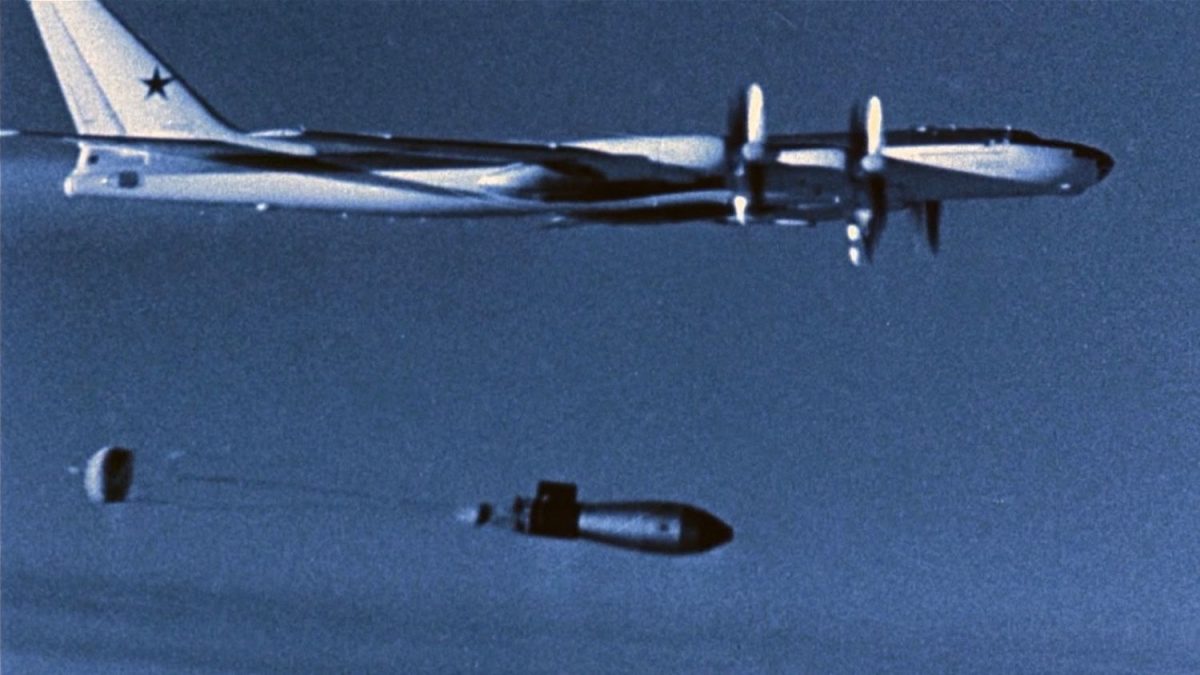
These flights have increased in frequency in 2026.
NORAD routinely intercepts, identifies, and escorts these flights, and underscores the importance of “meeting presence with presence.”
Amid this heightened activity near Alaska, the importance of Eareckson Air Station as Alaska’s westernmost point, roughly 500 miles from Russia’s Far East, is hard to overstate.
While NORAD has previously deployed USAF fighter jets to Eareckson Air Station, this was the first time these fighters were deployed to maintain air defense alert, marking a notable return to an alert posture at one of the US’s westernmost military outposts.
The successful F-16 certification of the arresting system further validated Eareckson Air Station as a viable location for future fighter operations.
Eareckson Air Station could serve as Washington’s forward post to monitor Russia’s Far East and protect Alaska, the Arctic, and the Northern Pacific. As its role in Alaska’s overall defense grows, the USAF could even maintain a permanent presence on this remote airstrip in the future.
- Sumit Ahlawat has over a decade of experience in news media. He has worked with Press Trust of India, Times Now, Zee News, Economic Times, and Microsoft News. He holds a Master’s Degree in International Media and Modern History from the University of Sheffield, UK.
- He can be reached at ahlawat.sumit85 (at) gmail.com