As Chinese President Xi Jinping embarks on his first state visit to the US in more than a decade, he will be welcomed with full military honors, a formal White House ceremony, and a rare flyover by some of America’s most advanced warplanes.
Chinese President Xi Jinping will visit the US between September 23 and 25, the Chinese Foreign Ministry has confirmed.
Speaking at a press briefing, Ministry spokesperson Guo Jiakun said that Xi “will hold in-depth exchanges of views with President Trump on major issues concerning China-US relations, as well as world peace and development.”
The reciprocal visits by the two heads of state within a six-month period are “of historic, milestone significance,” the spokesperson stated, referring to Trump’s visit to Beijing in May this year.
“China is willing to work with the US to … strengthen dialogue and cooperation, properly manage differences, continuously enhance the well-being of the peoples of both countries, and promote world peace, stability and prosperity,” he added.
The Office of the First Lady confirmed details of the program, including an extremely rare military flyover featuring a B-2 Spirit bomber and four F-22 Raptor fighters during the formal ceremony at the White House on September 24.
President Trump is expected to greet Xi and China’s First Lady Peng Liyuan personally at Joint Base Andrews, with First Lady Melania Trump participating in multiple events. The formal State Arrival Ceremony at the White House would include a large military honor guard of about 479 personnel from all branches, bands, drills, national anthems, and remarks.
The ceremony will conclude with a military flyover featuring a B-2 Spirit and four F-22 Raptors, two of the US Air Force’s (USAF) most distinguished combat warplanes.
The flyover, which combines diplomatic courtesy with a display of US military might.
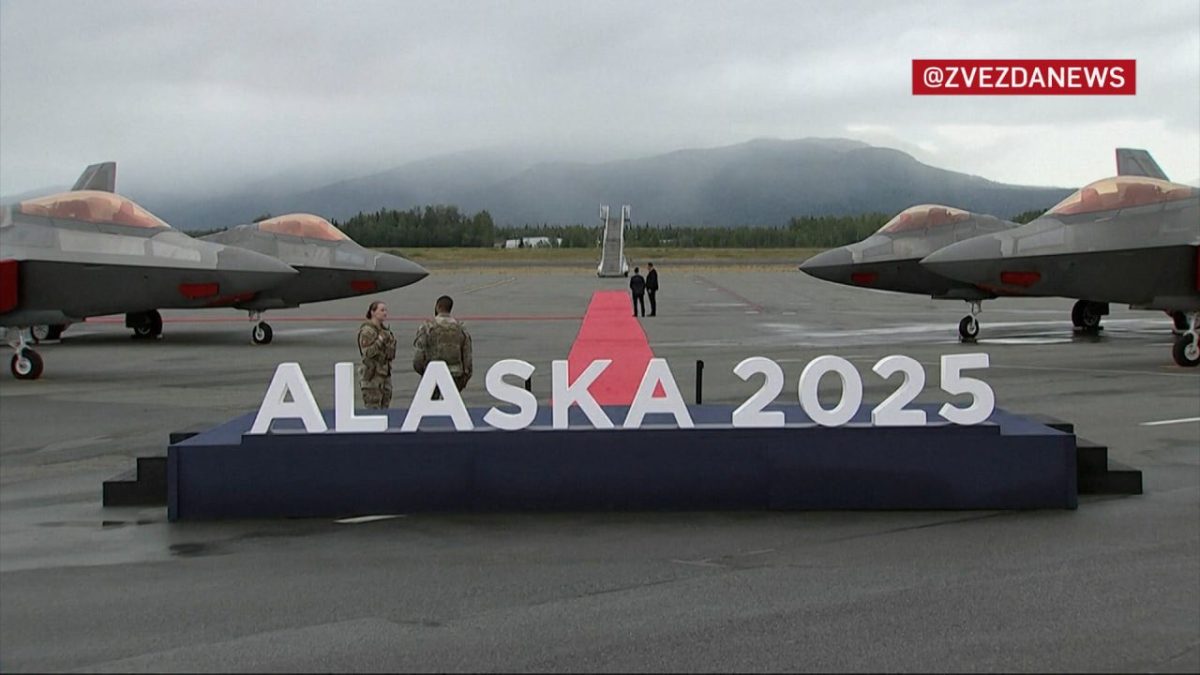
Earlier, Trump accorded a similar welcome to Russian President Vladimir Putin during their historic Alaska Summit last year.
As Putin walked onto the tarmac and up to the podium with Trump, B-2 bombers escorted by four F-35 fighters flew overhead, as the EurAsian Times reported. Additionally, Putin and Trump were seen walking together, with F-22 Raptors on either side in what appeared to be a lavish display of strength.
The scheduled flyover is not routine ceremonial aviation. Instead, it could be viewed as an intentional signal of US hard power to a strategic rival during sensitive talks, packaged within the highest level of state welcome. This is especially noteworthy given that Donald Trump’s attitude toward China has shifted from outright confrontation to cordial cooperation in recent years.
The B-2 is a state-of-the-art long-range stealth bomber that can evade enemy air defenses and deliver nuclear or conventional payloads. The US Air Force has touted the bomber as a beacon of global power projection, highlighting its ability to hit targets anywhere in the world.
The bomber was heavily employed in 2025’s Operation Midnight Hammer and Operation Epic Fury earlier this year against Iran.
Flying a B-2 over the White House during a Chinese state visit is therefore a pointed reminder of USAF’s unique capacity for long-range, stealthy conventional and nuclear strike—capabilities China still cannot fully match.
Meanwhile, the F-22 remains the world’s premier air-superiority stealth fighter. Its combination of all-aspect low observability, supercruise, thrust-vectoring agility, advanced sensor fusion, and internal weapons carriage sets a standard the Chinese PLAAF has spent more than a decade trying to emulate.
Pairing F-22s with the B-2 creates a complementary package: the bomber for deep strike and the fighters for air dominance and battlespace control. Together, the two platforms showcase the full spectrum of US air power the Chinese People’s Liberation Army Air Force (PLAAF) may face in a conflict between the two countries—a possibility analysts say is never off the table.
Xi’s High-Stakes US Visit In Focus
Building on their earlier meeting in May 2026, Xi Jinping and Trump are expected to cover a wide range of economic, technological, and security issues later this week.
Trade and tariffs are expected to be among the most important agenda items, with both sides focused on whether to extend the trade truce reached in late 2025 that will expire in November 2026.
Experts have so far predicted discussions will likely include possible reciprocal tariff reductions on non-strategic goods, Chinese commitments to buy more from the United States, and broader efforts to stabilize bilateral commercial relations without returning to escalating trade conflict.
However, a recent Wall Street Journal report claimed that Chinese leader Xi Jinping is unlikely to bring a delegation of corporate executives to his meeting with President Trump. This means that no major business deals are on the menu, if WSJ reports are to be believed.
Notably, Artificial intelligence has risen sharply in prominence and is expected to feature prominently in the upcoming high-stakes talks. The two countries are the leading AI powers and are locked in intense competition over technology, chips, models, and global standards. This will be closely watched after the US government accused Chinese AI companies earlier this month of copying technology from US AI companies.
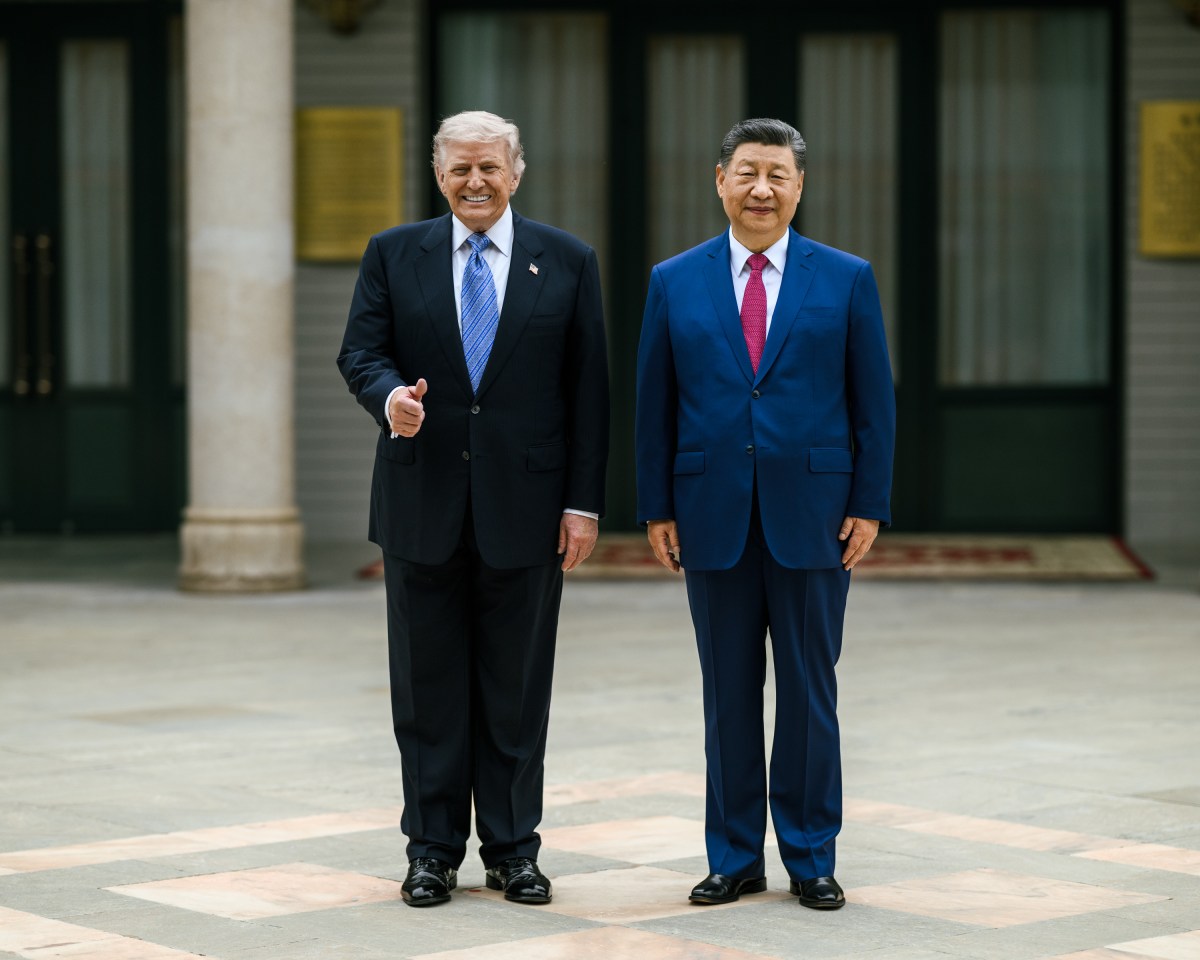
Analysts believe that the war in the Middle East with Iran may shadow the summit-level talks.
While Trump has so far downplayed China’s assistance to Iran, China is the world’s largest buyer of Iranian oil and maintains close economic ties with Tehran. The Trump administration has indicated that it sees Xi as uniquely positioned to influence Iranian behavior and has sought greater Chinese cooperation on sanctions enforcement, energy flows through the Strait of Hormuz, and related regional stability questions.
The Chinese delegation, on its part, could potentially raise the issue of the continued US military support for Taiwan, considered a renegade Chinese province. Beijing views it as the core issue in the bilateral relationship and is expected to press Trump on US arms sales to the island, including a pending multi-billion-dollar package. Xi had earlier warned that mishandling Taiwan could lead to serious clashes or conflict.
Consequential breakthroughs are expected to be constrained by fundamental differences over Taiwan, technology restrictions, and geopolitical alignment, even though both sides have incentives to appear calm and achieve limited deliverables, notably on trade.
Analysts surmise that rather than resolving the deeper structural issues between the two countries, the summit is likely to be a competition-management exercise.
- Contact the author at sakshi.tiwari13 (at) outlook.com
- Follow EurAsian Times on Google News