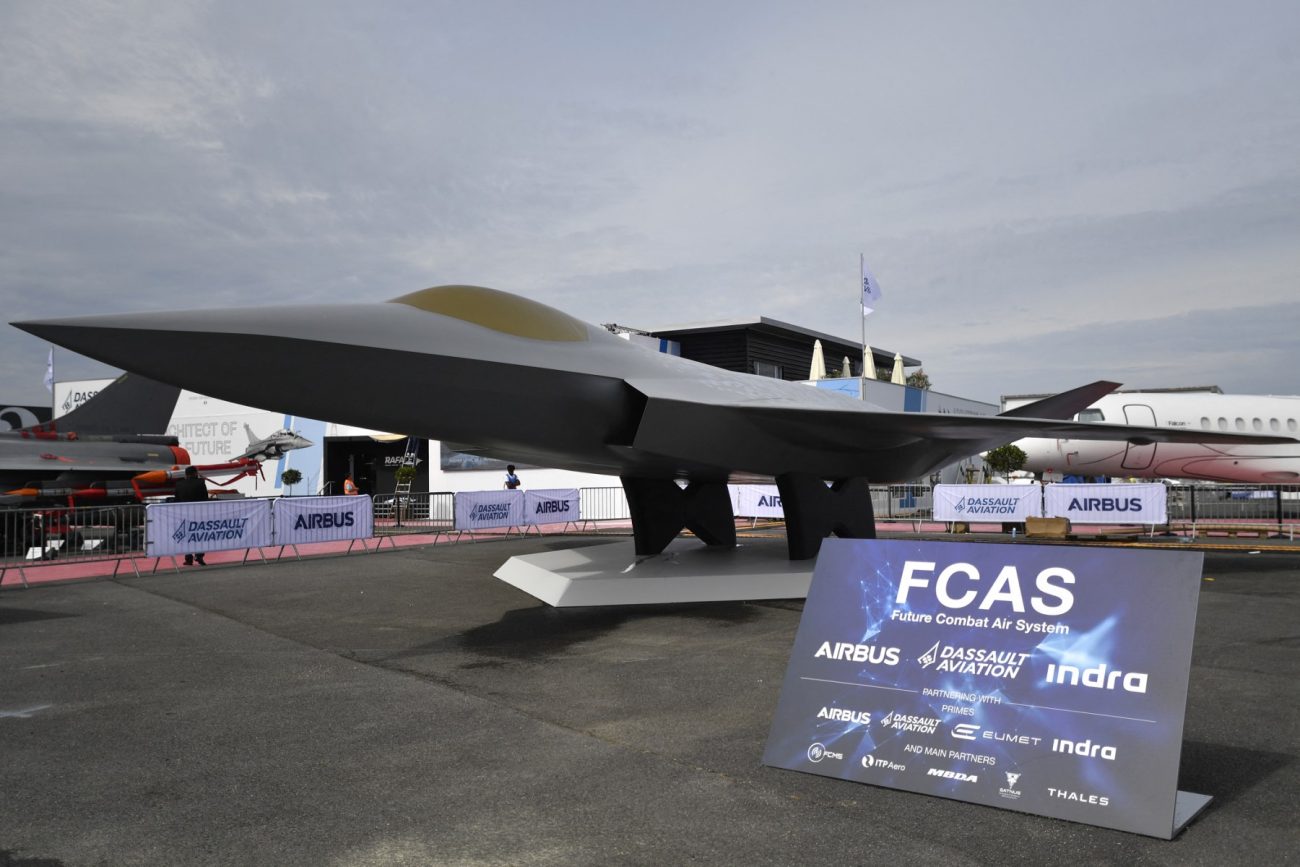
NATO allies, France and Germany, have finally agreed to ditch their joint fighter jet program, the FCAS, while Airbus has already hinted at turning to the Swedish defense giant Saab.
The FCAS was a €100 billion ‘system of systems’ program that included a next-generation fighter (NGF), adjunct aircraft, and a combat cloud—a multi-domain-capable, data-rich network enabling cross-platform information sharing. The program was launched in 2017 to replace France’s Rafale jets and the Eurofighter Typhoons used by Germany and Spain. But it has been plagued by disagreements between the firms involved — France’s Dassault Aviation and Airbus, which represents Germany and Spain.
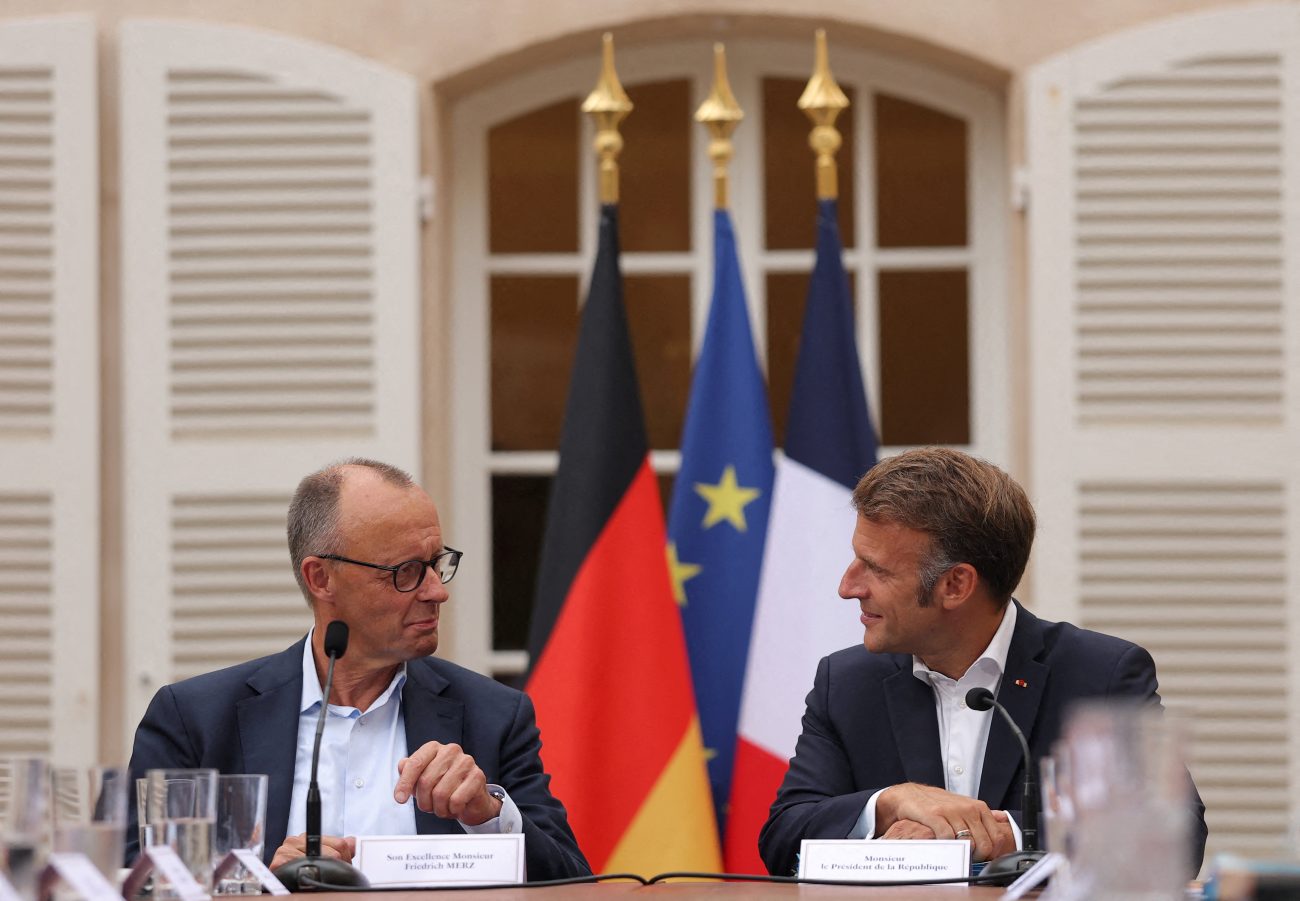
A German government official told AFP that Chancellor Friedrich Merz and French President Emmanuel Macron had “reached the shared assessment that the companies will not be able to come together on building a joint combat aircraft.”They acknowledge this reality.”The official, however, said other parts of the wide-ranging project will continue.
“The actual core of FCAS is to be continued as a European system,” the official said, describing it as a “nervous system that networks aircraft, drones and other components into an integrated whole”.
The French and German defense ministries are set to draw up a plan for defense cooperation “focused on a few realistic and relevant projects” at a forthcoming meeting, the official added.
In Paris, an official confirmed Berlin’s announcement. Macron and Merz “held lengthy and frequent discussions on ways to advance this project, which is important for European defense,” the official said, speaking on condition of anonymity. “They each expressed regret over the inability of the industrial partners to reach an agreement on continuing the project,” the official added.
The Elysee official said France believed that defense and security cooperation between the two countries was necessary.
“The French authorities will continue to encourage our companies and our armed forces to seek out the ways and means to pursue ambitious European projects that are consistent with our national security interests.”
Cedric Perrin, chief of the foreign affairs and defense committee at the French Senate, said that Macron “was the only one who still believed in the survival of FCAS.” “The sooner the decision is made, the less time we will waste moving on to the next phase,” he told AFP.
FCAS’s end comes despite both Merz and Macron insisting publicly that they were determined for the project to succeed.
The German leader had said earlier this year that he would “do everything in my power, and fight until the very last moment, to get joint European projects off the ground here, and above all German-French projects”. Speaking in April after talks with Merz, Macron had denied the project was dead. “We are continuing to move forward. Europe has never needed unity, greater independence, and greater sovereignty more than it does now,” he said.
Will Airbus Turn to SAAB?
As EurAsian Times reported earlier, Airbus hinted it could partner with Swedish defense manufacturer SAAB to develop its sixth-generation fighter. Michael Schoellhorn, the head of Airbus Defense, stated recently that he was eager to work with Sweden and Saab on a next-generation fighter.
When asked if Airbus was looking to specifically develop a manned tactical next-generation fighter with SAAB, the CEO said, “We are open to a number of things. For Airbus, the crewed fighter aircraft is still an open question.” In the same breath, Schoellhorn highlighted that the company “will be involved in the development of a sixth-generation fighter aircraft.”
“We will be involved in the development of such an aircraft. The structure within FCAS could be improved. That could lead to two fighter aircraft within FCAS, or to another form of cooperation, and Sweden and Saab are candidates with extensive expertise in this field,” Airbus Defence and Space CEO Schoellhorn said in the interview. “If we are to have something that can be called sixth generation and that is airborne before the 2040s, we have to act now. We are waiting impatiently to see what the politicians will decide. If we are still in limbo at the end of the year, that would be very challenging,” he added.
Further, the Airbus chief, who recently visited Sweden, said, “Sweden and Saab are candidates with extensive expertise”. “Everyone is aware of the difficulties we face. He continued, referring to the FCAS program, “That is why it is time to actively explore other options, which is what we are now doing.”
Interestingly, Sweden had previously held observer status in the GCAP grouping but withdrew from the initiative in 2023, citing a mismatch between expectations and requirements and high costs.
Micael Johansson, President and CEO of Saab, announced that the nation is currently in a “hibernation period” for the global project. “We are on the margins, and our involvement has not been as intensive as we thought it would be at first. We are not out of the program, but Sweden has hibernated while we see how the UK, Italy, and potentially Japan set it up. I am not sure how this will play out,” he said at the time.
Sweden has since initiated work on its own next-generation fighter.
In October 2025, the Swedish Defence Materiel Administration (FMV) awarded Saab a $276 million contract for conceptual studies for the next-generation fighter aircraft, scheduled to take place from 2025 to 2027. The contract includes conceptual studies of manned and unmanned solutions in a system-of-systems perspective, as well as technology development and demonstrators, SAAB said in a statement at the time.
Although the program is in a very nascent stage, with few details publicly available, it emphasizes a “system of systems” approach, potentially including both crewed and uncrewed platforms.
Moreover, its design is expected to prioritize air dominance, incorporate advanced technologies such as Artificial Intelligence (AI) and autonomy, operate in collaboration with loyal wingman drones, and align with global trends in sixth-gen technology.
The design philosophy appears very similar to that of the FCAS, potentially opening a door for collaboration between the two sides.
Sweden could potentially contribute to the FCAS through Saab, which manufactures the Gripen and has experience with sensors, avionics, and lightweight airframes. Furthermore, since Sweden has only just launched a study of the program, it can either develop its own next-generation fighter or contribute to an existing program as an equal partner.
With AFP Inputs