As demand for Patriot PAC-3 interceptors skyrockets amid two simultaneous wars in Europe and the Middle East, the US is now responding with emergency measures.
Among them, emergency procurement agreements between the Pentagon’s Munitions Acceleration Council (MAC) and key vendors to boost production, new production facilities in Europe, including in Ukraine, and the unveiling of plans to build a new low-cost interceptor to counter the mass missile and drone attacks that have become a defining feature of the wars in Ukraine and the Middle East.
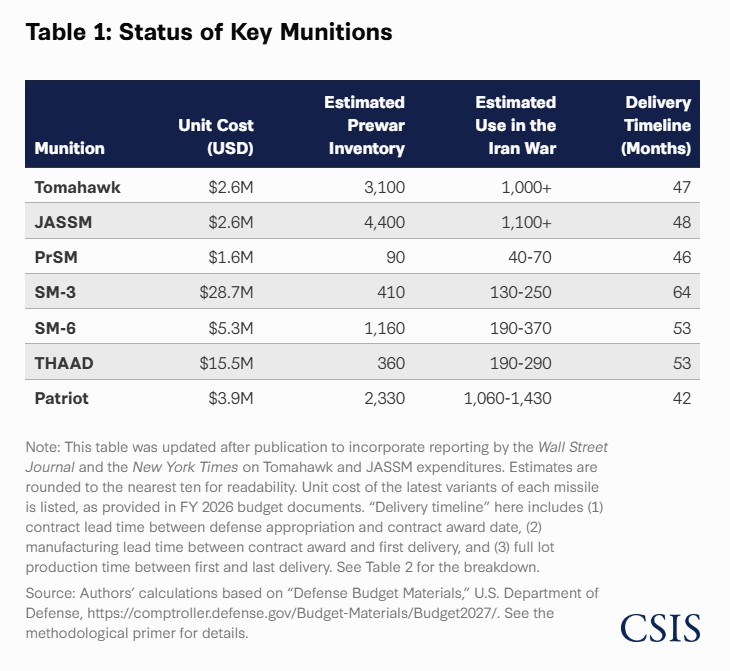
According to an analysis by the Center for Strategic and International Studies (CSIS), by the first week of April, the US military had already expended at least 45% of its stockpile of Precision Strike Missiles (PRSMs); at least half of its inventory of THAAD missiles; and nearly 50% of its stockpile of Patriot air defense interceptor missiles.
The study estimated that by April 7, the US had expended nearly 1,400 Patriot interceptors, from its pre-war inventory of nearly 2,330 missiles.
It further estimated that, given current production capacity, it would take 42 months to replenish Patriot interceptor stocks, leaving the US vulnerable in the event of a direct conflict with a near-peer power such as China or Russia.
Since then, the US has fought another two weeks of intense war with Iran, further depleting its Patriot stockpiles.
Meanwhile, Ukraine is unable to defend its capital Kyiv from almost daily barrages of Russian ballistic missiles amid a shortage of Patriot interceptors.
Facing critical shortages and unable to boost production immediately, President Donald Trump said during the NATO summit in Turkey earlier this month that Ukraine could soon be allowed to produce its own Patriot air defense systems.
Ukraine to Get License To Produce Patriot PAC-3 Interceptors
This was significant, as only one country, Japan, apart from the US, has so far been allowed to produce Patriot PAC-3 interceptors.
“We’re going to give a license to you to make Patriots. That’s pretty cool,” Trump told Ukrainian President Volodymyr Zelenskyy.
“This way, you can’t complain that we’re not giving them enough. I say, make them yourself. We haven’t informed the company of that yet, but that’ll work out all right,” he added.
Notably, various other European countries, including Germany, Romania, and Poland, are in the process of setting up localization units for various components of Patriot air defense systems.
However, after the US and Japan, Ukraine could be only the third country to get a license for producing PAC-3 interceptors.
Following Trump’s announcement, on July 22, RTX subsidiary Raytheon said it is in talks with Ukraine and is studying how to proceed.
“That process has just started,” Tom Laliberty, Raytheon’s president of land and air defense systems, told reporters during a briefing at the Farnborough Airshow near London. “And we’ll of course be following the United States government’s lead” on licensing, he added.
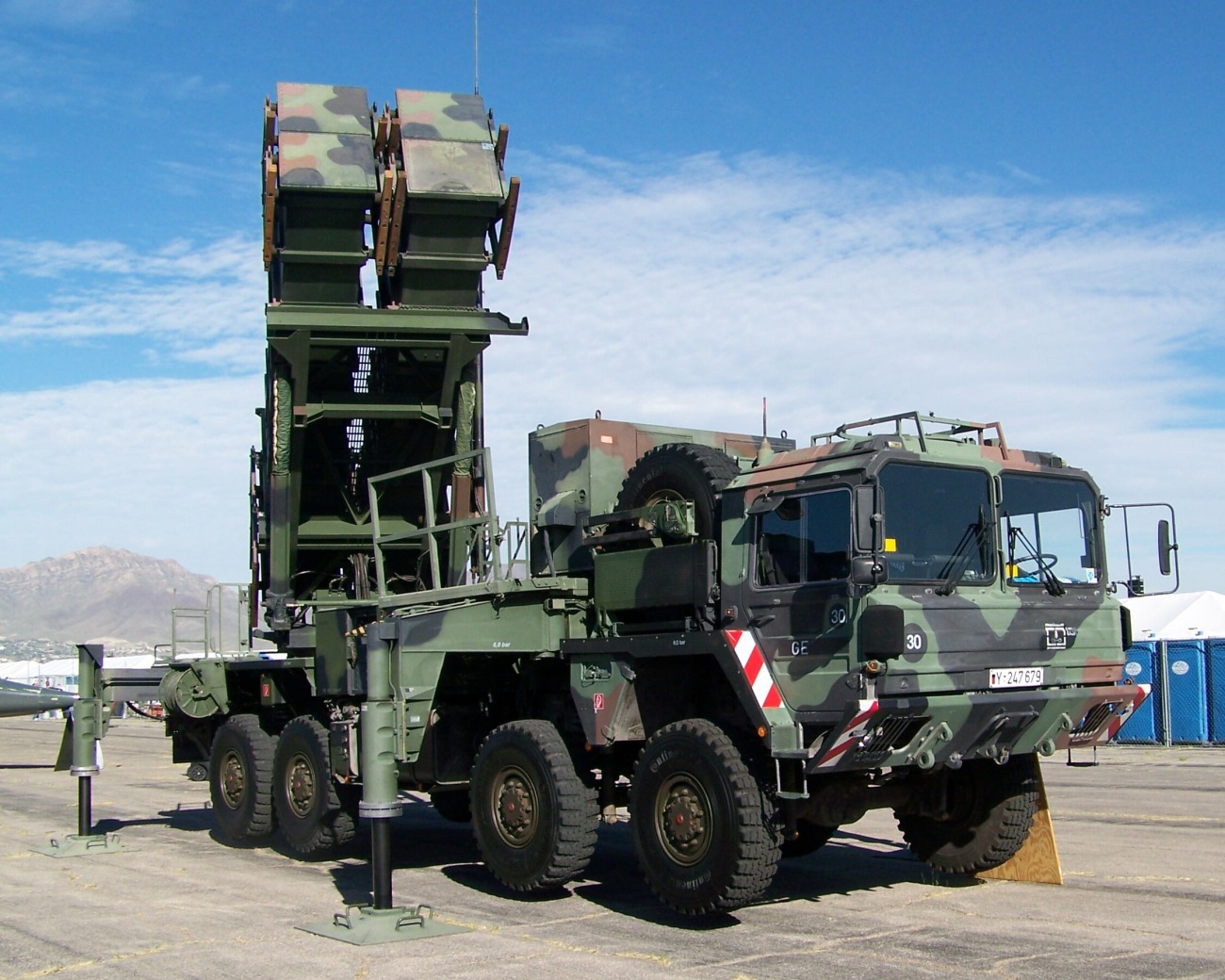
RTX supplies the Patriot’s GEM-T interceptor, and Lockheed produces the PAC-3, both of which can defeat air and missile threats.
“Working with the United States government, we are working all three of those lines of effort to determine what is feasible and what is best for Ukraine,” he said.
“So as we work through the sort of feasibility studies, we will also, in parallel, be working on licensing with the United States government,” he added. “And then, hopefully something of all that will yield the ability for Ukraine to get the right level of support that they desire for increased Patriot production.”
Separately, on July 20, Lockheed unveiled a new, lower-cost version of its PAC-3 interceptor, called the Adapted Capability Effector (ACE).
Lockheed Martin Unveils Baby Patriot Missile
While the Patriots are highly effective, their high-cost missiles make interception of aerial threats a costly affair.
Both Russia and Iran have used drones to wage asymmetric warfare by making adversaries expend costly Patriot interceptors.
Therefore, for some time, European governments were seeking a low-cost replacement for Patriot interceptors.
On July 20, Lockheed Martin announced the introduction of the PAC-3 Adapted Capability Effector (PAC-3 ACE), a low-cost interceptor built to defeat a wide range of air and missile threats for less than half the cost of a PAC-3 MSE per unit.
PAC-3 MSE interceptors cost roughly US$4 million per missile, according to U.S. Army budget documents.
“PAC-3 ACE will give allied forces a rapidly fielded, complementary air defense effector option that can be deployed in record time,” the company announced in a statement.
“To achieve this, Lockheed Martin will collaborate with American and European industry partners and suppliers, enhancing the resilience of the U.S. defense industrial base worldwide,” it added.
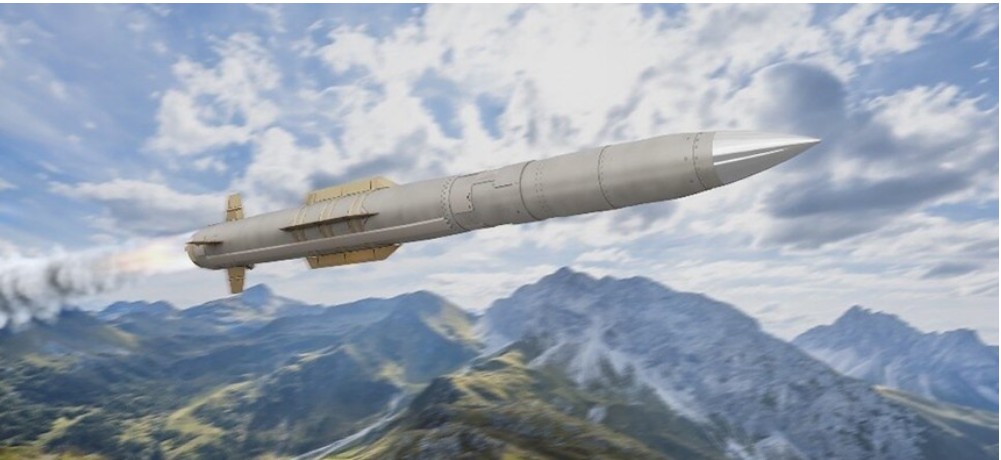
The company said that PAC-3 ACE will significantly lower the cost-per-kill against a wide range of threats, while improving “magazine depth the current global climate necessitates.”
Further, the missile could be easily produced, scaled, and deployed, it added. The statement underscored that joint development and production with European partners will be used to address critical shortages of interceptor missiles.
“My intention is to bring a capability in and quickly turn it into, for example, an entire European-sourced missile. Built in Europe,” said Tim Cahill, president, Lockheed Martin Missiles and Fire Control.
“That really becomes Europe’s missile,” he said.
The company said initial production could start in 2028.
Additionally, the PAC-3 ACE could be fired from the same Patriot launchers and would use the same command-and-control software, making its integration with the existing air defense network seamless and straightforward.
“American and allied warfighters need a solution that is battle-tested and budget-smart, and PAC-3 ACE delivers exactly that by building on the unrivaled performance of the PAC-3 MSE,” said Cahill.
“As we look to partner with our allies, we can further enhance resiliency and ensure our forces can swiftly counter emerging threats today and tomorrow,” he added.
However, Cahill clarified that PAC-3 ACE is not designed as a drone interceptor.
“What ACE is designed to do is go after air-breathing targets, so aircraft and cruise missiles, short-range ballistic missiles, kind of intermediate ballistic missiles,” Cahill said.
“This missile isn’t designed to go after drones,” he added.
So, PAC-3 ACE will bridge the gap between cheap drone interceptors and expensive PAC-3 MSE.
The global demand for Patriot interceptors has risen since the war in Ukraine, where they have successfully defended Ukrainian cities from Russian ballistic and cruise missile attacks.
The Patriot air defense systems are used by nearly 20 countries, including Germany, the Netherlands, Greece, Spain, Poland, Romania, Sweden, Saudi Arabia, UAE, Qatar, Kuwait, Egypt, Israel, Japan, South Korea, Taiwan, and others.
The war in the Middle East has put further pressure on PAC-3 interceptor supplies.
Even as the US has used over 1,500 Patriot interceptors in the Middle East alone, production remains low.
The US made an average of 270 advanced Patriot missiles a year from 2015 to 2024, according to the Center for Strategic and International Studies (CSIS). However, Lockheed Martin delivered 620 PAC-3 MSE in 2025, and the current capacity to produce PAC-3 interceptors is around 600.
Patriot missiles also featured in a list of 14 critical munitions that the US wants to boost production.
In fact, the 2026 US defense budget earmarks US$7 billion for the procurement of Patriot PAC-3 air defense missile interceptors, US$6.1 billion for the US Army to procure 1,429 PAC-3s, and US$874 million for the Navy to procure 207 PAC-3s.
However, the current production capacity in the US would have taken several years to replenish the expended stocks of Patriot missiles.
Accordingly, the United States is now prepared to license Ukraine to produce PAC-3 interceptors, establish supply chains in several European countries for other missile components, and introduce the newer, more affordable and scalable PAC-3 ACE variant.
- Sumit Ahlawat has over a decade of experience in news media. He has worked with Press Trust of India, Times Now, Zee News, Economic Times, and Microsoft News. He holds a Master’s Degree in International Media and Modern History from the University of Sheffield, UK.
- He can be reached at ahlawat.sumit85 (at) gmail.com