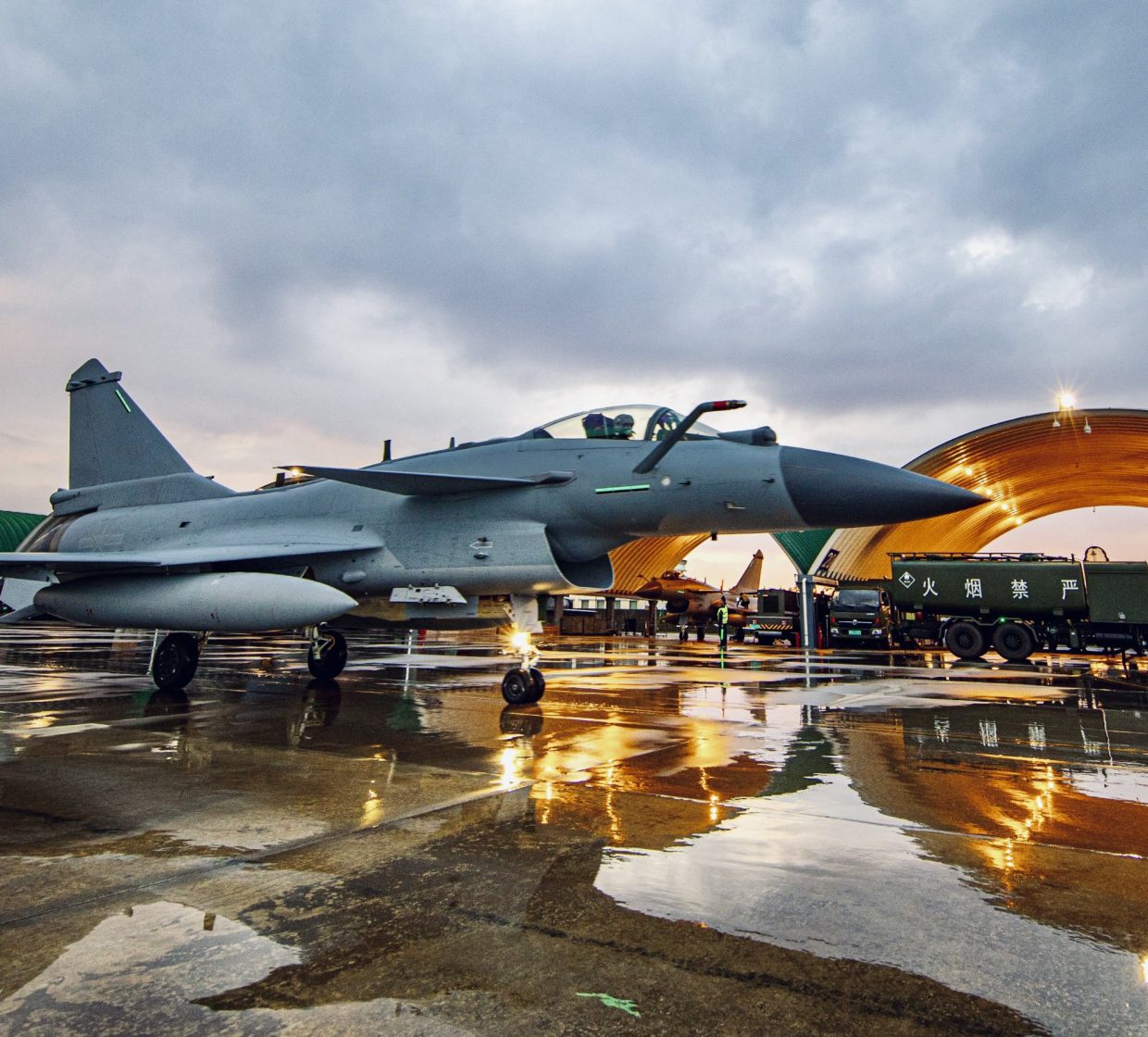
After claiming interception of foreign aircraft on two separate occasions last year, China has made another major claim: a “foreign warship” lost power while pursuing the People’s Liberation Army Navy (PLAN) Type 055 destroyer, seemingly an indirect reference to the USS Benfold.
Zhang Jun, a captain on the PLA Navy’s Type 055 “Zunyi” destroyer, said a foreign warship lost power while his warship, engaged in a routine training exercise at the time, the Chinese state-owned publication Global Times reported.
Speaking on China Central Television (CCTV), the officer said the destroyer had multiple encounters with foreign warships and aircraft during the exercise.
“During that mission, we were conducting routine training exercises when a foreign warship began tracking our ship. As we sailed at high speed, the foreign vessel had to match our speed. While we were in a standoff, its power and electricity all suddenly went out, its radar stopped emitting, and its navigation lights went dark,” Zhang said. “This lasted for nearly half an hour. But our equipment and our crew had no problems at all,” he added.
When asked whether the engagement made him nervous, the Chinese officer said, “Why should I be nervous? I was definitely not nervous. As long as you are within range of my missiles, I can definitely destroy you.”

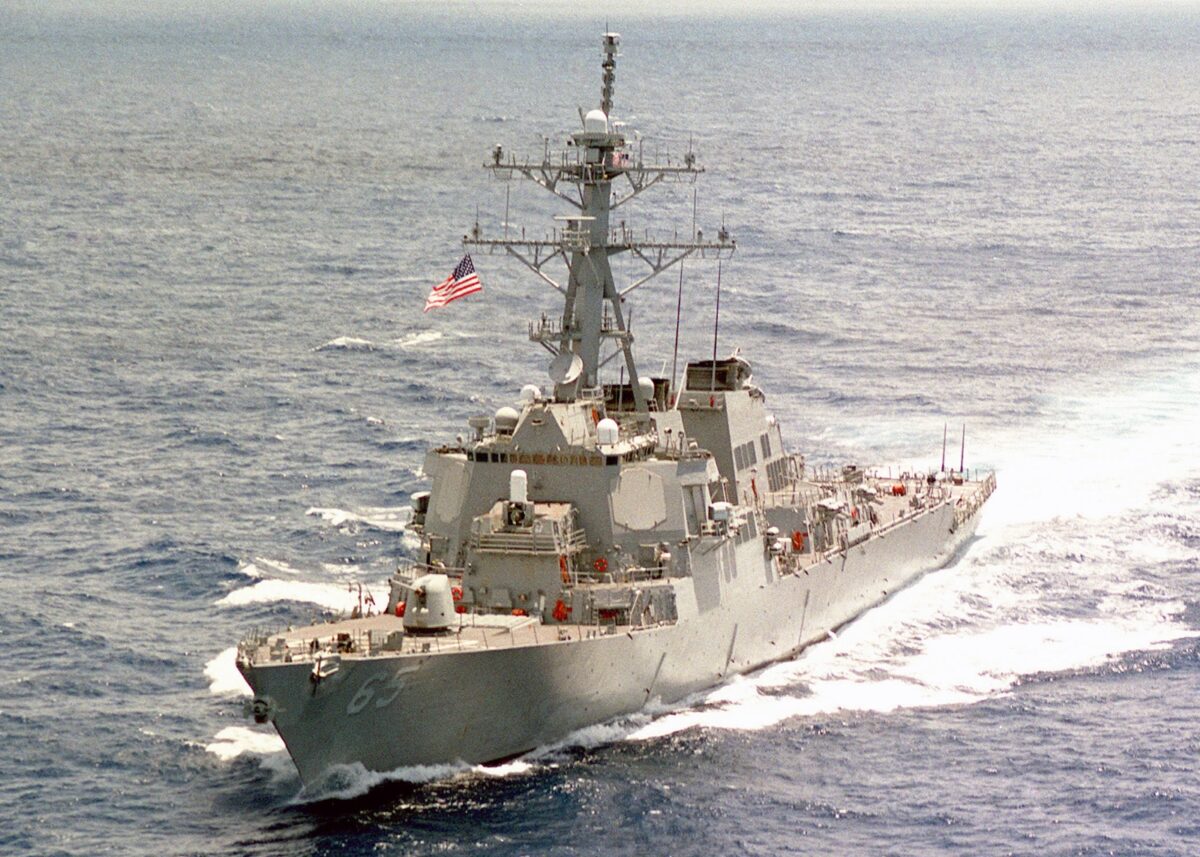
The officer stopped short of providing more details, including the time and place of the encounter and the name of the foreign warship. However, the claims appear aimed at the US Navy warship USS Benfold, which apparently lost power and was stranded in the South China Sea in July 2026, as previously reported by the EurAsian Times.
“On July 24, 2026, while conducting routine operations in the Indo-Pacific, Arleigh Burke-class guided-missile destroyer USS Benfold (DDG 65) reported an engineering casualty involving its generators, causing a loss of power,” Navy Cmdr. Matthew Comer, spokesperson for the 7th Fleet, said in a statement to USNI News in August 2026.
“There were no injuries to the crew, who demonstrated resilience, grit, professionalism and unwavering steadiness in their response,” he added.
The incident reportedly occurred while the USS Benfold was engaged in routine operations in the Indo-Pacific as part of the USS George Washington carrier strike group (CSG).
After the power loss, the guided-missile destroyer reportedly drifted for four days and was supplied by other ships in the South China Sea, which China claims as its sovereign territory and where frequent standoffs occur between Beijing and other forces.
The Seventh Fleet spokesperson did not mention a high-speed pursuit of a Chinese vessel or any engagement between the US carrier strike group and PLA Navy warships, although these encounters are not uncommon in the region.

When asked whether China’s claimed scenario is plausible, Indian Navy veteran and commentator Rear Admiral Girish Kumar Garg (retd) told the EurAsian Times, “For an Arleigh Burke-class ship, high-speed propulsion has nothing to do with total power loss. Complete power failure can happen if all onboard power generators fail or the power distribution system malfunctions. Although rare, it is not impossible.”
Further, when probed about potential reasons for the complete power loss, Rear Admiral Garg said, “Can be many reasons- fuel contamination can be a major cause. Power overload due to too many systems operating and loaded on the running generators can also cause them to trip. However, generally, if all onboard power generators are running and connected, then they cater for full ship’s electrical load plus some extra load margin.”
The USS Benfold power loss incident was not the first of its kind. Earlier, the USS Higgins had an “engineering casualty” in its electrical system in May 2026, which caused it to lose power and propulsion for many hours in the Indo-Pacific area. No chase of another vessel had occurred at the time.
Nonetheless, state media and Chinese experts used the opportunity and their purported claims to highlight the enviable capabilities of the PLAN’s Type 055 warships.
The Type 055 is considered the world’s best large destroyer in terms of comprehensive capabilities, Chinese military expert Shi Hong told the Global Times. Meanwhile, Xu Yi, another crew member on the ship that was involved in the purported encounter, said, “We have a powerful offensive and defensive system. In the future, we will definitely conduct operations externally in formation. In fact, we have already begun integrating multiple formations and exploring what makes for the best combination.”
Some pro-PLA observers on social media widely amplified the Chinese claims, aligning with similar previous instances.
However, Beijing deliberately makes specific claims while avoiding direct naming of the foreign assets to avoid a diplomatic response from the other side and to eliminate the possibility of a counter-narrative from official sources and a potential bilateral tussle.
Chinese Military Keeps Confronting Foreign Assets
In the past few years, China has claimed to have intercepted and expelled unidentified foreign aircraft from the same region on multiple occasions.
Last year, Chinese state media, CCTV, released a video on June 29 showing two J-16 fighter jets—considered the cornerstone of the PLA Air Force’s interception efforts—being dispatched to warn and drive out a “foreign aircraft” that allegedly breached China’s territorial sea boundary.
“The foreign aircraft flew over at a low altitude, not very disciplined, almost at a vertical 90 degrees, breaching our territorial sea line,” air force aviation brigade member Zhang Zhanfang stated on the broadcast at the time.
The Chinese media did not disclose the exact date or location of the incident, making it challenging to identify the foreign aircraft in question.
Later that year, Global Times reported on a documentary shown on CCTV in October 2025, in which a PLA Air Force (PLAAF) pilot from the special mission aircraft formation claimed he could simultaneously lock two foreign stealth fighter jets while flying the J-16 fighter jet and force both jets to withdraw.
“They headed straight toward our two aircraft. Their intention was very clear—it was a provocation. With our backs to the territorial sea line, we had to intercept them,” Li Chao, a pilot from the People’s Liberation Army’s Western Theatre Command, said while recounting the incident that allegedly took place during a coastal training exercise in 2024.
Although the Chinese did not disclose which foreign stealth aircraft it was referring to, the only two aircraft that fit the description were the F-22 Raptor and the F-35 Lightning II of the US Air Force (USAF).
Both of these aircraft are frequently deployed in the Indo-Pacific for training, war exercises, and other regular deployments and operational missions, as the EurAsian Times noted in a detailed report published at the time.
Washington did not acknowledge the claim, but the incident drew a wide debate over whether a 4.5th-generation jet could intercept US fifth-generation stealth fighters.
Separately, US and Chinese ships have had sporadic encounters in international waters, as the US Navy conducts regular FONOPs (Freedom of Navigation Operations) in the region.
Earlier this year, in January 2026, reports noted that a Chinese warship, CNS Taiyuan, encountered a foreign warship during “a long-range training exercise” in undisclosed waters. The report said the foreign ship meant to provoke the Chinese crew, but the crew instead followed orders and drove the vessel away.
Similarly, in January 2025, reports noted that China had claimed that its navy “drove away” a “foreign warship that attempted to spy on its Shandong aircraft carrier during a long-distance training mission. At the time, a Chinese sailor attached to the Type 055 destroyer CNS Yan’an crew said a foreign warship attempted to engage in “illegal reconnaissance” and infiltrate a formation led by the carrier during a routine training mission.
In June 2023, US destroyer USS Chung-Hoon had a close encounter with a Chinese warship in the Taiwan Strait. The US Navy alleged that the Chinese ship executed an “unsafe” maneuver, crossed the US ship’s path, and forced it to slow down to avoid a collision.
Another significant incident occurred in 2018 when a Chinese warship came dangerously close to the USS Decatur in the South China Sea. The US Navy described the action as “unsafe and unprofessional.
Despite a thaw in ties between Chinese and US leaders, the fight over Indo-Pacific dominance continues.
- Contact the author at sakshi.tiwari13 (at) outlook.com
- Follow EurAsian Times on Google News