

Is strategic trust in the India-Japan relationship entering a more consequential phase, marked by deeper military ties, industrial cooperation, and a shared commitment to Indo-Pacific security?
The Joint Statement from the fourth India–Japan 2+2 Foreign and Defense Ministerial Meeting, held in Tokyo on November 19, suggests the answer is YES.
Surprisingly, strategic analysts have paid limited attention to the decisions reached by India’s Defense Minister Rajnath Singh and External Affairs Minister S. Jaishankar alongside Japan’s Foreign Minister Motegi Toshimitsu and Defense Minister Koizumi Shinjiro.
Yet, if implemented, these agreements could fundamentally reshape bilateral ties.
India is increasingly viewed as a credible Indo-Pacific partner in Japan’s ongoing review of its National Security Strategy (NSS), National Defense Strategy (NDS), and Defense Buildup Program under Prime Minister Sanae Takaichi—all aimed at accelerating Tokyo’s shift toward a more proactive security posture.
Spanning 20 detailed paragraphs, the Joint Statement is undeniably dense, but its length reflects the groundbreaking nature of the deals inside.
Three outcomes stand out in the Joint Statement.
Perhaps the most consequential outcome is the signing of a Letter of Intent (LoI) allowing Japan’s Self-Defence Forces (JSDF) to use Indian firing ranges.
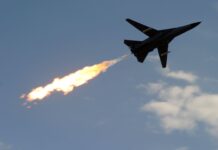
The sixth paragraph of the Joint Statement highlights how both nations have expanded bilateral exercises, such as Veer Guardian 26 (September 9–26), which saw the first-ever deployment of Japanese Mitsubishi F-2A fighter jets and personnel to Air Force Station Jodhpur, alongside a visit by Japan’s air chief, Takehiro Morita.
More significantly, the statement then notes that the ministers welcomed the signing of an LOI (Letter of Intent) toward the utilization of firing ranges in India, “Whereby Japan Self-Defence Forces would, for the first time, conduct live-fire training etc., including those involving surface-to-ship missiles, at firing ranges in India”. Japan’s Defense Minister Koizumi rightly called this “a major strategic step.”
As a densely populated island nation, Japan lacks the space for long-range live-fire drills; it cannot test a 1,000-km-range missile without flying over populated areas or vital fishing grounds. India, by contrast, offers vast, sparsely populated test ranges in Rajasthan, the Andaman and Nicobar Islands, and the Integrated Test Range off the coast of Odisha, where missiles can be fired safely and tracked accurately.
Until now, military engagement between the two nations followed a predictable path of goodwill port calls and routine drills—such as JIMEX (naval, most recently held November 13–14 south of Honshu), Veer Guardian (air), Dharma Guardian (army, held earlier this year in Chaubattia, Uttarakhand), and the multilateral Malabar exercises.
The fourth 2+2 dialogue has pushed this operational integration to a new level, with India opening sensitive strategic testing infrastructure to a foreign military. This signals an extraordinary degree of geopolitical trust that is reserved for only the closest strategic partners.
Beyond missile testing, the two sides also moved to strengthen naval logistics and grey-zone readiness. Building on the Reciprocal Provision of Supplies and Services (RPSS) agreement, ministers advanced negotiations toward a reciprocal maritime ship-repair framework.
Linking Indian shipyards with Japanese naval logistics networks will allow Indian warships in the Western Pacific and Japanese vessels in the Indian Ocean to rely on shared port, fuel, and repair infrastructure during peacetime or a crisis.
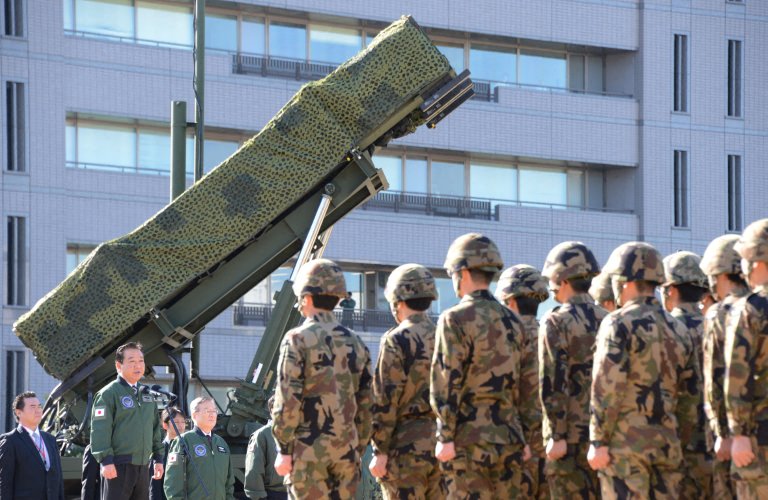
Furthermore, the Tokyo outcomes reflected an acute awareness of contemporary grey-zone and crisis scenarios. Both militaries have committed to integrating unmanned aerial and maritime systems into joint exercises, building the capacity to operate at short notice, and initiating joint tabletop exercises focused on Non-Combatant Evacuation Operations (NEO).
The ability to coordinate crisis response and deploy autonomous assets seamlessly across thousands of nautical miles in an era when regional flashpoints can erupt with little warning thus elevates the India–Japan partnership from a peacetime deterrent to an operational force multiplier.
Secondly, the seventh paragraph of the Joint Statement is equally path-breaking and marks an equally important shift in defense industry ties. Ministers pledged the early implementation of arrangements for the Unified Complex Radio Antenna (UNICORN) mast, a centerpiece of Japanese naval engineering, with India’s Acceptance of Necessity (AoN) expected by February 2027.
Fitted on Japan’s Mogami-class stealth frigates, the UNICORN mast integrates communications, electronic warfare, and radar into a single structure that reduces a warship’s radar signature while boosting situational awareness.
Under the agreement, Japan’s NEC Corporation will provide the design and technology, while India’s Bharat Electronics Limited (BEL) will handle integration and manufacturing.
Rather than a simple off-the-shelf purchase, India’s first major military equipment acquisition from Japan will be a true co-development project. At the Tokyo meeting, Rajnath Singh framed this partnership around a clear formula: “Design with Japan, Make in India.” This formula aligns the natural economic and technological complementarities of both nations.
Ministers agreed to apply this model to mine countermeasures, underwater domain awareness, missile technologies, and naval shipbuilding.
The logic is straightforward. Japan brings world-class expertise in precision engineering, advanced materials, and electronics, while India offers engineering talent, scale, and a rapidly growing defense ecosystem. Combining these strengths gives India access to high-end manufacturing processes while offering Japanese firms a cost-effective production hub to reach wider global markets.
Finally, the Joint Statement carries an unmistakable geopolitical message. The ministers committed to aligning India’s Indo-Pacific Oceans Initiative (IPOI) and MAHASAGAR vision with Japan’s updated Free and Open Indo-Pacific (FOIP) framework. They also reaffirmed their support for sovereignty, territorial integrity, and a rules-based maritime order, while opposing any unilateral attempts to change the status quo by force or coercion.
Although no country was named, China’s expanding footprint clearly shaped the discussions. Beijing’s rapid naval modernization, growing presence in the Indian Ocean and assertive actions in the East and South China Seas have created shared anxieties in New Delhi and Tokyo.
Japan faces persistent Chinese pressure around the Senkaku Islands (which Beijing calls the Diaoyu Islands) and mounting challenges to its surrounding maritime approaches. India, meanwhile, contends with an unresolved border dispute, military standoffs along the Line of Actual Control, and Beijing’s deepening strategic ties with Pakistan.
Therefore, New Delhi and Tokyo share a clear interest in preventing any single power from dominating the Indo-Pacific. However, rather than forming a formal anti-China military coalition, their approach focuses on strengthening regional resilience and supporting partners across Southeast Asia and the wider region “to provide strategic depth, resist coercion, preserve freedom of navigation and maintain an open and rules-based maritime order”.
To that end, the 14th paragraph highlights closer coordination with ASEAN nations, welcoming the inaugural India-Japan-Philippines Trilateral 1.5 Dialogue held in October and the first trilateral naval PASSEX exercise with Indonesia in February 2026.
In sum, the Joint Statement indicates that the India-Japan relationship is entering a more consequential phase. As India and Japan prepare to mark 75 years of diplomatic relations in 2027, the Tokyo 2+2 dialogue shows that their “Special Strategic and Global Partnership” is moving beyond diplomatic rhetoric and translating mutual trust into real military capability, shared industrial strength, and concrete security cooperation across the Indo-Pacific.
- Author and veteran journalist Prakash Nanda is Chairman of the Editorial Board of the EurAsian Times and has been commenting on politics, foreign policy, and strategic affairs for nearly three decades. He is a former National Fellow of the Indian Council for Historical Research and a recipient of the Seoul Peace Prize Scholarship.
- The author can be reached at prakash.nanda (at) hotmail.com