OPED by Rear Admiral Girish Kumar Garg, VSM (Retd)
The difficulty in ending the Iran war is not identifying the ingredients of peace. The nuclear issue, missiles, sanctions, regional armed groups, freedom of navigation, and Israel’s security concerns are all well known. The harder question is: how adversaries who deeply distrust each other can take the first step without believing that they are making themselves more vulnerable.
Military action can change the battlefield, but it cannot by itself create a durable political settlement. The longer the conflict continues, the greater the danger that military calculations become disconnected from the strategic objective.
The answer may not lie in one grand bargain, but in a sequence of reciprocal bargains, each limited in scope, independently verifiable and linked to the next. The objective should not be to create trust between Iran, Israel and the United States. That is unrealistic in the foreseeable future.
The objective should be to create a system that can function despite the absence of trust.
The broad issues are already clear. Iran wants recognition of its sovereignty, sanctions relief, and protection from military attack.
Israel wants assurance that Iran cannot acquire a nuclear weapon and that Iranian-supported groups cannot threaten its population. The United States wants to prevent nuclear proliferation, protect regional stability and avoid another open-ended war.
These objectives are not necessarily irreconcilable. The difficulty lies in sequencing them.
Iran fears that surrendering strategic capabilities before receiving meaningful concessions will leave it exposed. Israel fears that sanctions relief before Iranian capabilities are constrained will simply give Tehran resources to rebuild. Washington fears that concessions without Iranian compliance could be interpreted as weakness.
This is the classic security dilemma: each side sees its own actions as defensive while viewing the other’s actions as a threat that must be countered.
A successful peace process must therefore address not only what is negotiated, but how concessions are exchanged.
Replace the Grand Bargain with Reciprocal Bargains
The first step could be a time-bound Strategic Pause, perhaps lasting 30 days. During this period, the parties would freeze specified offensive operations, avoid attacks on civilian infrastructure and commercial shipping, and suspend actions that materially escalate the confrontation.
Compliance would need independent monitoring. More importantly, neither side should have to make a leap of faith. Each concession should trigger a corresponding concession by the other side.
A verified Iranian reduction in a specified category of nuclear activity could trigger suspension of particular sanctions. A verified reduction in attacks by regional armed groups could trigger defined relaxation of maritime or economic pressure. A verified violation would automatically suspend the corresponding benefit.
The settlement would therefore be built incrementally, with each step creating the conditions for the next.
Address Israel’s Security Dilemma
No settlement can succeed if it ignores Israel’s fundamental security concerns. From Israel’s perspective, Iran’s nuclear program is only one part of the threat. Iranian support for Hezbollah, Hamas and the Houthis has created a network of armed actors capable of imposing military pressure on Israel and disrupting regional security.
The practical approach would be to negotiate capabilities and behavior rather than political allegiance.
Iran could progressively restrict the transfer of specified advanced weapons, particularly long-range missiles, precision-strike systems and sophisticated drones, and commit to preventing attacks that deliberately target civilians or expand the conflict beyond agreed limits. In return, Iran would receive progressively stronger security assurances against direct attack.
The exchange is straightforward in principle: Iran reduces the forward military pressure it generates through its regional partners, while its security becomes less dependent on maintaining that forward deterrence.
For Israel, the benefit would be reduced military pressure on its territory. For Iran, the benefit would be a reduced perceived need to maintain an extensive regional deterrence architecture.
Hezbollah, Hamas & Houthis Need Different Solutions
These three groups should not be treated as one problem.
For Hezbollah, the central issue is Lebanon’s sovereignty and the presence of a heavily armed non-state actor on Israel’s northern frontier. A settlement should strengthen the Lebanese state’s authority and provide for a phased reduction or relocation of heavy weapons from sensitive areas. The immediate objective need not be the disappearance of Hezbollah as a political organization, but preventing any non-state actor from initiating a major interstate conflict without the Lebanese state’s consent.
Hamas presents a different challenge because it is inseparable from the unresolved Palestinian question. Requiring Hamas simply to disappear is unlikely to be realistic. A more viable pathway would involve Hamas relinquishing governance in Gaza, progressively reducing heavy weapons and transferring administration and security responsibilities to a legitimate Palestinian structure supported by the international community.
That process would need reconstruction and a credible political horizon for Palestinians. Otherwise, disarmament could simply create a vacuum for another armed movement.
The Houthis should be addressed through a separate Red Sea security arrangement. Iran could restrict the transfer of specified missile, drone, and maritime-strike capabilities, while a Yemeni political process provides the Houthis with a legitimate political future.
The objective would be to separate Yemen’s internal conflict from the wider Iran-Israel confrontation and restore freedom of commercial navigation.

Turn sanctions into an instrument for peace
Sanctions relief should also be redesigned. Iran is unlikely to make major concessions today in exchange for benefits that may arrive years later.
A Peace Escrow Mechanism could address this problem. Sanctions would be suspended in stages rather than simply lifted. Oil revenues, access to frozen funds, and selected financial channels could be released automatically when independent monitors verify specified Iranian actions.
The same principle would operate in reverse. If commitments are violated, the corresponding benefits would automatically pause.
Iran would therefore not have to trust that sanctions relief will eventually materialize; the economic benefit would be directly linked to verified compliance. At the same time, the United States and its partners would retain leverage until Iran demonstrated its commitments.
Sanctions would cease to be merely punishment or bargaining leverage and become an instrument for implementing the settlement.
Make Hormuz The First Test
The Strait of Hormuz offers an immediate opportunity for confidence-building because its security affects the entire international community.
Iran could provide a verifiable commitment to the safe passage of commercial shipping, while the United States and its partners could suspend specified maritime pressure measures during the Strategic Pause. An independent mechanism could investigate incidents and determine responsibility.
If commercial vessels can move safely while military forces exercise restraint, it would demonstrate that reciprocal commitments can work even when the parties remain deeply hostile.
That lesson could then be applied to the nuclear program, missiles and regional armed groups.
Peace Through Managed Distrust
The central mistake would be to expect trust to precede the agreement. Trust is more likely to result from repeated compliance.
The settlement should therefore rest on four principles: reciprocity, verification, gradualism and automaticity. Every concession should have a corresponding benefit; important commitments should be independently verifiable; major concessions should be broken into manageable stages; and agreed rewards or penalties should operate automatically rather than depend on renewed political bargaining.
This approach also gives each government a politically defensible narrative. Iran can present the process as an exchange of specific military concessions for tangible economic and security benefits rather than capitulation. Israel can demonstrate that its security concerns are being addressed through enforceable restrictions rather than political assurances. The United States can retain leverage while reducing the risk of another prolonged regional war.
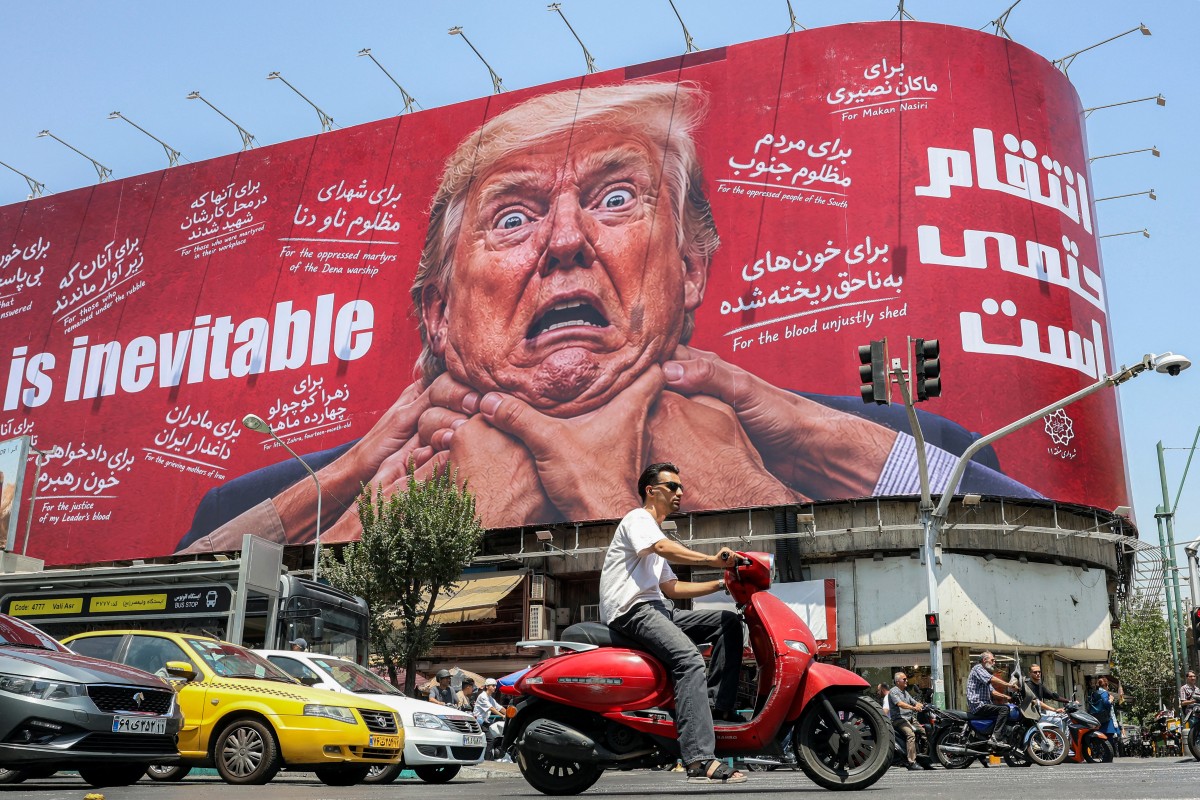
Most importantly, the framework recognizes a basic reality of international politics: peace does not always begin with trust. Sometimes it begins with managing distrust.
The parties do not have to agree on history, ideology or regional ambitions. They need only agree that certain actions are too dangerous to continue and that restraint can produce tangible benefits.
A durable peace is therefore unlikely to emerge from one dramatic handshake or a single comprehensive treaty. It is more likely to emerge from a chain of smaller agreements in which each side discovers, step by step, that restraint produces greater security than escalation.
The real diplomatic breakthrough would not be an agreement that ends all disagreements. It would be an agreement that makes continued disagreement less dangerous, more predictable and progressively less dependent on the use of force.
The ultimate test of diplomacy will not be whether Iran, Israel and the United States learn to trust one another. It will be whether they can construct a system in which they do not need to trust one another to stop fighting.
- OPED By Admiral (R) Girish Kumar Garg
- This is an Opinion Article. Views Personal of the Author
- The writer is a retired Rear Admiral and was the Naval Officer-in-Charge (A&N Islands)