Washington has sent two contradictory signals on Taiwan in the last few days. Whether these signals reflect strategic ambiguity or strategic confusion in the coming days has become a matter of debate among the strategic experts.
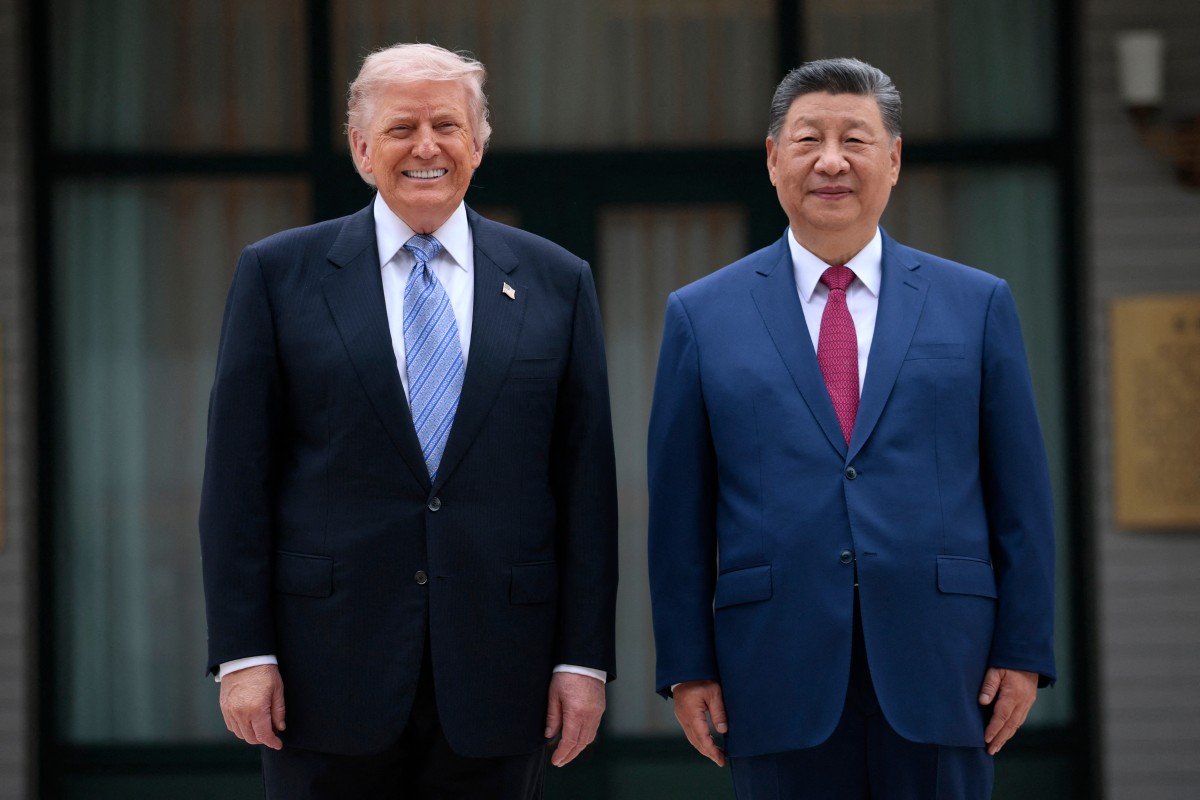
On the one hand, Trump is holding back a $14 billion arms package for Taiwan, pre-approved by the U.S. Congress, despite a bipartisan group of senators explicitly urging him to “formally notify . But the U.S. President has described his decision to pause as a “very good negotiating chip” for his talks with Chinese President Xi Jinping.
Whether that worked in his summit meeting with Xi last week in Washington is not known. But Taiwan’s Defense Minister Wellington Koo confirmed yesterday (October 6) that he has “not heard” of any new sale being cleared, even in smaller chunks.
On the other hand, the Pentagon is seemingly doing the opposite of this pause.
According to reports, the U.S. Department of Defense will station two representatives on a long-term basis inside Taiwan’s Ministry of National Defense headquarters in Taipei from 2026 to 2028.
One official will come from the Office of the Under Secretary of Defense for Policy [OUSD-Policy] — the office that writes U.S. national security and defense strategy. The second will come from the Institute for Defense Analyses [IDA] — a federally funded think tank that does mathematical modeling for war games and combat capability assessment.
The program is called the “Taiwan-US Defense Ministry Joint Cooperation Assessment,” with a total budget of NT$471 million [$14.8 million], including NT$152.5 million this year for personnel, consultancy, travel, data collection, and even interpretation for classified-level meetings.
If confirmed, this will be unprecedented.
This would mark the first time U.S. defense officials are permanently embedded inside Taiwan’s military headquarters, shifting cooperation away from traditional channels managed through the American Institute in Taiwan (AIT), Washington’s de facto embassy.
The military relationship between the United States and Taiwan is highly integrated yet formally unofficial. It is governed by the legal framework of the “U.S. Taiwan Relations Act” (TRA), which Congress passed on April 10, 1979.
Congress enacted it immediately after the U.S. formally terminated its previous “Mutual Defense Treaty with the Republic of China (Taiwan)” to officially recognize “the People’s Republic of China (PRC)” in Beijing.
Rather than abandoning Taiwan, Congress designed the TRA as a legal framework to ensure that “robust, unofficial security, commercial, and cultural ties” continue uninterrupted.
In short, the TRA provides a domestic legal workaround for treating Taiwan as a country without formal diplomatic recognition. However, under it, the U.S. is also obligated to maintain Taiwan’s capacity to resist force or coercion in general and the forcible annexation by the PRC in particular.
Over the years, U.S. personnel have served in Taiwan as trainers and advisers. Hundreds of active-duty U.S. military advisors—often colloquially referred to locally as “English teachers” to maintain a low profile—are routinely deployed across Taiwan.
U.S. military observers are present within Taiwan’s annual “Han Kuang live-fire military exercises”. They actively guide Taiwan’s defense strategy toward decentralized command, logistics, and real-world combat readiness.
Taiwanese fighter pilots undergo advanced combat training at Luke Air Force Base in Arizona.
The US remains Taiwan’s primary foreign weapons supplier, with a total backlog of orders nearing $20 billion.
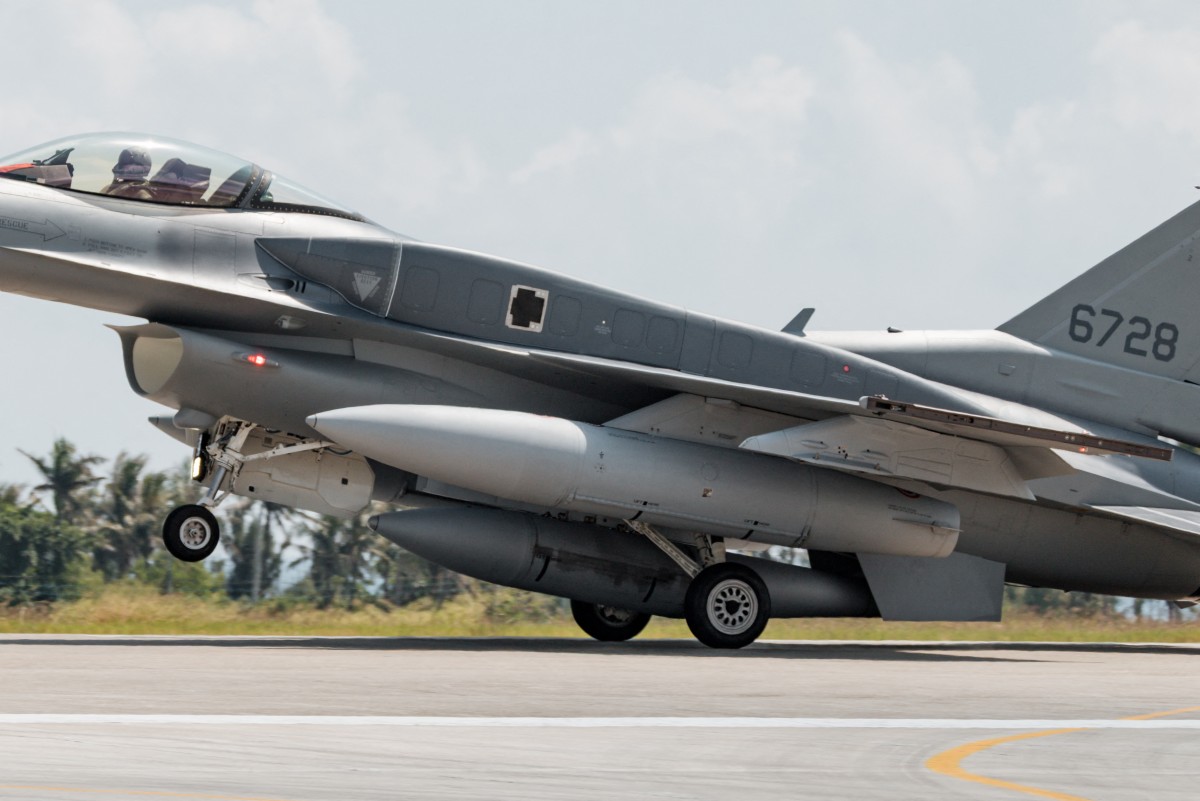
In fact, Taiwan received its first new batch of two advanced Lockheed Martin F-16 Block 70 fighter jets on October 2. This was part of an $8 billion deal approved in 2019 for 66 new-build F-16 Block 70 jets, with the remaining 64 aircraft scheduled for future delivery. out of a 66-aircraft fleet on order.
However, all these coordination efforts between Washington and Taipei are usually routed through the AIT intermediary, as the U.S. adheres to its One China” policy. In that sense, the new proposal to station Pentagon personnel directly inside the Taiwanese Defense Ministry represents a shift from this historical status quo.
The new arrangement puts Americans directly into the core of Taiwan’s defense policymaking, including policy coordination, Han Kuang exercise planning, asymmetric warfare doctrine, and major weapons procurement evaluations, it is said.
Of course, the U.S. routinely sends military and civilian defense officials to work directly inside the defense ministries of partner and allied nations. Established by the Pentagon in 2009, the Ministry of Defense Advisors (MODA) Program specifically trains and deploys high-performing senior U.S. Department of Defense civilians.
These advisors are embedded in partner-nation defense ministries to support institutional capacity building, strategy, financial management, and logistics.
The U.S. also actively deploys specialized defense consultants directly to the defense ministries of nations looking to transition away from historical adversaries such as Ukraine, Moldova, Armenia, and various Balkan nations looking to exit Moscow’s orbit.
The U.S. has a long history of embedding liaison officers in allied countries. For example, it has a Joint Political-Military Group in Israel that embeds officers in missile-defense cooperation for Iron Dome, David’s Sling, and now Iron Beam. But American officials do not operate inside the Kirya (Israel’s defense headquarters).
Similarly, despite 54,000 US personnel stationed in Japan, no U.S. officer sits inside Japan’s Ministry of Defense to assess combat capability.
Perhaps in NATO countries and South Korea, U.S. military officials are believed to sit together often.
There are also “Offices of Defense Cooperation” (ODC), or United States Military Groups, which are technically attached to the local U.S. Embassy for diplomatic protection. These teams provide security assistance and work in routine, day-to-day coordination with host ministry personnel.
However, what makes the proposed U.S. officials sitting directly within Taiwan’s military headquarters unique is that Taiwan is not an ally of America in the strict sense, as the U.S. lacks formal diplomatic recognition of Taiwan, and these officials will bypass the traditional AIT.
Of course, multiple reports in recent years have claimed that U.S. special forces are permanently stationed in Taiwan to assist its 101st Amphibious Reconnaissance Battalion special operations force, though Washington has officially denied it. The same has been the case with the speculations about the coming and going of U.S. military personnel from the Army Special Operations Command base in Taoyuan.
How will Beijing React?
At the time of writing, Beijing had not issued an official reaction, possibly because Taiwanese media outlets only recently brought details of this long-term Pentagon deployment to light. It has not been declared officially.
But it goes without saying that Beijing would be “certain to protest” and could respond “with expanded exercises and intimidation”, according to Zivon Wang, a military analyst at the Chinese Council of Advanced Policy Studies in Taipei.
He expects U.S. personnel not to wear uniforms at the Ministry of National Defense because it could be interpreted as a more formalized US-Taiwan military relationship and might further provoke Beijing.
Incidentally, China has made more air and naval incursions across the median line in the Taiwan Strait since 2022. Although Chinese military aircraft had occasionally crossed the median line (established informally in 1954) in the past, the practice became significantly more frequent from 2022, particularly after Nancy Pelosi (then Speaker of the House of Representatives) visited Taiwan in August that year. What had once been an informal but largely respected buffer increasingly became a zone of routine Chinese military activity.
Therefore, it remains to be seen whether China will respond to the Pentagon’s proposed deployment with loud exercises.
It may also remain silent, as nothing is official yet and Trump has his “negotiating chip” of holding back Taiwan’s military package.
Trump’s admirers often see his unpredictability as useful in negotiations with an adversary, because the other side cannot be sure how far he is willing to go.
But his critics argue that his unpredictability becomes counterproductive when allies cannot distinguish a negotiating threat from a real change in American policy.
It remains to be seen who will prove to be right in the case of Taiwan.
- Author and veteran journalist Prakash Nanda is Chairman of the Editorial Board of the EurAsian Times and has been commenting on politics, foreign policy, and strategic affairs for nearly three decades. He is a former National Fellow of the Indian Council for Historical Research and a recipient of the Seoul Peace Prize Scholarship.
- The author can be reached at prakash.nanda (at) hotmail.com