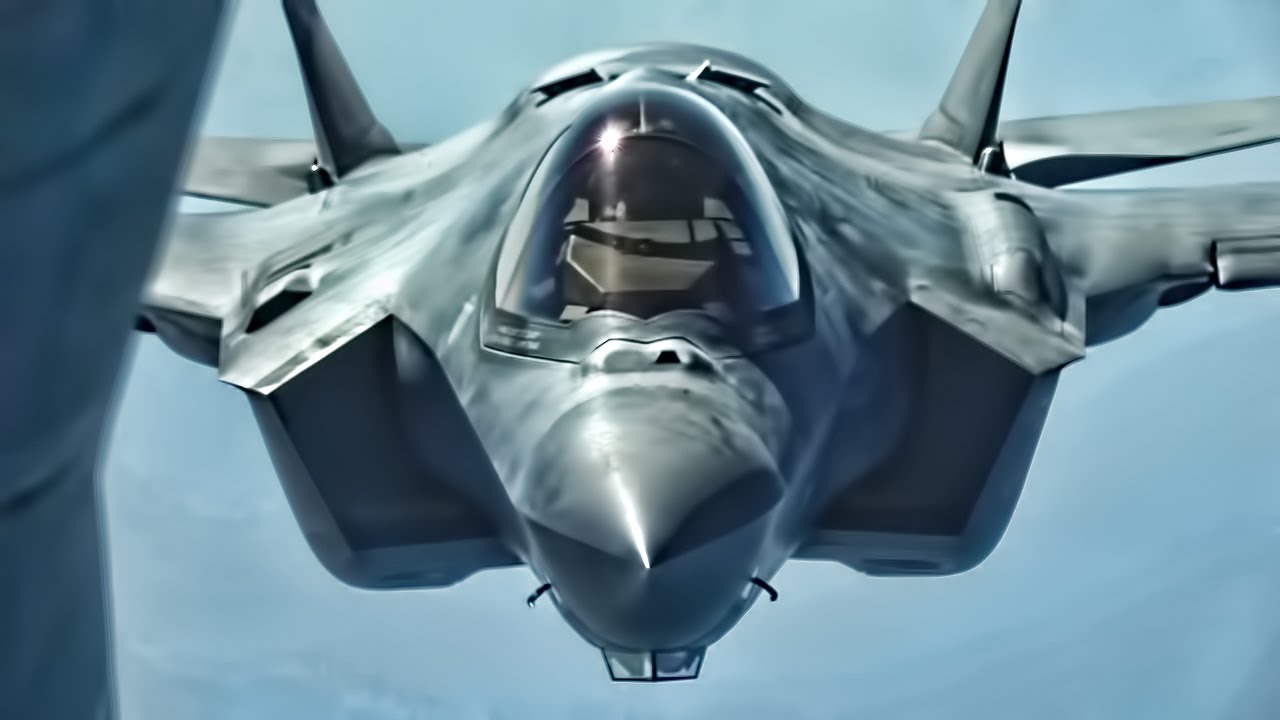
As Saab ramps up its campaign to persuade Canada to select the Gripen E/F over Lockheed Martin’s F-35 Lightning II, an unlikely third party stands to benefit from Saab’s success: the United Kingdom (UK).
After losing the Canadian fighter jet contest to Lockheed’s F-35, Saab’s Gripen E/F got an unexpected opportunity to make a comeback when the Canadian Prime Minister put the purchase of F-35A fighters under review in March 2025 amid growing tensions with the Donald Trump administration.
The Swedish defense and aerospace giant has since revived its “Gripen for Canada” campaign, offering Ottawa a very attractive deal.
Since Canada is acquiring 16 F-35s that it has already paid for, Saab aims to supply at least 72 Gripens to the Royal Canadian Air Force (RCAF), along with six GlobalEye early warning aircraft. At the heart of the Gripen offer are local manufacturing, full technology transfer (ToT), access to mission-system source code, sovereign control of data, and full independence in upgrades and maintenance for the Royal Canadian Air Force (RCAF).
So far, Saab appears to be optimistic, particularly as the Canadian government has been outspoken about the jobs, technology transfer, industrial and regional advantages, and sovereign sustainability of large defense purchases.
“We think that we can use military procurement to get more,” Canada’s Industry Minister Mélanie Joly told reporters in November 2025, when asked whether fighter programs create jobs. “That is why we’re looking, indeed, at the Gripen.” “We’ll see how that is concrete,” Joly said. “And at the same time, we’re looking at what Lockheed Martin can do.”
Saab has reportedly promised to create around 10,000 jobs for Canadians, with some estimates rising higher when GlobalEye surveillance aircraft are included.
Last month, Saab went a step further and announced collaborations with local Canadian industries, referring to the move as a first step toward creating a large national ecosystem to develop, deliver, and support the Gripen E fighters if the Canadian government decides to move forward with the acquisition, as the EurAsian Times noted in a detailed report.
UK to Benefit From Canada’s Gripen Purchase
The UK would benefit immensely if Canada selected Saab’s Gripen E/F aircraft, primarily because the aircraft has a substantial British industrial contribution, with UK companies supplying some crucial components and technologies.
“The Gripen is a collaboration between the UK, Sweden and the US. Companies across the UK supply critical components including the radar and landing gear, with over 30% of each aircraft manufactured in the UK. At least 50 British-based companies, from Saab UK in Fareham to Leonardo UK in Edinburgh, are set to be involved in the deal, supporting over 5000 UK jobs,” the United Kingdom government said in an official press release in May this year, in the context of Ukraine’s purchase of the aircraft.
However, it is not much different for Gripen exports to other countries, including Canada.

If a deal goes through, the first major beneficiary would be Britain’s aerospace industry, particularly companies such as Leonardo UK, Saab UK and other specialist manufacturers. For instance, Leonardo’s Edinburgh unit produces Raven ES-05 AESA radar, Skyward-G infrared search and track (IRST) systems, BriteCloud expendable active decoys, and the NATO Mode 5 identification friend-or-foe (IFF) technology.
Similarly, British company Martin Baker supplies ejection-seat technology for the Gripen family, including the Martin Baker S10LS seats adapted for the advanced Gripen-E. Meanwhile, Héroux-Devtek UK was awarded a contract to design, manufacture, and deliver complete landing-gear systems for the Gripen E, covering both main and nose landing gear.
This means that a Canadian order for Gripen-E would generate additional business for British manufacturers, engineers and specialist suppliers. That, in turn, will help sustain production lines, skilled employment and engineering expertise in Britain. Moreover, it could make British suppliers more competitive when Saab pursues future export deals.
Britain would also benefit from expanding the Gripen’s global supply chain.
If Canada orders a significant number of aircraft, British companies could supply components not only for Canadian aircraft but potentially for other Gripen customers. This would be significant because combat aircraft generate business over their entire lifecycle, especially as components require ongoing maintenance, replacement, and upgrades. Thus, Ottawa’s purchase could create a sustained revenue stream for British companies long after the initial aircraft deliveries.
Perhaps for this reason, the UK backed Thailand’s purchase of the Gripen earlier, even though the Lockheed F-16 Block 70/72 was also in the fray, as the EurAsian Times reported at the time. Similarly, London has officially backed and endorsed Ukraine’s purchase of the Gripen, evidently in its own interest.
Beyond this, Canada’s potential purchase of the Gripen could open new avenues of collaboration between British and Canadian companies. British suppliers could work alongside the Canadian companies Saab named last month, creating opportunities for cross-border aerospace manufacturing and technology cooperation. This, however, remains a conjecture for now because Saab’s partnerships are in an early stage.
Notably, Canada has also been admitted as an observer in the Global Combat Air Program (GCAP), a next-generation fighter program the UK is pursuing alongside Japan and Italy.
Canada’s purchase of the Swedish flagship fighter jet would also benefit the existing Britain-Sweden defense-industrial relationship. It could deepen the commercial ties between the two countries and encourage further cooperation in radar, electronic warfare, weapons, and next-generation combat aircraft. More importantly, though, it could strengthen the position of British industry within a major European-led aerospace program.
Nonetheless, it is somewhat ironic that the UK may want Canada to buy the Gripen despite being a major F-35 operator. Both the Royal Air Force and Royal Navy depend on the F-35B for their carrier-based strike capability. Britain is also deeply integrated into the international F-35 program, including its industrial supply chain.
Despite having a vested interest in Ottawa’s Gripen purchase, the British leadership has not openly endorsed it, likely because of its close strategic relationship with the United States and the clear political angle in Canada’s review of the F-35 purchase. The UK and US have one of the world’s closest military and intelligence relationships, built around NATO, Five Eyes and extensive defense-industrial cooperation.
While British companies would benefit from additional Gripen production, the UK government would not want to undermine confidence in a F-35 Joint Strike Fighter (JSF) program in which it has invested substantial financial and military resources.
That said, it is also pertinent to note that despite Saab’s hard-to-ignore offer, its Gripen pitch to Canada faces considerable challenges.
Canada may not abandon the F-35 purchase entirely, as it is currently the only fifth-generation stealth fighter on the market that offers deep interoperability with NORAD forces, an essential component of the country’s security.
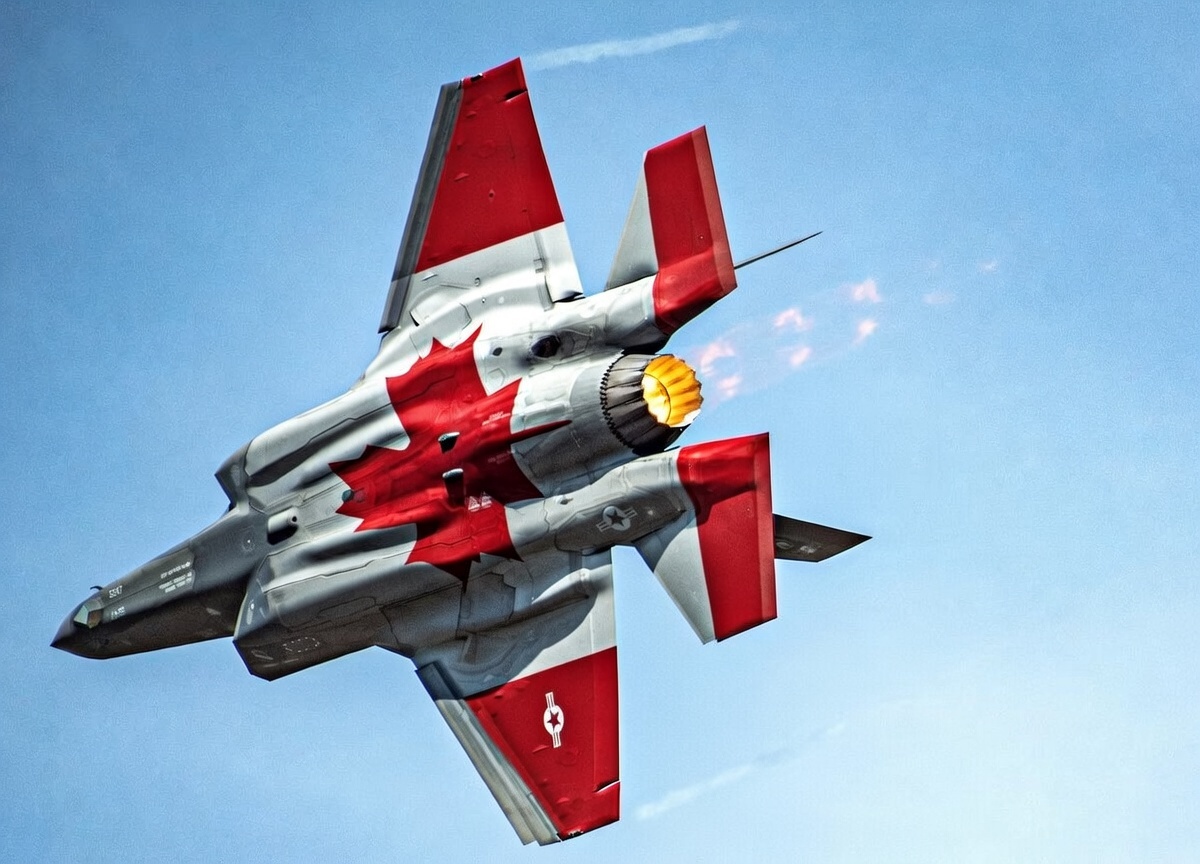
The F-35 would allow the Royal Canadian Air Force (RCAF) to share sensors, data, and tactics with American aircraft that appear to fit into NORAD. Furthermore, senior RCAF leadership believes that the F-35 is the most reliable counter to peer rivals like China and Russia, both of whom have advanced air defenses and stealth aircraft.
A third school of thought, however, supports a mixed fleet. According to a report in Canadian media earlier this year, the country could even buy 72 F-35s and 72 Gripen-E/F fighters, raising its total fighter-jet procurement to over 88 and suggesting Ottawa was unlikely to give up on the US stealth fighter. However, a mixed fleet would increase infrastructure, training, logistics, and weaponry integration costs and complexity.
Interestingly, the Mark Carney government has yet to publish the results of the F-35 review, more than a year after it was commissioned, and many analysts and watchers in the country predict Ottawa may choose to remain committed to the American stealth fighter. They often refer to the 2021 assessment by the Canadian Defense Ministry, in which the F-35 earned a 95% rating compared with the Saab Gripen-E/F’s 33%.
For now, it remains to be seen whether Canada will press ahead with an alternative that will help it reduce its reliance on the US amid tensions and benefit the UK, or bite the bullet and complete its F-35 purchase for security and sustained cooperation with the US.
- Contact the author at sakshi.tiwari13 (at) outlook.com
- Follow EurAsian Times on Google News