A profound transformation is underway in the politico-military-industrial complex that has dominated the US defense realm for over seven decades.
As drones, AI, autonomous systems, satellites, robots, and networked platforms reshape the battlefield, Silicon Valley is quietly edging out the US defense market’s big five: Lockheed Martin, RTX, Boeing, General Dynamics, and Northrop Grumman.
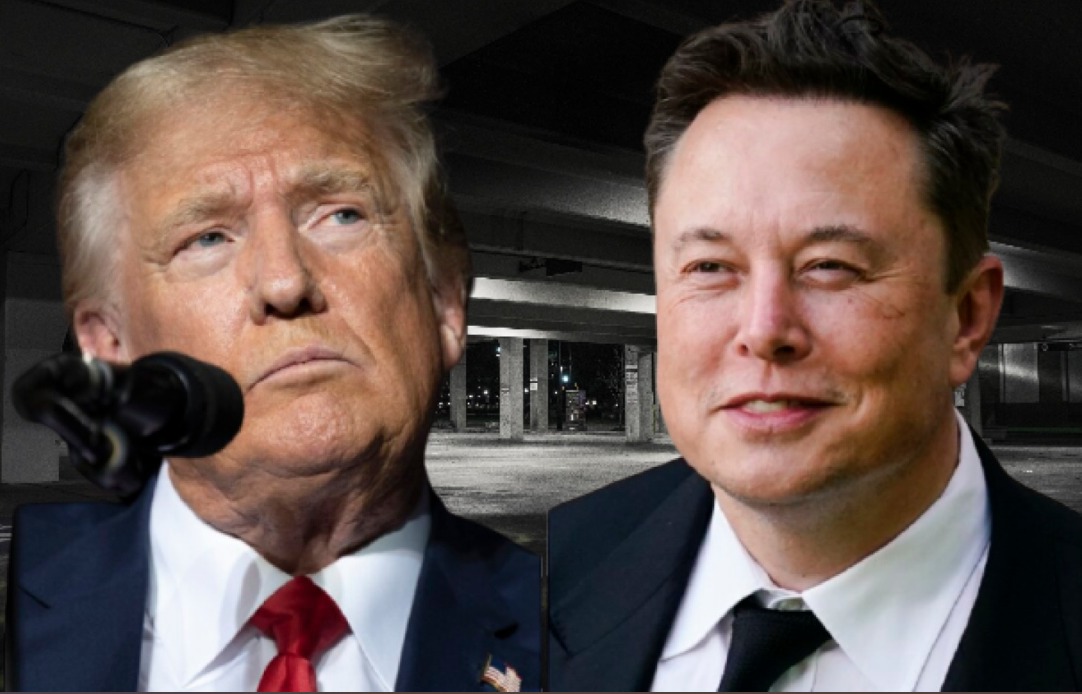
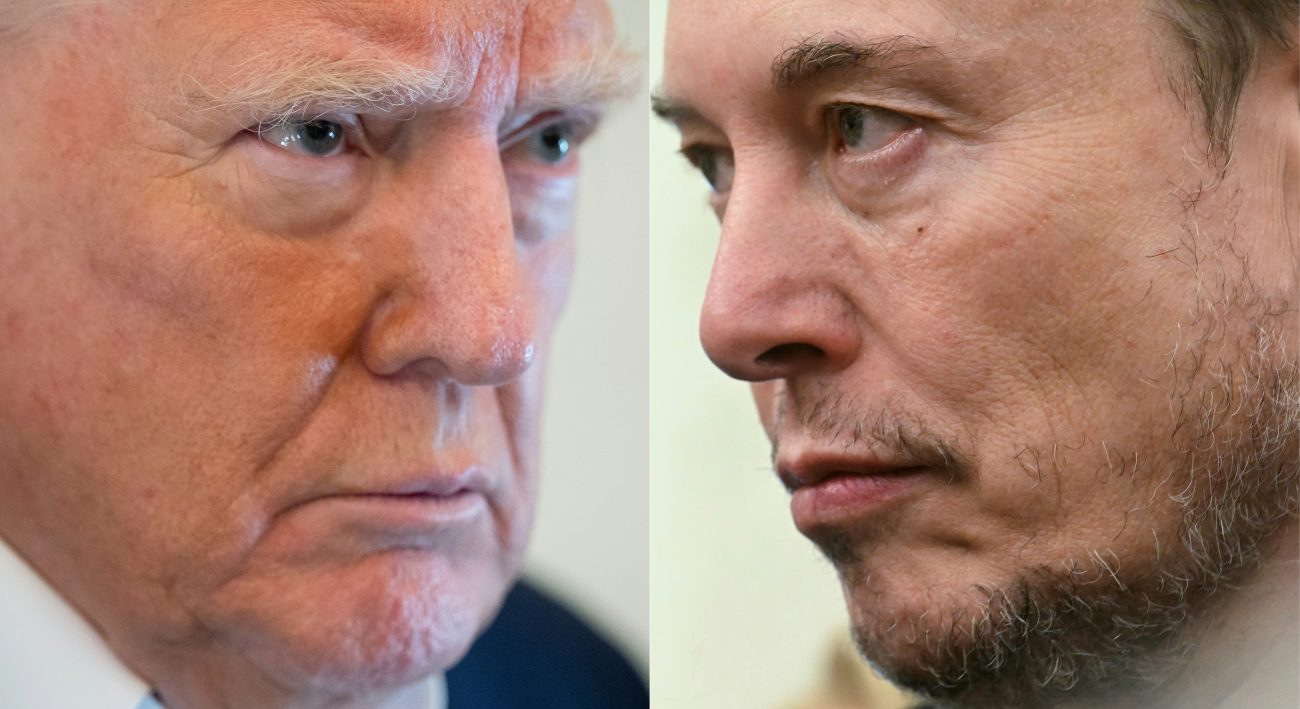
On October 6, Defense Secretary Pete Hegseth tapped SpaceX CEO Elon Musk and Palmer Luckey, the co-founder of defense technology firm Anduril, to lead “Project Meridian: The Future of Warfare,” a new 120-day initiative tasked with identifying the technologies and capabilities required for future military dominance.
“We are witnessing rapid advances in artificial intelligence, autonomy, directed energy, robotics, biotechnology, among other critical high-tech areas. Combined, these new domains, new ways of fighting, and technological developments will profoundly alter the character of warfare,” Hegseth said in his one-page memo while announcing Project Meridian on September 30.
“To maintain global dominance, the United States must anticipate future operational environments and act decisively to develop the tools to dominate in them.”
Defining the scope of the study, Hegseth said: “Project Meridian will study the battlefields of the future, identify which weapons and technologies warfighters will need to harness to dominate in these environments, and propose actionable solutions to start developing, testing, and fielding these capabilities such that America will have overmatch for the 21st century and beyond.”
In his memo, Hegseth hinted that the center of gravity is shifting over who defines and decides the parameters of future defense weapons, technologies, and requirements.
“Project Meridian will leverage critical perspectives from outside the Pentagon, drawing upon a group of top technologists, innovators, business leaders, policymakers, and national security experts.”
Its primary function will be to map the trajectory of future warfare, identify critical capability gaps, and propose actionable solutions, Hegseth said.
The Elon Musk and Palmer Luckey-led panel will therefore discuss not a particular weapons platform, but what American warfare and the battlefield will look like in the future.
What they will discuss and define is not merely a change in weapons technology, but the way the Pentagon sees warfare and organizes the production of military power itself.
The study’s co-directors will “identify the domains that we must conquer, and capabilities we must master,” Hegseth said at Marine Corps Base Quantico on September 30.
“The Project Meridian effort will examine the technologies and operational concepts required to sustain U.S. military advantage across the full spectrum of future warfighting domains across a 10-20 year time horizon,” said a spokesperson for the Department of Defense.
The Musk- and Luckey-led study could therefore shape the Pentagon’s defense procurement decisions for decades.
It’s no accident that while SpaceX’s Musk and Anduril’s Luckey are on the panel, the executives of the Big Five are conspicuously missing.
Silicon Valley to Replace US’ Military-Industrial Complex?
The US military-industrial complex started taking shape in the 1950s.
While the two World Wars saw large-scale mobilizations and the channeling of industries toward weapons production, the distinctive military-industrial complex emerged in the 1950s.
US President Eisenhower himself later described the “conjunction of an immense military establishment and a large arms industry as new in the American experience.”
In April 1950, the top-secret U.S. National Security Council (NSC) policy (NSC-68) concluded that the “only plausible way to deter the Soviet Union was for President Harry Truman to support a massive build-up of both conventional and nuclear weapons.
In other words, the US should maintain elevated defense spending even during peacetime.
U.S. military budget jumped from USD 13 billion to USD 60 billion within a couple of years. Most of these funds went to private contractors, rather than government bodies.
For nearly the next seven decades, military production and weapons procurement in the US followed a set pattern.
The Pentagon defined its requirements, the US Congress approved the budgets, defense production firms, mostly a handful of prime contractors, submitted bids, and the winner developed platforms with lifecycles ranging from a few years to a few decades.
Fighter jets, bombers, submarines, aircraft carriers, missiles, radars, military communication platforms- all these platforms were developed this way.
For decades, they remained industrial objects; however, these platforms gradually became computational systems. The F-35, for instance, has been described as a flying supercomputer.
New-age military platforms, however, are first and foremost computing platforms.
Drones, for example, are all these systems rolled into one.
They are at once a fighter jet and a bomber, equipped with radar seekers, missiles, a network of sensors, a communication system, and a software platform that integrates AI into flight paths and target selection.
Satellite constellations are becoming central to military communication and targeting by drones, as seen in the critical role Starlink is playing in the war in Ukraine. Ukrainian drones use AI to select flight paths that exploit gaps in Russia’s layered air defense network.
Command-and-control software and Battlefield Management Systems (BMS) fuse information from diverse sources, including satellites, drones, ground-based radars, and AWACS, within seconds to create a unified, simplified battlefield picture and propose the most critical sites for targeting.
Underpinning all these systems are software, computing systems, and AI, not just hardware.
In this new warfare, large, expensive defense platforms are often a liability, rather than an asset.
In short, military value is shifting at an unprecedented speed.
Defense platforms costing millions of dollars and once considered invincible could now be targeted by a drone costing just a few thousand dollars.
This shift is also forcing military suppliers to change. Software firms in Silicon Valley that combine artificial intelligence (AI), autonomy, and machine learning (ML) to deliver innovative defense solutions are now at the center of this shift.
In recent years, they have won contracts worth tens of billions of dollars, edging out the Big Five of defense production.
The rise of these new military technology firms marks the biggest shift in the US arms industry over the past five years.
“Companies like SpaceX, Palantir, and Anduril have been tapped for multi-billion-dollar contract awards from the Pentagon for communications, targeting, unpiloted vehicles, anti-drone defenses, and hypersonic weapons. The funds from these awards will flow to the companies over time, which should put them in the top ranks of Pentagon contractors by value of awards within the next several years,” a recent report from the Costs of War project said.
For instance,
has received awards for countering Unmanned Aerial Vehicles (UAVs) from the Marines (US$642 million); a contract for its Roadrunner UAV interceptor system (US$250 million); and contracts for its Ghost Shark autonomous underwater vehicle as part of the U.S.-UK-Australia AUKUS project, to name a few.
Anduril has also been selected to build the next generation of Army goggles, the Integrated Visual Augmentation System (IVAS), which are “intended to give soldiers everything from night-vision capability to warnings of incoming airborne threats.”
In June this year, the U.S. Air Force awarded engineering, manufacturing development, and production contracts for Collaborative Combat Aircraft Increment 1 to both Anduril (FQ-44) and General Atomics.
However, Anduril’s most lucrative contract could be in border security technologies. The Big Beautiful bill commits over US$6 billion for various border security technologies. However, as Eurasian Times reported earlier, the bill’s conditions mean Anduril is the only firm that qualifies for these border surveillance tenders.
SpaceX is launching most of the U.S. military’s satellites. It is also receiving funding for the military version of its Starlink system.
Separately, the Pentagon is considering investing in SpaceX’s Starship system.
SpaceX and Anduril could also win billion-dollar contracts in the upcoming ‘Golden Dome’ project.
Established tech firms are also challenging the Big Five’s dominance. For example, Amazon, Microsoft, Google, Oracle, and IBM are collectively investing US$10 billion in the Pentagon’s cloud computing program.
“To the extent that the Pentagon moves towards AI-driven weapons systems, including swarms of drones and uncrewed aircraft, ships, and combat vehicles, the dominance of the Big Five firms may be reduced,” the report by the Costs of War Project added.
In fact, a recent essay on the Anduril Industries blog, ‘Rebooting the Arsenal of Democracy,’ dismissed the Big Five defense contractors as ‘remnants of the Cold War’ that need to be supplanted if America is to take the lead in developing and producing the weapons of the future.
“Why can’t the existing defense companies simply do better? The largest defense contractors are staffed with patriots who still lack the software expertise or business model to build the technology we need.
“Tomorrow’s weapons – autonomous systems, cyberweapons and defenses, networked systems, and more – are enabled through software, while these companies specialize in hardware. These companies work slowly, while the best engineers relish working at speed… These companies built the tools that kept us safe in the past, but they are not the future of our defense,” the essay said.
The trend, therefore, has already started.
Project Meridian, which could profoundly impact US defense procurement for decades, will further accelerate this trend.
Musk and Luckey’s appointment to lead this study suggests Silicon Valley tech firms are quietly edging out the US military-industrial complex’s Big Five.
- Sumit Ahlawat has over a decade of experience in news media. He has worked with Press Trust of India, Times Now, Zee News, Economic Times, and Microsoft News. He holds a Master’s Degree in International Media and Modern History from the University of Sheffield, UK.
- He can be reached at ahlawat.sumit85 (at) gmail.com