India’s 5th-gen AMCA appears to be gaining momentum and could outpace U.S. stealth jets like the F-22 and F-35, as well as the Russian Su-57.
New Delhi is set to name a private-sector partner to build prototypes of its indigenous stealth fighter after three contenders submitted bids for the ₹15,000-crore (about $1.8 billion) project.
The shortlisted bidders include the Larsen & Toubro-Bharat Electronics-Dynamatic Technologies, Tata Advanced Systems, and Bharat Forge-BEML-Data Patterns.
Defense Secretary Rajesh Kumar Singh said on Nov. 16 at the ANI National Security Summit that the ministry expected to announce the winner shortly and hoped this would accelerate prototype work.
“As of now, our fifth-generation program is AMCA. I am happy to say that the bids have been received from three shortlisted bidders, including our fellow panelist (Arun T Ramchandani, Head of L&T Defense) in consortium with a PSU,” Singh said. “In a month’s time, we will be ready to announce the winner of the race, and after that we hope it will lead to faster development of the AMCA prototypes for induction.”
The selected development-cum-production partner will work with the Aeronautical Development Agency (ADA), a Defense Research and Development Organization (DRDO) laboratory that has designed the twin-engine aircraft, to manufacture five flying prototypes and one structural test specimen. The winner will establish a manufacturing ecosystem near Puttaparthi in Andhra Pradesh, the planned site of the program’s core integration and flight-test complex.
Earlier, the Aeronautical Development Agency (ADA) issued a Request for Proposal (RFP) in late May 2026 to three shortlisted bidders to develop AMCA.
The bidders were given two to three months to submit their commercial bids. The lowest bidder (L1) will be selected, followed by contract negotiations. Notably, the first prototype is expected to be powered by GE-414 engines, which have now become a source of trouble for the AMCA program.
India is in negotiations with General Electric, a US engine manufacturer, to use its F414 jet engine to power the fifteen AMCA prototypes. However, the talks recently hit a stumbling block after the cost per engine reportedly tripled, according to Indian media reports.
The unprecedented price rise has sparked fears of delays, particularly because the AMCA airframe design is frozen around the F414 engine, and switching to another engine would require redesign work, wind tunnel testing, and other validations, delaying the entire project.
Despite this, the contract is targeted for award in the first quarter of 2027, and the first prototype is to be rolled out on the predetermined 2029 timeline. In addition to the prototype rollout and testing, the AMCA could enter serial production by 2034-35, after completing about 1800 test sorties, as a detailed EurAsian Times report previously explained.
According to the roadmap, a new bidding process will be held for serial production of the AMCA, and HAL could participate again. However, the private consortium that secures the prototype contract will gain an insurmountable technological head start, making it the most likely to win the next stage of the bidding process.
Together, these factors suggest that the fifth-generation AMCA could receive Initial Operational Clearance (IOC) during the 2030s.
IOC usually occurs in the Production and Deployment (P&D) phase, after prototyping and testing and during or after Low-Rate Initial Production (LRIP), a limited production run to refine manufacturing and support operational testing.
Therefore, the AMCA is expected to attain IOC within 6-7 years of its first flight.
US & Russian Programs Trailed, China’s Paced
Historical data reveal that even leading defense contractors possessing mature supply chains and substantial prior experience with fifth-generation platforms take longer from contract award to the maiden flight of the first prototype.
For example, US aerospace giant Lockheed Martin’s F-22 and F-35—positioned as the world’s most advanced fifth-generation stealth fighters—are a case in point.
For the F-22 Raptor, the Engineering and Manufacturing Development (EMD) contract was awarded in August 1991 to the Lockheed Martin-Boeing team, following the earlier Advanced Tactical Fighter competition between the YF-22 and YF-23 demonstrators.
The first production-representative EMD aircraft rolled out in April 1997 and made its maiden flight in September 1997, approximately six years after the EMD contract was awarded. The F-22 achieved Initial Operational Capability in December 2005, around eight years after its first flight.
Similarly, Lockheed Martin was awarded the System Development and Demonstration (SDD) contract for the F-35 Lightning II in October 2001, following the competitive fly-off between the X-35 and X-32 demonstrators.
On February 25, 2011, the first production-standard F-35A (AF-6, serial 07-0744) flew, the lead aircraft of Low-Rate Initial Production Lot 1 (LRIP-1). The U.S. Air Force first formally accepted a production F-35A on May 5, 2011, when it accepted AF-7 at Fort Worth and flew it to Edwards AFB the following day.
Despite substantial prior experience on the F-22 program, including shared technologies and manufacturing lessons, the first F-35A prototype (AA-1) did not roll out until 2006 and first flew on 15 December 2006—more than five years after the contract was signed.
The first series-produced F-35 rolled out only on February 25, 2011, 11 years later.
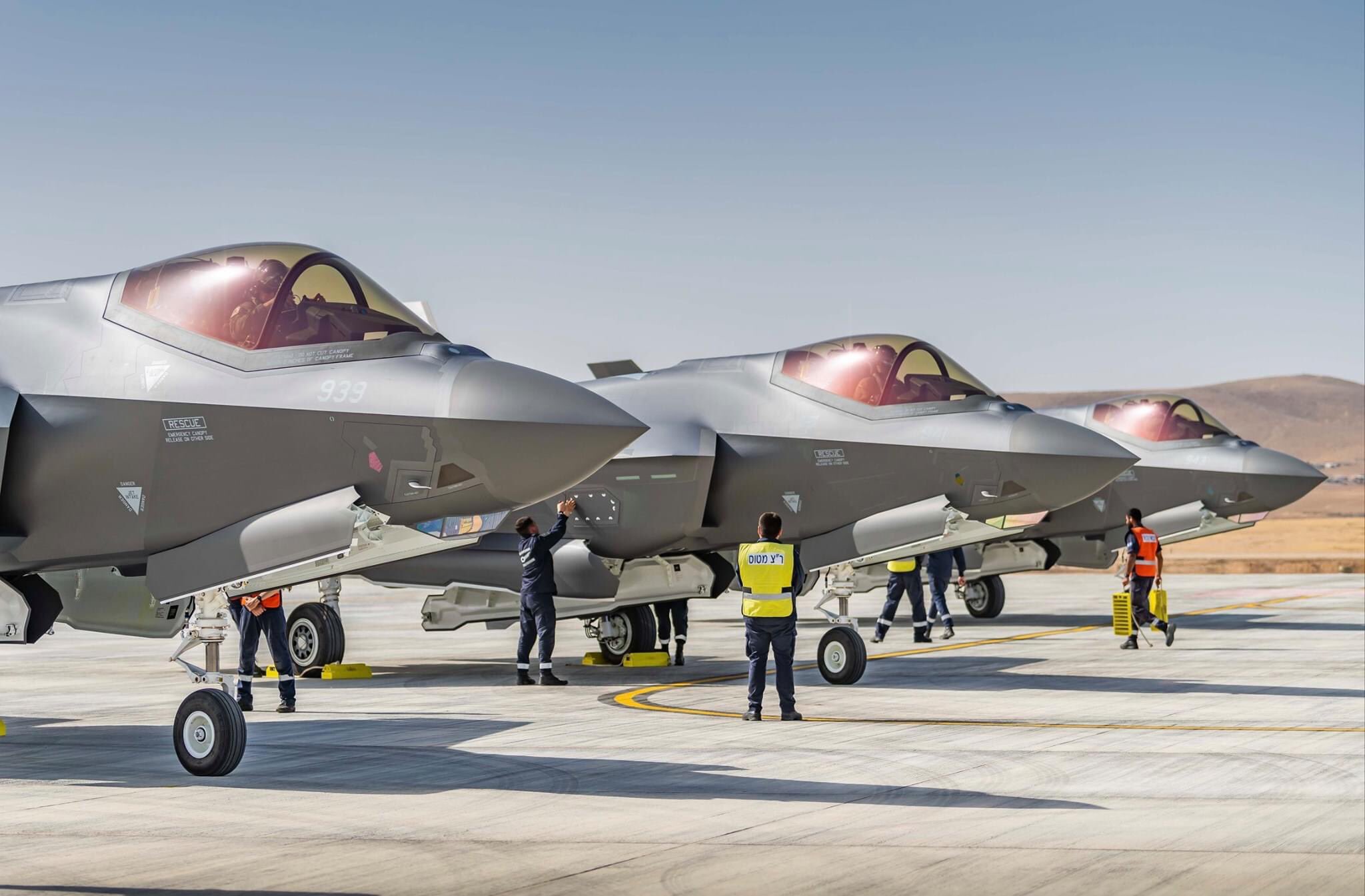
The F-35 variants achieved IOC at different times: the F-35B of the US Marine Corps was the first to attain IOC in July 2015, whereas the US Air Force’s F-35A reached IOC in August 2016. Meanwhile, the US Navy’s F-35C got IOC only in February 2019.
Notably, the F-35 began mass production before achieving Initial Operational Capability (IOC) in line with a purposeful acquisition technique known as concurrency. Lockheed Martin and the Pentagon collaborated on design, testing, and production to expedite fielding, save time, and reduce unit costs.
Russia’s Su-57, on the other hand, had its own long journey.
The Russian Ministry of Defense selected Sukhoi over Mikoyan as the winner of the PAK FA competition in 2002, but the first prototype rolled out in 2009, followed by the maiden flight in 2010.
However, the series-produced aircraft was rolled out 10 years later and achieved IOC in 2020, 10 years after the first flight.
Of the three powers that indigenously developed and fielded their own fifth-generation stealth fighters, China did it on the tightest timeline.
China’s J-20 program began in 2008, when its Air Force endorsed Chengdu Aircraft Corporation’s Project 718 (twin-engine canard design) for the J-XX fifth-generation fighter program. Interestingly, CAC built its first prototype by 2010, and the maiden flight took place on 11 January 2011.
The J-20 entered low-rate initial production, with the first aircraft reportedly inducted into operational units in 2016. In February 2018, China announced that the fighter had entered combat service with the Air Force.
This placed the aircraft among the fastest-developed fifth-generation fighter programs.
Two new programs—South Korea’s KF-21 and Turkey’s KAAN are proceeding at an impressive pace.
South Korea rolled out the first production KF-21 Boramae fighter in March 2026, marking an important milestone in South Korea’s indigenous fighter program.
KF-21 received its initial type certification in June 2026, less than five years after its maiden flight on 19 July 2022. However, type certification confirms that the aircraft meets key airworthiness prerequisites; it is not equivalent to IOC.
South Korea declared the Block I version combat-suitable in May 2026, and delivered the first production aircraft to the Air Force in September 2026, with operational deployment planned for the second half of 2027.

The Turkish Aerospace Industries (TAI), on the other hand, rolled out the first KAAN prototype in March 2023, which then took its maiden flight the following year, in February 2024.
A contract to produce 20 KAAN units was awarded in May 2026, with deliveries scheduled for 2028-2030. Meanwhile, analysts believe the aircraft will achieve IOC by 2030-31—within 6 to 7 years of the first flight.
India is expected to follow a similar timeline, even though several sections have flagged that prospect as impractical for various reasons.
- Contact the author at sakshi.tiwari13 (at) outlook.com
- Follow EurAsian Times on Google News