After hesitating for weeks amid a deteriorating security situation in the Red Sea, Saudi Arabia, Pakistan, and Türkiye (Turkey) have finally agreed to activate “deterrence measures” under the mutual security agreement, the Makkah (Mecca) Pact.’
Under the agreement, Pakistan and Türkiye have agreed to “rapidly deploy forces” in Saudi Arabia to counter the attacks by Yemen’s Houthi rebels.
This is the first time that the ‘Mecca Pact,’ signed in August, has been invoked.
“The committee agreed to activate collective deterrence measures, within the framework of the Alliance, in response to the attacks and all those responsible for them,” Khalid bin Salman, Saudi Arabia’s defense minister, said.
The ‘Mecca Pact’ has a mutual defense clause, similar to NATO’s Article 5, that an armed attack against one country would be considered an attack on all three.
Under the agreement, Ankara could deploy its soldiers in the southern Arabian peninsula for the first time in over a century.
The last time Turkish soldiers served in Yemen was in 1919 under Ottoman rule. After the Ottomans’ defeat in the First World War, Ankara agreed to surrender garrisons outside Anatolia under the Armistice of Mudros.
After the Armistice, signed between the Ottomans and Allied nations in 1918, Ottoman garrisons in Yemen surrendered to the British forces one by one.
Therefore, activating the Mecca Pact could see Turkish forces return to the southern Arabian Peninsula after more than a century.
In fact, while the Mecca Pact was signed only in 2026, Turkey has been waiting for an opportunity to return to Yemen for over a decade.

In 2015, when Saudi Arabia intervened militarily in Yemen against the Houthi rebels for the first time, President Recep Tayyip Erdogan said that “Depending on the course of events, we may consider providing logistical support.”
However, Ankara should not celebrate too soon, as history holds a sobering lesson for the Turks.
The mighty Ottoman Empire once ruled across the three continents of Asia, Africa, and Europe; controlled three of Islam’s holiest sites, including Mecca, Medina, and Jerusalem; and controlled a huge territory in the European lands of the Balkans and southern Europe.
Ottomans, however, could never fully subjugate the Zaidi tribesmen of Yemen, the historical ancestors of today’s Houthi rebels.
Yemen, in fact, was frequently called the “graveyard of Anatolia” or the “graveyard of Ottoman soldiers”.
Yemen – The Graveyard of Turks (Ottomans)
Victoria Clark, in Yemen: Dancing on the Heads of Snakes (2010), writes that by the 1890s Yemen was already “renowned as the ‘graveyard of the Turks'” during Ahmed Feyzi Pasha’s campaigns.
She also quoted an Ottoman official: “Yemen has become now the graveyard of Muslims and money.”
Turkish journalist and author Mustafa Balbay titled his book ‘Türkler Mezarlığı Yemen,’ which means “Cemetery of the Turks”.
In fact, describing Yemen as a “graveyard of Turkish soldiers” is a recurring theme in Ottoman (Turkish) historical memory.
Yemen Türküsü is a famous Turkish folk song that serves as a tragic lament for Ottoman soldiers who marched off to fight in Yemen during World War I and never returned.
Another Turkish folk song remembers the difficulties faced by Ottoman soldiers in Yemen and pays homage to Turks who went to Yemen but never returned.
“There are no clouds in the sky, what is this smoke?
There is no death in the neighborhood, what is this commotion?
These lands of Yemen are so treacherous
Oh, Yemen, its rose is a meadow
Why do those who leave not return?”
Ayşe Hür, in her article “The largest Ottoman cemetery: Yemen,” recounts that the Ottoman rule in Yemen was fiercely opposed by Zaydis, the ancestors of Houthi rebels.
According to the Zaydis, the Ottomans were ‘turbaned infidels’.

In his work titled “My Lament,” Ahmet İzzet (Furgaç) Pasha, who was sent to Yemen in early 20th century to supress a Zaydi revolt against the Ottomans described the period of Ottoman struggle in Yemen (1635-1840) in following words: “After a century of conflict in Jabal, with internal revolts and constant wars against the Zaydi imams, which continued until the year 1045 AH (1635), the entire Yemen region fell under the rule of the Zaydi imams due to the siege and pressure exerted on Haydar Pasha, who was forgotten and left in Jabal by the central government.”
Ottoman sources do not specify how many people died in the wars with the Zaydis during these 100 years, merely stating that “thousands of people died.”
“Going to Yemen and not returning” has been the fate of Ottoman soldiers since the 16th century, Ayşe Hür wrote in her article.
In the article titled “The Situation in Yemen” in the 15th issue of the Ottoman Newspaper dated 1316 (1900), it was stated: “As a result of Ahmet Fevzi Pasha’s wrong policies, approximately 4,000 soldiers died every year.”
Ayşe Hür also quoted an Ottoman official in her article who said that 1,30,000 Ottoman soldiers were buried in the Hijaz and Yemen between 1871 and 1894.
Marshal Galip, who served as a captain in Yemen in the 19th century, wrote: “Since I worked under the General Staff, all the general staff records passed through my hands. In these records, I noticed a wide and terrible gap between the new soldiers joining the army and those who were replaced or disabled… Yemen was a permanent war zone at that time.
“I compared the number of those who joined their factions or were mobilized en masse and sent away due to rebellions with the number of those who survived and returned to their homeland. The conclusion I reached was this: In the 22 years that had passed, a total of 130,000 Anatolian youths had been buried in the deserts of Hejaz and Yemen.”
In 2011, then-Turkish President Abdullah Gül renovated and inaugurated a Turkish Memorial Cemetery (Yemen-Türk Şehitliği) in Sanaa to commemorate the Ottoman soldiers who died in Yemeni campaigns.
Just one year later, in 2012, Houthi rebels demolished part of the memorial.
For centuries, the memorial has symbolized the Ottoman presence in Yemen. The deliberate attack on this memorial serves as a reminder of how the Houthis recall Ottoman campaigns in Yemen.
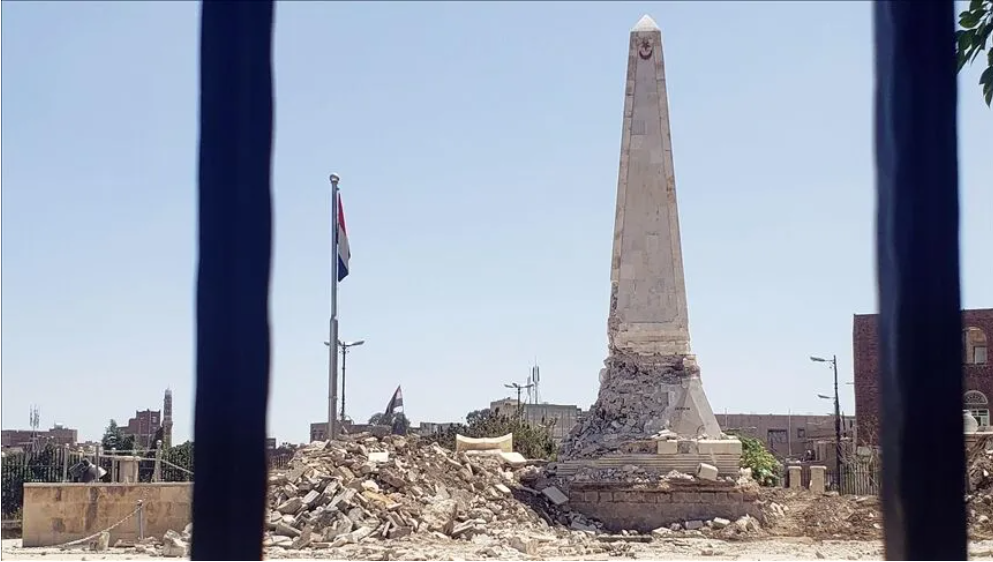
It was also a clear message to Ankara that they would not accept any Turkish involvement in Yemen.
Writing in Politics Today, Ahd Yaseen Al-Tamimi said: “History textbooks, which were adopted after 1962, presented a positive view of the Ottoman Empire and its rule over Yemen. Nevertheless, this did not prevent Zaydi supporters from maintaining their strict and extremist position on the Ottoman Empire.”
Of course, Turkey is a strong military power, and its influence extends in Yemen as well.
It has achieved remarkable military success in Syria, Libya, and in combating Kurdish insurgents in Iraq. Its military support to Azerbaijan was perhaps the deciding factor in its war against Armenia.
However, Yemen is a different ballgame altogether.
And if history is anything to go by, then Yemen, often described as a “graveyard of the Ottomans,” could once again become a quagmire for Turkey.
- Sumit Ahlawat has over a decade of experience in news media. He has worked with Press Trust of India, Times Now, Zee News, Economic Times, and Microsoft News. He holds a Master’s Degree in International Media and Modern History from the University of Sheffield, UK.
- He can be reached at ahlawat.sumit85 (at) gmail.com