The US Air Force’s next strategic bomber, the B-21 Raider, is moving from flight test to the flight line, and the industrial base is expanding to match that pace. As part of this effort, the Department of the Air Force and the manufacturer broke ground on a new bomber final assembly line at Plant 42 in Palmdale, California.
“It’s more than construction… we’re moving fast to build B-21s! The Department of the Air Force & @northropgrumman have broken ground in Palmdale, CA, on over 1M sq ft of new facilities that will be the final assembly line at Air Force Plant 42,” Secretary of the Air Force Dr. Troy E. Meink recently wrote in a post on X.
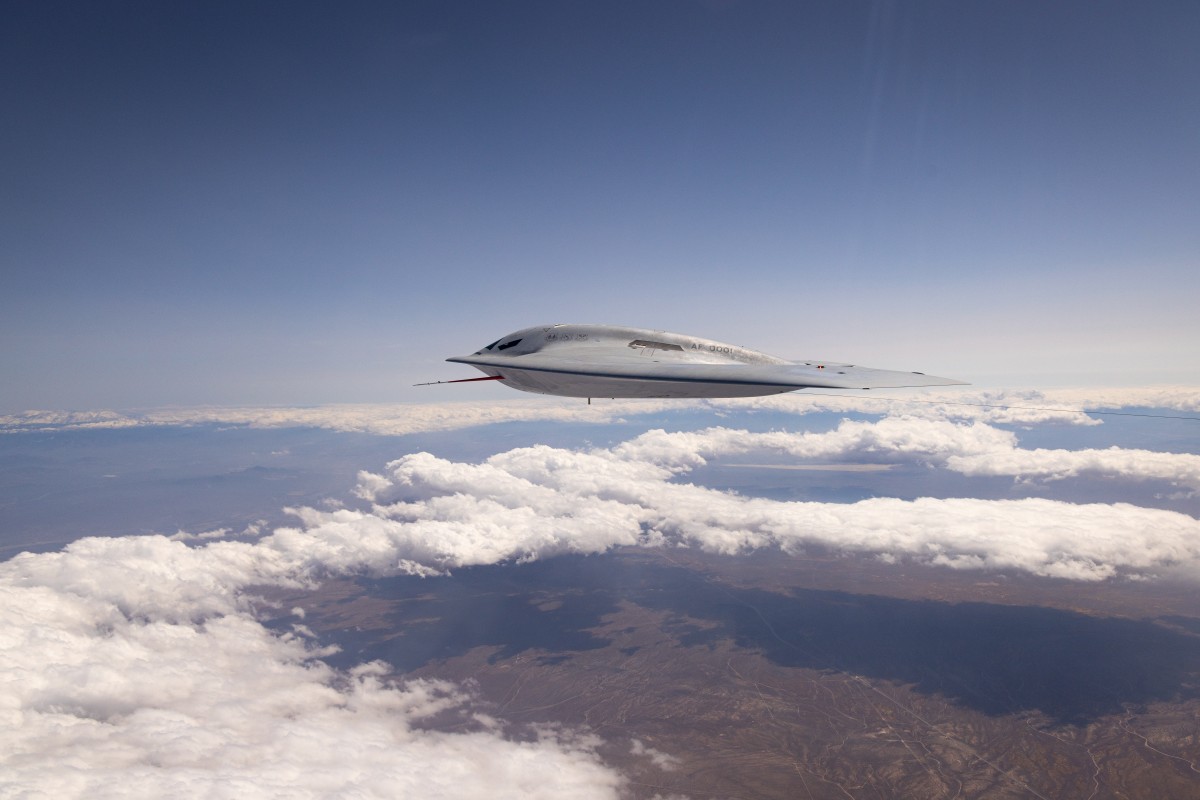
The B-21 Raider is the USAF’s next-generation nuclear- and conventional-capable, long-range penetrating bomber optimized for highly contested environments.
The new assembly line likely supports an agreement signed in February 2026 to increase annual B-21 production capacity by 25% using $4.5 billion in funding from the fiscal year 2025 reconciliation legislation.
Separately, Northrop Grumman is investing approximately $2.5 billion of its own capital over several years in related facilities and capacity. In September 2026, the company also opened the East Gate 3 manufacturing campus in Layton, Utah, to produce key B-21 components.
The construction of an all-new assembly line shows that expansion at the B-21’s production facility has moved from planning and funding to active construction.
This expansion is meant to give the service extra manufacturing capacity as the B-21 advances through flight testing and into initial operational deliveries.
The USAF plans to buy at least 100 B-21 bombers to replace the B-1B Lancer and B-2 Spirit and eventually complement the B-52 Stratofortress.
The B-21 Raider program remains in low-rate initial production, meaning Northrop Grumman is building a small number of aircraft to test and refine the production process before full-rate production begins.
At the same time, senior officials have said the Air Force may need more than the current minimum of 100.
In April, Defense Secretary Pete Hegseth told the Senate Armed Services Committee that he believed “a lot more” B-21s were needed. Indo-Pacific Commander Admiral Samuel Paparo had earlier said he would favor a fleet of 200 for nuclear deterrence and penetrating strike.
A Mitchell Institute report has likewise argued that 100 is a raid force, not a campaign force. None of those comments changes the program of record, and the Palmdale construction is tied to the February capacity agreement, not to an approved increase in the buy.
Furthermore, a report by the Mitchell Institute for Aerospace Studies said the USAF’s current plans to purchase “at least” 100 B-21s match one-time operations into hostile airspace but are insufficient to maintain pressure in a larger conflict because they are “a raid force, not a campaign force.”
Meanwhile, the USAF has said the sixth-generation bomber—which currently has no analogs in the world—is “close” to entering service. In fact, it is expected to reach Ellsworth AFB in South Dakota, one of the three bases selected to host the Raider, in 2027.
This bomber project has moved at a breakneck pace, going from the official public unveiling in December 2022 to the maiden flight in November 2023. In fact, an operational test pilot flew alongside a developmental test pilot, sharing the B-21 cockpit for the first time in June this year, underscoring the urgency of fielding the bomber.
The B-21 Raider’s rapid path from first flight to operational ramp at Ellsworth AFB in 2027 marks a striking acceleration in how the US fields a complex new strategic bomber.
Observers have lauded the speed, remarking that it has been unusually compressed for a program of this scale and sensitivity. This speed, however, was made possible because of a more fundamental shift: the B-21 was built virtually before it was ever built in metal.
B-21 Raider Rewrote Pentagon Acquisition Rules
For decades, major US defense programs followed the process, but aspirational designs fell behind schedule and prototypes revealed problems missed earlier, delaying programs and driving up costs. Northrop claims to be breaking away from this pattern.
Northrop states that it built the B-21 virtually first, using an extensive digital ecosystem and high-fidelity digital twins long before cutting metal. Succinctly put, unlike previous bombers that were primarily analog and later adapted for the digital era, the B-21 was built to function, endure, and evolve in the contemporary environment.
Developing and producing combat aircraft previously involved designing, building a prototype, testing it, discovering problems, and redesigning. However, Northrop essentially inverted this sequence, using a constantly changing digital model for the Raider.
This gave engineers, manufacturers, and operators a common reference point, enabling them to evaluate and implement design changes almost instantly.
This method enabled engineers to model aerodynamic performance, stealth features, structural loads, and systems integration long before components entered production.
This meant that design modifications that once required expensive rework could be assessed and verified virtually, often in a few hours rather than months.
The team simulated and refined structural loads, stealth characteristics, flight dynamics, and systems integration in the virtual environment before committing to physical hardware.
As a result, the physical aircraft that emerged from this approach matched or even outperformed the models’ predictions, according to the manufacturer.
This, in turn, has allowed the program to compress testing timelines, accelerate production, and keep costs under tighter control.
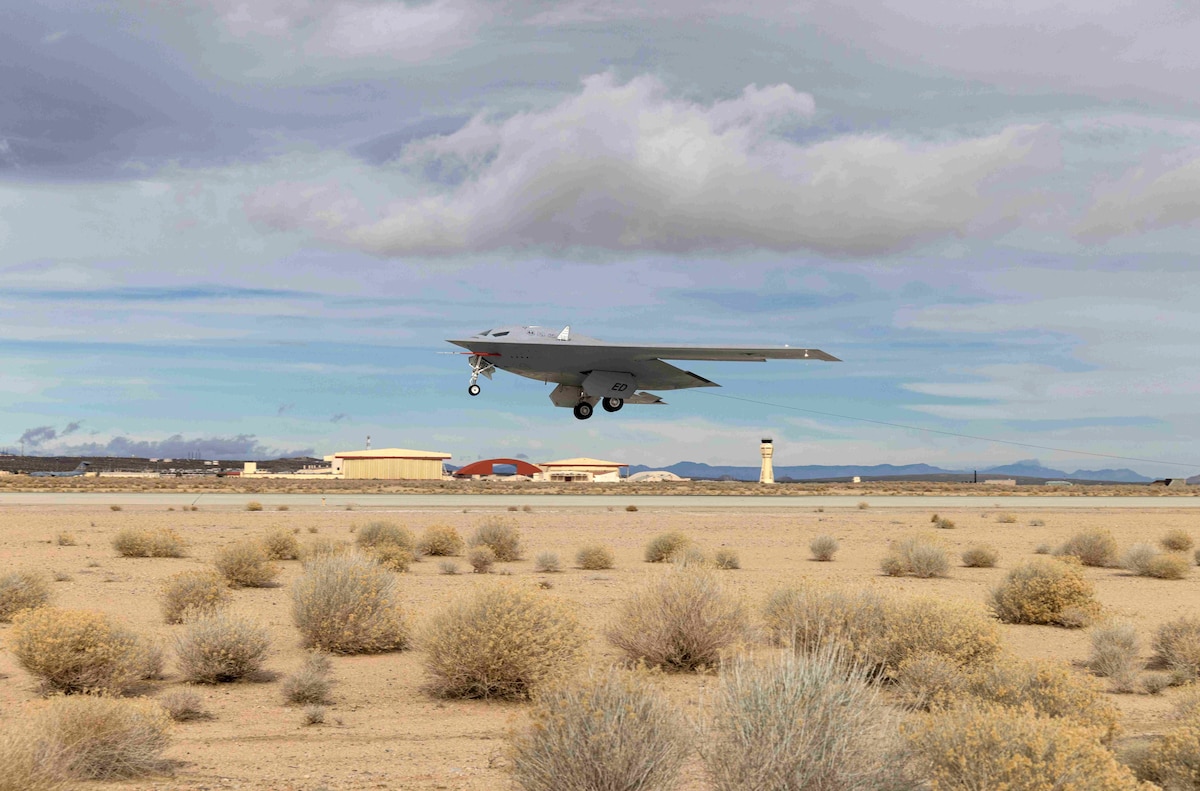
Unsurprisingly, the result was an unusually mature aircraft when the first Raider took flight. Northrop earlier said, “Before the B-21 ever took to the sky, the flying test bed completed more than 200 test sorties totaling more than 1,000 flight hours, testing production hardware, software, and sensors in a dynamic environment and enabling teams to tackle discovery well in advance.”
The speed with which B-21 moved from production to testing and into an operational setting at a USAF airbase was best demonstrated by the approach the manufacturer and the Air Force took during flight testing. A major 180-day test cycle was reportedly completed in just 73 days, as revealed in May 2026.
Officials have even stated that the program is exceeding expectations, as test aircraft are achieving high “code one” rates, which is the rate at which the aircraft is ready to fly again with minimal issues
The Combined Test Force achieved half the originally planned missions in less than half the planned time, while supporting significant contract value.
This compression was not the product of rushed flying, and reflected fewer surprises, higher aircraft availability, real-time data analysis, and the ability to clear multiple test points on single sorties.
The advantage of building the aircraft digitally has reportedly extended to the production lines. “Where the digital environment meets the production floor, this digital technology expedites configuration management, facilitating communication between technicians and engineers during the build, in some areas already reducing manufacturing hours by roughly a third,” according to the Northrop Grumman newsroom.
Nonetheless, the B-21 is not without risk, though experts think careful digital engineering, precise digital twins, and a conscious move away from sequential physical prototypes can break the long-standing pattern of delays.
- Contact the author at sakshi.tiwari13 (at) outlook.com
- Follow EurAsian Times on Google News