Nearly eight decades after its founding in 1948, Israel is still not formally recognized by 29 UN member states. With the exception of Cuba, North Korea, and Venezuela, all of these countries are Muslim-majority. Most are Arab states, while others are members of the Organization of Islamic Cooperation.
This widespread non-recognition is both a symptom and a contributing factor to the long-standing tensions in the Middle East. For decades, the refusal by many Arab and Muslim-majority states to accept Israel’s legitimacy helped shape the region’s conflicts, including multiple wars and cycles of violence.
Take, for instance, Iran. Since the 1979 Islamic Revolution, it has not only withheld recognition but has actively called for the elimination of the “Zionist regime.” Some analysts argue that this ideological hostility, combined with Iran’s support for proxy militias, has also led to the current war between Iran and the US and Israel.
On May 25, U.S. President Donald Trump publicly linked Iran’s potential peace agreement to a broader regional push, stating that normalization with Israel should be part of any comprehensive deal.
He urged several Arab and Muslim-majority countries, including Saudi Arabia, Qatar, Egypt, Jordan, Turkey, and Pakistan, to join the Abraham Accords by establishing formal diplomatic ties with Israel. Trump even suggested that Iran itself could eventually become part of this “unparalleled World Coalition” if it reaches a deal with the US.
In his signature style, Trump described the move as potentially “the greatest peace deal of all time,” arguing it would deliver lasting peace, stability, and economic prosperity to the resource-rich but conflict-torn Middle East.
In a lengthy post on Truth Social, Trump said, “During my discussions on Saturday with President Mohammed bin Salman Al Saud, of Saudi Arabia, Mohammed bin Zayed Al Nahyan, of The United Arab Emirates, Emir Tamim bin Hamad bin Khalifa Al Thani, Prime Minister Mohammed bin Abdulrahman bin Jassim bin Jaber Al Thani, and Minister Ali al-Thawadi, of Qatar, Field Marshal Syed Asim Munir Ahmed Shah, of Pakistan, President Recep Tayyip Erdoğan, of Türkiye, President Abdel Fattah El-Sisi, of Egypt, King Abdullah II, of Jordan, and King Hamad bin Isa Al Khalifa, of Bahrain, I stated that, after all the work done by the United States to try and pull this very complex puzzle together, it should be mandatory that all of these Countries, at a minimum, simultaneously, sign onto the Abraham Accords.”
Trump suggested that Saudi Arabia and Qatar should immediately sign the Abraham Accords, and others should follow suit.
On Iran’s possible inclusion in the deal, Trump said, “In speaking to numerous of the Great Leaders mentioned above, they would be honored, as soon as our Document is signed, to have the Islamic Republic of Iran as part of the Abraham Accords.”
“Therefore, I am mandatorily requesting that all Countries immediately sign the Abraham Accords,” he added.
The Middle East would be United, Powerful, and Economically Strong, like perhaps no other area, anywhere in the World, Trump declared.
Trump’s post underlines how the diplomatic recognition of Israel, normalizing ties with the Jewish state, and accepting its legality and right to exist, is at the very heart of lasting peace in the Middle East.
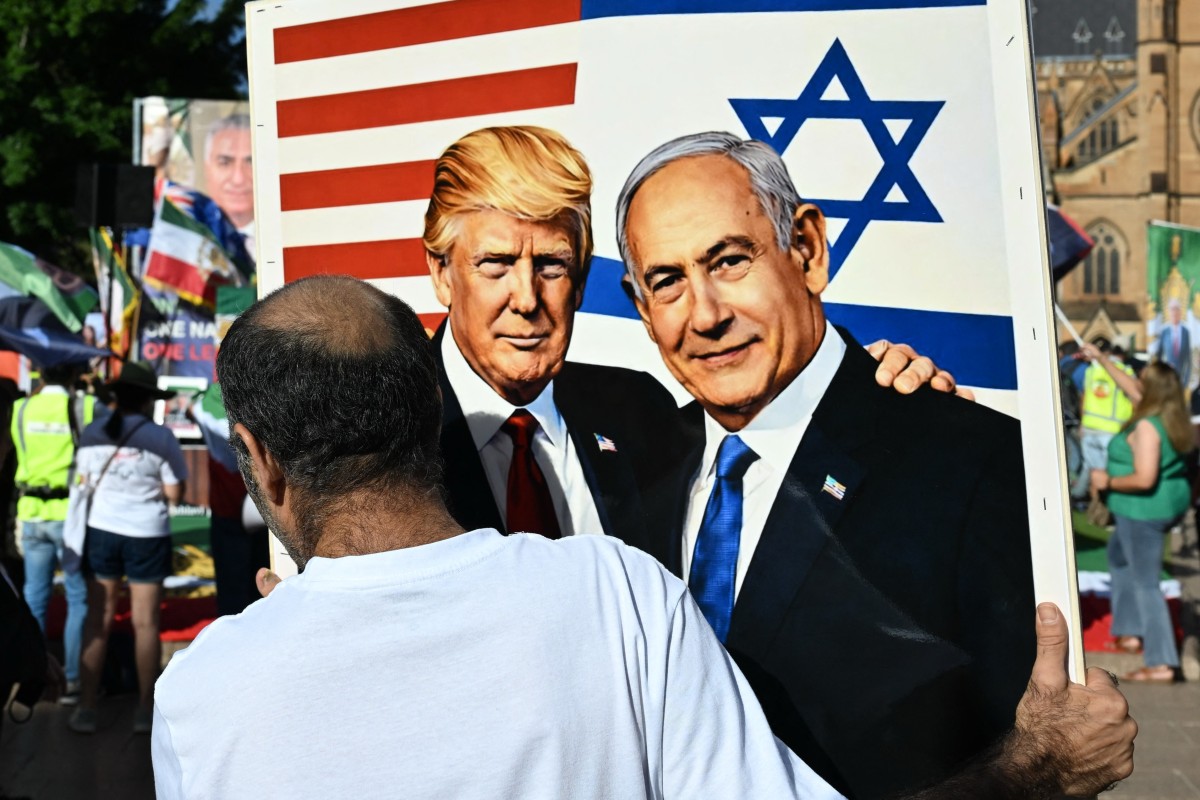
Even though the US is spearheading the diplomatic recognition of Israel today, the history of Israel’s recognition by various states is a story that does not fit into a straitjacket, defies logic, and has more twists and turns than any Hollywood thriller.
For instance, the first country to grant de jure (full legal) recognition to Israel was not the US, but its Cold War competitor, the Soviet Union.
Israel declared independence on May 14, 1948. The United States immediately gave de facto (practical) recognition on the same day, just 11 minutes after the declaration. This was the first recognition overall, but it was not full legal recognition at the time.
The Soviet Union granted de jure recognition on May 17, 1948 (three days later), making it the first country to extend full, official legal recognition.
Furthermore, two Muslim countries that are currently most hostile to Israel are Turkey and Iran. Incidentally, Turkey and Iran were also the first and the second Muslim-majority countries to formally recognize Israel.
Turkey recognized Israel in March 1949, becoming the first Muslim country to do so, followed by Iran in March 1950.
Again, while India recognized Israel in 1950, Pakistan, a country that was in the US camp during the Cold War and even joined the U.S.-led Central Treaty Organization (CENTO), has still not recognized Israel.
Additionally, many US allies in the Middle East, such as Saudi Arabia, Qatar, and Kuwait, have not recognized Israel. On the other hand, Egypt and Jordan, two countries that fought wars against Israel in 1948 and in 1967, have recognized Israel.
Egypt signed a peace treaty with Israel and recognized the Jewish state in 1979, following the 1978 Camp David Accords. In the process, Egypt also became the first Arab country to formally recognize Israel.
Jordan signed its own pact with Israel in 1994, giving it formal recognition and becoming the second Arab country to do so.
Furthermore, India and Iran had both opposed the creation of Israel, and yet, they both became some of the earliest countries to accord formal recognition to Israel.
How India & Iran Opposed Israel’s Creation, Yet Recognized It
During the 1930s and 1940s, the Indian independence movement had strong sympathies with the Palestinian liberation movement. They both were fighting against a common enemy, the British imperial state.
Mahatama Gandhi, while sympathetic to the Jewish cause, had explicitly said that dividing the Arab land for creating a Jewish state would be a “crime against humanity.”
“Palestine belongs to the Arabs in the same sense that England belongs to the English, or France to the French,” Mahatma Gandhi wrote in an article in his weekly newspaper Harijan, on November 26, 1938.
While he also sympathized with the Jews in his article and said “the German persecution of the Jews seems to have no parallel in history,” Gandhi stressed that it would be “wrong and inhumane to impose the Jews on the Arabs”.
“It would be a crime against humanity to reduce the proud Arabs so that Palestine can be restored to the Jews partly or wholly as their national home,” he wrote.
In 1947, India became independent, and that same year, it voted against the United Nations Partition Plan of Palestine into the Jewish state of Israel and the state of Palestine for Palestinian Arabs. Similarly, Iran also voted against the UN’s partition plan for Palestine.
Instead, India, erstwhile Yugoslavia, and Iran presented an alternate plan. They proposed creating a federal state, with two units comprising a Jewish-majority Israel, and an Arab-majority Palestine, under a unified Palestinian state.
However, two years later, in 1950, Iran, then under Mohammad Reza Pahlavi, became the second Muslim-majority nation after Turkey to officially recognize Israel.
Meanwhile, Israel used various channels to convince India to support its creations. One of those channels was the most famous scientist of those times, Albert Einstein.
In June 1947, Einstein wrote a letter to Jawaharlal Nehru, urging him to support the Zionist cause and the establishment of a Jewish national home in Palestine.
India ultimately recognized Israel de facto on September 17, 1950. However, full diplomatic relations were established much later, in 1992.
While Israel helped India with weapons during the 1962 war with China, and the 1965 and 1971 wars with Pakistan, India’s establishment of full diplomatic relations in 1992 had more to do with the end of the Cold War, and New Delhi’s strengthening of its diplomatic ties with the Western world.
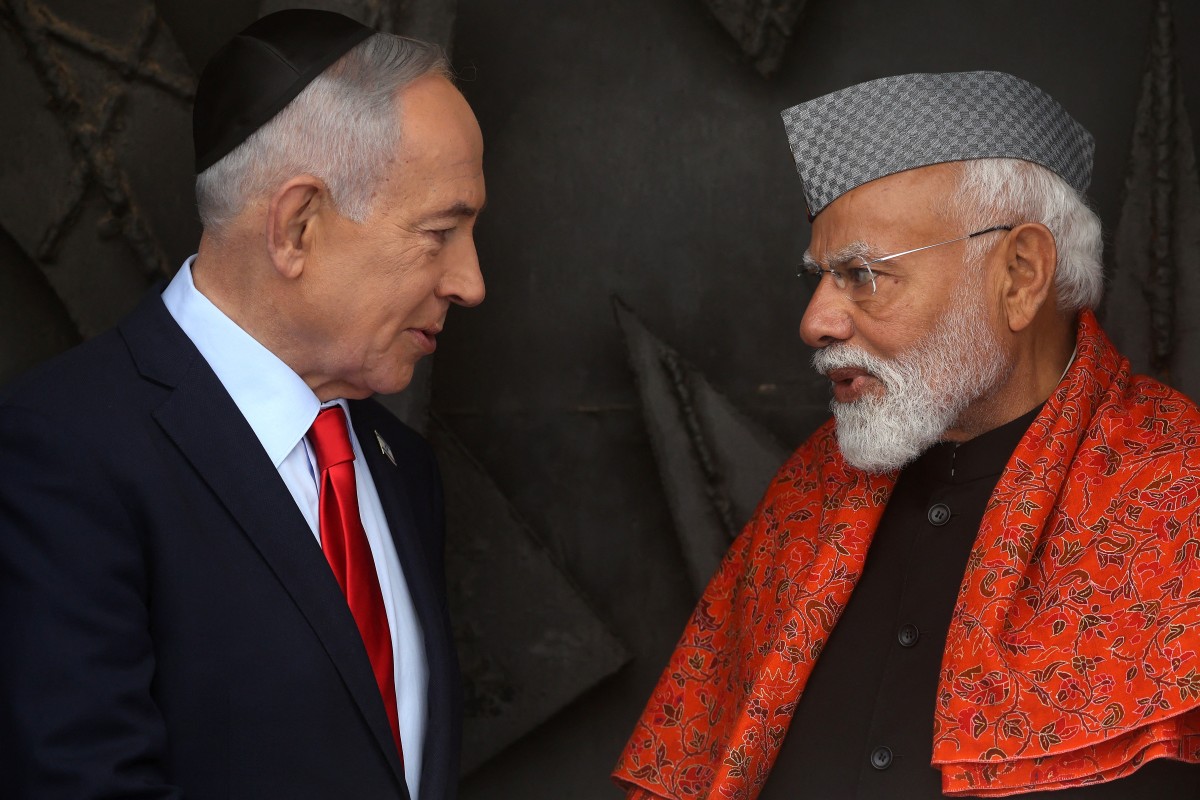
Meanwhile, Iran swung in the opposite direction. Following the 1979 Islamic Revolution, Tehran withdrew its recognition of Israel, gave the Israeli embassy in Tehran to Palestine, and declared the end of the ‘Zionist regime’ in Israel as its stated goal.
Over the years, Iran started supporting proxies, such as Hamas, Hezbollah, and the Syrian state, to wage a proxy war against Israel.
The next major round of Arab recognition of the state of Israel came in 2020, when two Arab states, the UAE and Bahrain, signed the Abraham Accords. Morocco joined in December 2020, Sudan in 2021, and Kazakhstan joined in 2025.
Now, Trump has again brought the signing of the Abraham Accords by a slew of Arab and Muslim-majority countries as central to achieving lasting peace and stability in the Middle East.
While Trump has said that many of these countries are willing to sign the Abraham Accords, it needs to be seen how many of them will actually do this, especially at a time when the opinion in the Muslim world is very anti-Israel, due to its ongoing wars in Gaza, Lebanon, and against Iran.
- Sumit Ahlawat has over a decade of experience in news media. He has worked with Press Trust of India, Times Now, Zee News, Economic Times, and Microsoft News. He holds a Master’s Degree in International Media and Modern History from the University of Sheffield, UK.
- VIEWS PERSONAL OF THE AUTHOR.
- He can be reached at ahlawat.sumit85 (at) gmail.com