The US has reportedly prepared a list of additional targets should President Donald Trump decide to resume combat operations against Iran, according to three US officials and national security experts familiar with the planning.
However, most of the targets will be significantly harder to locate, track, and destroy than those already hit during the intense three-month campaign under Epic Fury.
Pentagon planners are reportedly preparing for the possibility that diplomacy could fail.
The new target list, developed by the Defense Department, reportedly includes hardened underground facilities, dispersed mobile missile launchers, reconstituted production sites, and dual-use infrastructure that supports both military and civilian needs. Some of these targets are believed to be deeply buried in mountain tunnels or hidden among civilian populations, making them far more challenging for precision strikes.
One US official told NBC News that while the “easy” targets have largely been addressed, the “hardest hits are yet to come” if fighting resumes — but success is no longer guaranteed with airstrikes alone.
Meanwhile, although Israel boasts some of the most advanced air defense systems in its inventory that provide a near-perfect layered defense to the country, a recent report claimed that the US used a large portion of its high-end interceptors during the Iran War to defend Israel, even more than the interceptors Israel used to protect itself.
The revelation was reported by The Washington Post in an exclusive report based on a Pentagon assessment. Citing unidentified officials, the WaPo report stated that the US did the heavy lifting in thwarting Iran’s ballistic missile attacks on Israel during Operation Epic Fury, which began on February 28 with joint US-Israel strikes on targets across Iran.
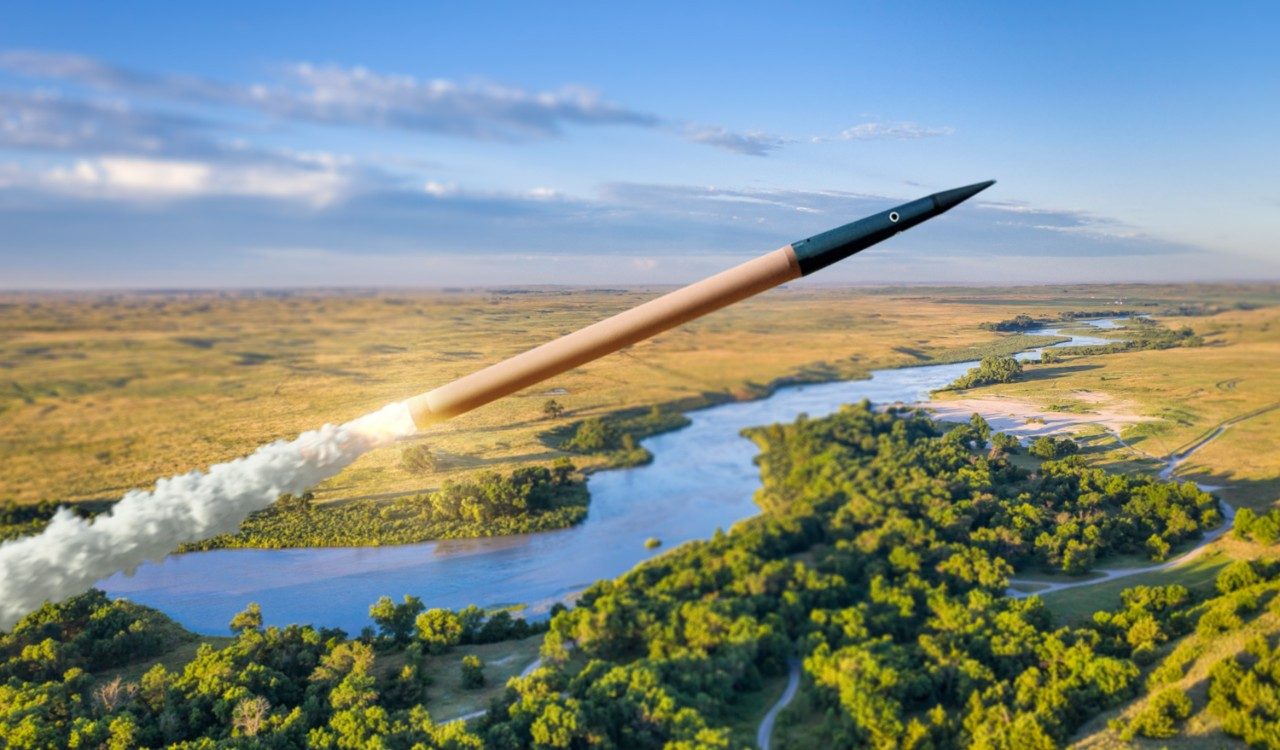
The United States launched more than 200 Terminal High Altitude Area Defense (THAAD) interceptors—roughly half of the Pentagon’s total inventory—in defense of Israel, along with more than 100 Standard Missile-3 and Standard Missile-6 interceptors fired from naval vessels deployed in the eastern Mediterranean, the report states.
In contrast, Israel fired just about 90 David’s Sling interceptors and fewer than 100 Arrow interceptors, some of which were deployed against less sophisticated missiles fired by Iran-backed militias, such as the Yemen-based Houthis and Hezbollah in Lebanon, it adds.
“In total, the US shot around 120 more interceptors and engaged twice as many Iranian missiles,” an anonymous US administration official stated.
Israel has the world’s most extensive layered air defense system, comprising Iron Dome, David’s Sling, Arrow, Patriot, THAAD, TPY-2, Aegis, and even aided by Qatar’s AN/FPS-132 Upgraded Early Warning Radar (UEWR). For a country the size of Israel, this offers the most comprehensive air defense coverage on Earth, as EurAsian Times explained earlier.
If the claims in the recent report are anything to go by, Israel’s assertions may come under suspicion. In fact, a US administration went so far as to tell the publication that, “Israel is not capable of fighting and winning wars on its own, but nobody actually knows this, because they never see the back end.”
However, it is also worth highlighting that some reports in local Israeli media in late March stated that the Israel Defense Forces (IDF) was running low on interceptors used to shoot down the steady stream of Iranian ballistic missiles and Hezbollah rockets fired at Israel.
Some analysts believe that Israel may have forged an understanding with the US to conserve its own missiles for the future amid a shortage. Several pro-Israeli accounts on X have echoed these views. Israel likely prioritized key sites for its Arrow-3 and David’s Sling missiles, while letting its most reliable ally handle the volumes, given that the US had larger, though still strained, inventories of certain air defense systems and forward-deployed assets.
“The numbers are striking,” Kelly Grieco, a senior fellow at the Stimson Center, told WaPo. “The United States absorbed most of the missile defense mission while Israel conserved its own magazines. Even if the operational logic was sound, the United States is left with roughly 200 THAAD interceptors and a production line that can’t keep pace with demand.”
Notably, producing and delivering a single interceptor typically takes about 53 months, from funding to delivery, as noted by the American think tank, Center for Strategic and International Studies (CSIS). Moreover, a single interceptor costs $15.5 million.
Calling the revelations stunning, Trita Parsi, the Executive VP at the Quincy Institute and a known Israel critic, said: “The US did more to defend Israel than Israel did to defend itself in a war that, according to Rubio [US Secretary of State Marco Rubio], the US is in because of Israel…”
According to US officials, Israeli Prime Minister Benjamin Netanyahu played a key role in convincing Trump to go to war by pledging an offensive that would spur regime change and eliminate the nation’s capability to produce nuclear weapons. It is rather surprising that the objectives could not be fully achieved, and somehow the US ended up paying a higher price than Israel itself.
As recently pointed out by a EurAsian Times article, the US lost as many as 42 aircraft (18 manned aircraft) during its 40-day war with Iran, whereas Israel’s losses were negligible, restricted mostly to slow-moving drones. Additionally, the US military also expended crucial weapons such as Tomahawk, JASSM, and PrSM, among others.
However, an Israel-based strategic analyst who didn’t want to be named defended the approach when probed by the EurAsian Times.
“Neither Israel nor the United States has publicly released official interceptor expenditure figures by system. This should not be read as a national scoreboard. American and Israeli systems operated together as an integrated layered defense,” the analyst stated.
“Iran’s missile strategy is an economic strategy: launch enough missiles and drones to force the defender to spend scarce, expensive, slow-to-produce interceptors. That is the central asymmetry of the missile age,” the analyst stated. No serious military can spend its premium interceptors as if there were no next wave, no second front, and no tomorrow. Interceptor management is now force management,” they added.
On its part, the Pentagon justified the distribution of military resources between the US and Israel in an official statement.
“Ballistic missile interceptors are just one tool in a vast network of systems and capabilities that comprise a layered and integrated air defense network,” said Sean Parnell, the Pentagon’s chief spokesman. “Both Israel and the United States carried the defensive burden equitably during Operation Epic Fury, which saw both countries employ fighter aircraft, counter-UAS systems, and various other advanced air and missile defense capabilities with maximal effectiveness.”
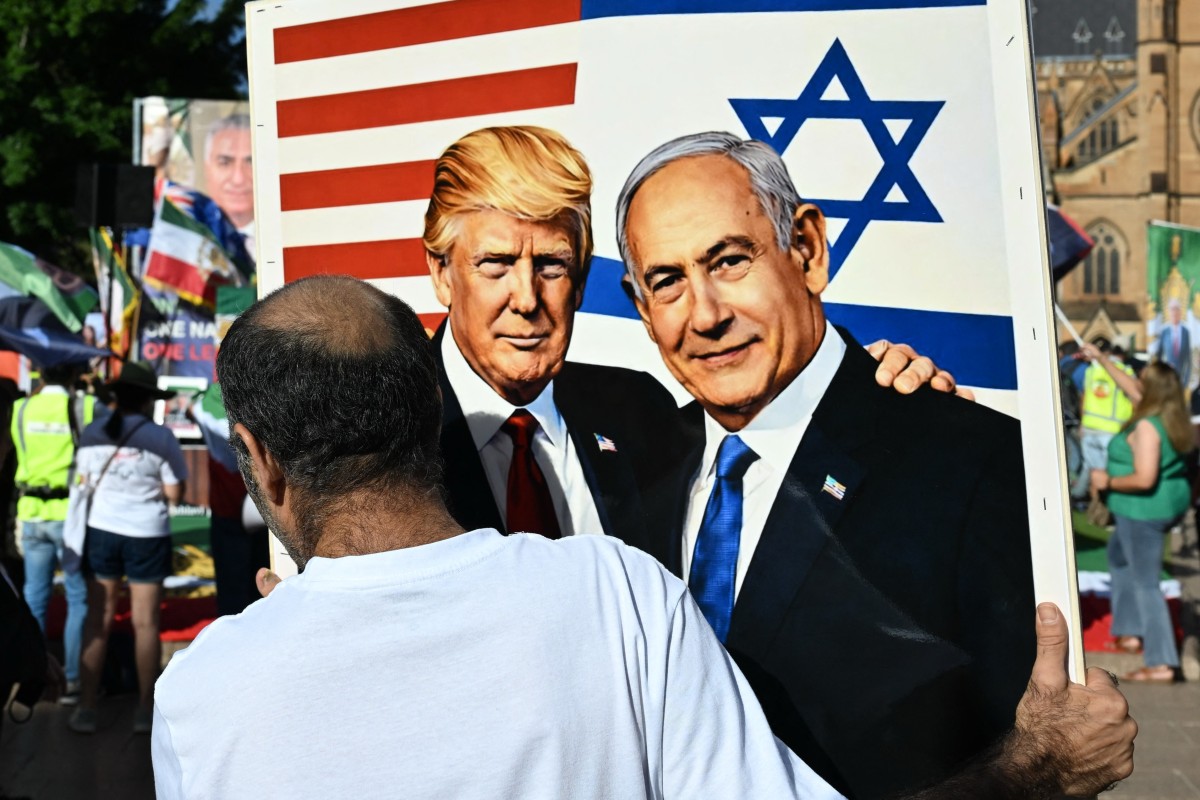
Meanwhile, the Israeli embassy in Washington defended against the reports, saying, “Operations Roaring Lion and Epic Fury were coordinated at the highest and closest levels, to the benefit of both countries and their allies. The U.S. has no other partner with the military willingness, readiness, shared interests, and capabilities of Israel.”
For now, we know that the Pentagon’s Munitions Acceleration Council (MAC) is now making all-around efforts to ramp up production of THAAD interceptors. Lockheed Martin began construction on a new production facility in Troy, Alabama. This facility will add 87,000 square feet of manufacturing space for THAAD interceptors and set the foundation for future Next Generation Interceptor projects.
- Contact the author at sakshi.tiwari13 (at) outlook.com
- Follow EurAsian Times on Google News