Croatia is poised to upgrade the combat communications of its most advanced combat aircraft, the Rafale, merely months after it lashed out at France for arming it with “second-hand” fighter jets.
The Croatian Ministry of Defense (MoD) signed a €33.2 million ($38.64 million) contract on September 9, 2026, for Ground-to-Air Networks (GAN), a national ground-to-air radio and data network linking command centers with airborne platforms, primarily the Rafales. The Thales–OiV system adds secure voice, tactical data links, and cybersecurity across seven ground radio sites.
It is meant to improve how Croatia’s existing F3-R Rafales—already fitted with radios and Link 16—connect to ground and allied nodes, and to prepare that network for a later move to the F4 standard.
Croatian Defense Minister Ivan Anušić, Thales Group Vice President for Sales in Network Infrastructure Systems Christophe Laberty, and Odašiljači i veze (OiV) Management Board Member and CEO Denis Nikola Kulišić signed the deal. The project is to be implemented between 2026 and 2030, the report noted.
What Are Combat Communications?
Simply put, combat communication on the Rafale refers to the systems that let the pilot talk, share pictures and sensor data, and operate as part of a networked force along with other aircraft, ships, ground controllers, and command centers during a mission—while resisting interception or jamming.
The Rafale communicates in two ways: voice (a fighter pilot speaking into a headset using short, standard phrases) and data links.
Notably, data links automatically and silently share digital information such as friendly and hostile aircraft positions, radar and sensor tracks, targeting data, and threats detected by the SPECTRA electronic warfare suite.
Rafales use Link 16, which is a secure, encrypted NATO-standard tactical data link that provides a shared, real-time common operating picture. This data link enables near-real-time exchange of positions, tracks, targeting information, text, imagery, and limited voice, supporting both external coordination with other assets, including early warning aircraft, ships, ground units, and allies.
In practice, this allows one Rafale to engage a target tracked by another platform even if the firing pilot does not yet have visual or radar contact. The entire force operates from a single coherent battlespace picture rather than isolated individual views. All of this communication, however, is encrypted and designed to resist jamming so the enemy can’t easily listen in or block the signals.
A key feature of this combat communication is the ability to run several data streams at the same time. The open architecture of the Rafale’s computers supports multiple broadband links working together. This includes links between Rafales in the same flight, connections to AWACS or ground stations, and the ROVER system that lets the crew send live video or still pictures of a target to ground controllers. In a nutshell, sharing images this way helps avoid friendly-fire mistakes and reduces collateral damage.
Notably, the F4-standard aircraft, which the Croatian Rafales are expected to transition into, further improve connectivity with enhanced software-defined radios, satellite communications for longer-range links, and more secure intra-flight data sharing, turning each jet into a networked node.
Combat Communication Upgrade Of Croatian Rafales
Croatia’s combat communication upgrade project, designated Ground-to-Air Networks (GAN), will establish a modern, secure network linking ground stations with airborne platforms—primarily the Rafales. It implements a Thales communications solution that integrates voice communications, tactical data links, and cybersecurity features.
The project will create a national network of seven ground radio sites connected to a central operations center, providing reliable coverage across Croatia and resilience under pressure. Thales is the primary solution lead, while the Croatian company Odašiljači i veze will act as local partner and systems integrator, coordinating with the MoD and Air Force, conducting radio coverage studies, preparing sites, integrating the system, conducting field testing, training users, and providing lifecycle technical support.
At the signing, Croatian Defense Minister Anušić said the partnership will transfer technology and expertise, helping Croatian industry build capabilities for future domestic and potentially international projects. The Ministry said this is part of its strategy to increase the role of Croatian companies in developing, producing, maintaining, and supporting acquired defense systems.
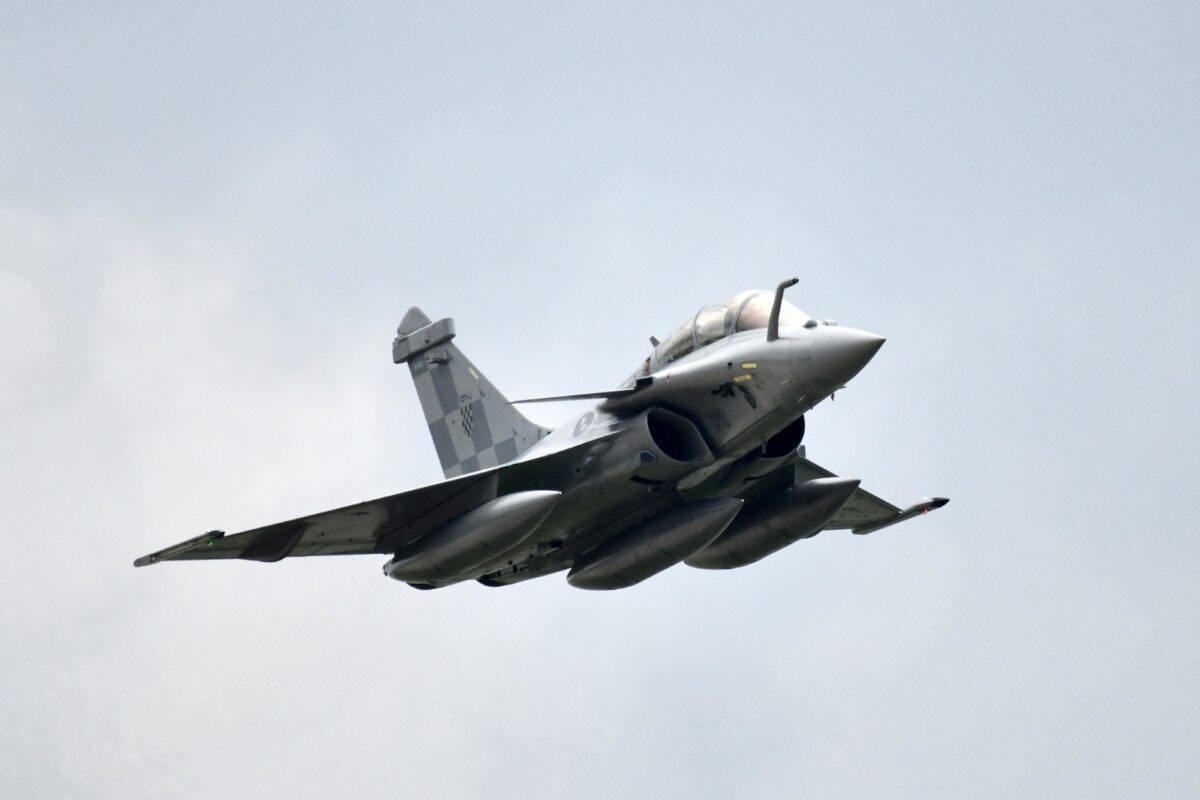
Notably, the Croatian Air Force currently operates 12 Rafale fighters of the F3-R standard, but plans to upgrade them to the more advanced F4 standard, which features better sensors, connectivity, and collaborative combat capabilities.
The new upgrade program will help build a more robust and secure digital link between the aircraft and ground command nodes, enabling faster, safer information sharing and improved overall combat effectiveness.
Interestingly, the deal for the upgrade program comes months after the Croatian President slammed France for arming it with second-hand fighter jets.
Croatian Outburst Over “Used” Rafales
Croatia ordered 12 Rafale aircraft in 2021—10 single-seat and two twin-seat—sourced as surplus from the French Air and Space Force and upgraded to the F3-R standard. The acquisition was the country’s most significant air-power modernization in decades, replacing the Soviet-era MiG-21 fleet and bringing NATO-standard beyond-visual-range air-to-air capability, training, simulators, and support.
The final aircraft were delivered in April 2025, and the jets were displayed at the military parade marking the 30th anniversary of ‘Operation Storm’, the last and decisive battle in its war of independence from Yugoslavia, as the EurAsian Times reported at the time.
Earlier this year, Croatian President Zoran Milanović publicly criticized France for supplying Croatia with second-hand aircraft while selling new-build Rafales to Serbia.
“We look like fools,” he said in his outburst in January 2026, “because the French sell new Rafales to the Serbs and used ones to us.”
Serbia—a rival and arch-nemesis of Croatia since the bloody disintegration of Yugoslavia—signed a contract with Dassault Aviation for 12 new Rafale multirole fighters in 2024, including 9 single-seat and 3 two-seat F4 standard aircraft. The jets are expected to replace the aging MiG-29 fighters when deliveries commence in 2028.
Slamming France, the Croatian President said that the deal was “implemented behind Croatia’s back and to the detriment of Croatia’s national interests,” and showed “that every country takes care of its own interests, including profits, first and foremost.” Furthermore, he faulted the previous government for failing to secure assurances that France would not sell equal or more advanced aircraft to a non-NATO neighbor.
Although relations between Croatia and Serbia have improved significantly since the 1990s, Zagreb, which joined the EU in 2013 and the Atlantic Alliance in 2009, remains concerned about non-NATO Serbia’s close ties to Moscow, although Serbia has been diversifying. The two countries are also locked in a tense arms race.
Nonetheless, it is worth underlining that when Croatia signed the deal for French Rafales, it urgently needed to replace aging MiG-21s and restore credible air-defense capability as a NATO member. At the time, Zagreb chose 12 second-hand F3-R aircraft from the French Air and Space Force inventory because they were available quickly and considerably cheaper. Moreover, the F3-R was the operational standard at the time of the 2021 contract, and the new-build F4 aircraft were not yet fully mature or available for rapid delivery.
In contrast, Serbia needed a longer-term replacement for its MiG-29 fleet and was diversifying away from Russian suppliers amid sanctions and spare-parts issues. By 2024, the F4 standard—particularly F4.1—had reached (or was reaching) operational maturity, which made the new-build aircraft the logical choice.
As a NATO member, Croatia received full interoperability features such as Link 16, Mode 5 IFF, etc., whereas Serbia faces some limitations on certain NATO-specific systems, weapons, and data links.
Nonetheless, Croatia plans to transition from the F3R to the F4 standard in the future, which is intended to close any residual capability differences while leveraging its Alliance advantages. The GAN project therefore forms part of a broader effort to maximize the operational value of the existing Croatian Rafale fleet and prepare it for higher levels of networked, collaborative combat.
- Contact the author at sakshi.tiwari13 (at) outlook.com
- Follow EurAsian Times on Google News