With the US and Iran trading fire again after a brief hiatus, Tehran has managed to capture a US underwater uncrewed vehicle (UUV), earning another “war trophy” that could potentially help it refine its own military capabilities.
The IRGC (Islamic Revolutionary Guard Corps) announced on September 8 that they had recovered a US uncrewed submarine at the entrance to the Strait of Hormuz, which has become an area of showdown between the two sides.
“One of the US military’s most advanced unmanned underwater vehicles was seized by Iranian armed forces at the entrance to the Strait of Hormuz during a complex intelligence and field operation and brought into Iran, IRIB (Islamic Republic of Iran Broadcasting) said in a post on X.
The photos and videos released by Iranian state media and IRGC-linked outlets showed a large autonomous underwater vehicle whose form, flood holes, transparent forward mast, seams, X-form control surfaces, and partial markings closely matched the Anduril Dive-LD.
Iran’s state media later officially identified the captured vessel as an Anduril Dive-LD UUV.
Notably, the published photos suggest the UUV was recovered largely intact, triggering concerns that, besides using it to bolster its own capability, Iran could pass on the technology to adversaries like China and Russia.
The first visuals have been released of the American Dive-LD unmanned submarine, seized by Iran's Islamic Revolution Guards Corps (IRGC) early on Tuesday. pic.twitter.com/ump8zQZt7c
— IRNA News Agency ☫ (@IrnaEnglish) September 8, 2026
Meanwhile, the US military confirmed the capture of the UUV but downplayed its significance.
US Navy Captain Tim Hawkins, the spokesperson for US CENTCOM (Central Command), said, “An underwater drone operated by US forces malfunctioned more than a day ago. It was surveying regional waters in support of ongoing operations. The defective drone was an older model that neither collected sensitive data nor carried any classified sonar or radar equipment. US operations in area waters continue.”
The CENTCOM spokesperson stopped short of naming the UUV captured or specifying the exact issue that caused the purported malfunction. However, independent analysts surmised that the UUV may have broken down from overuse in the waters of Hormuz, a theory the EurAsian Times could not independently verify.
Notably, although US officials had earlier suggested that they were using uncrewed drones in the region to assist mine clearance in the Strait of Hormuz, this may be the first time that the deployment of the US Dive-LD has been publicized in the six-month-old war.
What Could Iran Derive Out Of This War Exploit?
Iranian accounts portrayed the recovery as a major intelligence coup—the capture of one of the US military’s most advanced “ghost” submarines.
Western analysts have been more measured in their assessment. For example, Alex Hollings, a US Marine veteran and Editor-in-Chief at Sandboxx News, countered the jubilation, saying, “The Navy’s interest in the Dive-LD was largely because it’s a commercial off-the-shelf solution, built around commercial off-the-shelf technologies.”
”For the most part, this sub was designed to use as many off-the-shelf components as possible and 3D-print the rest. So, what’s special about the Dive-LD isn’t any groundbreaking technology onboard, but rather the Navy’s willingness to take something designed deliberately for commercial applications and see if it can fight wars too,” he wrote in a report published on his Sandboxx News website.
Analysts believe the core value of this capture lies more in understanding design, autonomy software, navigation, power management, propulsion, acoustic or magnetic signatures, modular payload interfaces, and mission computers.

It is worth emphasizing that the Dive-LD is yet another US weapon system captured by Iran in the ongoing war with the US.
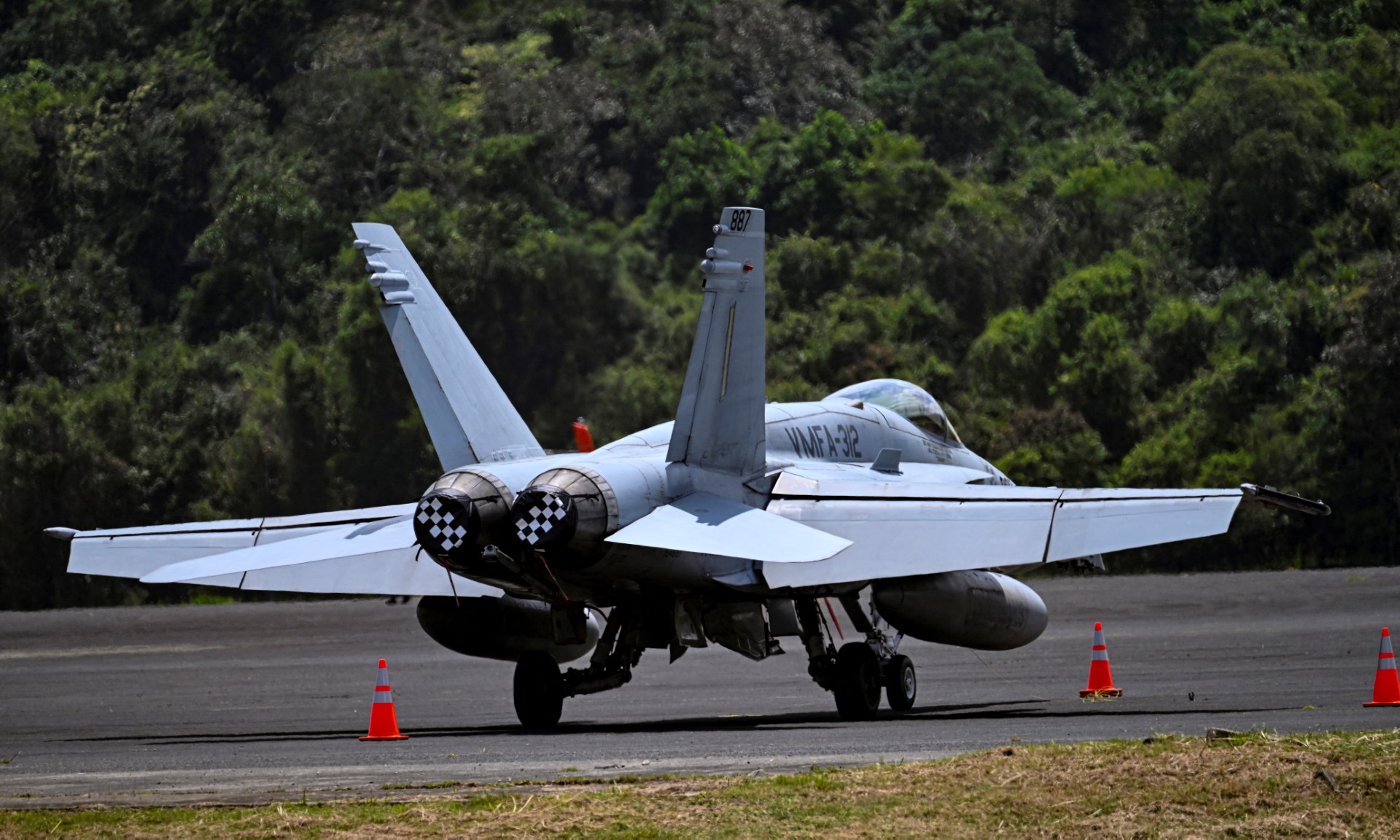
The IRGC had earlier captured and publicly displayed a US MQ-9 Reaper, MQ-1 Predator, and an Israeli Elbit Systems Hermes 900, as well as the canopy and an ACES II ejection seat of the F-15E downed in April.
These exploits have similarly sparked concern about Iran reverse-engineering and bolstering its combat capability, which would be directly inimical to the interests of the US and its allies.
The X accounts linked to the Islamic Republic threatened to reverse-engineer the recovered UUV, as it has done with drones in the past.
Earlier, for instance, Iran captured the RQ-170 Sentinel UAV in December 2011, and published photos and videos of the system, much like they did with the Dive-LD. By 2012, the IRGC claimed it had extracted data from the US drone and was building a process to create a replica; it later reverse-engineered the Sentinel to create what is now the Saeghe/Simorgh drone, as the EurAsian Times previously noted.

Iran itself has developed and operates a growing inventory of indigenous unmanned underwater vehicles. These systems support mine-laying, seabed surveillance, and harassment of shipping or naval forces in the confined waters of the Strait of Hormuz.
When it captures a US weapon system, Iran could either reverse-engineer it to build a system of its own and refine the capabilities of existing systems of a similar kind, or build countermeasures for the captured system, or both. However, it all boils down to one fact: whether the captured war trophy is worth undergoing that much trouble.
Even without sensitive payloads, as US CENTCOM has claimed, Iranian engineers could study things like hydrodynamic performance, battery or thermal systems, sealing, autonomy logic, and sensor interfaces. Navigation or mission logs—if not already wiped—could potentially reveal US survey patterns, mine-clearance priorities, or areas of interest in the Strait. Moreover, access to aspects of Anduril’s command-and-control architecture could offer broader lessons on how US autonomous systems operate and coordinate.
What Do We Know About Dive-LD?
Dive-LD is a large-diameter autonomous undersea vehicle (AUV) with modular payloads, according to Anduril. Measuring 5.8 meters and weighing nearly 3 tons, it is designed for long-duration deep-sea missions and can operate underwater for 10 days at depths of up to 6,000 meters, the company’s official website states.
The American manufacturer states that the Dive-LD uncrewed underwater vehicle features “extensive open interfaces [and] generous payload bays,” and that “the use of additive manufacturing enable[s] rapid integration of a variety of sensors and effectors for customized defense and commercial mission sets.”
Furthermore, it states that the Dive-LD features open software, mechanical, and electrical interfaces that enable seamless integration and rapid reconfiguration of multiple payloads and sensors. This, in turn, delivers relevant, impactful, and affordable capability in weeks rather than months or years, supporting missions such as Intelligence Preparation of the Operational Environment (IPOE), Intelligence, Surveillance, and Reconnaissance (ISR), Mine Warfare (MW), and Precision Placement.
Anduril’s Dive-LD autonomous underwater vehicle was reportedly selected as part of the second tranche of the Pentagon’s Replicator initiative.
Replicator, launched in 2023, aims to rapidly field thousands of affordable, attritable autonomous systems across domains by accelerating production and adoption, as the EurAsian Times previously explained.
Alex Luck, a naval analyst, noted on X that Dive LD is not technically an Anduril design, as Dive Technology originally developed the drone before Anduril acquired it.
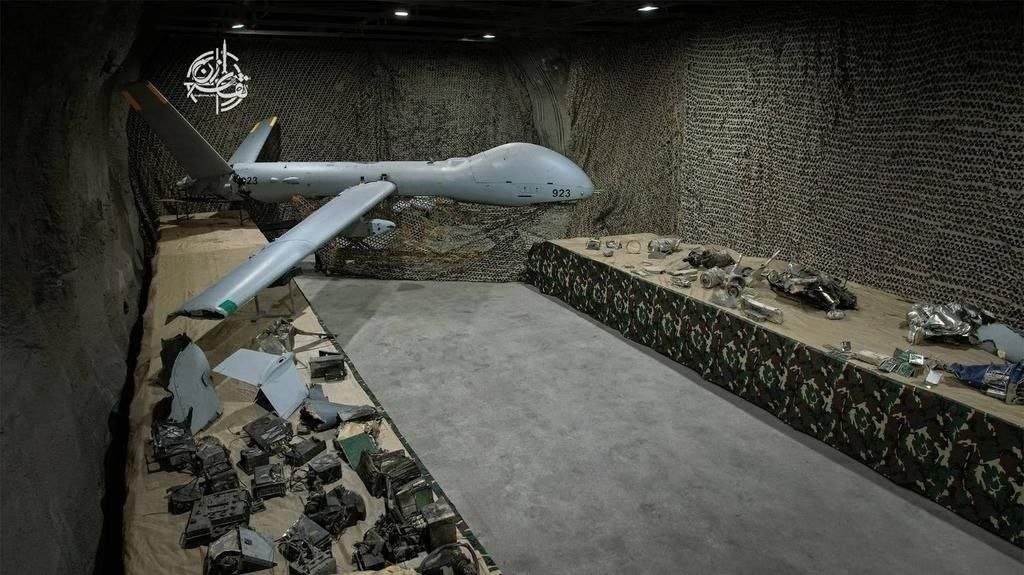
Nonetheless, we know that the Dive-LD has helped Anduril create an even more powerful Ghost Shark UUV, which Australia is acquiring.
Anduril delivered the first Dive-LD to the US Navy in the summer of 2025, and the system is operational with Unmanned Undersea Vehicle Group (UUVGRU) 1 and Undersea Vehicle Squadron (UUVRON) 3, according to reports. However, it is currently unclear how many of these UUVs the Navy has acquired and operates.
The UUV was likely conducting mine clearance when it was captured by the IRGC.
Typically, UUVs can detect and map naval mines using sonar, cameras, and other sensors, allowing friendly forces to stay farther from potential threats in a contested area. Once forces locate mines, they can select neutralization methods based on the specific mine type identified. The US may have deployed the Dive-LD precisely for this role, although it may have been used for seabed surveying and related support for safe commercial shipping.
Its capture may be embarrassing at a time when US President Donald Trump continues to claim full dominance over Iran and threaten it with further devastating strikes. Iran may also use the “war trophy” for its own propaganda, while breaking it down to extract engineering data it could exploit to refine its undersea capabilities.
- Contact the author at sakshi.tiwari13 (at) outlook.com
- Follow EurAsian Times on Google News