

The US Navy saw a 10-year high in Class-A mishaps in Fiscal Year 2026, underscoring the risks of naval operations even for the world’s most powerful military.
The US Navy recorded its highest number of serious Class-A aviation and afloat mishaps in at least a decade in FY26, according to data the Naval Safety Command released Oct. 26, 2026.
The Naval Safety Command reported 16 Class A aviation mishaps and 11 Class A afloat mishaps between October 1, 2025, and September 30, 2026 — the highest combined total in at least a decade and a clear sign of a difficult year for naval operations.
These accidents are the most since FY2014, when the Navy had 17 Class A aviation mishaps and four afloat Class A mishaps.
Class A mishaps are accidents that result in damage of at least US$2.5 million, destroyed aircraft, or fatalities or permanent total disabilities.
A Bad Year For Naval Aviation
In the one-year period between October 1, 2025, and September 30, 2026, the aviation mishap rate rose to about 2.23 per 100,000 flight hours, up from 1.60 the previous year and well above the 10-year average of about 1.31.
Some of these notable incidents that were widely publicized are:
In a shocking incident on October 26, 2025, a US Navy MH-60R Sea Hawk helicopter assigned to the ‘Battle Cats’ of Helicopter Maritime Strike Squadron 73 and the F/A-18E/F Super Hornet assigned to the “Fighting Redcocks” of Strike Fighter Squadron 22 crashed into the South China Sea within 30 minutes of each other, as the EurAsian Times reported.
The back-to-back crashes occurred in relatively shallow waters of the South China Sea, which China claims almost entirely. The wreckage of the aircraft was pulled out of the crash site from a depth of about 400 feet only in December 2025.
Two US Navy EA-18G Growler jets from the VAQ-129 “Vikings” Growler Demonstration Team collided mid-air during the Gunfighter Skies Air Show at Mountain Home Air Force Base in Idaho on May 17, 2026.
Eventually, videos of the collision surfaced on social media, showing one plane coming up from behind before it collided, hitting the back of the lead aircraft with its nose. All four pilots of the two planes managed to eject in time and safely parachute down to the ground even as their aircraft crashed and exploded.

On July 1, 2026, a US Navy MH-60S Sea Hawk helicopter assigned to the USS George H.W. Bush aircraft carrier ditched in the Arabian Sea early on July 1, leaving one crew member missing who was later presumed dead. While the crash occurred in a war zone, it wasn’t caused by hostilities, the Navy said, adding that an investigation had been launched.
A US Navy EA-18G Growler assigned to the “Zappers” of Electronic Attack Squadron (VAQ) 130 experienced an arresting-gear failure while landing aboard USS Dwight D. Eisenhower (CVN-69) off the Virginia coast on September 28. The two crew members ejected and were safely recovered, though about four to six personnel were reportedly injured.
Other notable manned-aircraft incidents include two separate engine fires aboard the Navy’s carrier-capable fighter, the Super Hornet. On July 1, 2026, a two-seat F/A-18F Super Hornet assigned to Strike Fighter Squadron 22 at Naval Air Station Lemoore, California, experienced a left engine fire during a routine training mission.
Later, an F/A-18E experienced an in-flight engine fire during a routine training mission and landed safely at Naval Air Station Oceana, though the exact date wasn’t specified.
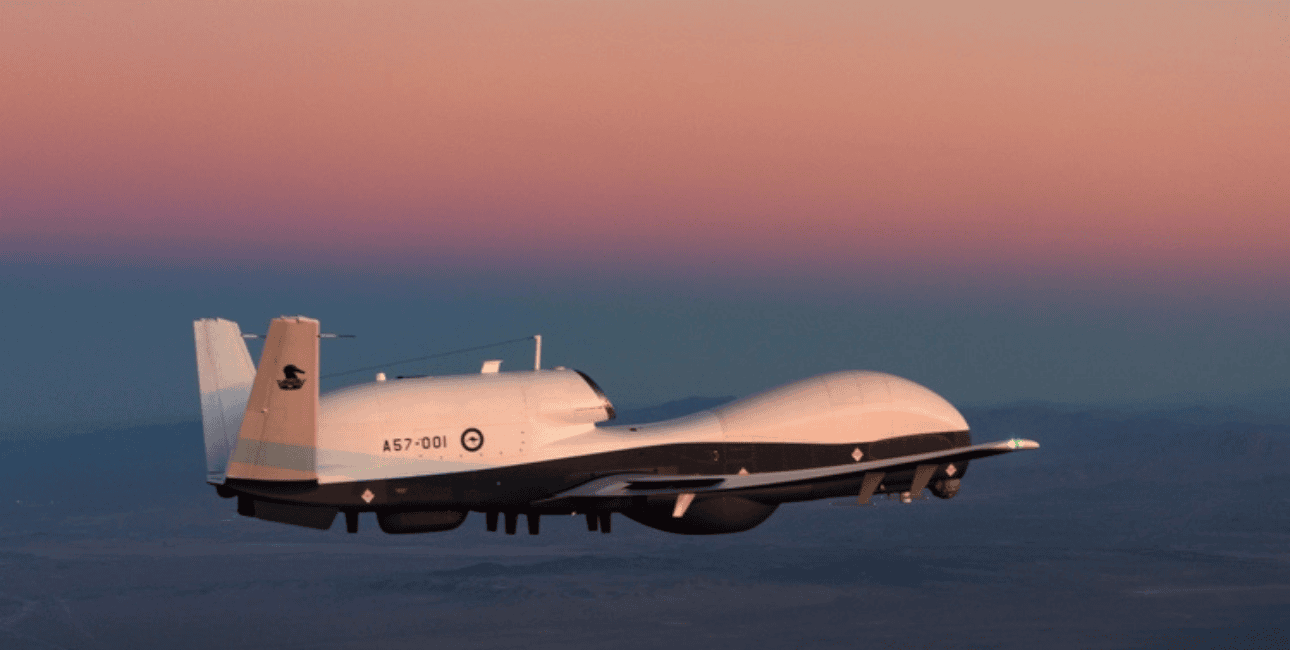
The US Navy also lost an MQ-4C Triton unmanned aircraft.
On April 9, the MQ-4C Triton high-altitude, long-endurance (HALE) unmanned aerial vehicle (UAV) disappeared over the Persian Gulf near the Strait of Hormuz during a maritime surveillance mission.
The Navy finally acknowledged on April 14 that the drone had crashed that day, as the EurAsian Times had previously reported. An MQ-4C costs slightly more than $238 million per unit, and the crash was classified as Class A.
US Navy Afloat Accidents
A Supply-class fast combat support ship, USNS Supply, and the USS Truxtun destroyer collided while conducting a replenishment-at-sea on February 12, 2026. Two personnel sustained minor injuries in the collision, and the Navy was investigating the incident.
“Two personnel reported minor injuries and are in stable condition. Both ships have reported sailing safely. The incident is currently under investigation,” the USNI News reported at the time, citing a statement from the US Navy.
On March 12, 2026, the most severe accident occurred aboard USS Gerald R. Ford when a fire broke out in the laundry room.
“The cause of the fire was not combat-related and is contained. There is no damage to the ship’s propulsion plant, and the aircraft carrier remains fully operational. Two sailors are currently receiving medical treatment for non-life-threatening injuries and are in stable condition. Additional information will be provided when available,” the US Navy said at the time. “There is no damage to the ship’s propulsion plant, and the aircraft carrier remains fully operational.”
The fire burned for more than 30 hours, damaged berthing for hundreds of sailors, and forced the carrier to divert to Split, Croatia, for repairs.
On April 19, 2026, a fire on board the destroyer USS Zumwalt (DDG-1000) at HII Ingalls Shipbuilding injured three sailors. The fire was reported at around 9:45 p.m. local time while Zumwalt was pierside at the Pascagoula, Miss., shipyard. The guided-missile destroyer was at Ingalls for a modernization phase since August 2023.
Two more notable incidents that resulted in the death of the crew include the assumed death of Lance Cpl. Chukwuemeka Oforah, who fell overboard from USS Iwo Jima on February 7, and the death of Lance Cpl. Armando Ortiz Canseco, attached to the San Antonio-class amphibious transport dock USS Anchorage (LPD-23), who vanished at sea on June 25.
The report also notes that although the absolute numbers of catastrophic events rose, off-duty fatalities declined, and many aviation mishaps did not result in loss of life thanks to successful ejections and rescues. The Navy experienced 30 total on-duty Class A incidents in FY 2026, the highest number since the sea service experienced 30 in 2022.
A 46-year-old lieutenant commander who perished in a motorcycle accident during a military motorcycle safety group ride and a death during physical training were the other two on-duty fatalities in FY 2026.
There were 45 fatalities from 48 off-duty accidents in the Navy. That was less than the 54 accidents and 53 fatalities from the previous year.
Meanwhile, the report suggests that the Marine Corps recorded six aviation Class-A mishaps, including five flight and one ground-related, up one from the prior year, and 12 total on-duty Class-A mishaps that resulted in seven fatalities.
One high-profile Marine aviation loss occurred on October 16, 2025, when an AH-1Z Viper attack helicopter crashed in a Southern California desert during a training flight. The pilot, Maj. Tyler Braconi, was killed in the deadly crash, while the second Marine was hospitalized after the incident.
The Navy’s high Class A mishap rate comes amid sustained operational tempo, including its Indo-Pacific presence, the war with Iran in West Asia, and ongoing training requirements. A range of issues caused these accidents, from maintenance problems and equipment failures to human factors and environmental conditions.
The numbers are a sobering reminder of the inherent risks of naval aviation and surface operations amid ongoing security risks and military operations.
- Contact the author at sakshi.tiwari13 (at) outlook.com
- Follow EurAsian Times on Google News