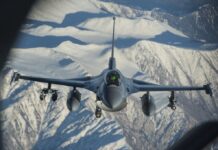


Days after Canada received the first two of the 16 F-35A fighters from Lockheed Martin, Swedish defense and aerospace firm Saab has stepped up its “Gripen for Canada” campaign by selecting top Canadian aerospace firms to build the Gripen-E jets.
On March 28, 2022, Lockheed Martin edged out Saab to win a CAD $27.7 billion contract for 88 F-35A Lightning II stealth fighters, with an initial commitment of 16 jets.
Saab attributed the loss to unfair play. “The process was not transparent. The requirements were tailored to exclude competition. We delivered the best value—Canada chose politics over merit,” said the Saab Canada President, Simon Carroll.
After Canadian Prime Minister Mark Carney announced in March 2025 that it would review the purchase of F-35 stealth fighters amid rising tensions with the Trump administration, Saab revived its Gripen-E campaign last year.
Saab has offered a deal that may prove difficult to ignore. At the heart of this offer are local manufacturing, full technology transfer (ToT), access to source code for mission systems, sovereign control of data, and full independence in upgrades and maintenance for the Royal Canadian Air Force (RCAF).
Saab announced on October 27 that it plans to work with several of Canada’s leading aerospace companies as a first step toward creating a large national ecosystem to develop, deliver, and support the Gripen E fighters if the Canadian government decides to move forward with the acquisition.
If the RCAF chooses Saab, the company and its Canadian partners will provide an all-encompassing domestic capability for manufacturing, final assembly, maintenance, and advancing airpower capabilities, the company said in a statement. The partnership would also provide long-term sustainability, training, and in-service support (ISS).
SAAB’s Tempting Offer
The Canadian government has been vocal about the industrial and regional benefits, jobs, technology transfer, and sovereign sustainment of major defense procurements.
“We think that we can use military procurement to get more,” Canada’s Industry Minister Mélanie Joly told reporters in November 2025 on the question of fighter programs creating jobs. “That is why we’re looking, indeed, at the Gripen.” “We’ll see how that is concrete,” Joly said. “And at the same time, we’re looking at what Lockheed Martin can do.”
Saab’s official partnership with Canadian companies is meant to appeal to this sentiment, especially since Canadian public and political opinion has grown more cautious about relying exclusively on the US amid ongoing trade and diplomatic tensions.
Saab has repeatedly promised to create around 10,000 jobs for Canadian, with some estimates rising higher when GlobalEye surveillance aircraft are included.
As noted in its official release, Saab has built teaming arrangements with Canadian firms CAE of Montreal, Quebec; IMP of Halifax, Nova Scotia; and Magellan Aerospace of Mississauga, Ontario. “Canada’s fighter capability is a long-term national investment. Together with CAE, IMP and Magellan Aerospace, we are prepared to establish a strong Canadian industrial ecosystem around Gripen that delivers operational effect, national sovereignty and lasting industrial and technological benefits,” said the Saab CEO.
The companies selected by Saab will be in charge of the following:
IMP Aerospace & Defense will establish and run a new final assembly line for the Gripen fighter in Canada, produce electrical assemblies, and provide in-service support (ISS) for Canada’s Gripen fleet.
IMP is a vertically integrated Canadian aerospace company that specializes in In-Service Support (ISS) / Fleet Management (Full lifecycle support for military aircraft fleets), Maintenance, Repair & Overhaul (MRO), Aircraft Missionization and Modernization (aircraft upgrades and modernization), Engineering Solutions (Design, structural analysis, systems integration, avionics work, and airworthiness certification), and Manufacturing.
Magellan Aerospace will manufacture advanced aerostructures, composite structures, and structural assemblies in Canada.
Magellan mainly produces aeroengines and aerostructures (complex structural components and major aircraft assemblies), offers MRO, and also produces solid rocket motors, satellite buses, space hardware, and related systems for space-based applications.
CAE will deliver advanced fighter pilot and technician training, handle mission systems engineering, and provide support and sustainment capabilities in Canada.
CAE is a Canadian global leader in training and simulation technologies.
Its main segments include civil aviation, defense, and security. It delivers military training and simulation solutions for air, land, sea, and other domains, supplies mission simulators, live-virtual-constructive (LVC) training systems, and platform-independent training programs, and supports force readiness for defense forces, OEMs, and government agencies.
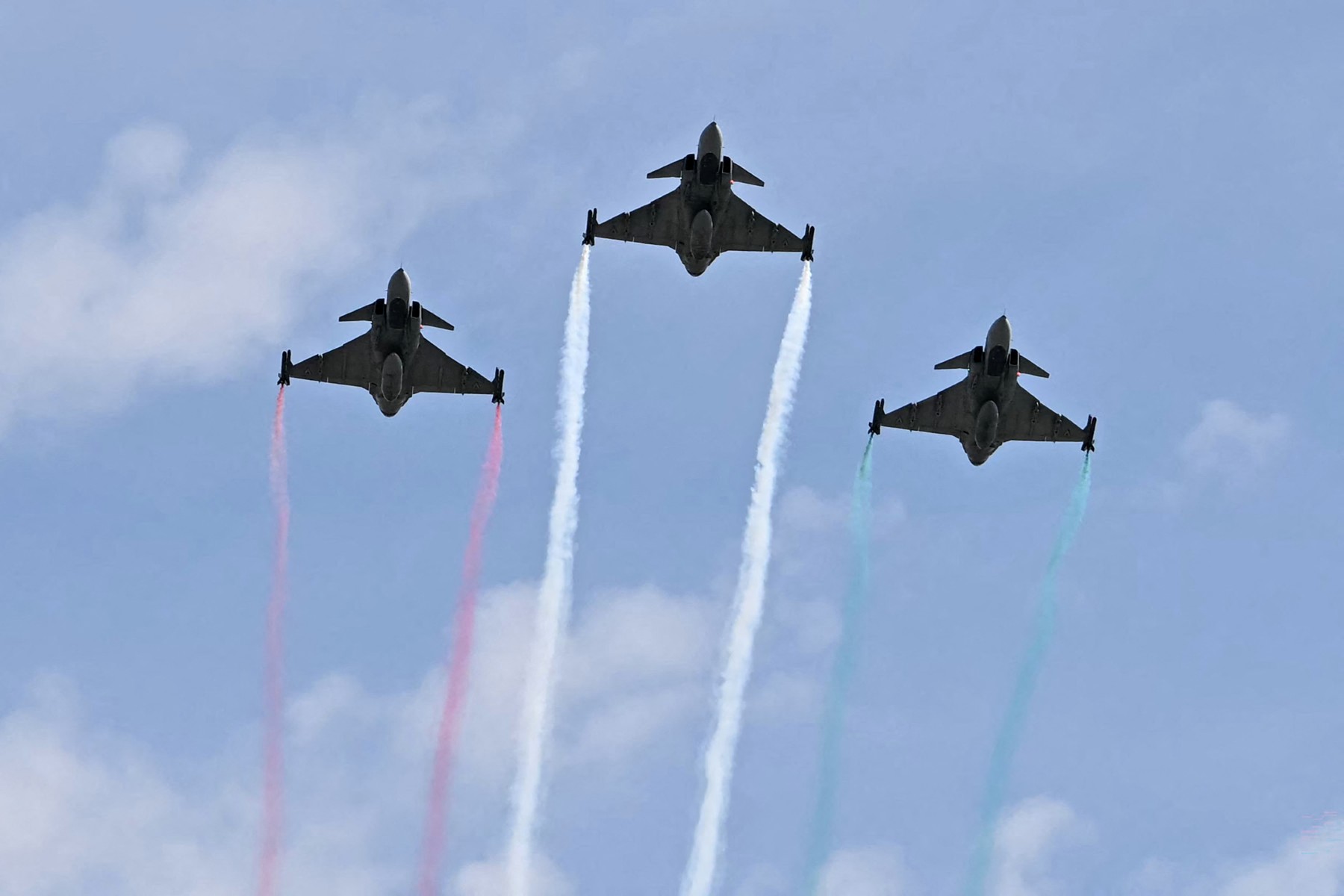
Saab formalizing partnerships with these companies is a major move in its campaign, turning “we will build in Canada” language into named, ready-to-execute industrial relationships.
It demonstrates that Saab has done the groundwork with capable domestic players who already have relevant expertise. In fact, it likely aims to show that the industrial package the company repeatedly offers is not just marketing.
These partnerships promise significant new high-tech jobs and skills development in advanced manufacturing, composite structures, electrical systems, model-based systems engineering, training, and much-needed long-term sustainment.
At the same time, Saab’s selection of these companies means work will be distributed across key regions, appealing to local governments and lawmakers.
Saab has stressed that “These partnerships are designed to strengthen Canada’s sovereign defense capability while contributing to the development of advanced aerospace and defense expertise across the country.”
Canada’s F-35 Review Still Ongoing
Political sensitivity around the F-35 deal has grown amid trade tensions with the US.
In August 2026, the head of the Defense Investment Agency said the Canadian public would not welcome sole-source military contracts awarded to American companies under the current conditions. “That’s just me reading the room,” Stephen Fuhr, secretary of state for defense procurement, said in an interview. “I think that would be a very difficult thing to do, especially after this last week. I think that people would not be happy about that.”
Fuhr stressed that Canada has recognized the risks of “putting all our eggs in one basket” and that Ottawa needs to form new strategic alliances or become more independent in military manufacturing, adding that he still sees the US as a crucial defense ally.
Saab, for its part, appears hopeful.
In Saab’s Gripen final-assembly hall in Linköping, flags of its eight customer nations hang above the line—plus a ninth white banner marked “RESERVED,” the Globe and Mail had reported. However, ambiguity persists as Canadian leadership sits on the review, more than a year after Carney ordered it.
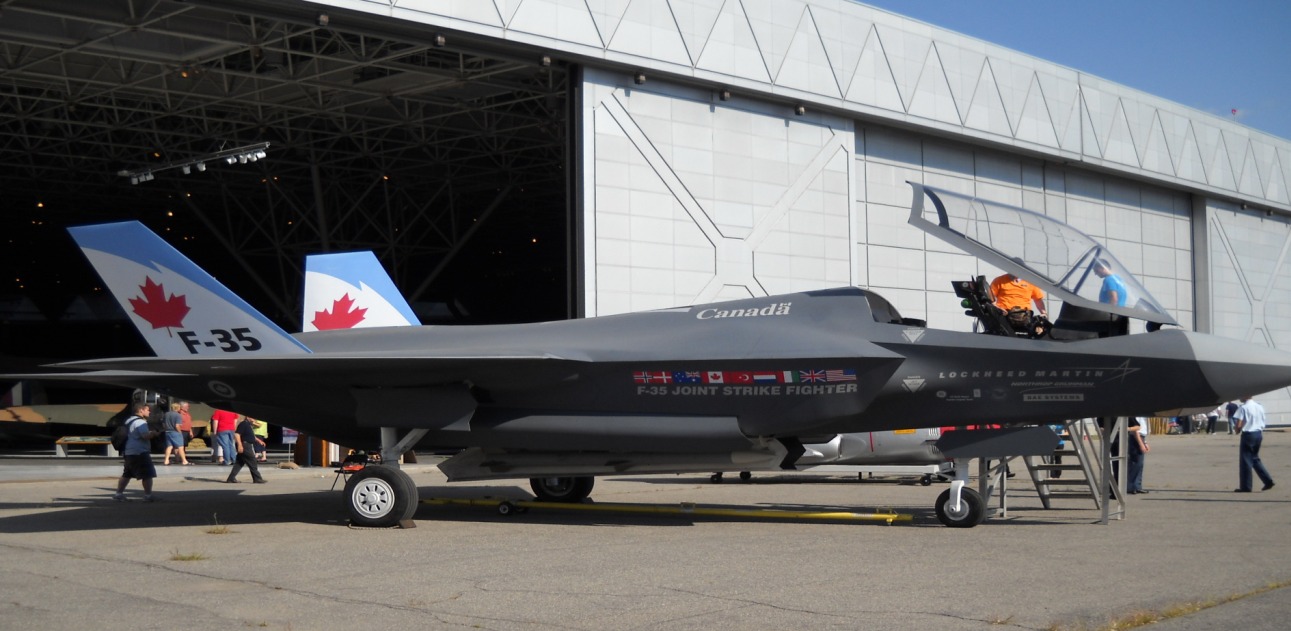
Canada may not abandon the F-35 purchase entirely, as it is currently the only fifth-generation stealth fighter available in the market that offers deep interoperability with NORAD forces.
Moreover, top RCAF leadership continues to view the F-35 as the most credible counter to peer adversaries such as China and Russia, both of which field advanced stealth fighters and sophisticated air defenses.
Beyond proponents of the F-35 and Gripen-E/F, a third school of thought advocates a mixed fleet. Earlier this year, a report in Canadian media said the country could buy 72 F-35s and 72 Gripen-E/F jets, bringing its fighter-jet purchases to more than 88 and suggesting Ottawa was unlikely to abandon the US stealth fighter.
A mixed fleet, however, would add high costs and complexity in training, logistics, weapons integration, and infrastructure. Defense planners have long cited these factors as potential long-term drawbacks for the RCAF.
- Contact the author at sakshi.tiwari13 (at) outlook.com
- Follow EurAsian Times on Google News