The US Navy has officially confirmed the loss of an MQ-4C Triton unmanned aerial vehicle (UAV). Interestingly, the Triton was not lost in combat but rather days after the US-Iran ceasefire took effect.
On April 9, MQ-4C Triton high-altitude long-endurance (HALE) unmanned aerial vehicle (UAV) disappeared over the Persian Gulf, near the Strait of Hormuz, during a maritime surveillance mission.
The drone completed a nearly three-hour patrol over the Persian Gulf and the Strait of Hormuz, according to open-source monitoring data, and then began its return trip to its forward-operating base at Naval Air Station Sigonella, Italy.
In an unprecedented development, though, the drone abruptly turned northeast toward Iran shortly after entering Saudi airspace.
Before disappearing, the drone squawked 7400, the transponder code indicating a loss of communication with the remote pilot. Open-source data shows that the drone descended from its cruise altitude of 52,000 feet to 9,500 feet for over 15 minutes, after which communication was lost.
Breaking 🚨
🇺🇸A US MQ-4C began squawking 7700 emergency code, while losing an altitude of over 12,000 meters rapidly over a period of just 10 minutes in the Persian Gulf.
The fate of the drone is unknown.. https://t.co/j4nsWOtu48 pic.twitter.com/AzIUUM310q
— Aiden Reports (@AidenReports) April 9, 2026
The fate of the drone remained unknown for days, keeping military watchers wondering what had happened to the drone. However, the US Navy put all sorts of speculations to rest on April 14, 2026, by confirming that the MQ-4C Triton in question had crashed on the fateful day of its disappearance.
The incident was confirmed in the US Naval Safety Command’s latest report on a publicly available mishap summary. In the USN – SHORT NARRATIVES” section, under CLASS ‘A’ – AVIATION CLASS A MISHAPS, which includes UAS/UAV, the entry reads: “CLASS ‘A’ FLIGHT MISHAPS (4) o 9 Apr 2026 (Location Withheld – OPSEC) MQ-4C crashed, no injury to personnel.”
The crash has been listed as a Class A mishap, which typically means that the incident resulted in more than $2 million in damage, total loss of an aircraft, fatality, or permanent disability. An MQ-4C costs slightly more than $238 million per unit, and experts have noted that the categorization most likely indicates a total loss.
The report provides only this brief, sanitized narrative to protect operational security (OPSEC) and omits possible details on cause, location, or investigation findings. With the confirmation of the crash, the MQ-4C has joined a long list of aircraft that the US military has lost in the West Asian region since the American war on Iran.
As previously reported by the EurAsian Times, the US lost three F-15E Strike Eagles shot down in a friendly-fire incident over Kuwait, another F-15E that was downed by Iran, one A-10 Warthog that was part of the rescue mission over Iran, one E-3G Sentry AWACS, two MC-130J transport planes that had to be destroyed in Iran after they failed to take off, and at least 14-15 MQ-9 Reaper drones. In addition, seven aircraft have been damaged, including one F-35, one F-16, and five KC-135 tankers.
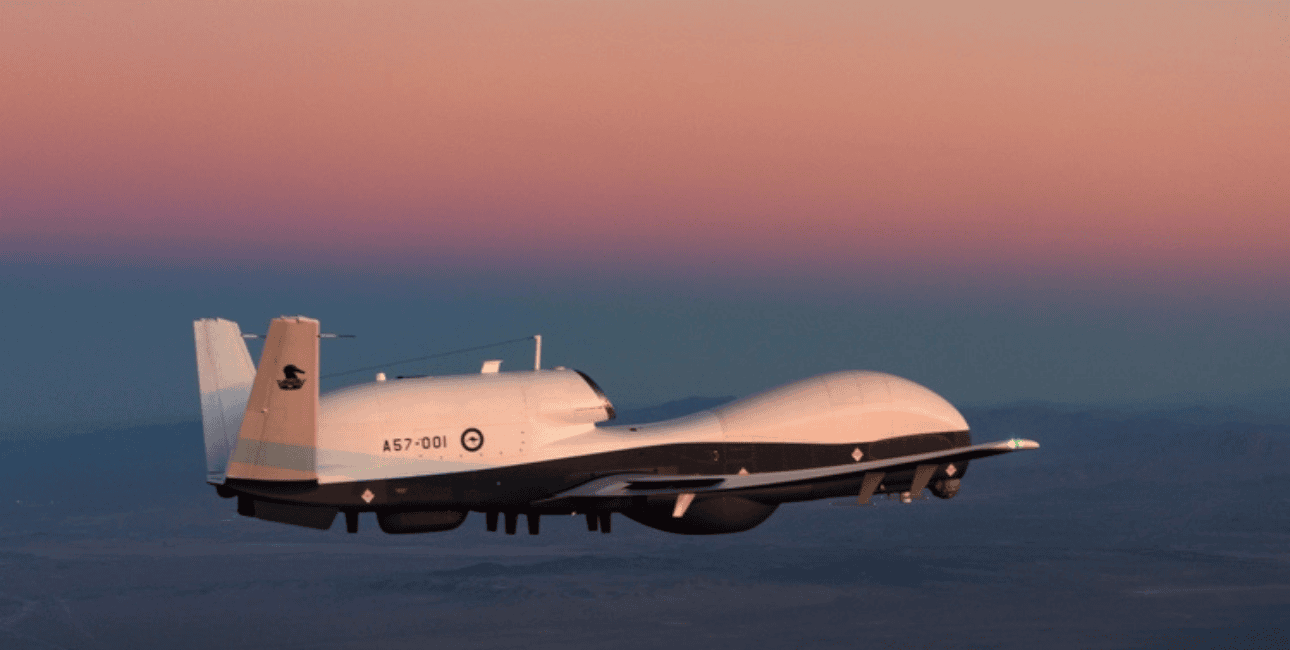
At this point, there is no clarity on whether the drone came under fire or crashed due to a malfunction. However, in a hypothetical scenario, if the MQ-4C Triton wreckage is recovered by Iran or its proxies, sensitive sensors, such as multi-function maritime radar, EO/IR cameras, SIGINT/electronic support measures, and AIS integration, could be compromised.
This would be a big setback for the United States, just as it was in 2011 when Iran captured a US RQ-170 Sentinel stealth drone near the city of Kashmar in northeastern Iran. The Iranian Islamic Revolutionary Guards Corps (IRGC) claimed in 2012 that it had extracted data and began building reverse-engineered copies of the drone.
It is pertinent to note that the US Navy’s MQ-4C program was significantly scaled back over time, from an original plan to acquire about 68–70 aircraft to just 27. As of early to mid-2026, the operational or in-service fleet stands at roughly 20 aircraft, with plans to acquire only 7 more. This means that losing one drone reduces available airframes by about 5%
The Triton drones reportedly support persistent surveillance orbits over the Indo-Pacific, Western Pacific, Mediterranean, and the East Atlantic, as well as the Middle East and Gulf region, and each orbit requires multiple aircraft for round-the-clock coverage. This means that a loss creates a temporary gap in broad-area maritime domain awareness, especially in the volatile Central Command area of responsibility.
The MQ-4C is designed to work closely with the US Navy’s P-8A Poseidon patrol aircraft. As a crucial component of the Maritime Patrol and Reconnaissance Force (MPRF), it transmits real-time data via satellite to a network of ships, aircraft, and shore stations.
A short-term reduction in Triton coverage, particularly in the Middle East, could affect real-time vessel tracking, threat detection, and coordination with crewed P-8 Poseidon surveillance aircraft. The Navy could surge crewed patrols or reallocate other Tritons, but doing so would increase pressure on the remaining airframes and pilots.
The MQ-4C is one of the Navy’s most expensive unmanned systems. According to recent estimates, including procurement and associated expenses, the unit cost ranges from about $200–243 million per aircraft, with some fully burdened program costs even higher.
What is so Special About MQ-4C Triton?
The MQ-4C Triton, manufactured by Northrop Grumman, is an unmanned aerial vehicle specifically engineered for high-altitude, long-endurance missions. The drone represents a significant advancement in maritime Intelligence, Surveillance, and Reconnaissance (ISR) technology and serves the needs of both the US Navy and the Royal Australian Air Force.
The sophisticated drone can remain airborne for over 24 hours and has an impressive operational range of 13,700 kilometers.
The drone is used for a range of missions, including marine patrol, signals intelligence collection, and search-and-rescue. In fact, the exceptional durability of this unmanned aircraft enables consistent monitoring of large maritime areas, providing crucial data for tactical and strategic planning.
Operating at elevations above 17,000 meters (55,000 feet), the Triton has a clear advantage for monitoring vast marine regions while remaining well beyond the reach of most potential threats. This high-altitude capability distinguishes it from medium-altitude unmanned aerial vehicles.
The MQ-4C Triton distinguishes itself from its predecessor, the RQ-4A, with reinforced wings and fuselage, as well as cutting-edge innovations that reduce ice accumulation and increase lightning-strike resistance. These upgrades, in turn, enable the drone to descend to lower altitudes for a closer look at surface targets, enhancing Triton’s surveillance capabilities.
The Triton is equipped with a sophisticated suite of sensors, including the AN/ZPY-3 Multi-Function Active Sensor (MFAS), an advanced active electronically scanned array (AESA) radar that provides extensive coverage in all directions. The MFAS can traverse up to seven million square kilometers in a single day and scan an astounding 5,200 square kilometers every cycle.
The drone also features high-resolution infrared and electro-optical cameras, enabling it to capture crisp images in any lighting conditions. Moreover, its electronic support systems further improve its capabilities by identifying radio and radar signals.
Manufacturer Northrop Grumman has also upgraded to the Multi-Intelligence (Multi-Int) configuration. This configuration integrates additional electronic and signals intelligence (ELINT/SIGINT) capabilities, enabling Triton to track both naval and aerial targets by intercepting communications and precisely geolocating electronic sources.
In January 2020, two Triton drones were stationed at Andersen Air Force Base in Guam, marking their first significant operational deployment. They carried out crucial ISR missions in the Western Pacific from this key location, amassing more than 5,000 flight hours by 2023. The main goal of these missions was to keep a careful eye on Chinese naval activity in the Taiwan Strait and the strategically significant South China Sea.
Later, in 2024, the Triton was sent to the Italian Naval Air Station Sigonella, where it supported crucial ISR operations over the Mediterranean and Black Seas.
In April 2025, Japan’s Defense Minister Gen Nakatani confirmed that the U.S. military will deploy MQ-4C Triton surveillance drones to Kadena Air Base in Okinawa, Japan, as previously reported by the EurAsian Times. The deployment came on the back of a notable increase in Chinese military activity near Taiwan and Japan’s southern islands.
And even before the US went to war with Iran, the MQ-4C Tritons from the Sigonella detachment were active in the region, providing crucial data that may have eventually paved the way for an offensive.
- Contact the author at sakshi.tiwari13 (at) outlook.com
- Follow EurAsian Times on Google News