Poland has been selected as the maintenance site for Patriot’s most advanced interceptors, the first and only such facility outside the United States.
The decision highlights two very different American approaches: the F-35’s highly globalized supply chain versus the Patriot’s more tightly controlled production and maintenance model.
Two simultaneous wars in Ukraine and the Middle East have strained global Patriot interceptor stockpiles, and multiple European countries, including Germany, Poland, and Ukraine, have urged the US to establish new production and maintenance facilities for the air-defense system.
Poland highlighted how multiple European countries were lobbying and competing for the Patriot Advanced Capability 3 (PAC-3) missile maintenance facility.
“Four countries competed for the European location of this investment: alongside Poland — Germany, the Netherlands, and Norway,” Poland’s Deputy Defense Minister Magdalena Sobkowiak-Czarnecka wrote on social media platform X.
Announcing the decision, the Pentagon said in a statement: “The United States Government, in coordination with Lockheed Martin and European Allies, announced the selection of the Republic of Poland as the host nation for the European Patriot Advanced Capability-3 (PAC-3) Missile Maintenance Facility (MMF).”
It added that the “new facility will be underpinned by robust, transatlantic industrial cooperation, with critical supply chain integration led by Germany, the Netherlands, and Sweden.”
Notably, the center in Poland will be the only one outside the United States.
The Pentagon statement underlined that the facility will “significantly enhance operational readiness,” ensure rapid surge capacity during a crisis, and reinforce “credible collective deterrence along NATO’s Eastern Front.”
“By establishing regional maintenance, repair, and overhaul capabilities directly within the European theater, the MMF will dramatically shorten turnaround times and further secure critical supply lines,” it added.
While the Pentagon statement highlights the importance of the new PAC-3 maintenance facility in Poland for Europe’s collective security, deterrence, and operational readiness, the fact that it is the only such PAC-3 maintenance facility outside the US still underscores Washington’s relatively centralized, tightly controlled approach to Patriot interceptor production and sustainment.
Notably, this is not only the sole PAC-3 missile interceptor maintenance facility outside the US, but so far, only one country, Japan, has been allowed to license-produce the PAC-3 MSE interceptors.
Despite Ukraine’s repeated requests, it has not been allowed to license-produce the PAC-3 MSE interceptors.
In July, U.S. President Donald Trump announced an agreement to allow Ukraine to produce Patriot missile interceptors during the NATO summit in Ankara, Turkey.
However, Trump reversed course within a week, saying no final agreement had been made and expressing caution about transferring the sensitive technology.
Reportedly, the prime contractor for the PAC-3 MSE interceptors, Lockheed Martin, was opposed to transferring the sensitive technology to Ukraine.
In September, Ukrainian President Volodymyr Zelenskyy announced that Trump had made a “final decision” to grant Kyiv production licenses for PAC-3 MSE interceptors; Washington has not confirmed this.
This approach of strictly guarding Patriot PAC-3 MSE production and sustainment contrasts sharply with Washington’s approach to another weapons platform, the F-35, whose production is highly globalized through a multinational supply web.
The F-35 vs Patriot PAC-3 MSE Interceptors: A Study in Contrasts
The F-35 Lightning II Joint Strike Fighter (JSF) and Patriot air defense systems are two of the US’s most successful weapons export platforms. The US has exported them to 20 countries so far, including original partners and foreign military sales customers.
However, many other countries, including Saudi Arabia, Turkey, and Qatar, want to buy the stealth aircraft.
Notably, earlier this month, the Pentagon and Lockheed Martin have agreed to a framework agreement to buy F-35 fighters for the next 10 years.
Under the framework, pending US Congress approval, Lockheed Martin will produce 1,560 F-35 Lightning II aircraft over the next ten years for the US and its international customers, at a rate of 156 fighters per year.
The US will buy at least 850 of these stealth fighter jets, and the remaining 710 F-35 fighters are expected to be built for export markets.
Similarly, 18 countries operate the Patriot air defense system, and it has been combat-tested in multiple theatres, including Ukraine and the Middle East War.
However, despite their similar export success and rising global demand, the two weapons systems could not have been different in how the US envisioned them, handled their design and development, and organized their production and sustainment.
Patriot AD System
The MIM-104 Patriot is the US Army’s primary air-and-missile defense system, which evolved over decades from a 1960s anti-aircraft system to a truck-mounted mobile air defense system capable of intercepting ballistic and cruise missiles.
Patriot entered full-rate production in September 1980, and the US Army activated its first Patriot missile battalion in May 1982.
The Patriot system first saw combat service during the 1991 Gulf War, defending critical assets in Saudi Arabia, Kuwait, and Israel, and intercepting Iraq’s Scud missiles.
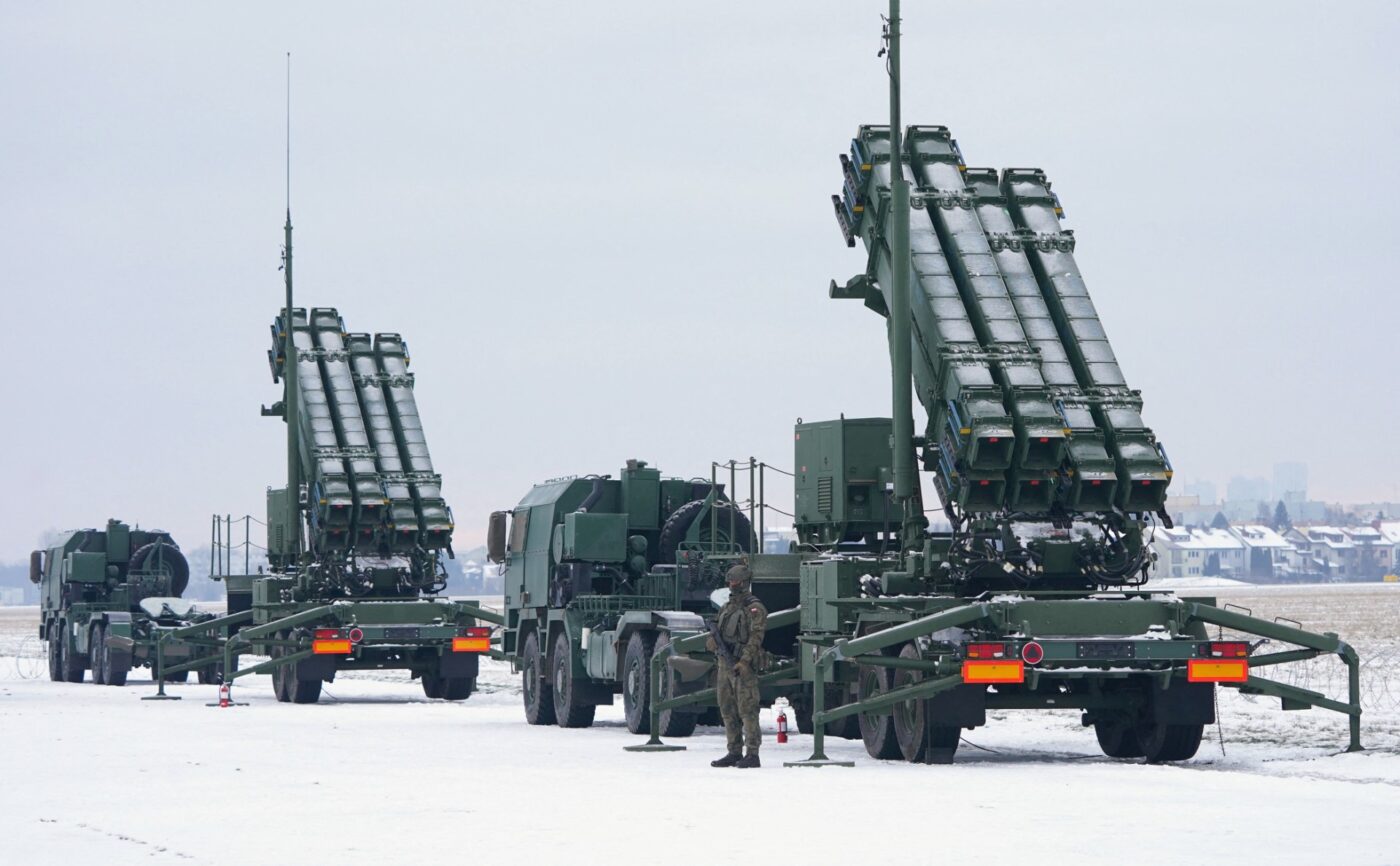
Notably, from the 1960s through the development of PAC-1, PAC-2, and the highly capable PAC-3 MSE, the system was designed and developed exclusively to meet US Army requirements.
Patriot received its first export customer only in 1984, when the Netherlands ordered four Patriot batteries and received them in 1987.
Israel, the US’s strategic ally in the Middle East, got Patriots only in 1991 on an emergency basis during the Gulf War.
Many NATO countries and other US allies got the system only in the 2000s.
For instance, Spain, South Korea, and the UAE all ordered Patriots in the 2000s.
Countries like Qatar, Romania, Sweden, Poland, and Bahrain ordered them even later.
Ukraine received Patriot batteries as donations only in 2023.
Therefore, Patriot’s export success has followed a predictable path that many US weapons systems have followed.
The Pentagon defines the requirements, then runs a tender process, selects primary and secondary contractors, and fields the system with the US military.
Foreign customers enter the picture only later and have minimal influence on the design and development of the weapons systems. For instance, the Pentagon is currently running the US Army’s Future Interceptor program, for which multiple defense firms are competing.
Earlier this month, the Pentagon advanced Lockheed Martin’s PAC-3 Edge interceptor to the next stage of this competition.
Although 18 other countries operate Patriot systems, they have no say in defining the requirements for the next stage of air-defense development.
The Patriot system therefore remains an exclusively US weapons platform, and Washington wants to maintain strict control over the production and sustainment of its radars, launchers, interceptors, and other components.
Even as the US struggles with low stockpiles of PAC-3 MSE interceptors due to the war in the Middle East, Washington is reluctant to let partners license-produce them.
F-35
The F-35 JSF program, however, was conceived, designed, and developed from the start as a multinational joint program, not a purely American fighter that would later be exported.
In the 1990s, the U.S. needed to replace multiple aircraft, such as the F-16, F/A-18, Harrier, and A-10 Warthog, with one common stealth fighter family.
To share the enormous development costs and lock in future allies, the Pentagon structured the JSF as an international partnership from the outset.
The program organized all international partners into investment tiers.
The UK remains the sole Tier 1 partner, with an initial investment of USD 2.5 billion in the JSF program. The UK also has the greatest access to F-35 technology and data outside the US.
Italy and the Netherlands are Tier 2 partners, with initial investments of USD 1 billion and USD 800 million, respectively.
Australia, Canada, Denmark, and Norway are Tier 3 partners. Turkey was one of the founding participants in the JSF program; however, it was kicked out in 2018 after controversially purchasing the Russian S-400 AD system.
All the initial partner countries contributed funding, industrial workshare, and design input in exchange for influence over requirements and a guaranteed share of production.
This created a global supply chain and production network from day one.
In fact, according to Lockheed Martin, nearly 30 to 42 percent of the jet is manufactured outside the US across three continents before final assembly in Texas.
While Lockheed Martin is the primary contractor, the UK’s BAE Systems and Martin Baker, Leonardo and Cameri in Italy, GKN Fokker in the Netherlands, ASDAM Group in Australia, and nearly 30 companies in Canada also supply crucial parts for the F-35 fighters.
Therefore, the Patriot remains an essentially US platform, tightly controlled but primed for exports, while the F-35 is a joint international effort.
- Sumit Ahlawat has over a decade of experience in news media. He has worked with Press Trust of India, Times Now, Zee News, Economic Times, and Microsoft News. He holds a Master’s Degree in International Media and Modern History from the University of Sheffield, UK.
- He can be reached at ahlawat.sumit85 (at) gmail.com